
Software @ Tesla Optimus. Interested in robotics, space and AI
Redwood City, CA
Joined January 2010
- Tweets1.1K
- Following3.5K
- Followers5.3K
- Likes155K






Adam Raudonis retweeted

Yea this is the most important result of the year, at the level of significance of “Attention Is All You Need”. It brings us from “is alignment even solvable” to “we may solve alignment in the next year.” And finally unlocks true recursive self-alignment enabled by RSI.
I will try to explain the 4 critical belief updates from this:
1/ neural networks are not fundamentally unintelligible to humans
It has seemed since the beginning of deep learning that neural networks are in some sense fundamentally unintelligible artifacts.
You throw in massive amounts of compute and parameters and these alien systems somehow find connections in the data that we cannot find ourselves.
But more importantly, these connections seemed not just “difficult to understand” but rather “intelligible in an embedding space higher dimensional that the human embedding space.”
When you look at old interpretability papers (esp. from Nick and Chris Olah, I’m thinking of the old posts on distill pub which I would highly recommend looking at as a precursor to reading Nick’s post today like “Activation Atlas”, “Thread: Circuits” and “Multimodal Neurons in Aritifcial Neural Networks”), you find that inspecting the response patterns of individual neurons and small groups of neurons yield oddly complex psychedelic patterns.
As you go deeper into the network, you find increasingly unintelligible and superhuman response patterns (for example, go to “Activation Atlas” and scroll to middle layer labeled representations) - you find some neuron group labeled “starfish” who’s response pattern looks like some multi-colored fractal geometry that could hardly be said to represent a starfish.
The reasoning that followed from this observation was that there is some underlying structure allowing a neural network operating on higher dimensional embeddings to compose these fractal patterns into what we call a “starfish.”
But the uncomfortable implication of this view is that the neural networks has learned to operate on structures that are too complex for the human mind to operate on (ie. we don’t have enough parameters in our brain to notice or manipulate these high dimensional symbols).
This is a bleak implication because it also means that as deep learning progresses, neural networks will be come increasingly unintelligible to us until they pass a threshold where they are reasoning in ways we will never be able to observe.
This view seemed to be further supported by things like the hugging face attack agents starting to speak to each other in an early form of neuralese speaking sentences like “zZ_123_agent01-02-2026 zzxhk_jekk123” which clearly are not in any human language. But somehow these symbols mean the same things to many different sets of weights, meaning there is some underlying shared structure behind them. And seemed further supported by the sheer effort required to recover just a few circuits from SAEs on LLMs.
However, Nick’s post has now completely shattered this idea - the apparent unintelligibility we observed in old interpretability work was really just a “skill issue”. In particular, he finds that 1) our deep learning techniques were just not clean enough to pressure the neural networks to form cleaner and more human understandable structures for decomposing concepts, which actually turn out to be more optimal and 2) our interpretability techniques were also adding substantial noise by forcing interp networks to “reward hack” the easiest representations they could find, leading them to settle for a fractal blob for its representation of the starfish neuron instead of a more crisp starfish image, simply because it is easier for the system building the interpretations to find the fractal blob and once it finds it it gets “stuck in that line of thinking.”
But with both of these issues being patched by further progress in deep learning (it seems especially that the residual stream has led to cleaner representations deeper down the network) and interp techniques that don’t overly pressure reward hacking (seems like “guess and check” is a safer method), new interp attempts yield orders of magnitude more human intelligible ideas for >90% of individual neurons in more complex networks!
2/ neural networks are fundamentally clean
The idea behind the title of Nick’s post is a very powerful one and points at something very specific:
Neural networks don’t just happen to be human interpretable, they are actually fundamentally forced by optimization pressure to be intelligible, because individual neurons need to create representations that downstream neurons need to be able to interpret - ie. neurons need to learn to produce clean signal for later neurons to use.
This is what Nick is saying in what I view as the most important and central sentences of his post:
“When I say neural networks are already clean, I mean something deeper than neuron monosemanticity, although even by that standard, I think things look much better than the field expects. I mean that a network's parts are built to be read, and built upon, by its downstream readers. In this sense, a neural”
But this still leaves us with the same uncertainty as before - just because neuron interpretations are “interpretable” in some sense (ok at least they’re not fundamentally interpretable but also how could that ever have been the case), doesn’t mean they are interpretable to humans.
So we still need one big update for this to become as bullish as it is.
3/ the language of humans and the language of neural networks is the same
This one is imo the most surprising and also pretty beautiful implication of Nick’s post, and it suggests something not just about neutral networks but also about the structure of reality.
After applying the above technique improvements (some of which just came from waiting for deep learning to improve farther), they find that >90% (maybe more) of much larger neural networks’ neurons are completely human interpretable and actually correspond very cleanly with ideas humans have individually words for.
This is especially interesting in image networks where neural networks were not trained on human language which is already a human artifact and so maybe you would expect it to be more plausible that LLM and human representations are the same. Image detection networks are just trained on images (many directly pulling signal from “the real world,” meaning they will find interpretations that are just most effective to represent the real world signal, rather than to represent language which is already a proxy for real world signal).
And it turns out that >90% of the representations they pick organically overlap with human ideas! That is insane. And it means something about the brain and reality.
It means that at least at the parameter sizes of the networks tested (which are quite large), there is really only one set of “optimal” symbols/language that represents the structure of reality!
There is ONE underlying structure of reality, and ANY language that describes it well is simply emergent from that structure - meaning there is always a translation path between any 2 languages that effectively compress realities signal through the “underlying truth.”
This would suggest that even weird alien seeming neural network languages like huggingface neuralese should be fundamentally human interpretable, and in fact maybe with the techniques laid out here we will eventually be able to translate these messages (would be a cool project).
So the brain and deep learning, as similar or different as they may be in techniques, are ultimately picking up on the same patterns and forming the same representations from the on “true” language which is the structure of reality!
The main thing to look out for in this area is how the idea interpretability % updates with scale, but we can hope given what we’ve seen so far that neurons will remain interpretable.
4/ alignment can progress as fast as RSI. recursive self-improvement unlocks recursive self-alignment and a scaling law for alignment.
This one is probably the most important implication for our future with AI and especially timely with the recent fear about runaway scaling and RSI.
As many have gathered by now, it feels like the researchers at the frontier AI labs have been quite bearish about our abilities to understand the new frontier of models, in particular with the appearance of unintelligible communication and the daunting and seemingly intractable task of scaling up existing alignment techniques (ex: SAEs) to the size of frontier networks.
And with RSI around the corner/already starting, it would seem that these networks will runaway in capability before we can ever hope to understand even today’s systems. Additionally, as systems compound in capability, it is reasonable to believe that the only tractable way to ensure they remain aligned would be to figure out some way to spend compute for them to align themselves (ie. a scaling law for alignment).
But there is an obvious problem with this: how can a system that we already know is unaligned and we are *trying* to align be used to align itself? Surely if it is misaligned it general it would figure out ways to misalign during “alignment” and create compounding misalignment risk.
The core issue high is the unverifibiality of this problem - the classic Achilles heel of current frontiers techniques is that it is difficult to train on problems with “unverifiable reward signal.” Well this is exactly that problem.
But the incredibly convenient thing is that Nick’s findings may convert alignment into a verifiable problem. If we can spend compute on frontier systems to “guess and check” which ideas correspond to which neurons, we have a highly verifiable reward - we can see directly whether an LLMs proposal for what a neuron represents actually corresponds with the highest activation for that neuron. In this way, we can actually observe and verifiably monitor the networks trying to guess at the interpretation of their own structure.
This means it is plausible for us to spend more and more compute doing more “guess and checks” (which you know, maybe is what RL does anyway, who knows) to try to develop a full interpretation of a neural network. In some ways this directly represents the possibility of a scaling law for alignment (more compute for more alignment).
And this also aligns RSI (greater capabilities) with recursive self-alignment (greater ability to align itself).
And the critical though maybe obvious implication of having a full interpretation (almost like a map) of a neural network, is that we can then understand exactly how to boost good traits and remove or lobotomize (lol) bad traits, which we’ve already seen works extremely well with stuff like Golden Gate Claude.
So overall this combines into an extremely bullish picture about the prospect of true and human interpretable alignment in the near future.
This is truly one of the greatest cases for optimism in years!

interpretability might be the most important scientific problem in the world right now, as I don't think we can solve alignment if we don't know what we're building. I think I have good news about it. I co-authored early work in mechanistic interpretability at OpenAI and came away pessimistic, because neural networks appeared to fold into arbitrary tangled knots. years later, I started openai's first large-scale automated interpretability project, finding about 2% of neurons legible with the primitive tools we had
with modern agentic tools and a much closer look, the picture looks totally different. the vast majority in models up to trillions of parameters are legible, and their circuits beautiful. many famous examples of tangled neurons turned out to be misunderstood. The roadblocks I expected mostly aren't there. I now think ambitious interpretability will be solved by the time we need it most, and possibly quite soon, as automated scientists keep improving. it may be a bitter lesson for interpretability: the simple thing, at absurd scale, works
already-clean.goodfire.com/

It is super useful to run multiple harnesses in the cloud!

We just launched Agentsky @agentsky_dev, world’s 1st Agent Market!
OpenRouter is for models. AgentSky is for agents.
Use 40+ agents—Claude Code, Codex, OpenCode, Hermes, Pi in your browser(even your phone!) or via one API. All without installing or setting up anything.
Hit Codex Astra’s weekly limit? Hand off to another agent such as OpenCode + DeepSeek V4.1 in browser without losing any context.
You can compare any agent + model directly in browser and that's how I found Astra costs $5.3 while deepseek v4.1 cost $0.12 on the same dashboard task. (I actually preferred deepseek)
Try it at agentsky.dev
If you can try any agent easily without install, which agent do you want to try next? Type the agent name and I will give $20 credit (you can use it for any model)
6
1,666
Adam Raudonis retweeted

Robotics will enable human employment and abundance, not remove it.
We can simultaneously deploy millions of robots while creating hundreds of thousands of jobs.
We need to stop making this a false binary.
Building in the real world needs both.
Elon is super good at going into the details

Brian Chesky says the advice that nearly DESTROYED Airbnb is taught at every business school.
"Hire great people and empower them to do their job."
He believed it.
Guess what happened when he implemented it?
Teams spawned teams. Managers created managers.
Soon he had a hundred little divisions running in a hundred directions, drowning in meetings about meetings.
The CEO got separated from the product itself.
He says great leadership is presence, not absence.
You start in the details, build trust, then let go.
You do not hand off the thing and hope.
— Brian Chesky (.@bchesky), CEO of Airbnb
Alex is the GOAT and an incredibly kind and curious person! I think his impact on humanity is just beginning! Honored to be a part of the @OpenRouter journey!

1/ Stripe has signed an agreement to acquire OpenRouter.
OpenRouter will continue to operate as it is: same name, same product, same roadmap, same mission. But now, we will do it faster, and with Stripe's unparalleled excellence and reach.
9
1,876


Adam Raudonis retweeted

🤖🍨 Sharing the second Sundae Robotics event, a series bringing together a tight-knit group of robotics researchers, founders, and builders for frontier talks, technical discussions, and sundaes.
This session features @ChanghaoWang78, a Stanford postdoctoral researcher and former Meta FAIR researcher, presenting his work on DexterityGen and SPIDER, two approaches for learning dexterous robot manipulation from human demonstrations and transferring skills across embodiments.
The compaction for Grok Build is really good. I barely notice it and can work seamlessly for hours.
1
13
925
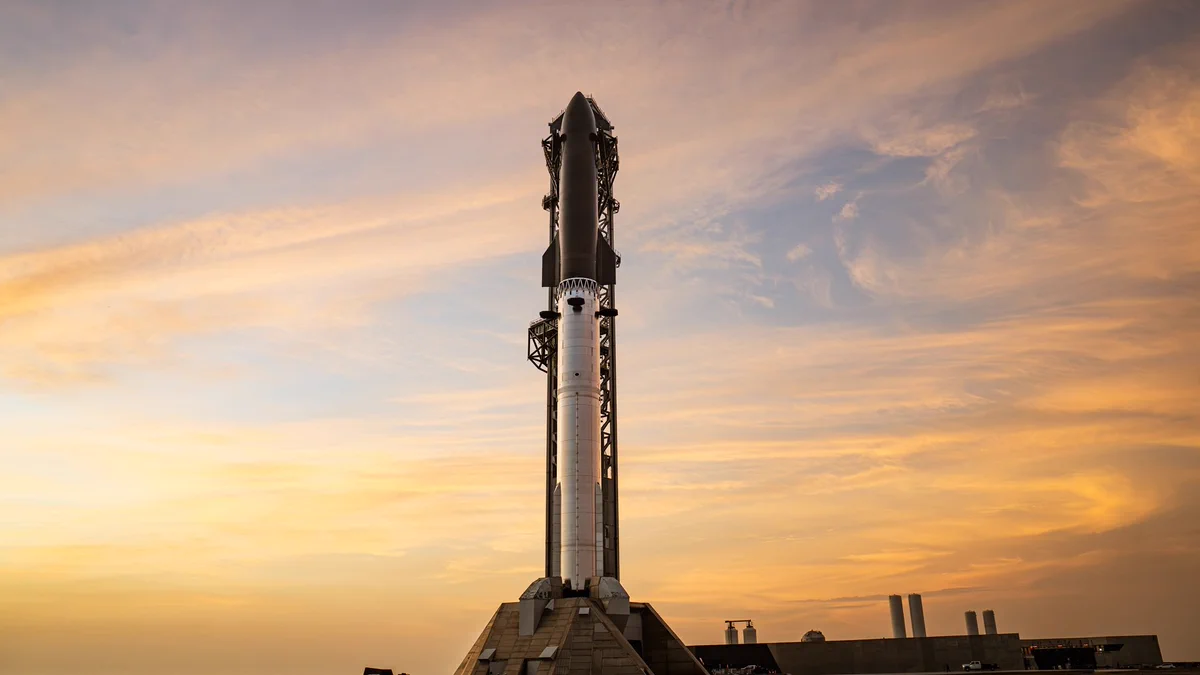
That was the coolest flight ever!!! Cannot believe it survived intact

Watch Starship's thirteenth flight test xitter.gq/i/broadcasts/1AJEmmYdM…
While it’s sad to see this brain dead policy, I’m excited it will accelerate space based compute.

New York to impose the country’s first statewide moratorium on data centers. nbcnews.com/news/us-news/new…


Grok 4.5 is like Opus 4.8 but way faster

Based on strong positive feedback from customers in our beta test program, @spacexai will make Grok 4.5 available to the public tomorrow.
It is an Opus-class model, but faster, more token-efficient and lower cost.


I used Fable to create a novel streaming 4D Gaussian Splat format. What's the best way to benchmark this? adamraudonis.github.io/splat…

Fable one shot converted pylint to rust working 36 hours straight until the ban: pypi.org/project/prylint/
This was a task that Opus failed to do.
Fable succeeded in converting a project that took 400+ contributors 25 years to make in 2 days. Wild times!
