

AfPak Diary is an independent, non-partisan publication tracking the security, politics, diplomacy, and social shifts shaping Afghanistan and Pakistan.
AFPAK Region
Joined October 2026
- Tweets48
- Following0
- Followers225
- Likes0




Sneako’s short visit to Kabul this week gave Afghanistan’s government a clear, modest communications win.
Over a few days, the American streamer walked through city streets, visited a girls’ primary classroom, and interviewed officials Abdul Qahar Balkhi and Anas Haqqani. His streams and talks crossed a million views on YouTube alone, putting Afghan voices directly in front of young Western viewers who rarely hear from them.
Viral clips do not fix larger policy issues like girls’ secondary education and formal recognition. Those challenges are still there.
Still, the reaction shows real curiosity about everyday life in Afghanistan. Letting a foreign creator film openly gave Kabul a simple, low-cost way to speak for itself instead of through filtered news. For a government isolated since 2021, simply getting a direct hearing is a real step.

Fact Check: Video Claiming Assassination of Taliban Intelligence Member in Surobi Shows a Cropped Motorcycle Accident afpakdiary.com/fact-check/vi…

AFPAK Diary retweeted
If you want to understand the state of Afghanistan’s anti-Taliban resistance groups, you don’t need a 50-page intelligence brief. You just need to watch this 15-second split-screen video.
On the right is a clip from one of the two dozen resistance groups. It has a red breaking-news banner, a Surobi dateline, an official logo, and a claim that the group killed a Taliban intelligence officer. The footage itself is just a zoomed-in cloud of dust beside an overturned motorcycle.
On the left is the unedited original video, filmed from a passing car. There is no gunfire, no explosion, and no ambush. It is a routine roadside motorcycle accident. The original clip keeps rolling for a few seconds after the dust settles, showing the rider upright beside his bike. The group cropped the frame, looped the dust, and cut the video before you could see him.
This is not a one-off mistake. It points to a larger problem across Afghanistan’s anti-Taliban opposition. More than five years after the Taliban returned to power, dozens of fragmented fronts, many run from abroad, are competing for international attention and funding without holding a single district let alone a major city or province. With little real movement on the ground, many groups rely on inflated casualty numbers and edited clips to look active.
Calling this out is not a defense of the Taliban. It is basic accountability. Credibility is hard to build and almost impossible to win back once it is lost. When groups claiming to fight for Afghanistan’s future have to crop a traffic accident to prove they are in the fight, they only confirm the irrelevance they are trying to hide.
While Pakistan has expelled more than 2.75 million Afghans, former Afghan soldiers and police in Balochistan are reportedly being recruited into irregular, state-aligned militias.
This analysis examines how vulnerable veterans are being pulled into Pakistan’s proxy conflicts against Baloch insurgents and Kabul. afpakdiary.com/analysis/paki…

Pakistan’s New Proxy Gamble: Former Afghan Forces in Balochistan afpakdiary.com/analysis/paki…
While Pakistan has expelled more than 2.75 million Afghans, former Afghan soldiers and police in Balochistan are being quietly pulled into irregular, state-aligned armed groups.
Left without legal status and facing serious dangers at home, unemployed veterans are reportedly offered around 40,000 rupees a month and local police immunity. Kept off official military rosters, they give Pakistani agencies deniable fighters on two fronts: inside local militias battling Baloch insurgents, and in covert operations against Kabul.
Turning stateless soldiers into off-the-books fighters shows how deeply proxy warfare remains embedded in Pakistan’s security playbook, a strategy that trades short-term leverage for lasting regional instability.
Thousands of Afghan scholars gathered in Kabul this week to grant Haibatullah Akhundzada the title of Shaikh ul-Islam, a rare public moment for a leader who usually rules by decree from Kandahar.
Behind the honorific was a clear political signal: the religious establishment stands firmly in line.
Organized under the Taliban’s higher-education authorities, the assembly brought clerics together to endorse his rulings. Giving a historic scholarly title to a man who already holds the rank of Amir ul-Momineen sends an unmistakable message. Religious authority and political power sit in one person.
Akhundzada’s presence in the capital, and his address to the crowd, left no room for doubt. Obedience to his leadership is non-negotiable, and the scholars backing the system are projecting a united front.
Around 4,000 Afghan scholars have gathered in Kabul and conferred the title of ‘Shaikh ul Islam’ on Taliban leader Sheikh Haibatullah Akhundzada.
The assembly, organised under Taliban higher-education authorities, focused on the impact of decrees issued by Supreme Leader Sheikh Hibatullah Akhundzada. He already carries the title of Amir ul Momineen. Adding Shaikh ul Islam, an old honorific reserved for the most senior Islamic scholars, strengthens his standing as both a political and religious authority. The gathering also pushed for greater obedience to his leadership.
Akhundzada, who is based in Kandahar and rarely appears in the capital, attended the meeting and addressed the participants.
“Federations do not break because citizens love their mother tongues. They break when a centralizing state insists that belonging requires erasure.”
Read the full op-ed on how Pakistan is waging a quiet war on indigenous languages: afpakdiary.com/op-eds/a-mush…

After five years, Afghanistan’s air force has successfully repaired and flown an L-39 Albatros jet trainer over Kabul. The aircraft, a remnant of the country’s older inventory, took to the skies in a clear demonstration of restored technical capacity.
Local mechanics and remaining specialists appear to have returned the jet to flying condition, marking a modest but meaningful step in rebuilding limited air capabilities. While the L-39 is a trainer rather than a modern fighter, the flight signals growing efforts by the Afghan authorities to maintain and operate inherited equipment.
Such developments reflect gradual progress in sustaining air assets despite ongoing challenges with parts and expertise.
"Ankara’s reliance on the vague phrase 'Afghanistan-Pakistan region' serves a clear diplomatic purpose. It lets Turkey showcase counterterrorism wins domestically without publicly embarrassing Islamabad, either by highlighting that transnational jihadist camps are operating inside Balochistan, or by exposing the fact that Turkish intelligence feels compelled to run direct field operations on Pakistani soil to neutralize them." afpakdiary.com/analysis/what…

The appointment of Rehman Gul alias Mureed as the new commander-in-chief of BLA undercuts earlier claims by Pakistani media and intelligence sources that he had been killed.
In September 2025, those sources reported his death in Afghanistan’s Helmand province, presenting it as evidence of Afghan sanctuary for the insurgency. The reports proved inaccurate. Gul, who had long commanded the Majeed Brigade, the group’s suicide unit, has now taken overall leadership.
The repeated practice of declaring senior commanders dead in order to attribute the conflict to Afghanistan has once again been contradicted by events. With an experienced leader of the suicide brigade now at the helm, the security situation in Balochistan is likely to become more difficult.

BLA Appoints Rehman Gul Alias Mureed as New Commander-in-Chief
afpakdiary.com/dispatches/no…

2
238
A deadly TTP ambush in Kohat killed 10 Pakistani police officers, underscoring the deteriorating security situation in Khyber Pakhtunkhwa and across Pakistan. One month into federal Governor’s Rule, militants continue to strike state forces with ease. afpakdiary.com/monitoring/de…

BREAKING: Baloch Liberation Army (BLA) elects Rehman Gul, alias Mureed, as new Commander-in-Chief.
Spokesperson Jeeyand Baloch said the Senior Command Council unanimously selected the senior commander, who previously led the Majeed Brigade, following a leadership transition.

The crisis in Khyber Pakhtunkhwa cannot be understood exclusively through the language of counterterrorism. There is a deeper political question: who benefits from prolonged instability, and what institutional changes does that instability make possible? afpakdiary.com/analysis/paki…

The most uncomfortable question for Pakistan's military establishment is no longer just why militancy persists. It is whether the continuation of instability has become politically useful to those who claim to be fighting it.
Fazlur Rehman's challenge puts that question squarely on the table.
Read full analysis here: afpakdiary.com/analysis/paki…
The audio leaks are authentic. @afpakdiary’s verification desk has examined the recordings and is preparing a forensic report detailing its findings, which will be published soon.
Separately, two independent sources familiar with Sami Sadaat’s whereabouts have confirmed to @afpakdiary that he has been in Pakistan for the past six weeks. According to these sources, he has visited Balochistan and Chitral and is currently based in Islamabad.

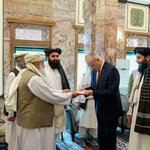
Russia’s Deputy PM Overchuk Seals $103 Million Trade Deals in Kabul
afpakdiary.com/dispatches/no…
