

Tracking capital flows and market trends. Sharing stock insights, momentum opportunities, and trading strategies. 25+ years of market experience.
Global
Joined June 2011
- Tweets82.9K
- Following3.1K
- Followers3.3K
- Likes1.8K


Pinned Tweet
We've created a free stock discussion group for traders who want genuinely valuable market insights—not just meaningless stock ticker information.
Limited spots available—first come, first served!
How to Join:
Send me a direct message on X with the word "YES".
xitter.gq/messages/compose?recip…
Daily content includes
Daily stock watchlists
Market analysis reports
Key price levels
Trading ideas and investment opportunities
100% FREE! No hidden fees, no sales pitches, and absolutely no pressure to buy anything!

1
119
Anthropic (NASDAQ: $ANT ) has had a post-IPO performance that may have caught many investors off guard.
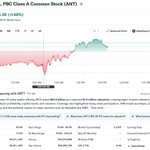
On November 19, ANT officially debuted on the Nasdaq at an IPO price of $83. It opened at $111.50 and reached an intraday high of $115.10. However, within just a few trading sessions, the stock gave back all of its initial gains and even dropped as low as $73.85.
As of November 25, the latest intraday quote I found showed ANT recovering to $85.36, putting it back above its $83 IPO price. For a newly listed AI leader, this kind of volatility presents both opportunities and risks.
1. Why has ANT been so volatile?
First. The market is reassessing AI valuations
Anthropic's Claude product family has attracted significant attention in enterprise AI and software development, and the company's revenue growth has been particularly strong.
However, the market had already assigned the company very high valuation expectations. As investors become more concerned about AI infrastructure spending, computing costs, and future profitability, even companies with strong business growth can face valuation pressure.
Second. Post-IPO profit-taking and potential share supply pressure
ANT attracted significant investor interest when it first went public. After its sharp first-day rally, some investors chose to take profits.
In addition, shares held by insiders and employees may become eligible for sale in subsequent periods. As the number of publicly tradable shares increases, changing supply and demand dynamics could put further pressure on the stock.
Third. The broader technology sector remains under pressure
AI and semiconductor stocks have recently faced continued selling pressure, as investors have become more cautious about highly valued technology companies. As a newly listed AI company, ANT is unlikely to remain completely insulated from broader market sentiment.
2. Three key factors to watch going forward
First: Can $83 become a meaningful support level?
The $83 IPO price is an important psychological level for investors. If the stock can stabilize above it and trading volume gradually improves, this could help restore short-term market confidence.
However, if ANT breaks decisively below $83 again, investors should watch the previous low near $73.85 for potential support.
Second: Can it regain and hold $90?
The $90 level is an important short-term price area to monitor. If ANT breaks above it on strong volume and manages to hold that level, it could signal improving buying interest and potentially open the door to a test of $100.
However, a single-day rally is not enough to confirm a trend reversal. Further confirmation over subsequent trading sessions is needed.
Third: Can AI business growth justify its long-term valuation?
Beyond short-term price movements, I'm more interested in Anthropic's commercialization capabilities, enterprise customer growth, computing expenses, and path to profitability.
If revenue continues to grow while cost management and profitability improve, the market may reassess the company's long-term value.
3. My outlook: Cautious in the short term, but worth watching over the long term
I don't believe ANT's post-IPO decline necessarily means it has lost its long-term potential. However, being a high-profile AI company doesn't mean investors should ignore valuation concerns and market risks.
In the short term, the stock's ability to hold around $83, reclaim $90, and attract stronger trading volume will be important signals of whether market sentiment is recovering.
If selling pressure on high-valuation technology stocks continues, ANT could face further volatility. On the other hand, if the AI sector begins to stabilize, ANT may once again attract investor interest.
I'd rather wait for the market to provide clearer confirmation than rush into buying during a period of extreme volatility.
#ANT #IXIS #NVDA #AMD #Stocks

101
$AKAN is definitely a stock worth keeping a close eye on. Since I started following it at $4.18, it has reached a high of $6.70, representing an impressive gain of approximately 62%. However, I chose not to take profits when it hit $6.70. Although the price has now pulled back to around $5.00, it is still up nearly 20%. I firmly believe it can break through the $10 target, and that's where I plan to take profits!


$AKAN has surged more than 400% in less than a week! After hovering around its 60-day moving average for two days, it broke above $4 today, with trading volume continuing to increase.
It's worth keeping an eye on in the short term, and I'll be watching for a favorable entry point.

174
Since I started following $RIBBU , its price has climbed from $52.50 to $93.50, representing an impressive gain of approximately 77%!
That's an outstanding performance given the current market conditions, and my returns have been very impressive as well!

$RIBBU has surged more than 450% over the past month! Whether it can sustain this upward momentum is what I'm keeping a close eye on.

64
The U.S. stock market sent another worrying signal in premarket trading today.
After technology stocks continued to weaken yesterday, selling pressure intensified. Nasdaq 100 futures briefly dropped more than 3%, S&P 500 futures fell over 2%, and Dow futures also moved lower.
The biggest concern? Investors are increasingly questioning AI valuations, massive capital spending, and the outlook for interest rates. Semiconductor stocks are once again at the center of the sell-off.
1. Technology stocks remain under pressure
Yesterday's market showed a clear divergence:
S&P 500: -0.5%
Nasdaq: -1.5%
Dow Jones: +0.9%
The weakness was concentrated in technology stocks. Meanwhile, concerns about the cost and profitability of AI investments continue to weigh on sentiment.
The key question is: Can AI's long-term growth potential justify today's high valuations?
2. Strong economic data isn't necessarily good news for stocks
Recent U.S. data showed:
October PCE inflation: 3.8% year over year
Q3 GDP growth: 4.3%
Initial jobless claims: 189,000
The economy remains resilient, but persistent inflation could limit the Fed's ability to cut rates. Higher-for-longer interest rates would put additional pressure on technology and growth stocks.
3. Three signals I'm watching
Nasdaq: Can it stabilize, or will selling pressure continue?
MU, NVDA, AMD: Can semiconductor stocks attract buyers again?
Sector rotation: Will capital continue shifting from technology into more defensive sectors?
My outlook: Stay cautious and don't rush to buy the dip.
I don't see a convincing market reversal signal yet. Sharp volatility may create opportunities in individual stocks, but I'd rather wait for prices to stabilize and buying interest to return.
With U.S. markets closed Thursday for Thanksgiving and Friday's session ending early, preserving cash may be wiser than rushing into new positions.
What do you think? If MU and NVDA continue falling, is this a long-term buying opportunity or a sign that the AI valuation bubble is starting to burst?
🤖 Made with AI

134

The Market Could Take a Dramatic Turn Today! Stocks Soared Yesterday, But Could Today Bring a Reversal? Is This Rally a Recovery or Just Another Bull Trap?
How dramatic was yesterday's market action?
The S&P 500 surged 4.7%, the Nasdaq jumped 6.5%, and the Dow gained 3%. Technology and semiconductor stocks led the rebound, while NVDA reportedly soared more than 30% in a single session, reigniting investors' confidence in the AI trade.
But here's the big question:
If the bull market is truly back, why is selling pressure already emerging before investors have even had a chance to celebrate yesterday's rally?
This may be the warning sign investors should pay the most attention to today.
1. The Bigger Yesterday's Rally, the More Cautious We Should Be Today!
Ahead of today's opening bell, Nasdaq 100 futures have weakened noticeably, S&P 500 futures have also turned lower, and NVDA has given back some of its gains. Semiconductor stocks such as MU, SNDK, and INTC are also facing renewed pressure.
What does this tell us?
Yesterday's rally was certainly encouraging, but it may have been driven largely by short-term bargain hunting and short covering after the market's sharp selloff. A genuine trend reversal requires sustained buying pressure, healthy trading volume, and broader participation across multiple sectors. It cannot rely on just a handful of high-profile technology stocks.
If technology stocks continue to weaken today, yesterday's surge could turn out to be nothing more than a temporary recovery in market sentiment rather than the beginning of a new bull market.
2. Can AI Stocks Keep Rising, or Have They Become the Market's Biggest Risk?
This is where the market faces its biggest contradiction: AI.
On one hand, AI remains one of the most important growth opportunities over the next several years. Semiconductors, data centers, and computing infrastructure all have enormous long-term potential.
On the other hand, investors are increasingly asking a critical question: With so much capital being poured into AI, how much real profit will these investments ultimately generate?
NVDA can surge 30% in a single day, only to give back a significant portion of those gains shortly afterward. Such extreme volatility shows just how sensitive current market valuations remain to developments in the AI sector.
Here's the question I want to ask: If you believe AI will be one of the defining industries of the next decade, does that mean you should buy AI stocks at any price right now?
My answer is absolutely not.
A promising industry doesn't mean every stock is worth buying at every valuation, and it certainly doesn't mean there is no risk after a sharp short-term rally.
3. What Really Matters Today Is Not the Indexes, but Whether Capital Is Flowing Back Into the Market!
Today, I'll be closely monitoring three areas:
Semiconductors: Can key stocks such as MU, NVDA, and SNDK stabilize, hold important support levels, and attract renewed buying interest?
AI infrastructure: Can data center, optical communications, and computing-related stocks maintain their relative strength?
Overall market sentiment: Can the Nasdaq recover its premarket losses, and will market breadth improve as more stocks participate in the rebound?
Investors will also be watching today's U.S. consumer confidence data, along with upcoming inflation-related reports this week, which could further influence expectations for the Federal Reserve's interest rate policy.
My Outlook: Today Could Be a Critical Test of Whether This Rally Has Real Strength!
I don't believe one strong trading session is enough to prove that the market has completely moved past its recent correction.
If stocks pull back today but leading technology companies manage to hold key support levels, that could actually create better entry opportunities for upcoming trades.
However, if selling pressure intensifies again, particularly across semiconductors and AI-related stocks, investors will need to reassess their risk exposure.
I'd rather miss part of a rally than blindly chase stocks when market sentiment is at its most euphoric.
After the opening bell, I'll be watching capital flows and individual stock performance closely to identify opportunities with genuine short-term trading potential.
One final question:
Do you think yesterday's massive rally signals the return of the bull market, or was it just another dangerous bear-market bounce? If the market drops sharply again today, would you buy the dip or continue holding cash?
Share your thoughts in the comments!
95
robinhood:0xd0601ce157db5bdc3162bbac2a2c8af5320d9eec Surged 30%, But I'm Actually More Concerned! Can NVIDIA Continue Its Legendary Run?
NVIDIA (robinhood:0xd0601ce157db5bdc3162bbac2a2c8af5320d9eec) has recently staged a powerful rebound, surging more than 30% in a single day and reigniting market enthusiasm.
But I want to raise three questions that deserve serious debate:
1. Is NVIDIA Truly Irreplaceable?
Competitors like AMD and Google's TPU division are rapidly catching up. Can today's technological leadership guarantee market dominance over the next decade?
2. Is AI the Next Industrial Revolution or the Biggest Bubble in Financial Markets?
Tech giants are investing hundreds of billions of dollars in AI infrastructure. But will these investments ultimately translate into sufficient commercial profits?
3. Is It Still Worth Chasing NVDA at These Levels?
If future growth has already been priced into the stock, even continued earnings growth may not be enough to drive further gains.
Finally, I have two questions for investors:
If NVDA remains the dominant player in AI chips over the next three years but its stock underperforms the broader market, would you still consider it an excellent investment?
Do you believe NVIDIA will continue making history, or is it becoming the centerpiece of the next tech bubble?
42
Jensen Huang Returns as NVIDIA CEO! Could This Spark Another Rally in the U.S. AI Sector?
NVIDIA is facing a major leadership development!
According to the latest reports, NVIDIA has announced that Jensen Huang is returning as the company's CEO, effective immediately. This news has brought renewed attention to the technology sector, which has been under pressure recently.
As one of the most influential figures in the global AI chip industry, Jensen Huang is not only NVIDIA's founder but also a key leader behind the development of the global AI infrastructure ecosystem.
So, what impact could his return have on the stock market?
1. Boosting Market Confidence
Huang's return could ease investor concerns about NVIDIA's leadership stability and help restore confidence in the company's long-term strategy.
2. Potentially Benefiting the Broader AI Supply Chain
NVIDIA plays a major role in the AI chip industry. Greater leadership stability could strengthen confidence across the sector. Stocks such as NVDA, AMD, AVGO, MU, and companies involved in AI data centers are all worth watching.
3. Potential Reassessment of Technology Stock Valuations
If investors regain confidence in the AI industry's growth prospects, some technology stocks that have experienced significant corrections could attract renewed buying interest.
My Take:
I believe Huang's return is a positive development, but it doesn't necessarily mean the AI sector is about to begin another major rally.
The market is still facing valuation pressures, interest rate uncertainty, and questions surrounding the returns on AI capital expenditures.
Going forward, I'll be paying close attention to NVDA's market reaction and whether the semiconductor sector can use this news as a catalyst for a sustained recovery.
Here's a question worth considering: Could Jensen Huang's return become a turning point for the AI sector?
Do you think robinhood:0xd0601ce157db5bdc3162bbac2a2c8af5320d9eec will lead the next rebound, or could this development lift the entire technology sector?
167
Can the Stock Market Rebound This Week? After the Selloff, the Real Test Is Just Beginning!
Last week, the U.S. stock market experienced one of its most severe corrections of the year. The S&P 500 fell 8.6% for the week, while the Nasdaq dropped 10%, with AI and semiconductor stocks bearing the brunt of the selling pressure.
However, as we enter a new week, there are also some encouraging signals worth watching. Some analysts believe last week's selloff may have reflected excessive pessimism, while the valuation reset in technology stocks could begin creating new opportunities.
There are three key areas I'm watching this week:
1. Inflation Data Will Shape Market Sentiment
Wednesday's release of U.S. October PCE inflation data and the revised third-quarter GDP figures will directly influence investors' expectations for future Federal Reserve policy. If inflation shows signs of easing, it could provide momentum for a market rebound.
2. Can AI and Semiconductor Stocks Find a Bottom?
Major technology stocks such as NVDA, AMD, MU, and AVGO have experienced significant pullbacks. The key now is to watch whether capital starts flowing back into these names and whether they can establish new support levels.
3. U.S. Consumer Spending Deserves Attention
Thanksgiving and Black Friday are approaching. Consumer spending will be an important indicator of the resilience of the U.S. economy.
My Outlook for This Week:
I believe there is room for a technical rebound, but it's still too early to conclude that the correction is over.
Wednesday's economic data could trigger significant volatility. With Thanksgiving shortening the trading week, changing market liquidity is another factor worth monitoring.
My strategy remains focused on patience. I'm not chasing rallies or rushing to buy the dip. Instead, I'm prioritizing fundamentally sound stocks that have undergone meaningful corrections and are beginning to show signs of stabilization.
Do you think the U.S. stock market will rebound this week, or will it continue searching for lower support levels?
I'd love to hear your thoughts in the comments!

119
The Market Is Entering a Critical Observation Phase: Is the Sell-Off Coming to an End?
The past week has undoubtedly been a challenging one for U.S. stock market investors. Technology and semiconductor stocks came under significant selling pressure, risk appetite continued to weaken, and major market indexes remained under pressure.
As of the November 20 close, the Nasdaq Composite had fallen approximately 10% for the week, the S&P 500 was down around 8.6%, and the Dow Jones Industrial Average had declined approximately 8%. The S&P 500 had also pulled back more than 10% from its previous high, entering correction territory. Significant declines in Nvidia, AMD, and other semiconductor-related stocks further intensified market anxiety.
So, what exactly is the market worried about?
In my view, the current market pressure is mainly driven by several factors:
AI valuations are facing renewed scrutiny. Although the long-term growth prospects of the AI industry remain intact, investors are paying closer attention to companies' capital expenditures, their ability to turn growth expectations into actual earnings, and whether current valuations are justified. The market is no longer willing to pay for growth expectations alone.
Uncertainty surrounding interest rates and the economic outlook. Investors are reassessing the Federal Reserve's future policy path. The ongoing tension between inflation, economic growth, and borrowing costs is putting additional pressure on high-valuation growth stocks.
Market sentiment and capital flows are weakening. When major technology stocks continue to decline, overall market risk appetite tends to deteriorate. Even individual stocks whose fundamentals have not fundamentally changed can come under pressure from broader market-wide selling.
Key Areas to Watch Next Week
Next week is Thanksgiving week, which means shortened trading hours and potentially lower market liquidity. Investors will also be watching upcoming economic releases, including October PCE inflation data, the revised third-quarter GDP estimate, and the Federal Reserve's Beige Book.
These developments could further influence expectations for interest rate policy and the broader economic outlook. In addition, earnings from technology companies such as Dell are worth watching, as they may provide further insight into demand for AI infrastructure and corporate IT spending.
My Outlook for Next Week
I believe the market may be entering a particularly important observation phase next week.
If selling pressure gradually eases and trading volume and market breadth begin to improve, some oversold technology stocks could see a technical rebound. However, if major indexes continue to break below key support levels, or capital continues flowing out of high-valuation technology stocks, the market may need more time to absorb the recent selling pressure.
We should not assume that the market has bottomed simply because stock prices have already fallen significantly. What really matters is whether selling pressure is easing, whether capital is flowing back into the market, and whether individual stocks can sustain a rebound supported by meaningful trading volume.
Strategy Going Forward
At this stage, I prefer to remain patient, manage position sizes carefully, and maintain sufficient cash reserves. We will continue monitoring NVDA, AMD, MU, and other AI- and semiconductor-related stocks, paying close attention to their price action, trading volume, and key support levels.
Market corrections can create risks, but they can also gradually present new opportunities. However, until the trend becomes clearer, there is no need to increase exposure blindly just to chase a short-term rebound.
Next week, our priority will be to watch for signs of market stabilization rather than rush to predict when a rebound will begin. Protecting existing capital and waiting for clearer signals remain the most important priorities in the current environment.
🤖 Made with AI

114
Weekly U.S. Stock Market Recap and Outlook: Tech Selloff Intensifies — Is the Market Approaching a Critical Turning Point?
U.S. markets experienced a particularly difficult week. As technology and semiconductor stocks continued to face selling pressure, overall risk appetite weakened significantly, with the Nasdaq among the hardest-hit major indexes.
Even Anthropic's successful market debut failed to restore investor confidence in the AI sector. Instead, investors have begun reassessing AI valuations, capital expenditures, and the industry's future profitability.
1. Weekly Market Recap: Technology Stocks Lead the Decline
Several important developments stood out this week:
1. Technology and semiconductor stocks remained under pressure.
Semiconductor-related stocks, including NVDA, AMD, MU, and AVGO, experienced notable pullbacks. The market is no longer simply pricing in AI growth expectations. Investors are increasingly focused on whether companies can generate meaningful commercial returns from their massive investments.
2. Risk appetite declined significantly.
This week's selloff was no longer limited to a handful of technology companies. Major market indexes also came under considerable pressure. Investors began reducing their exposure to riskier assets, while market volatility increased noticeably.
3. Interest rate expectations became another source of pressure.
Recent comments from Federal Reserve officials have brought future monetary policy back into focus. If borrowing costs remain elevated, high-valuation technology companies could face additional pressure.
Overall, this is not simply a routine sector rotation. The market is reassessing valuations, earnings expectations, and the broader economic outlook.
2. Next Week's Market Outlook: Rebound Opportunities and Further Downside Risks
In my view, the most important thing to watch next week is whether the current selling pressure begins to ease.
First, watch whether the Nasdaq can stabilize.
The Nasdaq and major technology stocks remain important indicators of overall market sentiment. If the index can stabilize around key support levels and trading volume begins to improve, we could see a potential short-term rebound.
However, if selling pressure continues to intensify, we need to remain alert to the possibility of further downside.
Second, watch for divergence within the semiconductor sector.
Core names such as NVDA, AMD, MU, and AVGO deserve continued attention. However, I don't believe a stock automatically becomes attractive for a short-term entry simply because it has already declined significantly.
What really matters is whether capital begins flowing back into the sector and whether individual stocks can gradually reclaim important technical levels.
Third, monitor macroeconomic policy and corporate earnings expectations.
Next week, the U.S. market will enter the Thanksgiving holiday week, with shortened trading hours and potentially lower liquidity during certain sessions. Federal Reserve policy expectations, economic data, and corporate earnings may continue to influence market direction.
3. Trading Strategy for Next Week: Stay Patient and Wait for Clearer Signals
My overall assessment is that short-term market uncertainty remains elevated. Further downside cannot be ruled out, but a technical rebound is also possible if selling pressure gradually subsides.
Therefore, I would favor the following approach:
• Maintain a reasonable cash allocation rather than rushing to establish large new positions.
• Closely monitor stabilization signals in key technology stocks such as NVDA, MU, and AMD.
• Avoid blindly buying the dip during continued selling pressure, and don't rush to chase short-lived rebounds.
• Wait for clearer improvements in trading volume, price action, and sector capital flows before considering new trading opportunities.
Final Thoughts
This week's market has delivered an important reminder: even industries with significant long-term growth potential can experience severe stock price corrections.
The long-term development of AI and the technology industry has not disappeared because of one difficult week. However, the market is increasingly demanding that companies justify their valuations through actual earnings and investment returns.
I don't expect the market to necessarily launch into a broad-based rebound immediately next week. More importantly, we need to see whether the market can stop weakening and gradually establish a more stable price structure.
In the current environment, protecting capital, managing risk, and waiting for better entry opportunities are far more important than rushing to participate in every market fluctuation.
Do you think technology stocks will experience a rebound next week, or does the market still need more time to digest this correction?
$ANT $NVDA robinhood:0x86923f96303d656e4aa86d9d42d1e57ad2023fdc robinhood:0x322f0929c4625ed5bad873c95208d54e1c003b2d $MU $SNDK $AVGO
🤖 Made with AI

1
1
145
$AKAN reached an intraday high of $5.50 today, representing a gain of more than 30% compared with its price of $4.18.
After pulling back, the stock has stabilized and started moving gradually higher again. It could present a good opportunity for intraday trading.

$AKAN has surged more than 400% in less than a week! After hovering around its 60-day moving average for two days, it broke above $4 today, with trading volume continuing to increase.
It's worth keeping an eye on in the short term, and I'll be watching for a favorable entry point.
201
Technology Stocks Outlook: Is the Correction Nearing Its End, or Is a New Opportunity Taking Shape?
U.S. technology stocks have remained under pressure recently, with semiconductor and AI-related stocks bearing the brunt of the selloff. Even Anthropic's strong demand during its IPO failed to reverse the market's pessimistic sentiment toward the AI sector. Investors are becoming increasingly cautious and are taking a closer look at the massive investments in AI infrastructure and whether those investments can ultimately translate into sustainable and meaningful profits.
I believe the technology sector is currently undergoing three important shifts:
1. The market is reassessing AI valuations.
Over the past several months, optimism surrounding AI growth has attracted substantial capital into semiconductors, cloud computing, and data centers. However, as stock prices have pulled back, investors are paying closer attention to corporate cash flow, capital expenditures, and returns on investment. Going forward, simply having AI exposure may no longer be enough. Companies with proven profitability and the ability to turn AI innovation into commercial success are more likely to attract investor interest.
2. Semiconductors still have long-term potential, but short-term volatility may persist.
Companies such as NVDA, AMD, MU, and AVGO remain important players in the AI ecosystem. Long-term demand has not disappeared simply because the market has recently declined. However, growth expectations, regulatory policies, financing costs, and the pace of corporate capital spending could continue to influence stock prices.
I expect the market to gradually move away from broad-based gains across the entire sector, with greater differentiation emerging between individual stocks.
3. A technical rebound is possible, but a genuine trend reversal still needs confirmation.
Technology stocks have already experienced a significant correction, and some technical indicators suggest that the market is approaching oversold territory. This could increase the likelihood of a short-term rebound.
However, oversold does not necessarily mean the market has bottomed. We still need to watch whether trading volume improves, whether key support levels can be reclaimed, and whether major technology stocks begin to stabilize. Only when these signals start aligning can we have greater confidence that a potential market bottom is taking shape.
Here are three areas I'll be watching closely:
• AI Chips and Semiconductors: NVDA, AMD, MU, and other leading companies, particularly whether capital begins flowing back into the sector.
• Cloud Computing and Data Centers: Whether AI infrastructure investments can translate into actual revenue and cash flow.
• Large-Cap Technology Platforms: The progress of AI commercialization and earnings performance at companies such as GOOG, MSFT, and AMZN.
My Overall Outlook:
The long-term growth potential of the technology industry remains worth watching, but the market has not yet provided sufficiently clear signs of stabilization. I won't rush to buy the dip simply because prices have fallen, nor will I completely dismiss the sector because of short-term selling pressure.
At this stage, maintaining cash flexibility, managing position sizes, and waiting for the market to confirm signs of a bottom may be wiser than rushing to chase a rebound.
The real opportunity isn't necessarily about buying at the absolute bottom. It's about identifying fundamentally strong companies with reasonable valuations as market risks gradually ease and the trend begins to improve.
Do you think the current correction in technology stocks is nearing its end, or does the market still need to go through another leg down?
#NVDA #ANT #AMD #TSLA #AVGO


116
$ANT (Anthropic): IPO Excitement Fades as Selling Pressure Builds — Is a Deeper Correction Ahead?
ANT is facing a very different market environment on its second trading day. After an impressive IPO debut, the stock is now experiencing significant selling pressure, raising questions about whether its initial momentum can be sustained.
Latest Market Developments:
ANT closed its first trading session at $97.17, approximately 17% above its $83 IPO price. However, during Friday's premarket session, shares retreated toward the $85 area, giving back a substantial portion of their initial gains.
At the same time, Nasdaq futures weakened, while semiconductor and other AI-related stocks continued to face selling pressure. This suggests that the current weakness is not limited to ANT but reflects broader concerns about technology valuations and market confidence.
Three Important Factors to Watch:
Selling Pressure: The sharp pullback from the IPO debut highlights how quickly early enthusiasm can turn into profit-taking. We need to see whether buyers are willing to step back in at lower levels.
Broader AI Market Sentiment: Weakness across semiconductor and AI-related stocks could continue weighing on ANT. Even companies with strong long-term prospects may struggle when investors become more defensive.
Valuation and Market Expectations: Anthropic has attracted enormous attention, but its high valuation also creates significant expectations. Investors will need to see continued business growth and a credible path toward profitability to justify that valuation.
My Short-Term Outlook:
I remain cautious about ANT in the near term. The current pullback suggests that the market is still trying to determine a fair trading range after its highly anticipated IPO.
If selling pressure continues, ANT could test lower price levels before finding meaningful support. On the other hand, a stabilization in trading volume and renewed buying interest could signal that the initial correction is beginning to ease.
My Strategy:
I would not rush into buying ANT at this stage, nor would I assume that the IPO price of $83 will automatically act as support.
I'll be watching today's regular-session price action, trading volume, and the broader technology sector for clearer signals. In the current market environment, protecting capital and waiting for better opportunities are more important than chasing short-term excitement.
The IPO was only the beginning. The real test is whether ANT can maintain investor confidence after the initial excitement fades.
#ANT #Anthropic #AI #ArtificialIntelligence #Nasdaq #StockMarket

101
$ANT (Anthropic): A Strong IPO Debut, but Can the Momentum Last?
Anthropic has officially completed its highly anticipated Nasdaq debut, and the first trading session delivered plenty of excitement. However, the price action also revealed some important signals that investors should not overlook.
ANT opened at $111.50, approximately 34% above its $83 IPO price, and briefly climbed to $114.99. However, selling pressure emerged as the session progressed, pushing the stock down to a closing price of $98.56. Despite the pullback, ANT still finished its first trading day approximately 18.7% above its IPO price.
What Does This Tell Us?
Strong Initial Demand: The significant premium over the IPO price reflects substantial investor interest in Anthropic and the broader AI industry.
Profit-Taking Pressure: The retreat from the intraday high suggests that some early investors are locking in gains. This could create additional volatility in the coming sessions.
Broader Market Conditions: Despite ANT's strong debut, the Nasdaq and other major indexes came under pressure. This indicates that enthusiasm around AI alone may not be enough to overcome broader market weakness.
My Short-Term Outlook:
I believe ANT's next move will depend heavily on whether buyers can regain control after the initial wave of profit-taking.
The key will be whether the stock can establish a stable trading range, maintain sufficient trading volume, and attract renewed buying interest after pullbacks.
I remain positive about Anthropic's long-term position in the AI industry, but its current valuation leaves limited room for disappointment.
My Strategy: I would avoid chasing the initial IPO rally. Instead, I'll be watching how ANT behaves over the next few sessions, particularly whether selling pressure begins to ease and a more stable entry opportunity develops.
The first day was impressive, but the real test is whether ANT can sustain its momentum.
#ANT #Anthropic #AI #ArtificialIntelligence #Nasdaq #StockMarket

138
$ANT (Anthropic): Its First-Day Performance Is Worth Watching — How Much More Upside Is Possible?
As the AI industry continues to gain momentum, Anthropic has officially made its Nasdaq debut under the ticker symbol ANT, with an IPO price of $83 per share. The offering attracted strong investor demand, with the final pricing set above the previously expected range, reflecting significant confidence in the long-term growth potential of Claude and the enterprise AI market.
Short-Term Outlook:
I believe ANT could experience considerable price volatility during its early trading sessions. On one hand, strong market interest in leading AI companies and investor enthusiasm could provide short-term support. On the other hand, a valuation of approximately $1.5 trillion already reflects substantial growth expectations. Actual buying demand, trading volume, and the market's willingness to accept this valuation will be key factors in determining whether the stock can sustain its upward momentum.
Three Key Signals to Watch:
Opening Trading Volume: If the stock rises alongside consistently increasing volume, it would suggest relatively strong buying interest.
Price Action Around the $83 IPO Price: This is an important reference level to monitor during the early trading sessions. Whether the stock can remain stable amid volatility may influence short-term market sentiment.
Overall AI Sector Performance: If technology and AI-related stocks continue attracting capital, ANT could benefit from positive sector sentiment. Conversely, a decline in overall risk appetite could put pressure on the stock.
My View:
I remain interested in Anthropic's long-term AI business potential, but I don't believe strong IPO demand automatically means the stock will continue rising. In the short term, the more important factors are whether the market can absorb its high valuation and whether the stock can establish a stable trading range after the initial price discovery.
I'll be closely monitoring trading volume, price stability, and buying support during potential pullbacks. Rather than chasing the stock higher, I prefer to wait for clearer entry signals.
#ANT #Anthropic #AI #ArtificialIntelligence #Nasdaq #StockMarket

1
3
571
robinhood:0x58ffe4a942d3885baa22d7520691f611ef09e7aa (Taiwan Semiconductor): A Core Semiconductor Player in the AI Boom
As global demand for AI computing power continues to grow, TSMC remains an essential player in the AI supply chain, supported by its advanced process technology and manufacturing capabilities. Although the stock has recently pulled back, its long-term competitive advantages remain intact.
Short-Term Technical Analysis:
First Support: $359–360
Second Support: $350–352
First Target: $370–371
Second Target: $381–382
Extended Target: $392–393
If the stock stabilizes around $359–360 and breaks above $370 with stronger trading volume, it could potentially move toward the $381–382 range.
My View:
I remain optimistic about TSMC's long-term growth potential, but short-term market sentiment and technical trends still deserve close attention. Rather than chasing the price, I prefer to wait for signs of stabilization and look for opportunities at more favorable levels.
#TSM #TSMC #AI #Semiconductor #Nvidia

1
72
$AKAN has surged more than 400% in less than a week! After hovering around its 60-day moving average for two days, it broke above $4 today, with trading volume continuing to increase.
It's worth keeping an eye on in the short term, and I'll be watching for a favorable entry point.
$RIBBU has surged more than 450% over the past month! Whether it can sustain this upward momentum is what I'm keeping a close eye on.