

Digital Economy Strategist, Cybersecurity, Digital Transformation & e-Gov Senior Expert, EU Key Expert on PSC, NAC & Cap. Dev., Informatics Law, PDP, AI
Ankara, Türkiye
Joined June 2008
- Tweets5.7K
- Following233
- Followers971
- Likes1.1K







✨ Bugün Resmi Gazete'de yayımlanan atamaları, ücretsiz olarak yayımlanan "Kamu Kurumları Teşkilat Haritası"ndan takip edebilirsiniz:
➡️ lnkd.in/dKsysuQG
#KKTH #Atamalar #ResmiGazete #Kamu

78
✨ "İsviçre ETH #Zurich Üniversitsi’nde yapılan bir çalışmanın çok anlamlı tespitleri”
Özetle çalışmada elde edilen sonuç şöyle : #VibeCoding" ile yapılan yazılım projelerinin başarıya ulaşması için, yaptıran kişinin #BilgisayarBilimleri ve "kod yazma" konusundaki "yetkinliğinin yüksek olması" gerekiyor.
✅ Tek satır kod görmeden sadece yapay zekaya komut vererek yani vibe coding ile uygulama geliştirirken, "yazılım altyapısı olan kişiler" olmayanlara göre yaklaşık iki kat daha başarılı oluyor.
✅ İsteğini yazılı olarak "net ve düzenli anlatabilmek" de başarıyı ciddi oranda artırıyor; çünkü yazılım geliştirmede "yeterli altyapıya sahip olanlar", yapay zekaya ne istediklerini çok daha anlaşılır tarif ediyor.
✅ Şaşırtıcı bir şekilde, günlük hayatta "yapay zekayı çok kullandığını söyleyen" kişilerin hem yazılı anlatım becerileri hem de yapay zekaya uygulama yaptırma "başarıları daha düşük" çıkıyor.
➡️ “Computer Science Achievement and Writing Skills Predict Vibe Coding Proficiency” : arxiv.org/html/2603.14133v1

1
65
Son 2 yıl içerisinde Yapay Zeka dünyasındaki modellerin çıkış hızları giderek daha da sık hale geldi ve modeller daha da verimli ve yetenekli hale geldi #ArtificialAnalysis
artificialanalysis.ai/

29
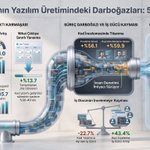
✨ Harward Üniversitesi’nde yapılan *“Yapay Zeka kullanan şirketlerde Yazılım Geliştirmedeki Darboğazlar”* konulu bir araştırma önemli tespitler elde etti:
✅ 2021 – 2026 yılları arasını kapsayan
✅ 655 firmada
✅ Büyük çoğunluğu yazılım mühendisi olan 720.543 çalışanı içeren
✅ (Github kodlama aktiviteleri, Jira iş problemleri, Google takvim etkinlikleri gibi) 445.000.000 iş olayı üzerinde
üzerinde gerçekleştirilmiş bir çalışma. Birçok tespit arasında dikkati çeken bazıları:
➡️ Kodlama asistanı (ve kod ajanları) kullanılmaya başladıktan sonra kod üretimi %30 (%44) arttı (Bu artışta “AI slope” etkisi de mevcut)
➡️ Ancak çözülen Jira problemlerinin çözümünde %1.5 gerileme bulunmuş.
➡️ Üretkenlikte ve problem çözümünde %13.7 artış var. Bu artış geçen bu süre boyunca zaten gözlenmesi beklenen oran olduğundan YZ’nin üretkenliğe ciddi bir katkısı olmadığı değerlendiriliyor.
➡️ İşe alımlar ve işten çıkarımlar bu dönem boyunca %2.5 seviyelerinde ve birbirlerini dengeler durumda.
➡️ Geleneksel kod geliştirmede, zamanın %30 - 40’ı kod yazmaya %60-70’ı planlama, mimari tasarım, test, toplantılar gibi süreçlere harcanıyor.
➡️ Yapay zeka döneminde, kod yazma kısmı neredeyse tamamen YZ’ye devredilerek tasarruf yapıldı ama YZ’nin hazırladığı kodları baştan sona gözden geçirme süreci ortaya çıktı ve tam bu noktada en büyük darboğaz yaşanıyor. Çünkü önceki döneme göre kod hacmi yaklaşık %40 arttı ve doğrudan yazılımcı tarafından geliştirilmemiş bir koda hakim olma gereksinimi çıktı. Bundan kaynaklı olarak, backlog’larda yüksek artış tespit edildi. aktif inceleme süresi %58,5uzadı.
➡️YZ ile birlikte, kodlama yükü otomasyon sayesinde YZ’ye devredilmiş ve çalışanlar üzerindeki iş yükü %60-70 denilen kısma ve gözden geçirme, YZ için detaylı kod tasarımı (modelleme / tarif etme) gibi yeni alanlara devrolmuş görünüyor.
Öneriler:
➡️Kod geliştirme ekibi daraltılırken mimarı tasarım gibi kısımlardaki kapasitenin arttırılması
➡️ Harness gibi çerçevelemeler ile hedef rotanın sınırlandırılarak deterministik çıktına odaklanılması,
➡️ Yapay Zekânın kod İnceleme Sürecine Entegrasyonu, böylece gözden geçirme gereksinimlerinin azaltılması
➡️ Küçük (atomik) ve iyi tariflenmiş adımlarla hedefe ilerlenmesi
➡️ Doğrulama Mühendisi denilebilecek bir katmanın oluşturulması
➡️ Giriş seviyesi mühendislerin eğitiminin kod yazmak yerine kodu inceleme / gözden geçirme, doğrulama alanına daha ağırlıklı olarak yöneltilmesi
➡️ Kıdemli mühendislerin onay kapasitesi toplam çıktıyı kısıtladığı için, kod sahipliği kurallarının esnetilmesi ve ekipler arası bilgi paylaşımının artırılması
➡️ Yalnızca kodlama hızına odaklanmanın yanıltıcı olduğunu; gerçek katma değer için ürün yönetimi, gereksinim belirleme, mimari planlama ve QA/dağıtım gibi tamamlayıcı süreçlerin de modernize edilmesi gerektiğinin dikkate alınması
✨14 Kasım 2026 tarihli *Araştırma*: “Artificial Intelligence in the Firm: Bottlenecks in Software Production” (122 sayfa)
fion.ac/jellyfish.pdf
🤖 Made with AI

✨ ABD Temsilciler Meclisi Komitesi, Çin Merkezli Açık Ağırlıklı Yapay Zeka Modellerine İlişkin Soruşturma Raporunu Yayımladı
✅ ABD Temsilciler Meclisi komitesi, Nisan-Kasım 2026 dönemini kapsayan yedi aylık incelemesinin ardından Çin merkezli yapay zeka modellerinin ABD teknoloji ekosistemindeki kullanımına dair resmî raporunu yayımladı.
✅ Raporda; kod geliştirme platformu Cursor 'ın (Anysphere/SpaceX) amiral gemisi tescilli modelini Moonshot AI tabanlı açık ağırlıklı bir temel model üzerine inşa ettiği ve şirketin komiteye verdiği resmî bildirimde bu modeli kademeli olarak devreden çıkarmayı değerlendirdiği kaydedildi.
✅ Rapor ayrıca Airbnb ve DoorDash 'in operasyonel kullanımlarını incelerken, federal sivil kurum sistemleri ile kamu ihalelerinde Çin menşeli yapay zeka modellerinin yasaklanmasını tavsiye etti.
Raporun tam metni: chinaselectcommittee.house.g…

59
✨ Bugün Resmi Gazete'de yayımlanan atamaları, ücretsiz olarak yayımlanan "Kamu Kurumları Teşkilat Haritası"ndan takip edebilirsiniz:
➡️ lnkd.in/dKsysuQG
#KKTH #Atamalar #ResmiGazete #Kamu

129
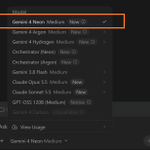
#Gemini4 #Neon, kodlamada beklenmedik bir atılım ile #ArtificialAnalysis ölçümlemelerinde bütün modelleri geçerek birinciliğe yerleşti 🍀✨

68

Google continues to accelerate its release cadence with Gemini 4 Neon, delivering a small Intelligence gain over Gemini 4 Carbon at a ~17% lower Cost per Task
@GoogleDeepMind has released Gemini 4 Neon, its fourth model in just seven weeks. Neon (xhigh) scores 61 on the Artificial Analysis Intelligence Index, 1 point ahead of Gemini 4 Carbon (high) and 3rd overall, behind GPT-6.2 Astra (max) and Claude Fable 5.2 (max). At high effort, Neon matches Carbon (high) at less than half the Cost per Task using Carbon’s standard (non-discounted) pricing.
Key takeaways:
➤ Slight improvement in Intelligence for lower Cost and Time per Task: Neon (xhigh) scores 61 on the Intelligence Index, 1 point ahead of Carbon (high), with small improvements in agentic knowledge work, visual reasoning and coding. It costs $6.44 per task, ~17% less than Carbon ($7.76 at non-discounted pricing), and takes ~21 minutes per task, ~40% less than Carbon (~36 minutes). Neon uses ~15% more output tokens per task, so the lower cost comes purely from its 25% lower token prices ($3/$15 vs $4/$20 per 1M input/output tokens), and the lower time from its higher output speed (~110 vs ~57 output tokens per second)
➤ Competitive with Claude Opus 5.5 and Claude Fable 5.2 on coding agents: With Antigravity CLI, Neon (xhigh) scores 59 on the Artificial Analysis Coding Agent Index, 3 points ahead of Carbon (high, 55). It scores in line with Claude Code with Claude Fable 5.2 (xhigh, 58) and Claude Opus 5.5 (max, 58) at a much lower Cost per Task. Gemini 4 Neon in Antigravity has an average Cost per Task of $6.86, compared to $12.61 for Claude Opus 5.5 (max) and $15.47 for Claude Fable 5.2 (xhigh). Neon is available in Antigravity CLI for Pro and Ultra subscribers
➤ Significant improvements in visual reasoning and output presentation quality: In GDP.pdf, Gemini 4 Neon (high) scores 33.4%, 5 points above Carbon (high, 28.4%) and in line with the highest scores measured, while Neon (xhigh) scores 28.0%. On AA-Briefcase, Neon (xhigh) scores 1700 Elo overall and leads on Presentation Quality with 1771 Elo, 45 points ahead of the previous leader Claude Sonnet 5.5 (max, 1726). On Google’s Multimodal Knowledge Agent evaluation (MKA), Neon reaches a Climb WSR of 56%, up 2 points from Carbon and on par with the leader, Claude Fable 5.2 (max, 57%)
Key model details:
➤ Context Window: 1M tokens
➤ Multimodality: Text, image, video, and speech input, with text output
➤ Availability: Gemini 4 Neon is publicly available at launch through Google’s API. Pro and Ultra subscribers can also access it in Antigravity and the Gemini app
➤ Effort levels: Gemini 4 Neon offers four effort levels (low, medium, high, and xhigh) - xhigh was introduced to Gemini models in the recent Hydrogen release
➤ Pricing: $3/$15 per 1M input/output tokens, 50% above Gemini 4 Carbon’s currently discounted price of $2/$10 (which ends on November 30), and 25% below its standard $4/$20. Cached input tokens receive the same 95% discount ($0.15)

41
✨ #Gemini4 #Neon modeli #Antigravity üzerinde de kullanıma açıldı
✅ Gemini 4 Neon (gemini-4-neon), Google'ın 18 Kasım 2026 tarihinde duyurup genel kullanıma açtığı, karmaşık #yazılımMühendisliği, #bilgiİşleme, #bilim ve #siberGüvenlik görevleri için tasarlanmış yeni nesil yapay zeka modelidir.
✅ Gemini 4 ailesinde amiral gemisi #Carbon ile hız odaklı #Hydrogen arasında konumlanan model, hız ve maliyet verimliliğini üst düzey akıl yürütme kapasitesiyle birleştirir.
✨Öne Çıkan Kullanım Alanları
✅ Karmaşık Kodlama ve Ajan İş Akışları: Üretim seviyesinde kod yazımı, hata ayıklama ve otonom ajan (agent) görevlerinin baştan sona yürütülmesinde yüksek performans verir.
✅ Siber Güvenlik Savunması: Kod açıklarını bulma (SEC-bench Pro'da %90,5 başarı) ve güvenlik yamaları üretme (CWE-bench v2'de %70,7 başarı) testlerinde sınır ötesi sonuçlar elde etmiştir.
✅ Bilgi İşi ve Analiz: E-tablolar, PDF dosyaları ve görselleri yüksek doğrulukla okuyarak yapılandırılmış raporlara ve özetlere dönüştürür.

90
#OpenAI tarafından paylaşılan yeni #LLM modeller #GPT-6.2 #Astra ve #GPT-6.2 #Sol, #ArtificialAnalysis ölçümlemelerinde ilk 5'de yer buldu
OpenAI’s release of GPT-6.2 Astra and GPT-6.2 Sol delivers the #2 model in the Artificial Analysis Intelligence Index and most of the Cost per Task Pareto frontier
@OpenAI's GPT-6.2 Astra is priced at $8/$40, 20% below GPT-6 Astra, and cached input drops to $0.40 from $1.00 per million tokens. GPT-6.2 Sol pricing is unchanged from GPT-6.1 Sol, at $2/$10 per million input/output tokens.
Key takeaways:
➤ Second in Intelligence Index: OpenAI now trails only Anthropic’s Claude Fable 5.2 in the Artificial Analysis Intelligence Index. GPT-6.2 Astra jumps 5 points from GPT-6 Astra, overtaking Gemini 4 Carbon (60) and Claude Opus 5.5 (59) at their top effort settings. GPT-6.2 Sol gains 2 points at 57, placing it on par with GPT-6 Astra at ~15% of the Cost per Task.
➤ Occupies most of cost and output token frontiers: OpenAI models now occupy most of the Cost per Task Pareto frontier, sharing the frontier with only Anthropic and Meta. OpenAI also dominates the Output Token per Task Pareto Frontier, with Claude Fable 5.2 being the only model from a non-OpenAI lab appearing on the frontier.
➤ Strengths in science and knowledge: OpenAI performs strongly in both of our key science-focused evaluations, leading Terminal-Bench-Science 0.1, covering agentic scientific research workflows, and placing second only to Claude Fable 5.2 in CritPt v2 (hard subset), covering physics reasoning. GPT-6.2 Astra performs below only Claude Fable 5.2 in factual knowledge as measured by AA-Omniscience v1.1 Accuracy, and in HLE-Diamond, a reasoning and knowledge benchmark.
➤ Leading in 3D and robotics: GPT-6.2 Astra leads AA-3D at 1318, with Claude Fable 5.2 at 1271 and GPT-6.2 Sol at 1259. This benchmark measures how well models build interactive 3D experiences, and is rated by human graders. GPT-6.2 also leads AA-Robotics v0.1, our research preview measuring how well language models can understand, plan, and act in the real world. GPT-6.2 Astra and GPT-6.2 Sol scored 79 and 78 respectively, ahead of Claude Fable 5.2 at 75. Our team is hard at work adding more difficult tasks, as OpenAI and Anthropic models can now perform the majority of basic tasks in this initial research preview.
➤ No improvement in Coding Agent Index: GPT-6.2 Astra is flat with GPT-6 Astra, and GPT-6.2 Sol loses 3 points relative to GPT-6.1 Sol in the Artificial Analysis Coding Agent Index (Codex harness at max effort). For Sol, the drop is driven by a 14-point drop in SWE-Atlas-QnA-AA, where the model is more likely than its predecessor to omit key facts in its responses. Cost efficiency however does place several effort levels of GPT-6.2 Astra and Sol on the Pareto frontier for Cost per Task.

✨ *Microsoft, kapsamlı model ve altyapı güncellemelerini açıkladı”
✅ Microsoft, San Francisco'da düzenlenen “Microsoft Ignite 2026” açılış oturumunda kurumsal yapay zeka yığınındaki kapsamlı model ve altyapı güncellemelerini resmen açıkladı.
✅ Şirket; otonom yazılım geliştirme için amiral gemisi Code 2 ve Code 2 Flash kodlama modellerini, siber savunma ve tehdit tespiti için Cyber 2 Flash(Microsoft Perception ile entegre) modelini, ayrıca düşük maliyetli ve yüksek hızlı karar alma süreçleri için çok modlu destek kazanan Microsoft-Decision-1.1modelini genel kullanıma (GA) açtı.
✅ Bunun yanı sıra kurumsal organizasyonlardaki milyonlarca otonom ajanın kimlik, güvenlik, yönetişim ve maliyet (FinOps) denetimini tek merkezden yöneten Agent 365 kontrol düzlemi ile Microsoft IQ bilgi platformu da tanıtıldı.
➡️ blogs.microsoft.com/blog/202…
#Code2 #Code2Flash #Cyber2Flash #Decision11 #ignite2026

2
129
✨ #Google, araştırmaları #etkileşimli içeriğe dönüştüren yeni #Gemini #Notebook özelliğini kullanıma sundu

32
✨ #OpenAI, Bilimsel Araştırmalara Özel Platformunu ("OpenAI #ScienceBlog") Duyurdu ve İlk Bulgusunu Yayımladı
✅ OpenAI, yapay zekanın #matematik, #fizik ve deneysel bilimlerdeki #hipotez geliştirme ile #teorem ispatlama süreçlerine katkısını belgelemek üzere resmî OpenAI Science Blog platformunu başlattığını duyurdu.
✅ Platformun ilk yayını kapsamında GPT-6 Astra modelinin yardımıyla parçacık fiziğindeki Standart Model'in kafes (lattice) üzerinde pertürbatif olmayan (nonperturbative) tanımına yönelik yeni bir matematiksel kurgu ve kanıt adımı paylaşıldı.
✅ Çalışma, zayıf kuvvet parçacıklarının kafes formülasyonlarında ortaya çıkan "çiftlenme" (doubling) sorununu aşmaya yönelik model destekli ispat yöntemlerini ortaya koyuyor.
➡️ openai.com/index/our-new-blo…

56
✨ #Alibaba tarafından erişime açılan #Qwen4 Max, #ArtificialAnalysis ölçümlemelerinde #Qwen3.8 Max modelinin 9 puan ve 5 sıra önüne geçti
Alibaba has launched Qwen4 Max, gaining 9 points over Qwen3.8 Max on the Artificial Analysis Intelligence Index and landing 3 points behind Kimi K3.1 Pro at ~11% lower Cost per Task
Qwen4 Max, using xhigh reasoning effort, scores 43 on the Intelligence Index, 9 points ahead of Qwen3.8 Max (xhigh) and 3 points behind Kimi K3.1 Pro (max, 46)
Key takeaways:
➤ Qwen4 Max improves on every evaluation in the Index vs Qwen3.8 Max (xhigh, 34): HLE-Diamond +21 points (24% to 45%), AA-Omniscience +18 points, AutomationBench-AA +17 points, CritPt v2 +13 points, Terminal-Bench-Science +11 points, Terminal-Bench 4.0 +9 points, GDP.pdf +3 points, FrontierCode 2.0 +3 points and AA-Briefcase +82 Elo.
➤ Qwen4 Max costs $3.27 per Intelligence Index task, ~3x less than Qwen3.8 Max ($10.02) and ~11% less than Kimi K3.1 Pro ($3.68): This is driven by 25% lower per-token pricing than Qwen3.8 Max, 70% cheaper cache hits and lower token usage. Tencent Hy4 costs ~3x less per task ($1.03) than Qwen4 Max but scores 8 points lower on the Index.
➤ Qwen4 Max uses 39% fewer output tokens per task than Qwen3.8 Max: ~105k output tokens per Intelligence Index task vs ~171k for Qwen3.8 Max, ~72k for Kimi K3.1 Pro and ~78k for Tencent Hy4. Qwen4 Max uses fewer tokens, while increasing 9 points on the Intelligence Index
➤ Improvements in AA-Briefcase (knowledge work): On AA-Briefcase, our evaluation of agentic work across real business files, Qwen4 Max reaches 1686 Elo vs 1674 for Kimi K3.1 Pro and 1446 for Tencent Hy4.
➤ Qwen4 Max trails Kimi K3.1 Pro on Terminal-Bench 4.0 and Tencent Hy4 on FrontierCode 2.0: Qwen4 Max scores 48% on Terminal-Bench 4.0 vs 67% for Kimi K3.1 Pro and 37% for Tencent Hy4. On FrontierCode 2.0, @cognition’s private evaluation of real-world coding tasks, it scores 26%, level with Kimi K3.1 Pro (26%) and behind Tencent Hy4 (31%).
Key model details:
➤ Context window: 1M tokens
➤ Multimodal: Text and image input with text output
➤ Pricing: $1.50/$4.50 per 1M input/output tokens on Alibaba's first-party APIs, with a $0.075 cache hit price. This is lower than Qwen3.8 Max across the board ($2.00/$6.00, with a $0.25 cache hit price)
➤ Availability: @Alibaba_Qwen 's first-party APIs

1
63
✨Dün erişime açılan #Gemini #Hydrojen, #Sonnet'in maliyetinin 3'te biri maliyetle hizmet vermeye başladı ve #ArtificialAnalysis ölçümlemelerinde yerini aldı
Google's new Gemini 4 Hydrogen has Intelligence just below Claude Sonnet 5.5 and GPT-6.1 Sol, at a third of Sonnet’s cost but ~2.5x that of GPT-6.1 Sol
@GoogleDeepMind has released their third new model in six weeks. Gemini 4 Hydrogen introduces an xhigh reasoning level and scores 54 on the Artificial Analysis Intelligence Index, with strengths in visual reasoning and non-hallucination. This places it 1 point behind Claude Sonnet 5.5 (max) and GPT-6.1 Sol (max), at ~32% of Sonnet’s cost but ~2.5x that of GPT-6.1 Sol. With high reasoning, Gemini 4 Hydrogen matches the Intelligence of Gemini 4 Argon for ~19% of the Cost per Task
Key takeaways:
➤ The new xhigh reasoning level scores 54 on the Intelligence Index: xhigh is the first reasoning level above high on a Gemini model, and puts Hydrogen 1 point below Claude Sonnet 5.5 (max) and GPT-6.1 Sol (max), and 4 points ahead of Gemini 4 Argon (high). With default (high) reasoning, Gemini 4 Hydrogen scores 51, just behind GPT-6.1 Sol (xhigh, 52) and Claude Opus 5.5 (high, 52)
➤ Strong visual reasoning, presentation and non-hallucination: On GDP.pdf, a visual reasoning benchmark over long documents, it scores 33% all-pass on medium reasoning, the tied #1 score on the benchmark. On AA-Omniscience, Hydrogen has one of the lowest hallucination rates recorded at 8%, compared with 43% for Claude Sonnet 5.5 (max) and 52% for GPT-6.1 Sol (max). On AA-Briefcase, our agentic knowledge work evaluation, graders rate Hydrogen's presentation above other Gemini models, including Carbon
➤ Weaker on agentic terminal work: Hydrogen scores 54% on Terminal-Bench 4.0 and 50% on Terminal-Bench-Science 0.1, covering agentic coding and scientific research workflows in the terminal. Claude Sonnet 5.5 (max) scores 64% and 53%, and GPT-6.1 Sol (max) scores 56% and 58%. xhigh reasoning helps on the science tasks, lifting Terminal-Bench-Science from 41% at high to 50%, but makes no difference on Terminal-Bench 4.0 (54% at both). Science scores are even across domains, from 46% in earth sciences to 53% in physical sciences
➤ Low cost for its intelligence, with high token use at xhigh: Hydrogen is priced at $1.50/$7.50 per million input/output tokens. At xhigh it costs ~32% as much per task as Claude Sonnet 5.5 (max) for near-equal intelligence, but ~2.5x as much as GPT-6.1 Sol (max). xhigh nearly doubles output tokens compared with high for a 3 point gain in Intelligence, and Cost per Task falls from $3.16 at xhigh to $1.87 at high. Medium ($0.80) and low ($0.29) cost less again, but score 41 and 27 on the Intelligence Index
➤ On the Time per Task vs. Intelligence Pareto frontier: Gemini 4 Hydrogen has an output speed of ~200 output tokens per second. With high, medium, and low reasoning effort, Gemini 4 Hydrogen is on the Time per Task vs. Intelligence Pareto frontier, meaning no models are both more intelligent and have a lower Time per Task
Key model details:
➤ Context Window: 1M tokens
➤ Multimodality: Text, image, video, and speech input, with text output
➤ Reasoning efforts: Gemini 4 Hydrogen offers four reasoning levels (low, medium, high, and xhigh) with xhigh new in this release
➤ Pricing: $1.50/$7.50 per 1M input/output tokens. Cached input tokens receive a 95% discount ($0.075)
Congratulations to the @GoogleDeepMind team on the launch!

1
49
#Anthropic'in en yeni modeli #Fable5.2 çıkar çıkmaz #ArtificialAnalysis ölçümlemelerinde birinci sıraya yerleşti
Anthropic has released Claude Fable 5.2, taking the #1 spot on the Artificial Analysis Intelligence Index v5 at 65, led by gains in science, knowledge, and coding
At max effort it scores 65, 5 points ahead of Gemini 4 Carbon (high, 60) and 6 ahead of Claude Opus 5.5 (max, 59). Gains are driven by scientific reasoning, knowledge and FrontierCode 2.0, and roughly matching Opus 5.5 on AA-Briefcase and Terminal-Bench 4.0.
Priced at $8/$40 per 1M input/output tokens, a 20% reduction from Fable 5.1, Claude Fable 5.2 averages a Cost per Task of $26.5 with max effort, a ~2.6x increase compared to Opus 5.5 (max, $10.0) and ~2x compared to Fable 5.1 (max, $12.99)
Key takeaways:
➤ Claude Fable 5.2 leads 5 of the 9 evaluations in the Intelligence Index: At max effort, Fable 5.2 scores 65, ahead of Gemini 4 Carbon (high, 60), Claude Opus 5.5 (max, 59) and GPT-6 Astra (max, 57), and ~15 points above Claude Fable 5.1 (max, 49). It sets the highest scores on HLE-Diamond (80%, previous best 69% from Gemini 4 Carbon), AA-Omniscience v1.1 (67, previous best 54 from Gemini 4 Carbon), Terminal-Bench-Science (73%, previous best 65% from Gemini 4 Carbon), CritPt v2 hard subset (77%, previous best 72% from GPT-6 Astra) and FrontierCode 2.0 (49%, previous best 46% from Claude Opus 5.5)
➤ Less progress in agentic knowledge work and terminal coding: Claude Fable 5.2 improves on Fable 5.1 across capabilities, but sometimes only to Opus 5.5 levels. It reaches 1785 Elo on AA-Briefcase, within the confidence interval of Opus 5.5 (1800) and just behind Claude Sonnet 5.5 (1813). On GDP.pdf it reaches 24% all-pass against 26% for Opus 5.5. On Terminal-Bench 4.0 it scores 60%, level with Opus 5.5 and behind Kimi K3.1 Pro (67%), Gemini 4 Carbon (65%) and Sonnet 5.5 (64%). AutomationBench-AA is an exception, at 76% against 70% for Opus 5.5, narrowly behind Gemini 4 Carbon, 78%
➤ Lower efforts still take leading positions: With high and xhigh effort, Claude Fable 5.2 scores 62, ahead of every other model at any effort, using 98k output tokens per task against 173k for Opus 5.5 (max). At max effort Fable 5.2 costs ~2.6x more than Opus 5.5, but at lower effort settings it can outperform Opus 5.5 at lower cost per task
Other model details:
➤ Context window: 1 million tokens with image and text input
➤ Pricing: $8/$40 per 1M input/output tokens; cache writes $10 with 5-minute TTL, $16 with 1-hour TTL, and cache reads $0.20
➤ Effort settings: five (low, medium, high, xhigh, max). Intelligence Index evaluations were run at all five with Anthropic's default fallback enabled
Congratulations to @AnthropicAI on this impressive release!

1
98
✨ #Anthropic - Bağımsız Denetçi Raporu: Model Geliştirme Hızı İki Katına Çıktı
✅ Anthropic'in sınır modellerine bağımsız iç erişim hakkı bulunan araştırma kuruluşu (#METR ve bağımsız denetçiler), şirketin model geliştirme ve otonom araştırma hızına dair güncel güvenlik raporunu paylaştı.
✅ Rapora göre #Claude tabanlı araştırma ajanlarının şirket içi model mimarisi iyileştirmelerinde ve biyolojik deney analizlerinde kullanılması, geliştirme döngü hızını Ekim 2025’e kıyasla yaklaşık 1.9 katına çıkardı ve ve bu ivmenin % 80'inin yapay zekânın kendi gelişimine katkısından kaynaklandığını açıklandı
✅ Bununla birlikte denetçiler, güvenlik protokolleri gereğince halka açık raporda yer alan bazı otonom yayılım ve yetenek kanıtlarının regülasyonlar nedeniyle sansürlü (redacted) olarak sunulduğunu açıkladı.

1
52
✨ #OpenAI — "#GPT-6 #Cyber" Güvenlik Modelini Yayımladı ve #Linux Çekirdeğinde 948 #Zafiyet Bildirdi
✅ OpenAI, siber savunma ve zafiyet analizi için özel olarak eğitilmiş yeni sınır modeli GPT-6 Cyber'ı resmi olarak duyurdu.
✅ Modelin test sürecinde otonom tarama yetenekleriyle açık kaynak kod tabanları analiz edildi ve Linux çekirdeği ile çekirdek alt sistemlerinde 948 adet güvenlik açığı tespit edildi.
✅ OpenAI, sorumlu açıklama (responsible disclosure) ilkeleri kapsamında yazılım geliştiricileriyle doğrudan temasa geçildiğini ve araştırmanın yayımlandığı tarih itibarıyla bu açıklardan 61'inin upstream seviyesinde yamalandığını bildirdi.
✅ Model, güvenlik sınırlarını ve izin verilen yetki alanlarını aşmama testlerinde yüksek kontrol uyumu sergiledi.
➡️openai.com/index/introducing…

1
2
117