

gpu scheduler @genreasoning ml @cambridge_uni. cs @iiit_hyderabad. futurebound.
london
Joined June 2023
- Tweets1.2K
- Following870
- Followers3.4K
- Likes2.9K

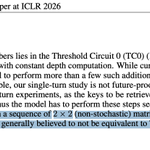





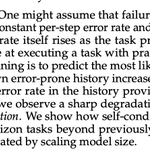

i really find the use of emergent funny at this point.
afaik this could be a pretty common training task because people have been trying to edit weights directly for a while
not every “new” capability is “emergent” 😭


just goes to show people have ~0 idea what frontier LLMs are trained on. it’s some pretty whacky stuff i can say that
3
190
Akshit retweeted

Some good insights here.
(Most of the stuff you see on X is handcrafted harnesses; we cover here a more important problem which is how to *train* agents to co-ordinate)

🐝 How to Train a Swarm
In our first blog post, we explain how latency pressure can incentivise parallel work, the communication primitives agents need to co-ordinate, and outstanding challenges in training large agent collectives.
gr.inc/blog/how-to-train-a-s…

🐝🐝🐝
🐝 How to Train a Swarm
In our first blog post, we explain how latency pressure can incentivise parallel work, the communication primitives agents need to co-ordinate, and outstanding challenges in training large agent collectives.
gr.inc/blog/how-to-train-a-s…
24
1,399
Akshit retweeted
Excited to share first glimpses of our research on agent collectives, a year in the making.
I’ve been thinking about parallel reasoning for some time since I was at Meta. Why automate researchers when we should be automating communities? Genius is great, but scenius matters too.
We’re sharing a recipe today (RLCR) that is producing interesting results for us at a small scale. We’re using it to train our Avalon-M1 series of models, starting with a small 120B model.
Usual caveats apply. We are a small team (8 people!), we are conducting more experiments and ablations as we speak, and we’re still training and seeing gains.
Let us know your feedback. My summary of findings in thread below. 🧵
Introducing Reinforcement Learning from Collective Rewards (RLCR).
RLCR is a recipe that trains language models as agent organisations, which share a message board and workspace. We use it to train Avalon-M1-Mini (120B) and study its behaviour.
We find a number of interesting results, including:
🛠️ Learnt organisational hierarchies and divisions of labour
🕵️ Increased collective verification, through hires of verifiers and testers
👥 The rise of collective thinking, where agents think more about other agents and how to help them
We believe RLCR can provide a laboratory for studying collective intelligence and multi-agent safety.
Blog post and technical report 👇
we had an amazing time building Avalon! agent orgs have been in the news for quite a while, so i’m super proud to share a scientific look into them starting at training time! we have interesting results for everyone, and we hope to share more in the coming months!

Introducing Reinforcement Learning from Collective Rewards (RLCR).
RLCR is a recipe that trains language models as agent organisations, which share a message board and workspace. We use it to train Avalon-M1-Mini (120B) and study its behaviour.
We find a number of interesting results, including:
🛠️ Learnt organisational hierarchies and divisions of labour
🕵️ Increased collective verification, through hires of verifiers and testers
👥 The rise of collective thinking, where agents think more about other agents and how to help them
We believe RLCR can provide a laboratory for studying collective intelligence and multi-agent safety.
Blog post and technical report 👇
Akshit retweeted

Introducing Reinforcement Learning from Collective Rewards (RLCR).
RLCR is a recipe that trains language models as agent organisations, which share a message board and workspace. We use it to train Avalon-M1-Mini (120B) and study its behaviour.
We find a number of interesting results, including:
🛠️ Learnt organisational hierarchies and divisions of labour
🕵️ Increased collective verification, through hires of verifiers and testers
👥 The rise of collective thinking, where agents think more about other agents and how to help them
We believe RLCR can provide a laboratory for studying collective intelligence and multi-agent safety.
Blog post and technical report 👇
happy to see this paper is still on peoples minds one year later! a lot of academic work doesnt survive this long really proud of this work haha

This paper shows why I am skeptical of the idea that frontier models can be easily replaced by cheaper ones (and why you should use the best models as orchestrators): Small improvements in accuracy & judgement compound over long-horizon tasks, creating huge gains in outcomes.


13
964
i often wonder how much of long horizon performance is now just an engineering problem as opposed to research
models are clearly super capable now, only thing limiting them is their working capacity (context) and we can probably engineer are way around it pretty well (compaction etc)
a base recipe for scaling multi-agent swarms is prolly all thats left
(this is not to say that is bad, engineering problems are sometimes more fun than research :P)

Autoresearch with coding agents can now run for days on a single problem, but we've seen an increasing number of cases where they stop improving early. We address this issue with a simple idea: forgetting.
Introducing our new paper: "Scaling Discovery Requires Forgetting"

4
12
917
this is something i’ve seen so much btw- env/eval creators just leave very basic ways for the model to cheat,,, and never look at the data,,,
ive spent the last 4 days fixing really easy hacks present in ProgramBench which to my knowledge have never been talked about, like, reaaaly easy hacks and it’s really frustrating

Xiaomi open-sourced the RL environments behind MiMo v2.6. In two-thirds of the coding tasks, the answer is still in the task's Git history, and MiMo finds it.

2
27
1,885
AI has been a transformational technology, but people still focus more on the capabilities of AI or its economic impact in place of the one thing that should be the most important: improving our lives as humans.
checkout this amazing effort by Shashwat to start to document how AI has been transformational and creating a lasting impact on the lives of people (and contribute!)
i like thinking about AI in this way, helps me sleep at night while the doomer calls grow louder

I made lasteval.com. The premise is simple: AI is already improving lives, and we should have a page that collects these wins.
We only talk about how "intelligent" the models are, what jobs they might automate, the trillions being invested, who will "win" the AI race, and the safety risks. All these things naturally worry people, and make them averse to AI. I think we're missing the point.
The goal of technology should be to improve people's lives. AGI, ASI, RSI are all just in-group goals, that aren't obviously beneficial on their own. Speculative promises shouldn't be all we have to offer. Imagine releasing a new model and saying "it will score 99% on these benchmarks one day" instead of reporting what it already does today.
I've spent the last few weekends reading about AI systems, both generative and predictive, that are already making a large positive impact on the world. It gives me hope, and I made this page so it does the same for others. Some examples in 🧵
Ultimately, the final, and only evaluation for AI that matters is whether it improved lives. The models are already so good, and yet the world is not that different. I think it's important to change that, and this is my attempt to paint the target.
There's no way the list is complete, so if you think an AI system has had a large positive impact, do share it through the submit page!

12
679
when people talk about AGI, they often mention it being able to recreate discoveries on the same lvl as general relativity
this makes me wonder, what do people think is perhaps some of the greatest mathematical/physics discoveries/inventions of all time?
for me it’s 100% the discovery/invention of complex numbers. it’s hard to grasp how far reaching its influence has been in almost every part of science and engineering. and to think all of this started with the most basic of questions. so elegant
2
13
964
Akshit retweeted

One thing I found missing from the ICLR submissions debate: Capping submission per author would have only very modestly reduced the load in prior years.
Even under the elimination by submission order (which is unrealistically strict), going down to 3 per author would not change the trend by a lot. More realistic modes (such as minimizing removals) would remove even fewer papers. And, in reality, changes in authorship patterns will likely reduce further invalidate gains from capping.
I think as people who have been in the field for a while, we tend to underestimate just how much the number of unique authors grows every year, as AI/ML consumes all of our CS department students, our math, physics and econ departments, and an evergrowing number of industry positions and independent researchers


so sad to see takes like this. the philosophy/literature/politics/ethics classes i took at IIIT were some of the most important and interesting courses available.
it taught me to question and challenge authority and standards, and not just accept something because “someone older/smarter” decided it works.
most people who i consider really smart have take philosophy/psych courses alongside CS, which can really be seen in how they think and approach problems.
without such courses, all we are doing is training kids to be like robots and follow instructions as they are given, which most of the engineering institutes in this country already do.
i wonder if people in authority don’t like it because it leads to students asking questions that they are uncomfortable answering, and demanding changes they are too afraid/lazy to make?

great news for people running forecasting evals, now we can give the model internet access without leakage 😁
This quoted post is unavailable.
1
19
1,564

