

Economista / Editorial team @heterodoxnews / Sturm und Drang / De omnibus dubitandum est
Joined November 2009
- Tweets20.4K
- Following4K
- Followers967
- Likes27.3K




Alam retweeted

Linkedin é uma rede social que vc entra, tem 48 notificações e NADA é pra você.
kkkkkkkk que rede bosta
Alam retweeted
1/3
Good New York Magazine article on Perry Mehrling and his importance to economics (even if most mainstream economists still disagree). For me, Mehrling was Hyman Minsky's most important disciple.
nymag.com/intelligencer/arti…

Alam retweeted

Few economists can claim finance bros and young socialists as fans. I wrote about how the late Perry Mehrling pulled it off (with thoughts from @adam_tooze, @NathanTankus, @TheStalwart, and more) nymag.com/intelligencer/arti…


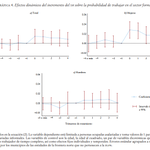
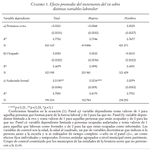
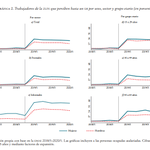
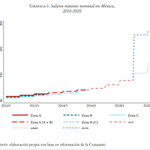
¿Qué pasa cuando duplicas el salario mínimo de golpe? 🇲🇽📈 Un estudio de Alvarado, Orraca y @fcabrerahz (2023) en @ElTrimestreEcon analiza el experimento natural de 2019 en la Frontera Norte de México y sus efectos en empleo, formalidad y brecha de género. 🧵👇

EzDeke Carlos, aumentar el salario no destruye empleos…
.
Los empresarios que son quienes crean los empleos, tienen otros datos
.
Todo mundo quiere ganar 100,000 pesos al mes preparando pizzas, pero no se puede
.
#SorryLosEngañan 🤷🏻♂️
.

El artículo completo en acceso abierto en @ElTrimestreEcon aquí 👇
Alvarado Pérez, R. ., Orraca Romano, P. P., & Cabrera-Hernández, F. (2023). El efecto de duplicar el salario mínimo en la brecha de género en empleo y salarios en México.
eltrimestreeconomico.com.mx/…

Alam retweeted

I attended the international summit against oligarchy, organized by Gabriel Zucman. Some reactions.
It is clear that the new oligarchs pose a danger to democracy. I believe this is how the fight against them should be framed: as a fight for democracy. Not as vengeance, or punishment.
The main issue is not their wealth, but their political power. A 2% "Zucman tax" (or even a 50% "Piketty tax," for that matter) will not diminish their power.
While taxation is an essential tool, it is by no means sufficient on its own.
Reforming campaign finance, shifting the governance of newspapers to favor journalists, and exercising much tighter control over social media algorithms are all essential steps.
Alam retweeted

This is a poor article and does the @jacobin's political project no favors. I write this as someone who self-defines more as a Keynesian than a New Keynesian, in the sense that issues of multiple equilibria/indeterminacy, incomplete markets are more central to my thinking than price stickiness (at least as conventionally modelled).
First, the critique fails on its own terms: unoriginal in some respects, obsolete or incomplete in others.
-There is not a single argument here advanced on criticisms that appeared circa 2010. (To be fair the authors cite the excellent paper by Ricardo Caballero.)
-The critiques do not reflect the current New Keynesian program. One would have no idea that Heterogeneous New Keynesian models have emerged, a near revolution in macroeconomic methodology, which makes the complaints about representative agent models obsolete. Less progress has been made on enriching the role of banks and the financial sector, but advances have been made.
-Finally, one of the most important criticisms of New Keynesian model is omitted: the indeterminacy approach
Roger Farmer @farmerrf, "The Indeterminacy School in Macroeconomics," NBER Working Paper, 2019
This type of work challenges new Keynesian models using the logic of intertemporal decision making, so does not meet the agenda of the article's authors.
Second, the criticisms are in, important cases, incorrect. To claim that
"The contributions of Hall and Woodford and the New Neoclassical Synthesis more generally provided no theoretical foundation for macroeconomic stabilization."
ignores how New Keynesian arguments mattered in understanding zero lower bounds, forward guidance. The peremptory pronouncement of course ignores insights of the model in the decades preceding the Financial crisis.
The discussion of Hall's work on consumption is, to my eyes, bizarre. Leaving the fact that Hall himself demonstrated limitations to his original 1978 paper, consumption analysis has evolved to account for heterogeneity, borrowing constraints, etc. This evolution represents a success of the New Keynesian research program.
Third, the article misstates the purported value of pluralist/heterodox approaches. I have long argued for the value of complex systems methods in enriching economic theory, and am nevertheless comfortable in saying that 30 years of work have failed to demonstrate much value for the approaches in understanding macroeconomics. As for agent-based models,
Robert Axtell and J. Doyne Farmer , "Agent-Based Modeling in Economics and Finance: Past, Present, and Future, Journal of Economic Literature 2025
reviews the work, and demonstrates how little has been produced. Individual papers may be interesting, but the idea that complexity or agent-based models have demonstrated theoretical or empirical relative to mainstream macroeconomics. The Axtell-Farmer literature synthesis is filled with mainstream economists who have explored complexity/ABM methods. It is simply false that the economics discipline has refused to consider them.
As it happens, this article nearly coincides with the publication of
Greg Kaplan @GregWKaplan, Macro: The Economic Models that Shaped Our World
which I just finished reading and strongly recommend, if one wants to understand the actual state of the New Keynesian model.

Economists Michael Woodford and Robert Hall were awarded the Nobel Prize for the rigor of their models.
The only problem is, their proposed tools have proven useless in formulating the economic policy interventions needed to avert depression. jacobin.com/2026/11/hall-woo…


