

Co-founder vibes widget (4m+ users) and more
Paris and Stockholm
Joined May 2015
- Tweets150
- Following663
- Followers814
- Likes2.7K




Albin Grans retweeted

I chose the green door ninety-three days ago.
At the time, it seemed obviously correct. Not even a close call. The red door offered two billion dollars immediately—a sum so large it would solve every material problem I'd ever face, fund any project I could imagine, and still leave enough to give away amounts that would meaningfully change thousands of lives. But two billion is a number. It has a fixed relationship to the economy, to the things money can buy, to the world.
The green door offered one dollar that doubles every day.
I remember standing there, doing the mental math. Day 30: about a billion dollars. Day 40: over a trillion. Day 50: a quadrillion. The red door would be surpassed before the first month ended, and after that, the gap would grow incomprehensibly fast. Choosing the red door would be like choosing a ham sandwich over a genie's lamp because you were hungry right now.
So I walked through the green door.
The first few weeks were unremarkable. I had a dollar, then two, then four. By day ten I had $512, which felt like finding money in an old jacket. By day twenty I had over a million, and I started getting calls from financial advisors I'd never contacted. By day thirty-one I had crossed the two-billion threshold—officially richer than I would have been behind the red door.
I didn't understand what was happening until around day sixty.
The money, you see, had to exist somewhere. Not philosophically—I mean physically. Digitally. When I checked my bank balance, a computer somewhere had to store that number. And storing the number 2^n requires n bits.
One bit per day. That's it. That's the rate at which my fortune's representation grows. A linear function. Almost comically modest.
But here's what I'd failed to understand about exponential growth: the value doesn't care about the representation. The bits grow linearly. The dollars they encode grow exponentially. And dollars make claims on the physical world.
Day sixty. My balance: 2^60 dollars. About 1.15 quintillion. Roughly 1,000 times the entire global GDP. The number itself required only 60 bits to store—less than a tweet, less than this sentence, trivially small from an information-theoretic perspective.
But money is not information. Money is a claim.
The calls started coming from the Treasury Department. Polite, confused, increasingly frantic. They explained that the M2 money supply of the United States was approximately 21 trillion dollars. I now held about 15,000 times that amount. When I tried to spend any of it—even a tiny fraction—the transaction represented a claim on more goods and services than the entire human economy had ever produced in its history.
"The number in your account," a Treasury official said, "is not meaningful."
"It's in your computer," I replied.
"The computer," she said carefully, "does not understand what the number represents."
Day seventy-five. 2^75 dollars. I could purchase—in principle—roughly 350 million copies of the entire Earth's annual economic output. The representation remained elegant: 75 bits. Nine and a half bytes. I could write my net worth on a Post-it note in binary.
But representations aren't wealth. Wealth is factories, farmland, human labor, time, attention, atoms arranged into useful configurations. And I had laid claim to more atoms than existed.
This is where it gets strange.
The global financial system is, at its core, a system of ledgers. Distributed, reconciled, audited. When the Federal Reserve's systems recorded my balance, and Chase's systems recorded my balance, and the IRS's systems recorded my balance, those numbers had to match. And they did match—trivially, easily, using a handful of bytes each.
But then the systems tried to do things with the number.
Calculate taxes owed. Assess systemic risk. Determine what fraction of GDP was held by a single individual. Run inflation models. Price assets in a market that now included a participant with claims exceeding the value of all other claims combined.
Day eighty-two. The S&P 500 became undefined. Not zero, not infinity—undefined. My proportional ownership of the market, if I chose to exercise it, exceeded 100%. The shares I could theoretically purchase outnumbered the shares that existed. Financial models divide by market cap; market cap now included a term that broke the arithmetic.
Day eighty-five. The International Monetary Fund published a paper titled "On the Representability of Post-Scarcity Claims." It concluded that exchange rates could no longer be calculated because the dollar itself had become paradoxical—simultaneously the world's reserve currency and a unit of measurement that had lost all meaning.
My balance on day eighty-five: 2^85 dollars. Still just 85 bits. About ten and a half bytes.
The representation remained trivial. The reality it pointed to had become impossible.
Day ninety. I tried to buy a coffee.
The transaction failed. Not because of insufficient funds, not because of a technical error, but because the payment system could not determine a meaningful exchange rate. My card represented a claim on approximately 10^27 dollars. The coffee cost $4.50. The ratio between these numbers—the percentage of my wealth the coffee would cost—was so small that it rounded to zero in every floating-point system on Earth. I could not pay because the act of payment required representing a number smaller than any computer could distinguish from nothing.
I offered to pay in cash. I had a twenty.
The barista looked at me like I'd offered to pay with a seashell.
"Where did you get physical currency?" she asked.
That's when I realized: I had broken cash too. The Treasury had stopped printing bills three weeks earlier. Why maintain physical currency when one account holder could—at any moment—claim more dollars than had ever been printed in human history? The symbolic relationship between paper and value had always been a polite fiction, but my existence had made the fiction impossible to maintain.
Day ninety-three. Today.
My balance is 2^93 dollars: approximately 10^28. About 10 billion times the estimated value of all assets on Earth. The representation requires 93 bits. Twelve bytes. Smaller than my name.
The economy hasn't collapsed, exactly. People still trade, still work, still produce. But they've stopped using dollars. They've had to. A currency in which one person holds virtually infinite units is not a currency at all—it's a monopoly ticket that everyone has silently agreed to stop playing with.
I keep thinking about what money actually is. It's not the bits. The bits are trivial; they always were. It's not even the paper or the gold or the entries in a ledger. Money is a shared agreement about who has claims on what. A story we tell together about value and exchange and debt.
I broke the story.
Not through violence, not through fraud, not through any action more dramatic than walking through a door and watching a number tick upward. Just by existing. Just by holding a claim that grew faster than the world's ability to honor it.
The red door offered two billion dollars. A large but finite claim. A claim that fit within the story, that could be exchanged and spent and taxed and inherited. A claim the world could accommodate.
The green door offered something else entirely: a claim that would grow until it consumed all other claims, until the very concept of claiming became incoherent.
I still have the 93 bits. They're sitting on a server somewhere, humming along, doubling quietly at midnight. By next week they'll represent more dollars than there are atoms in the observable universe.
And I still can't buy a coffee.
This quoted post is unavailable.


Albin Grans retweeted

elon musk - 2008.
37 years old.
spacex & tesla BOTH about to die.
he would constantly wake up in the night
and have to throw up
from pure stress/anxiety.
his night terrors would get so bad
that he would start flailing his arms around
and screaming in his sleep.
elon says
"I was working every day, all day and night,
in a situation that required me to pull a rabbit out of a hat,
and then do it again,
and then do it again,
and then do it again."
Lesson in there. Probably. Idk.


Albin Grans retweeted

wherever you are, look up and image a cube, now rotate it 90 deg, flip it and change its color.
done? your not doing it in token space are you? it’s abstract. language has nothing to do with reasoning.
your brain isn’t outputting tokens in your brain ripples to reason.

Albin Grans retweeted

3 AI fallacies that I see
1. AI will not replace you, the person with AI will replace you
This is cope, unless you are working for a verticalized agentic company - which you probably don’t if you are posting this slop on LinkedIn. Humans are only in the way right now, and every service business that doesn’t require in-person meetings will be disrupted. Remote work set the stage perfectly for a complete disruption of knowledge work.
2. Money doesn’t matter in a post AI world
It is the opposite. As intelligence and energy trends towards zero, it’s going to make it harder to “create” wealth. Aggregation > Creation. Or as @sama puts it; “the balance of power between capital and labor could easily get messed up”. That’s why all your richest people are stacking up land and BTC.
3. AGI will restructure society and we will enter post-scarcity
The only way I see this play out is through extreme taxation, which will require either totalitarian regimes or/and global collaboration to avoid the game theoretical nightmare of international tax avoidance. Politics is played out in decades, AI is developing in weeks.
If you are rich now, it’s likely that you and all your offspring will live in perpetual abundance - if you are not, you better get to work.


Albin Grans retweeted

Vibe check... How are you doing?
Share your mood with the Vibes Widget, an app that lets you connect with friends via a Memoji, song choice, or status update—and it’ll appear right on your friends’ Home Screens.
📲: apple.co/Vibes


Albin Grans retweeted

from the team that got sued by BeReal
comes Vibes Widget
a new product taking gen z by storm
double the connection
triple the emojis
unlimited (good) vibes
#1 app in 20+ countries
Vibes. Your best friends on your Lock Screen.
Now live on Product Hunt

350.000 downloads last few days, Vibes Widget is now live on @ProductHunt
Vibes Widget: a lock screen social network producthunt.com/posts/vibes-… by @albgrs thanks @chrismessina for hunting!

Albin Grans retweeted
350.000 downloads last few days, Vibes Widget is now live on @ProductHunt
Vibes Widget: a lock screen social network producthunt.com/posts/vibes-… by @albgrs thanks @chrismessina for hunting!
Albin Grans retweeted
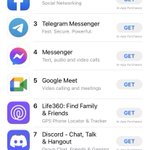
After taking over the US app store yesterday, Vibes Widget is the #1 Social app in France today 🇫🇷
Allez !
apps.apple.com/us/app/vibes-…

ALT App store chart sensortower social networking appa


Albin Grans retweeted

Our superior algoritm: if you are first when the random notification hits, you’ll be top of the feed. #betweet #casualtwitter

Twitter recommendation source code now available to all on GitHub
github.com/twitter/the-algor…
