Alejandro I. Pérez Cabeza (@alejandroipc2) header
Alejandro I. Pérez Cabeza (@alejandroipc2) profile picture

Cardiólogo. Subdirector médico @HUVV_SAS CIBERCV. Secretario SAC. Tutor residentes. Comisión Nacional Cardiología

Málaga, España
Joined June 2011
Photo by Alejandro I. Pérez Cabeza (@alejandroipc2)Photo by Alejandro I. Pérez Cabeza (@alejandroipc2)Photo by Alejandro I. Pérez Cabeza (@alejandroipc2)Photo by Alejandro I. Pérez Cabeza (@alejandroipc2)Photo by Alejandro I. Pérez Cabeza (@alejandroipc2)Photo by Alejandro I. Pérez Cabeza (@alejandroipc2)Photo by Alejandro I. Pérez Cabeza (@alejandroipc2)Photo by Alejandro I. Pérez Cabeza (@alejandroipc2)Photo by Alejandro I. Pérez Cabeza (@alejandroipc2)Photo by Alejandro I. Pérez Cabeza (@alejandroipc2)
Alejandro I. Pérez Cabeza retweeted
Here is a trial that needs to be repeated and finished ASAP
AF pt unsuitable for OAC? ASAP-TOO RCT of LAAC vs SAPT/no antithrombotic was underpowered due to poor accrual. No significant diff in ischemic stroke/systemic embolism. #LAAC overall low risk for complications. NEW LAAC focus issue of #JACC: bit.ly/4iJ8Mjr @bbikdeli
4
7
73
10,744
Alejandro I. Pérez Cabeza retweeted
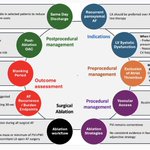
Another sobering study in AF ablation. Melbourne group reports on 121 patients who have recurrent AF despite durable PVI. All have posterior wall isolation. [Because we can.] The results are similar to the trials. Not good. doi.org/10.1016/j.jacep.2026… @peterkistler3
15
19
1
69
19,706
🫀 The second universal definition of heart failure (2026): what's new?💡3 LVEF groups instead of 4, with no fixed cut-offs 💡First universal classification of HF aetiology (18 groups)💡Clear split between worsening HF and decompensated HF 💡Normal NPs should not end the HFpEF workup Viewpoint #ESCHeartFailure, open access 👇 ow.ly/bZcK50ZVIVO #HeartFailure #CardioTwitter @EJHFEiC @AmrAbdin10 @GiuseppeGalati_ @HanCardiomd @EJHFEiC @JanBiegus @ppponikowski #HFA_ESC @hvanspall @FudimMarat @gcfmd @MarcoMetra @GianluSava
77
2
257
13,412
Alejandro I. Pérez Cabeza retweeted
Original Article: Tricuspid-Valve Intervention in Heart Failure (TRIC-I-HF trial) nej.md/4ilZJGr Editorial: Transcatheter Tricuspid-Valve Intervention for Severe Tricuspid Regurgitation nej.md/4hGHKZf #Cardiology #ESCCongress
2
38
1
89
18,473
Alejandro I. Pérez Cabeza retweeted
Aortic stenosis: don’t grade severity from AVA alone. Echo assessment of AS should be integrative. For severe AS, the classic concordant parameters are: 🔵 Vmax ≥4.0 m/s ⚪ Mean gradient ≥40 mmHg 🔴 AVA ≤1.0 cm² ⚫ Indexed AVA ≤0.6 cm²/m² can support severe AS, particularly in patients with small body size. ( But what if the numbers disagree) That is where the real echocardiographic reasoning begins. 1️⃣ First, check for measurement error, especially LVOT diameter, LVOT VTI and Doppler alignment. 2️⃣ Then assess flow status: Low flow: SVi ≤35 mL/m² A patient with AVA ≤1.0 cm² and mean gradient <40 mmHg may have low-flow, low-gradient AS, with interpretation depending on LVEF and the clinical context. In selected discordant cases, CT assessment of aortic valve calcification can provide important additional evidence of stenosis severity. The 2025 ESC/EACTS guidelines emphasize multimodality assessment when severity remains uncertain. #Echocardiography #Cardiology #AorticStenosis #ASE
1
83
1
296
14,598
Alejandro I. Pérez Cabeza retweeted
Se puede predecir la fibrilación auricular por el aspecto de tu retina? Un poco si! Atrial fibrillation and retinal imaging-based oculomics: A cross-sectional and longitudinal analysis of two large cohorts journals.plos.org/digitalhea…
2
9
1,151
Alejandro I. Pérez Cabeza retweeted
I’m a cardiologist. Today cardiologists everywhere were humbled by this trial. The trial is Lp(a)HORIZON. Pelacarsen, a monthly antisense injection from Novartis and Ionis, was given to 8,323 patients who already had heart disease plus genetically high lipoprotein(a). These were not untreated people. They were on modern guideline therapy—high-intensity statins, blood-pressure control, antiplatelets. The drug did its job: it slashed Lp(a) levels by roughly 70–80%, the same drop we saw in earlier studies. The thing it was supposed to prevent did not move. Cardiovascular death, heart attack, stroke, and urgent stents or bypasses were no lower than placebo. The miss held even in the sicker subgroup whose Lp(a) started above 90 mg/dL. That is why the field is in shock. For a decade we treated this as settled biology. Lp(a) is 80–90% genetic. One in five adults carry high levels. Diet and gym do almost nothing. Observational studies and Mendelian randomization kept saying the same thing: higher lifetime Lp(a) means more heart attacks, more strokes, more aortic stenosis. Phase 2 looked like a home run—an 80% reduction with a simple monthly shot. We told ourselves this was the missing piece for the patient who already has perfect LDL, perfect blood pressure, doesn’t smoke, and still has events. Many of us expected it to be as important as the arrival of statins. Companies spent years educating the entire cardiology community that we finally had a target we could actually hit. We were wrong about the simple version of the story. A lifetime of high Lp(a) from birth is not the same experiment as turning the number down for a few years after the arteries are already damaged and every other risk factor is already optimized. Residual risk from Lp(a) may simply be smaller once LDL is already in the 40s. Eighty percent lower may still leave too much particle in people who started very high. The next drugs (siRNAs) go deeper and last longer; this was the first-generation ASO. Benefit, if it exists, might live in younger patients, primary prevention, or extreme levels rather than this secondary-prevention population. Or the effect on existing plaque and thrombosis is slower and smaller than the genetics made us believe. We will get the full event curves, actual achieved levels, and every subgroup later this year. Other outcome trials with more potent agents are still running. The Lp(a) chapter is not closed. But the version we all believed—“lower this inherited number and events will follow in already-treated patients”—just failed its first large, hard test. Measure Lp(a) once. Treat everything else we can actually change as if it still matters. Because today we learned, again, that a beautiful lab change is not the same thing as fewer funerals. Science is supposed to surprise us. This one did.
34
58
15
312
46,151
Alejandro I. Pérez Cabeza retweeted
We have recently seen two major null results of CVD outcomes trials where genetic evidence was supposedly rock solid [IL6 & Lp(a)] Aside from failure modes of Mendelian Randomization, genetic causal evidence does not guarantee therapeutic validity or success novartis.com/news/media-rele…
9
24
1
137
12,289
Alejandro I. Pérez Cabeza retweeted
Novartis today announced that the phase III Lp(a)HORIZON trial of pelacarsen did not meet its primary endpoint of 4-point major adverse cardiovascular events in 8,323 patients with elevated Lp(a) and established CVD. Three things were once said to be certain in life: death, taxes, and that lowering Lp(a) would improve health. What has always struck me is the confidence with which pelacarsen was described by some experts as a drug “on its way”. I remember a debate a year ago in which I pointed out that, if the clinical benefit of lowering Lp(a) were a certainty, there would be little reason to run an outcomes trial in the first place. The fact that guidelines and consensus documents were already recommending Lp(a) measurement before cardiovascular outcomes trials had actually established clinical benefit seemed difficult to understand. It also contributed to the impression that the ongoing trial was essentially a formality and that it would inevitably be positive. Yet, as you may remember, Lp(a)HORIZON had to extend recruitment because fewer events than expected had occurred. Even then, that did not sound entirely reassuring. I do not want to overinterpret one negative trial, particularly with phase III outcomes trials of olpasiran and lepodisiran still ongoing. But until those results are available, what do we make of the recommendation to measure Lp(a) at least once in everyone’s lifetime?
24
46
4
172
22,741
Alejandro I. Pérez Cabeza retweeted
Otro estudio negativo que nos hace reflexionar sobre la importancia de la investigación clínica. De la teoría a la práctica en medicina todo se tiene que demostrar. HORIZON Reducir Lp(a) con #pelacarsen en pacientes con Lp(a) elevada y enfermedad cardiovascular, NO mejora los resultados cardiovasculares en el ensayo de Fase 3. Probablemente el buen control del LDL en este estudio, redujo en impacto CV de la Lp(a) Otra prueba más de que el motor de la aterosclerosis, es en el LDL-ApoB. novartis.com/news/media-rele…
8
25
91
10,786
Alejandro I. Pérez Cabeza retweeted
ACASA-TAVI and NOTION-4 Trials Give Mixed Messages on DOACs After TAVI tctmd.com/news/acasa-tavi-an…
2
6
2,652
Alejandro I. Pérez Cabeza retweeted
"La ablación consiguió reducir de forma clara la recurrencia de FA, pero esta diferencia no se tradujo en una mejoría adicional de la calidad de vida", destaca @cris_lozano. #BlogSEC @jovenesSEC ow.ly/KTlI50ZJcRS
7
12
2,242
🛑Syncope-Stopper #ESCCongress #HOTLINES #syncope 200 pts with unexplained syncope + high bradycardia risk (DROP ≥2), mean age ~80 (47% women 👏🏽🌟)→ upfront pacemaker 🆚 standard care At 1 yr: ↓51% primary composite ↓53% recurrent syncope (11.1% vs 21.8%; HR 0.47, P=.037) ↓43% all-cause hospitalization Upfront pacing may benefit selected high-risk pts
4
59
5
143
15,566
Alejandro I. Pérez Cabeza retweeted
🧠 ENRICH-AF (n=948): Edoxaban after intracranial haemorrhage did not reduce stroke/systemic embolism (11.8% vs 12.8%; HR 0.88) but increased major bleeding (11.6% vs 5.2%; HR 2.23). Routine edoxaban is not supported in this unselected population. #ESCCongress
2
13
23
1,147
Alejandro I. Pérez Cabeza retweeted
Prasugrel versus Ticagrelor in Acute Coronary Syndromes: @NEJM #ESCCongress2026 #ESCCongress 🥸 So many good trials - and STAREE is coming - SWITCH-SWEDEHEART 😱 Effient vs Brilinta in ACS - take a look 👇👇👇👇
2
54
1
225
23,705
Alejandro I. Pérez Cabeza retweeted
Presented at #ESCCongress: In patients at high risk for ischemic events 12 months after implantation of a drug-eluting stent, clopidogrel monotherapy was noninferior to extended dual antiplatelet therapy for net adverse clinical events. Full A-CLOSE trial results: nej.md/4ggbFqv @escardio
1
90
3
285
35,564
Alejandro I. Pérez Cabeza retweeted
Ticagrelor vs prasugrel in ACS: another round, still no winner 🥊. The debate continues #ESC2026 #ESCCongress
2
3
39
4,135
🧠❤️ #ENRICHAF at #ESCCongress One of the hardest decisions in #AFib: Should anticoagulation be restarted after intracranial hemorrhage? AF survivors of ICH randomized to: Edoxaban vs non-anticoagulant therapy 948 patients: edoxaban 60 mg qd vs no anticoagulation ➡️ Stroke/systemic embolism: 11.8% vs 12.8%: HR 0.88 , P=.48 ❌ ⚠️ Major bleeding: 11.6% vs 5.2% HR 2.23 , P<.001 Edoxaban reduced stroke&MI, but ~3× more hemorrhagic stroke. This study does not support routine anticoagulation with edoxaban after ICH in unselected patients with AF #Stroke #Anticoagulation #CardioTwitter
1
15
3
59
5,553