

2x AI entrepreneur, father, dreamer & builder. CEO/Founder @portfoliopilot, Chairman/Founder @iris_automation, Advisor @verisimlife. 30under30 YCS16 ODF8 ODI
San Francisco, CA
Joined September 2011
- Tweets1.8K
- Following807
- Followers1.9K
- Likes959







Pinned Tweet
After 100,000 hours of work, we’re announcing financial AGI.
@portfoliopilot 3.0 automatically finds optimization opportunities across your financial life.
Try now for 10 days, no credit card required.
Alexander Harmsen retweeted
Fund fees have fallen more than 60% since 2006, and that's actually bad news if you're the one still paying yesterday's average.
New Morningstar data: the average US fund fee is now 0.32%, down from 0.80% two decades ago.
Most people paying above average have no idea they are, because the number that matters isn't any single fund's fee. It's the blended fee across everything they hold.
One old fund at 0.75% sitting next to five funds at 0.05% still drags the whole portfolio's average up more than people expect.
Your personal blended number is one page away, not a spreadsheet away. Check yours: portfoliopilot.com
Disclaimer: All facts and figures shared in this content, including the attached image, are for illustrative purposes only and don’t constitute financial advice in any way shape or form
Alexander Harmsen retweeted
Your coffee price is basically a bet on Brazilian weather, whether you meant to make one or not.
Brazil grows 35% of the world's coffee, more than Vietnam, Colombia, and Indonesia combined, per USDA data. When that much of global supply sits in one country, a rough harvest there doesn't stay a Brazil problem. US coffee prices are up roughly 31% year over year, among the sharpest food-inflation moves in the country.
Concentration risk shows up on a grocery receipt too, not just a portfolio statement.
Alexander Harmsen retweeted
Two thousand characters.
That's the space PortfolioPilot leaves open for the part of your financial life a dropdown can't capture, in your own words: an account you'll never touch, a stock thesis you're not budging on, a parent you're quietly supporting. Type it into the “anything else PortfolioPilot should know” field and it factors into your recommendations. Small box. Enough to capture the 10,000+ other settings we didn't want to add explicit filters for.
Disclaimer: All facts and figures shared in this content, including the attached image, are for illustrative purposes only and don’t constitute financial advice in any way shape or form
Alexander Harmsen retweeted
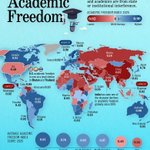
There's an index that scores every country on how free universities are from state and institutional interference: the Academic Freedom Index, updated for 2025 by V-Dem and Our World in Data.
The headline number: academic freedom has declined in 50 countries since 2015. It improved in 9.
No single country explains that. Fifty countries moved the same direction over the same decade.
Alexander Harmsen retweeted
For thirty years the instruction was simple: contribute, invest, hold, repeat.
Then you retire, and the instruction reverses overnight. Now it's which of thirty different holdings to sell first, in what order, in which account, to raise cash without triggering a tax bill that undoes the whole point. Nobody trains for the second half.
Disclaimer: All facts and figures shared in this content, including the attached image, are for illustrative purposes only and don’t constitute financial advice in any way shape or form
Alexander Harmsen retweeted
The trends that define an economic era always look permanent while they're happening.
Global trade integration didn't just plateau. It's been unwinding for almost two decades, well before tariff headlines and pandemic-era supply-chain snarls put “reshoring” back in the vocabulary.
The case for hyper-globalization was real: falling tariffs, containerization, and China's 2001 entry into the WTO pushed trade from 38% of world GDP in 1980 to a peak of 61% in 2008, per World Bank data. That era delivered cheaper goods and two decades of lower inflation.
But 2008 was the high-water mark, not a new normal. Trade integration has fallen roughly 8 percentage points since, while more than 3,000 protectionist measures now get enacted globally every year as countries trade cost efficiency for resilience.
This has nothing to do with predicting the next tariff headline. A lot of portfolios built over the last 20 years assumed global supply chains only get cheaper and more interconnected. That assumption described one 28-year window, not a permanent feature of the economy.
Alexander Harmsen retweeted
A friend once told me his net worth was “around 2 million, give or take a few hundred thousand.” The give-or-take turned out to be his entire outstanding mortgage balance.
Most people can rattle off their salary to the exact dollar without thinking. Ask for net worth and the answer gets vague fast, not because the math is hard, but because salary is one number someone already handed them on a pay stub, and net worth means adding up everything yourself, including the parts that subtract, like that mortgage balance.
Disclaimer: All facts and figures shared in this content, including the attached image, are for illustrative purposes only and don’t constitute financial advice in any way shape or form
Alexander Harmsen retweeted
Forty percent of self-made millionaires have paid off their mortgage entirely. Most don't drive a luxury car, live in an impressive house, or look wealthy at all.
That's the finding from a twenty-year study of America's wealthy: the majority are business owners or professionals who spend well below their means and pay off their credit cards every month.
Wealth, in this data, correlates far more with what you don't spend than with what you earn. The doctor with the newest car in the parking lot is frequently not the one with the biggest net worth.
It's a less exciting story than the one usually told about getting rich. It also happens to be the one that's actually replicable.
Alexander Harmsen retweeted
If you had to pick just one: grow your money faster, or make sure a bad year can't wreck the plan?
Most people answer growth until you ask them to put a real number on the bad year. You'd be surprised how often the answer flips.
Disclaimer: All facts and figures shared in this content, including the attached image, are for illustrative purposes only and don’t constitute financial advice in any way shape or form
Alexander Harmsen retweeted
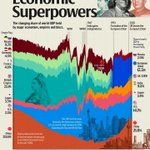
The country running the world economy always feels permanent. It never is.
- 1820s: China leads the world in output.
- 1800s: The British Empire climbs to nearly a quarter of global GDP at its peak.
- 1947: The US peaks at 29.7% of world GDP, the highest share any single country holds in the dataset.
- 2025: Adjusted for purchasing power, China holds the largest share again.
Every economy in that chart assumed it was the exception. None of them were.