

Research Intern · Ex-Data Engineer @ Infosys · Now MSc AI @ BTU Cottbus. Pipelines, warehousing, and what's underneath the SQL
Berlin, Germany
Joined May 2017
- Tweets587
- Following834
- Followers273
- Likes5.2K




Pinned Tweet
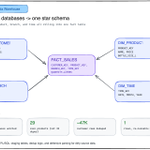
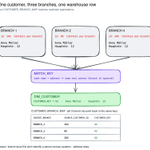
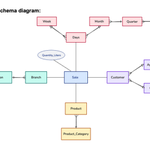
wrapped up my data warehouse project: a star schema pulling sales from 3 branch dbs into one model, loaded with an etl i wrote in oracle pl/sql.
deduped ~47k customer records, turned 35 duplicate products into the real 29. diagram + repo below.
github.com/aman7kh8an6/drink…
#Data #DWH

3
142
The title "Hist-Tree: Those Who Ignore It Are Doomed to Learn" is one of the best paper titles in databases, and the paper backs it up.

In 2018, a paper made a wild claim: a B-Tree is just a model.
It takes a key and predicts a position. So why not replace it with a neural net?
In 2021, another paper answered: “Those who ignore it are doomed to learn.”
I presented that one in my MSc seminar. Here’s the fight🧵
1
17
In 2018, a paper made a wild claim: a B-Tree is just a model.
It takes a key and predicts a position. So why not replace it with a neural net?
In 2021, another paper answered: “Those who ignore it are doomed to learn.”
I presented that one in my MSc seminar. Here’s the fight🧵
4/ In its comparison it goes up against 3 learned indexes: RMI (Kraska’s), the PGM-index, and RadixSpline.
My takeaway: sometimes "ML beats data structures" really means "we hadn’t tried hard enough with data structures."
1
8
Curious: how many of you have built a system from scratch to understand how it works underneath?
Not just used a database, but built a tiny one.
Not just used an HTTP server, but implemented one.
Not just used a cache, but built one.
1
30
In Oracle, when a row grows and no longer fits its block, the row moves — but the ROWID doesn't.
The old block keeps a stub pointing to the new location.
No index breaks.
You just pay an extra I/O on every read of that row until the table is reorganized.
Small storage detail.
2
65
1/ For 3 years I wrote SQL against Oracle. ROWID was just there useful, reliable, never in the way.
That's what a good abstraction does. You never need to look underneath it
I looked underneath it. Its the thing that makes indexes possible
How a database actually stores a row:
1
99
8/Postgres can't do that.
MVCC means an UPDATE writes a new row version. If it lands on a different page, every index pointing at the old TID gets rewritten.
Escape hatch: HOT — new version fits on the same page, no index touched.
Prevention knob: fillfactor.
1
8


