

Co-founder of CODE24 and Cadasto. openEHR, FHIR and semantic interoperability. Building open, vendor-neutral health data platforms. 41 years in healthcare IT.
Amsterdam, The Netherlands
Joined May 2024
- Tweets42
- Following415
- Followers113
- Likes1.6K

In healthcare we set requirements for almost everything: devices, medication, exchange, security. There's a standard for nearly all of it.
Yet how health data is stored at the source, how structured, how traceable, how vendor-independent, is rarely part of the requirements.
We demand that data travels well, not that it's kept well. Isn't that strange?
#EHDS
10

Exactly. Research-ready starts at the point of care. If "admission date" means three things in three systems, linkage just multiplies the noise. Define it once, archetyped, and every secondary use inherits the same meaning.

The European Health Data Space (#EHDS) will give researchers more data, but more data isn't the same as research-ready data. Even a perfect patient match can still lead to biased results. Read the 1st blog in our series: buff.ly/ZS78Mwg #DataLinkage #Pharmacoepidemiology

12
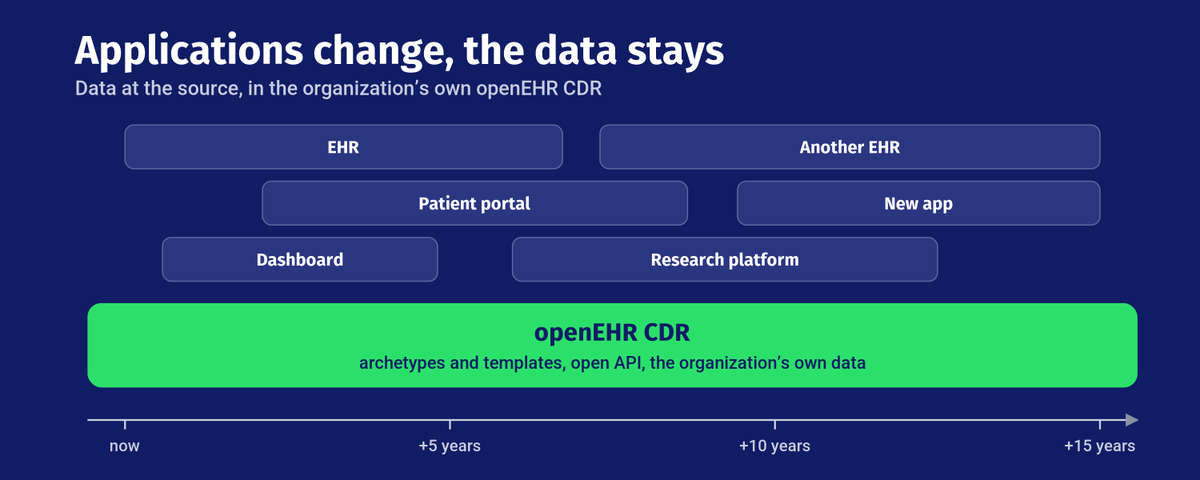
I'm often asked: why an openEHR CDR if data stays at the source anyway? GISA, the new Dutch health information architecture, says nothing about how that source is set up. Here's why executives should care.
1
1
60
EHDS implementation is now on every Member State's table.
Patient Summary exchange becomes mandatory from March 2029. The hard part isn't the connection. It's every system meaning the same thing by "allergy" or "active medication".
Store meaning once, in a shared clinical information model. Then exchange is the easy part.

Today in Dublin, the eHealth Network plenary brought us together with the Member States to discuss #EHDS implementation, MyHealthEU governance, AI in health, interoperability and the future of European digital health cooperation. 💻
A big thank you to our Irish hosts!


1
37

Every AI agent in healthcare now promises to pull it all together across scattered systems.
Fine. But an agent can only reason over what the data means.
If every system defines an admission date its own way, the agent inherits the mess.
Store meaning once. Then automate.
2
2
79
Right. EHDS is not an EHR upgrade project...

De EHDS vraagt meer dan technisch aangepaste EPD-systemen. Ook werkprocessen, toegang tot gegevens en patiëntenrechten veranderen. Esther Peelen van Nictiz laat zien waar zorgorganisaties nu al kunnen beginnen. #zorg
icthealth.nl/nieuws/ehds-wat…

9
Every national health data network hits the same wall.
The pipes work. The data arrives. Then two systems disagree on what "admission date" means.
Interoperability isn't a connection problem. It's a meaning problem.
Fix it once in the model, not per interface.
AI drafting the clinical note is the easy part. The record that counts is the version a clinician checked and approved, stored at the source with a trail of who signed off on what.
AI schrijft je consultverslag. Fantastisch. Tenzij het dingen verzint.
Vier revalidatiecentra testen Autoscriber. De belofte: minder administratie. De uitdaging: betrouwbare verslaglegging zonder extra controlewerk.
#zorg
icthealth.nl/nieuws/revalida…

1
12
420,000 FHIR-skilled roles by 2031. Fair. Every system needs to talk.
But who models the data that has to outlive the system?
Interfaces scale with people. A shared clinical information model scales with reuse.
Interfaces move data. Models keep its meaning.
xitter.gq/HL7/status/21165930386…

HL7 modeling estimates demand could reach 420,000 FHIR-skilled practitioner-equivalent roles by 2031.
How will healthcare build that workforce? HL7 CEO Rachel Dunscombe explores the investment ahead:
hubs.ly/Q04CdxXJ0
#HL7 #FHIR #Interoperability #HealthcareIT

13
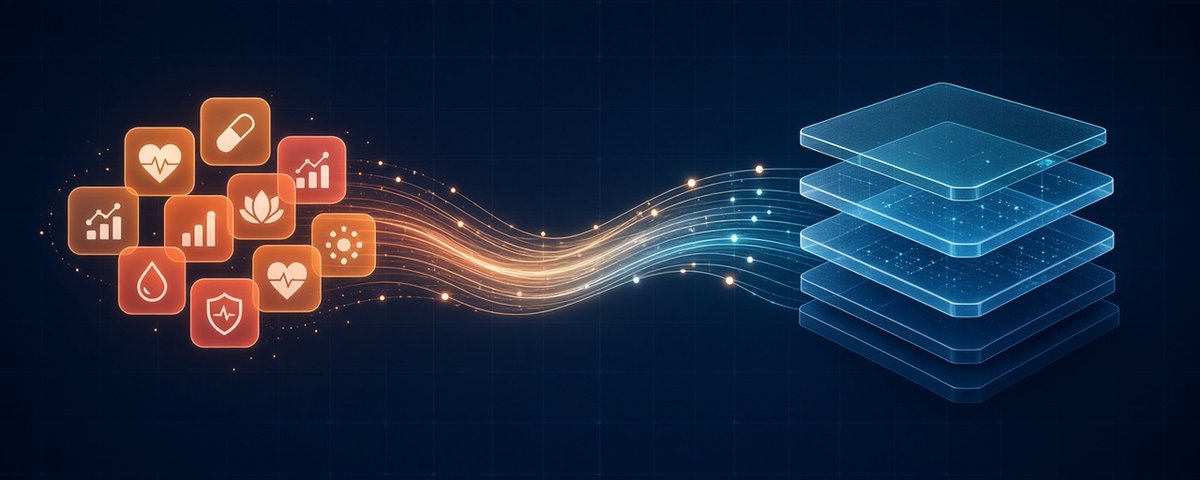
FHIR apps can connect to an openEHR CDR without being rebuilt. Together with Syntaric and Open Health Hub, we tested FHIRconnect on the Cadasto CDR with Patient, Observation and Condition. What worked, and what comes next:
#openEHR #FHIR #FHIRconnect
1
58
What we tested is now peer-reviewed. FHIRconnect is out in npj Digital Public Health: an open mapping language and open-source engine between openEHR and FHIR. Mappings defined once on archetypes, reused across projects.
nature.com/articles/s44482-0…

1
7
Cyprus starts testing cross-border exchange of clinical documents via MyHealth@EU: lab results, discharge reports and images, years ahead of the 2031 EHDS date.
The pipe is being built. What flows through it is only as useful as how it was recorded at the source.
#EHDS #openEHR

Cyprus has received approval to begin testing a new service for sharing clinical documents securely across participating European countries.
#sigmalive_english #Cyprus #Healthcare #DigitalHealth #MyHealthEU #EHDS
en.sigmalive.com/cyprus-appr…

16
A lab result is only as good as the check made when it was written.
"Validation on" is not "validation done". If the value set can't be found and nothing fails, a wrong code lands in the record.
Bind terminology in the model. Then test that a wrong code is rejected.
#openEHR
109
FHIR to collect. openEHR to keep.
66 Dutch validated questionnaires (Nictiz, IKNL) as openEHR templates. The FHIR Questionnaire carries the mapping, so each response lands as a composition. No per-form config.
Standards talk to standards.
discourse.openehr.org/t/revi…
#openEHR #FHIR

16
OECD: health data interoperability is worth 2.7–6.6% of annual health spending, up to ~€150bn a year in the EU. Standards alone won't get us there. Store clinical data once, at the source, in an open model. #openEHR #EHDS
oecd.org/en/publications/int…
11
One screen, several CDRs.
openEHR Explorer queries different openEHR CDRs through one interface. @ianmcnicoll showed it on @ehrbase, Cadasto and FerroEHR. When tooling works across CDRs, your CDR is replaceable. Choose on quality, not lock-in. discourse.openehr.org/t/1722… #openEHR
12