



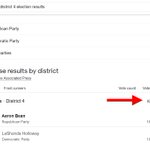
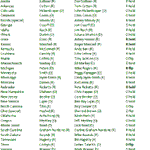


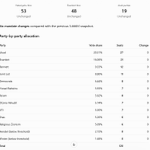
It took a while for Alaska to count its votes, but today the count is finally over, and Democrats flipped Alaska. Outcome: 56/44.
How I did:
1. I predicted that Republicans would hold Iowa, Kansas, and Nebraska, but they managed to hold only Nebraska. This is a clear miss. (-2/-2)
2. I predicted that Republicans would flip Michigan. That did not happen, but I also noted that I was not sure. (-3/-2)
3. I predicted that Democrats would flip Maine, North Carolina, Ohio, and Texas. This did happen. (-3/-2)
4. I predicted that Republicans would hold Alaska. Democrats flipped it, but it was very close because of the ranking system. Most polls predicted a clear Democratic flip. (-4/-2.5)
5. Democrats easily flipped South Carolina and flipped Mississippi, and no one predicted that. Polls did not count South Carolina or Mississippi as battleground states. (-6/-4.5)

2026 US Midterm Senate Predictions:
1. R flip Michigan.
2. D flip Maine, North Carolina, Ohio, Texas.
3. R hold Iowa, Kansas, Nebraska.
4. Outcome 50/50.
5. I'm only unsure about Texas and Michigan.

1
318
2026 US Midterm Senate Predictions:
1. R flip Michigan.
2. D flip Maine, North Carolina, Ohio, Texas.
3. R hold Iowa, Kansas, Nebraska.
4. Outcome 50/50.
5. I'm only unsure about Texas and Michigan.
Election Predictions #3
With just 10 days until election day, the latest polls show that Democrats' only path to victory hinges on winning three critical states: Wisconsin, Michigan, and Pennsylvania. Both Wisconsin and Pennsylvania are currently toss-ups. Here's a breakdown of potential outcomes:
1. If Democrats win all three states, they will reach the necessary 270 electoral votes, making the outcomes in Nevada and Arizona irrelevant (see image 1).
2. If Democrats lose Pennsylvania, Republicans will reach 270 (assuming they win Georgia), and the results in Arizona and Nevada won't matter (see image 2).
3. If Democrats lose Pennsylvania but win Georgia (which seems unlikely at this point), Nevada will become the deciding factor (see image 3).
4. If Democrats win Pennsylvania but lose Wisconsin, Arizona will decide the election - and it currently leans Republican (see image 4).
Bottom line: Pennsylvania is shaping up to be the most crucial state. Democrats must win all three - Wisconsin, Michigan, and Pennsylvania - while Republicans only need to win Pennsylvania or secure both Wisconsin and Arizona.


Thoughts on Israel war #48: USS Carney
October 19, 2023, just 12 days after October 7, marked the first Houthi missile and drone attack toward Israel.
The attack was intercepted by USS Carney, an American guided-missile destroyer that had entered the Red Sea just one day earlier.
Carney had departed Florida on September 27, on a scheduled deployment planned long before October 7. On October 18, it passed through the Suez Canal into the Red Sea, heading toward the U.S. 5 Fleet's area of operations. The following day, while sailing through the northern Red Sea, it encountered and intercepted the Houthi barrage.
Carney was not stationed there to defend Israel from an anticipated Houthi attack. It was conducting a previously scheduled deployment.
According to a U.S. Navy, October 19 began as a routine day for Carney's crew, until the engagement suddenly began around 4PM local time. During the following 10 hours, Carney intercepted four land-attack cruise missiles and 15 drones.
The attack was a surprise. Israeli intelligence had no advance warning of this particular launch and did not anticipate that the Houthis possessed such capabilities.
The missiles were directed toward Eilat, which did not have adequate air defenses at that moment. Israel was focused on threats from Gaza and Lebanon.
Such a surprise attack could have inflicted major casualties, including among people just recently evacuated from northern Israel and the Gaza envelope.
It was a coincidence that a capable American destroyer on a previously scheduled deployment happened to be in the right place at exactly the right time to intercept the first major Houthi barrage toward Israel.
Following October 19, Carney remained in the region, intercepting additional Houthi missiles and drones, including those threatening commercial vessels.
April 2024: Another coincidence
After approximately 6 months of combat operations in the Red Sea, USS Carney was preparing to return home.
On April 6, 2024, Carney passed through the Suez Canal into the Mediterranean. On April 9, it arrived in Palermo, Sicily, for a regularly scheduled port visit. The ship was already heading west toward its home port in Florida when, on April 10, the U.S. military decided to turn it around in anticipation of an Iranian attack against Israel.
On April 13-14, Iran launched its massive missile and drone attack against Israel. Carney, along with USS Arleigh Burke, participated in the defense from the Eastern Mediterranean, successfully intercepting a few Iranian ballistic missiles.
Once again, Carney happened to be in the right region at the right time. The Americans simply had suitable warships already nearby and repositioned them when the threat became clear.
Twice within 6 months, the same American destroyer happened to be in a position to defend Israel against major missile attacks, first from the Houthis and then from Iran.


Thoughts on Israel War #47: MOU #3 - "2/3 of Defensive Weapons"
As part of the anti-Israel smear campaign, J.D. Vance said on June 18, 2026, at the White House: "Over the last three months, two-thirds of the defensive weapons that have protected your homeland have been built by American hands and paid for by American tax dollars".
reuters.com/world/middle-eas…
Since the statement used so many modifiers, it raised my internal red flag. Where is it coming from? What are "defensive weapons"?
Overall, the U.S. provides a baseline of $3.8 billion in military aid annually, not cash but contracts. This makes up about 15% of Israel's defense budget, and the figure is on track to fall below 10%. So 15% does not sound like much, but "two-thirds" sounds significant, as if American hands and American dollars are the majority of Israel's defense.
The origin of this "two-thirds defensive weapons" argument appears to be the May 21 Washington Post report. According to the report, the U.S. fired more than 200 THAAD interceptors and more than 100 SM-3/SM-6 naval interceptors defending Israel, while Israel fired fewer than 100 Arrow interceptors and about 90 David's Sling interceptors.
washingtonpost.com/national-…
But this should be taken with a grain of salt. The Washington Post report is based on anonymous U.S. officials describing what they say are Pentagon assessments. The underlying assessment was not made public, we do not know who those officials were, and we do not know if the information was reported accurately. Also, Israel's interceptor-use numbers are classified, so the U.S. officials do not really know the full Israeli side of the equation anyway.
The same report said a U.S. official claimed the U.S. "shot around 120 more interceptors" and "engaged twice as many Iranian missiles".
So the math is probably this:
If you count recent high-end missile-defense engagements, "two-thirds" may be plausible only because "engaged twice as many Iranian missiles" implies roughly a 2:1 U.S.-to-Israel ratio.
If you count actual interceptors fired, even by those reported numbers, the numbers point more to about 60-62% U.S., not two-thirds. So even under that framing, "two-thirds" is a lie.
If you count Israel's whole "defensive weapons" inventory, the claim becomes misleading or unsupported. Israel's air-defense network is mixed. Iron Dome was developed by Israel, though the U.S. has been a production partner since 2014; David's Sling and Arrow were developed jointly with the U.S.; and the U.S. provides $500 million annually for Israeli and joint missile-defense programs.
Let's analyze:
1. Counting interceptors fired or missiles engaged is not the same as counting defensive value.
THAAD was deployed to Israel as a temporary backup for Israel's core multi-layer anti-ballistic missile defense shield. It was also deployed to the Gulf.
If THAAD fires many interceptors per target, Vance's "two-thirds" becomes almost meaningless.
Two to five interceptors were often required to take down a single missile in the Iran war context. It measures U.S. ammunition burn rate, not necessarily successful defense share.
2. For long-range Iranian ballistic missiles, Israel's Arrow system is the more natural strategic/top-layer defense.
If a missile is first engaged by Arrow and missed, and then THAAD fires multiple interceptors later, counting THAAD shots as if they were the core protection exaggerates the U.S. role.
3. The framing also completely ignores Hezbollah firing rockets and drones at Israel's north during the same broader period. Israel's defensive reality was not only Iranian long-range ballistic missiles. It was also the northern front, where Israel's own systems, forces, and civilian-defense infrastructure were part of the defense picture. That disappears from Vance's "two-thirds" framing.
On top of that, while the U.S. deployed THAAD launchers to Israel, Israel deployed Iron Dome batteries to the Gulf. Israel also implemented the civil early-warning, notification, and alarm system for some Gulf countries. This also protected Americans in the area.
reuters.com/world/middle-eas…
So Vance's statement appears to be based on a report about interceptor burn, but he presented it as if it describes Israel's defensive weapons or Israel's overall defense dependency.


1
403
Counting Israel elections. After 956K votes counted the right block is still above 60 (63-50) but Arab parties are heavily undercounted.

1
1
827
>> #2 after 1,216K votes counted. Netanyahu bloc is still 63 but Ra'am will soon pass the threshold and the bloc will go down to 61.

1
1
231
How Reliable Is Polymarket at Predicting Elections?
I am always surprised by the number of people posting about Polymarket as if it were something reliable.
Polymarket is the most unreliable among all election "polls" because, unlike regular polls where each person counts equally, in Polymarket money votes, not people. Its probabilities are driven by the volume of dollars traded, not the number of participants supporting a particular outcome.
Let's see how wrong Polymarket has been recently (a few selected examples):
1. Poland, presidential election (2025): Polymarket gave Rafał Trzaskowski around an 80% chance of winning. Karol Nawrocki won instead, with 50.89% of the vote.
2. India, parliamentary election (2024): Polymarket gave the BJP an approximately 80–96% chance of winning an outright majority of at least 272 seats. BJP won only 240 seats.
3. Brazil, presidential election, first round (2026): Polymarket gave Lula approximately a 74% chance of finishing first. Flávio Bolsonaro finished first instead, with 47.03% against Lula's 45.16%.
4. Brazil, presidential election, second round (2026): Polymarket gave Flávio Bolsonaro around an 80% chance of winning. Lula won instead, with 51.79% against Bolsonaro's 48.21%.
5. Serbia, parliamentary election (2026): Just two days before the election, Polymarket gave Aleksandar Vučić's United Serbia list around a 69% chance of winning, against 31% for the student-backed opposition. The student-backed list won.


1
308
My view on election fraud 👇 in the United States summarized back in 2024:
"...while organized election fraud is possible, it is always detectable. Election data in the US is transparent, allowing anyone to map and analyze results for anomalies. Claims that undetectable cheating is possible are simply false; always question the integrity of those who make such claims."
With just one day left before the 2024 elections, it's important to understand that, while organized election fraud is possible, it is always detectable. Election data in the US is transparent, allowing anyone to map and analyze results for anomalies. Claims that undetectable cheating is possible are simply false; always question the integrity of those who make such claims.
To fully interpret election data, you also need to understand demographics in competitive states - why Wisconsin and Michigan share similar characteristics, for instance, while Georgia differs. Any attempt at fraud involving even a few hundred ballots would be easy to spot on a state level, especially in mid-sized states, without needing advanced programming or AI.
When you put results on a map and look for patterns, unusual spikes, or unexpected results stand out. For example, if one county has a much higher turnout than nearby counties with similar demographics, that's a red flag to look closer.
To find these 'spatial outliers,' you can compare a county's results not only with its neighbors but also with counties in non-competitive states that share similar demographics, or with its own past voting patterns.
You don't just look at who won by what percentage - you also check things like the turnout %, voting pattern (EV vs ED etc), the ballot return rate, etc.
In short, if after a series of cross checks you don't find any anomalies or outliers in the data, you have good reason to believe the results are valid. If you see anomalies - you investigate further.
2
1
2,588
Clue Formula is now available on the App Store for iPhone, iPad, and Mac:
apps.apple.com/us/app/clue-f…
It is my new 3D matching puzzle game with mahjong-style gameplay and IQ-test-inspired tiles.
Please try it if you enjoy logic, memory, or matching puzzle games.
1
2
1,392
Android version is also available on Google Play:
play.google.com/store/apps/d…
2
619
Thoughts on Israel War #47: MOU #3 - "2/3 of Defensive Weapons"
As part of the anti-Israel smear campaign, J.D. Vance said on June 18, 2026, at the White House: "Over the last three months, two-thirds of the defensive weapons that have protected your homeland have been built by American hands and paid for by American tax dollars".
reuters.com/world/middle-eas…
Since the statement used so many modifiers, it raised my internal red flag. Where is it coming from? What are "defensive weapons"?
Overall, the U.S. provides a baseline of $3.8 billion in military aid annually, not cash but contracts. This makes up about 15% of Israel's defense budget, and the figure is on track to fall below 10%. So 15% does not sound like much, but "two-thirds" sounds significant, as if American hands and American dollars are the majority of Israel's defense.
The origin of this "two-thirds defensive weapons" argument appears to be the May 21 Washington Post report. According to the report, the U.S. fired more than 200 THAAD interceptors and more than 100 SM-3/SM-6 naval interceptors defending Israel, while Israel fired fewer than 100 Arrow interceptors and about 90 David's Sling interceptors.
washingtonpost.com/national-…
But this should be taken with a grain of salt. The Washington Post report is based on anonymous U.S. officials describing what they say are Pentagon assessments. The underlying assessment was not made public, we do not know who those officials were, and we do not know if the information was reported accurately. Also, Israel's interceptor-use numbers are classified, so the U.S. officials do not really know the full Israeli side of the equation anyway.
The same report said a U.S. official claimed the U.S. "shot around 120 more interceptors" and "engaged twice as many Iranian missiles".
So the math is probably this:
If you count recent high-end missile-defense engagements, "two-thirds" may be plausible only because "engaged twice as many Iranian missiles" implies roughly a 2:1 U.S.-to-Israel ratio.
If you count actual interceptors fired, even by those reported numbers, the numbers point more to about 60-62% U.S., not two-thirds. So even under that framing, "two-thirds" is a lie.
If you count Israel's whole "defensive weapons" inventory, the claim becomes misleading or unsupported. Israel's air-defense network is mixed. Iron Dome was developed by Israel, though the U.S. has been a production partner since 2014; David's Sling and Arrow were developed jointly with the U.S.; and the U.S. provides $500 million annually for Israeli and joint missile-defense programs.
Let's analyze:
1. Counting interceptors fired or missiles engaged is not the same as counting defensive value.
THAAD was deployed to Israel as a temporary backup for Israel's core multi-layer anti-ballistic missile defense shield. It was also deployed to the Gulf.
If THAAD fires many interceptors per target, Vance's "two-thirds" becomes almost meaningless.
Two to five interceptors were often required to take down a single missile in the Iran war context. It measures U.S. ammunition burn rate, not necessarily successful defense share.
2. For long-range Iranian ballistic missiles, Israel's Arrow system is the more natural strategic/top-layer defense.
If a missile is first engaged by Arrow and missed, and then THAAD fires multiple interceptors later, counting THAAD shots as if they were the core protection exaggerates the U.S. role.
3. The framing also completely ignores Hezbollah firing rockets and drones at Israel's north during the same broader period. Israel's defensive reality was not only Iranian long-range ballistic missiles. It was also the northern front, where Israel's own systems, forces, and civilian-defense infrastructure were part of the defense picture. That disappears from Vance's "two-thirds" framing.
On top of that, while the U.S. deployed THAAD launchers to Israel, Israel deployed Iron Dome batteries to the Gulf. Israel also implemented the civil early-warning, notification, and alarm system for some Gulf countries. This also protected Americans in the area.
reuters.com/world/middle-eas…
So Vance's statement appears to be based on a report about interceptor burn, but he presented it as if it describes Israel's defensive weapons or Israel's overall defense dependency.
Thoughts on Israel War #46: MOU #2 Ally vs Partner
Upon the agreement on the MOU between the US and Iran, the Trump admin and JD Vance, who led the negotiation team, anticipated backlash and criticism from Israel. Therefore, they prepared a massive media campaign in anticipation of criticism from Israeli ministers and Netanyahu himself.
The campaign started even before the MOU text was officially released.
The main problem with the campaign was that there was no public criticism of the MOU, nor of Trump or Vance, coming from Netanyahu or Israeli ministers. The reason was the government standdown order on the issue. Israeli government officials were ordered not to criticize the MOU, Trump, or Vance publicly.
It was too risky and too sensitive for Israel to publicly criticize the MOU, although it marked a 180 degree turn in the American approach to the Iran nuclear issue. The MOU also included American guarantees related to Lebanon and Hezbollah, although Israel is not a signatory.
Since there was no public criticism from Israel, and the Trump admin proceeded with the anti-Israel campaign anyway, it has the optics of a preplanned smear campaign. It was criticized not only by Democrats, but also by Republican senators and congressmen.
The clearest example showing that this was a campaign was the downgrade of the relations by using the transactional term "partner" in relation to Israel instead of the usual term "ally". Trump and Vance used "partner" in a downgraded, transactional way, often paired with correction and scolding.
The first major example came from Vance in a CBS interview published on June 10, 2026. He said Netanyahu governs a country that "has obviously been a very close partner" of the United States. Then he said that "even when we've been close partners", US and Israeli interests can be misaligned. He also said Israel had "been a good partner", but that when interests diverge, the US must choose American interests, "unfortunately for the Israelis".
The clearest Trump example came on June 17 at the G7. He said Netanyahu "gets a little excited sometimes", said Israel should use a "softer touch" in Lebanon, and then agreed that Israel was the "very small partner" while the US was the "big partner".
Trump said: "We've had an amazing partnership… we're the big partner and he's the very small partner".
In the same G7 remarks, Trump said: "They've been a good partner", then added that they "could do better". Later he said: "I love them as a partner. They were terrific, but they could do a much better job with Hezbollah".
This is the use of "partner", conditional praise, and past tense or past perfect framing.
Then Vance sharpened it further in the BlazeTV interview with Allie Beth Stuckey, released on June 19, 2026, saying Israel is "a good partner in the same way that the United Kingdom or France are good partners". This means Israel is not treated as a uniquely privileged ally, but as one partner among others whose interests may diverge from America's.
Trump and Vance are publicly downgrading the US-Israel relationship from a special alliance to a transactional partnership.
The wording pattern is clear: "partner", "close partner", "good partner", "very small partner", and "has been / we've been / they were" all place Israel in a dependent, conditional, past performance category.
Thoughts on Israel War #45: MOU #2 English vs Persian
As I suspected, the published Persian and English versions of the MOU differ in some important nuances. They are not direct translations of each other.
Nuclear weapons:
The English version says Iran shall not "procure or develop" nuclear weapons.
The Persian version says Iran will not "produce or acquire/purchase" nuclear weapons:
سلاح هستهای تولید یا ابتیاع نخواهد کرد
This is not the same. "Develop" is broader than "produce". The Persian wording leaves Iran more room to continue development work on components, while the English wording forbids development itself.
Lebanon clause:
The English version speaks about "ensuring" Lebanon's sovereignty and territorial integrity.
The Persian version says the parties will [guarantee] Lebanon's sovereignty and territorial integrity:
تمامیت ارضی و حاکمیت لبنان را تضمین کنند
This is also not the same. "Guarantee" is stronger than "ensuring". It gives Iran a stronger basis to claim that the U.S. must pressure Israel to withdraw from southern Lebanon, even though the MOU does not explicitly say "Israel must withdraw".
Thoughts on Israel War #44: MOU #1
The MOU between Iran and the United States was signed. The final agreement is supposed to be negotiated and reached within 60 days, but the 60-day period is "extendable", and therefore it cannot really be considered a hard deadline.
The MOU caused a lot of criticism in the United States and Israel. In Iran, it was presented as a victory over the United States.
Let's analyze it.
Since this is only an MOU, only the paragraphs that state that something must be done "upon signing this MOU" should be treated as obligatory for now. Everything else is declarative and can be ignored, at least until the final agreement is signed - and the final agreement may never be signed.
So, if we only take into account the "upon signing this MOU" parts, this is what we have:
a) The United States must begin removing the naval blockade and fully end it within 30 days.
b) Iran must begin reopening the Strait of Hormuz for commercial navigation, clear mines and other obstacles, and fully restore passage within 30 days.
c) Iran must allow safe passage with no charge for 60 days only. After that, the issue is not clearly resolved unless there is a final agreement.
d) The United States will issue waivers for Iranian oil exports starting from the signing day.
e) There is supposed to be a ceasefire on all fronts, including Lebanon.
f) No additional U.S. military forces should be deployed to the region while the final deal is pending.
That is it.
What about lifting all other sanctions and the $300 billion reconstruction plan? These are not immediate obligations. They are supposed to be addressed as part of the final agreement. That final agreement may never happen.
Enriched uranium:
a) The declaration says that the enriched uranium issue will be resolved through a mutually agreed mechanism, with down-blending as the minimum methodology. This means that down-blending is not already a completed agreement. It is part of a future mechanism that still needs to be agreed upon.
b) Again, this issue is not to be dealt with "upon signing this MOU". It is postponed to future negotiations and may never be fully agreed upon.
Lebanon:
Iran insists that Trump should pressure Israel to withdraw from southern Lebanon. But there is no explicit Israeli withdrawal clause in the MOU. The MOU mentions Lebanon, ceasefire, sovereignty, and territorial integrity, but it does not clearly state that Israel must withdraw from southern Lebanon.
Thoughts on Israel War #38: The Big Deal #1
On October 9, 2025, the Israeli government approved the first phase of a ceasefire deal between Israel and Hamas based on 20 specific points aimed at achieving a ceasefire, the return of Israeli hostages, dismantling Hamas's military capabilities, and establishing a transitional governance structure in the Gaza Strip (see: bit.ly/4pZm8ed).
This deal is a major achievement for Israel. It returns all living hostages - and most of the bodies of those killed - within 72 hours. In exchange, Israel releases into Gaza and deports abroad 250 convicted terrorist killers, along with another 1,700 prisoners and detainees from Gaza and from Judea and Samaria.
Israel remains deep inside Gaza, controlling more than 50% of the territory (yellow line). Any further withdrawal depends on Hamas's disarmament. If Hamas disarms, the IDF will pull back further while maintaining control of the buffer zone, including the Philadelphi Corridor, to prevent arms smuggling from Egypt. If Hamas does not disarm, Israel will either remain permanently in roughly 50% (or some intermediate line) or deliver a final blow to destroy Hamas completely - depending on conditions on the ground.
Why Hamas agreed to release the hostages first
1. When Israel began the operation to take Gaza City - the last Hamas stronghold - a few weeks ago, Hamas perceived that Israel had "gone crazy" and was willing to sacrifice the hostages. Hamas therefore misread the situation and concluded the hostages were no longer a strategic asset.
2. Despite dense urban terrain, Hamas could not stop the IDF advance, could not halt the mass civilian evacuation from Gaza City, and inflicted almost no casualties on the IDF due to extensive use of robots and other technologies.
3. A month ago, Israel struck Doha targeting Hamas senior leadership. While that strike did not achieve its primary objective, Qatar - long a safe haven for Hamas leaders - understood that once Israel broke the ice, further strikes (or covert actions) would follow and Hamas leaders would be hunted. Israel also exposed Qatar's role as a safe haven for terrorists. As a result, Qatar pressured Hamas to accept the deal.
Despite the release of roughly 2,000 terrorists and prisoners, the deal remains a major achievement for Israel.

Thoughts on Israel War #43: Enriched Uranium 2
We are in the middle of US-Iran negotiations. It is hard to see Iran giving up its stockpile of enriched uranium. But it was also hard to see Hamas giving up the hostages, and in the end, it did.
For Hamas, the hostages were the same kind of leverage that enriched uranium is for the IRGC. It took several rounds of intense Israeli military pressure and several rounds of ceasefires to get there, but eventually Hamas had to give up.
The tipping point was the last operation to retake Gaza City. Contrary to expectations, it went very smoothly for Israel and with very few casualties.
Has a country ever given up its nuclear arsenal before? Yes. South Africa gave up its nuclear arsenal between 1990 and 1991. The practical reason was that the arsenal had become a barrier to sanctions relief, foreign investment and political normalization.
The economic pressure was real. In 1985, Chase Manhattan stopped rolling over short-term loans. Other banks pulled back. The rand collapsed. South Africa had large short-term foreign debt coming due, and by September 1985 South Africa announced a debt standstill/moratorium.
On July 10, 1991, President George Bush lifted most US sanctions against South Africa. However, the US still kept the arms embargo and nuclear-trade restrictions in place.
On March 24, 1993, South Africa publicly admitted that it had built and dismantled six nuclear bombs.

Thoughts on Israel War #31: Enriched Uranium
On June 12, Israel launched a major operation targeting Iranian nuclear and ballistic missile sites to eliminate an existential threat. The operation was a significant success. In just a few days, Israel reportedly killed 14 Iranian nuclear scientists involved in the weapons program. Among the high-ranking Iranian casualties were two chiefs of the general staff, as well as top intelligence and air force generals.
Air defenses in western Iran — including areas near Tehran — were destroyed, along with many ballistic missile launch sites that were already loaded to attack Israel. Key nuclear facilities, including Natanz and several others, were also hit and sustained damage.
Iran responded by launching nightly barrages of ballistic missiles at Israeli cities. While the number of missiles has been gradually decreasing due to Israeli strikes on launchers, storage depots, and production sites, the attacks continue. Each missile that breaks through Israeli air defenses causes substantial damage, hitting both residential areas and strategic infrastructure.
On the night of June 21, the United States carried out a powerful follow-up strike. Six B-2 bombers dropped a total of 14 Massive Ordnance Penetrator (MOP) bombs — each weighing 30,000 pounds — targeting Iranian nuclear sites. The strike focused on Fordow, which is deeply buried inside a mountain; Natanz, which has significant underground components though not as deeply protected; and Isfahan, which is largely above ground. In addition to the bunker-busting bombs, Tomahawk cruise missiles were used to destroy buildings and factories tied to Iran’s nuclear weapons program. These strikes effectively destroyed the last remaining operational elements of Iran's nuclear infrastructure.
A satellite image dated June 19 — two days before the American strike — showed 14 to 16 trucks at the entrance to the Fordow site. It’s possible these trucks were used to transfer the stockpile of 60% enriched uranium — reportedly around 880 pounds — to other locations. They may also have been used to remove sensitive equipment, documents, or key personnel from the site before the attack.
Let's speculate how the uranium could have been moved. If the 880 pounds of enriched uranium metal were divided into 20 separate pieces of 44 pounds each, that would make handling and transport more manageable. Uranium metal is extremely dense — about 0.69 pounds per cubic inch — so each 44-pound piece would occupy only about 64 cubic inches in volume. That’s roughly the size of a large soda can or a thick paperback book.
To reduce radiation exposure, each piece would likely be enclosed in a shielding layer of about half an inch of lead. With shielding and a basic steel or composite container, the total weight of each package would come to around 110 pounds — heavy, but still liftable by a strong person or easily moved with a dolly or by two people. Each package would be about the size of a small toolbox or lunch cooler.
Using the trucks seen in the satellite image, it would have been entirely feasible to transport all 20 of these shielded packages, along with other equipment or material. Once removed and dispersed, tracking them becomes extremely difficult.
If the enriched uranium was taken from Fordow before the strike, the core question now is: where is it?

2
2
1,035
Thoughts on Israel War #42: Do Americans Support the War in Iran? (Epic Fury)
There have been a few polls since the war began - Operation Epic Fury in the U.S. and Operation Roaring Lion in Israel - after the joint U.S./Israel attack on Iranian ballistic missile sites, IRGC assets, naval targets, military production infrastructure and nuclear sites.
The mainstream media in the U.S. promotes the narrative that the war is not popular with the American public. Is that true?
Let's look at the recently published Politico poll conducted in partnership with Public First. In my view, this is the most comprehensive poll so far.
It asks many questions and examines the war from multiple angles. It also has a large sample and includes Trump voters, Harris voters, and people who did not vote in 2024.
Politico is not exactly a pro-Trump or pro-Republican outlet, so this is not the kind of poll one would normally dismiss as biased in Trump's favor.
Results overall:
Strongly support — 23%
Support — 20%
Neither support nor oppose — 18%
Oppose — 12%
Strongly oppose — 21%
Don't know — 5%
So 43% support the war and 33% oppose it. Among people who have an opinion, 56.6% support the war. Most of the public that has an opinion supports the war.
Among Trump 2024 voters:
Strongly support — 41%
Support — 29%
Neither support nor oppose — 13%
Oppose — 7%
Strongly oppose — 5%
Don’t know — 4%
So 70% of Trump 2024 voters support the war, or 85% among those who have an opinion. Support among Trump voters is overwhelming, and the anti-war influencers who try to present themselves as "America First" clearly do not have that much influence.
There are other polls on this war, but I selected this one because, in my view, it is more detailed, more balanced, and more useful than polls with smaller samples or more manipulative wording. I will address other polls in later posts.

Thoughts on Israel War #41: Iran Ballistic Missile Threat
Does Iran possess hypersonic missiles like it claims? Not really.
Many ballistic missiles (including Iran’s) can reach hypersonic speeds (Mach 5+) during short parts of flight - especially on re-entry (the fastest part of flight of the ballistic missile). But that does not mean they are hypersonic. Hypersonic missiles typically feature sustained travel at hypersonic speed for most of the flight and stay highly maneuverable.
The biggest part of the Iranian arsenal in the range of 1000 miles are Shahab-3 variants (Ghadr/Emad), Sejjil, and Khorramshahr (originally based on North Korean design). Some ballistic missiles feature a maneuverable re-entry vehicle with fins which provides a capability to maneuver (still in the range of limited terminal corrections) after the re-entry and avoid being intercepted - this is in case the Arrow 3 defense missed (in the context of Israel defense layers).
Even if a warhead can maneuver, in the context of the Iranian threat it often means: small course corrections in the terminal phase, mainly for accuracy, sometimes to complicate interception. During the 12 day war in June in Israel most ballistic RVs still looked like they're coming in on a steep, clean path and no maneuvering.
Arrow 3 intercepts outside the atmosphere when these missiles are not maneuverable. To mess with that, you'd need the threat object to change its trajectory while still in space and there is no proof Iranian missiles have this capability. If the engagement window is missed, terminal intercept is extremely hard because the target is at very high speed and there's little time/geometry left and this is where some of these missiles are capable to correct course.
However this also means that typical Israel interception policy - "not to intercept those that have predicted impact point in non populated areas" (to economize interceptors) - could be counter productive and Israel would have to intercept everything that is in range outside of the atmosphere.
So how many ballistic missiles that threat Israel Iran has? After the 12 days war in June 2025 - Iranian production pipeline and many launchers were hit and while Iran is trying to rebuild - they are not there yet. They have probably 2000–3000 missiles left total (among them a couple hundred with MaRV capability) and a 200–400 launchers.
youtube.com/watch?v=lZIfjtWo…
2
1
1,154
This is the end of every Nazi terrorist 🤝
Ali Khamenei - the Supreme Leader of Islamic Republic of Iran and the chief Nazi terrorist was eliminated on 2/28/2026 by the IDF airstrike.


1
3
2,168
Thoughts on Israel War #41: Iran Ballistic Missile Threat
Does Iran possess hypersonic missiles like it claims? Not really.
Many ballistic missiles (including Iran’s) can reach hypersonic speeds (Mach 5+) during short parts of flight - especially on re-entry (the fastest part of flight of the ballistic missile). But that does not mean they are hypersonic. Hypersonic missiles typically feature sustained travel at hypersonic speed for most of the flight and stay highly maneuverable.
The biggest part of the Iranian arsenal in the range of 1000 miles are Shahab-3 variants (Ghadr/Emad), Sejjil, and Khorramshahr (originally based on North Korean design). Some ballistic missiles feature a maneuverable re-entry vehicle with fins which provides a capability to maneuver (still in the range of limited terminal corrections) after the re-entry and avoid being intercepted - this is in case the Arrow 3 defense missed (in the context of Israel defense layers).
Even if a warhead can maneuver, in the context of the Iranian threat it often means: small course corrections in the terminal phase, mainly for accuracy, sometimes to complicate interception. During the 12 day war in June in Israel most ballistic RVs still looked like they're coming in on a steep, clean path and no maneuvering.
Arrow 3 intercepts outside the atmosphere when these missiles are not maneuverable. To mess with that, you'd need the threat object to change its trajectory while still in space and there is no proof Iranian missiles have this capability. If the engagement window is missed, terminal intercept is extremely hard because the target is at very high speed and there's little time/geometry left and this is where some of these missiles are capable to correct course.
However this also means that typical Israel interception policy - "not to intercept those that have predicted impact point in non populated areas" (to economize interceptors) - could be counter productive and Israel would have to intercept everything that is in range outside of the atmosphere.
So how many ballistic missiles that threat Israel Iran has? After the 12 days war in June 2025 - Iranian production pipeline and many launchers were hit and while Iran is trying to rebuild - they are not there yet. They have probably 2000–3000 missiles left total (among them a couple hundred with MaRV capability) and a 200–400 launchers.
youtube.com/watch?v=lZIfjtWo…
Thoughts on Israel War #40: Biden Admin Arms embargo on Israel
There is a popular claim, mainly in Israel, that Biden imposed an embargo on Israel and Trump lifted the embargo. Therefore Biden was bad and Trump is good. Let’s analyze:
1. Biden did impose a partial embargo on Israel, mainly on JDAMs and bunker-penetrator bombs, and that embargo was lifted during the Trump admin.
This claim is true, and it slowed Israel's war effort. But the important context is missing: Biden entered the election-cycle year where he was seeking his second term, while Trump is starting his final term.
If hypothetically 7 of October had happened in 2019 and not in 2023 - i.e. during Trump’s election cycle while seeking his 2nd term - I have no doubt Trump would have forced Israel to stop the war early, and Israel would have never reached any of the goals.
***Reuters (May 7–9, 2024) on the paused shipments tied to Rafah, including guided bomb kits / heavy munitions:
reuters.com/business/aerospa…
***Reuters (Feb 16, 2025) on Israel receiving MK-84 heavy bombs after Trump lifted the hold:
reuters.com/world/israel-rec…
***Congressional Research Service report noting Trump releasing a Biden hold on MK-84s:
congress.gov/crs_external_pr…
2. A second claim is that Israel had a lack of D9 bulldozers before the Rafah offensive, and this was due to frozen export by the Biden admin.
Facts: there was a freeze of D9 export, but it started before the elections in the US and not before the Rafah offensive.
The lack of bulldozers (due to hits and damage) did force Israel to improvise, and they came up with Zelda robots. Zelda robots are remote-controlled modified M113 APCs (Israel has thousands of old M113s), and the proof of concept existed and was revealed years ago (2013).
The fleet during the Rafah offensive was still small and those were mostly kamikaze missions, but the fleet grew and the modified versions were able to remotely plant explosives. They proved by far more effective as a forward expendable force than anything else in Gaza urban warfare.
D9 bulldozers still remain essential for engineering work like demolition, clearing routes and rubble, exposing IEDs and tunnel shafts, and building protected positions for troops - but not as a forward expendable force.
***Reuters (Dec 31, 2025) stating the U.S. paused D9 sales in Nov 2024 and later resumed under Trump:
reuters.com/graphics/ISRAEL-…
***The Times of Israel (Jul 9, 2025) on a bulldozer shipment arriving after delays:
timesofisrael.com/liveblog_e…
3. A related claim is that because of the lack of bulldozers, Israeli soldiers had to go by foot into booby-trapped houses and lost lives.
This claim is false: lack of bulldozers did not mean soldiers had to go into booby-trapped houses by foot.
This unfortunate loss of lives did happen, but mostly because of bad decisions on the ground by commanders, which is something inevitable during the war.
Out of roughly 500 soldiers lost in the war in Gaza, maybe roughly 100 were lost due to bad decisions on the ground (and another 100 due to accidents and friendly fire). You can't blame Biden for that.
4. There is also a claim that since Israel imports Merkava shells from the US and there was an embargo, tanks during the Rafah offensive did not have full magazines of shells (sometimes half, and by some reports certain units had one third).
Facts: there is no evidence Merkava shells were a part of the embargo at all.
Also, while the reports that tanks did not have full magazines are verified, it still does not mean this was part of the embargo.
The reason was that Israel used ammo economy and stockpiled ammo in preparation for the upcoming Lebanon offensive, which was anticipated as far more difficult than the Gaza offensive (it turned out to be not the case).
Also, why did Israel find itself dependent on tank-shell imports from the US in the first place? Merkava is Israeli-made, and the decision to outsource the production of shells to another country was simply a bad decision by someone in the Defense Ministry years ago.
***Reuters (Dec 8, 2023) showing the Biden admin was pushing tank-round sales (cuts against “tank shells were embargoed”):
reuters.com/world/state-dept…
***Defense Security Cooperation Agency press release (Dec 11, 2024) on a 120mm tank cartridges case for Israel:
media.defense.gov/2024/Dec/1…
***Amit Segal (newsletter) describing a field report where crews were allowed to load only a third of the tank ammo load:
newsletter.amitsegal.net/p/i…
***The Jerusalem Post (July 16, 2024) reporting the IDF/state told the High Court "the amount of ammunition is very limited":
jpost.com/israel-news/defens…

Thoughts on Israel war #18:
1/7
How Israel became dependent on U.S. armaments, munitions, and military equipment supplies, despite having its own advanced military production, can be traced back to policies implemented since the 1990s.
timesofisrael.com/idfs-footw…

2
2
1,233
Thoughts on Israel War #39: Saudi Arabia #1
Saudi Prince Mohammed bin Salman is visiting the White House yesterday and today. On the table are two main issues: a possible F-35 sale to Saudi Arabia and Saudi Arabia joining the Abraham Accords (the normalization agreements between Israel and Arab states in the Middle East - mainly the UAE and Bahrain - first signed in 2020).
The visit comes one day after UN Security Council Resolution 2803 on Gaza was adopted under Chapter VII. The resolution is supposed to establish an international force to administer Gaza, be in charge of Hamas disarmament and the destruction of the terror infrastructure (tunnels), and it lays out a vision that after reforms in the Palestinian Authority it may become possible in the future to move toward Palestinian statehood.
1. F-35 sale
During the joint press conference, Trump said that since Saudi Arabia is a “great ally,” it deserves “top of the line” F-35s and not reduced-capabilities F-35s (see transcript attached).
In this context, it’s important to mention that there is U.S. law on arms sales that is supposed to maintain Israel’s qualitative military edge over its neighbors in the Middle East.
Putting a 5th-generation fighter fleet in a neighboring country will erode that edge and can be seen as a violation of that law.
The law text (see attached):
govinfo.gov/content/pkg/PLAW…
Even if Washington calls the F-35 sale “for Iran” and a way to “strengthen moderate regimes,” the planes still sit in a country whose regime can change and whose interests can turn against Israel.
Putting 5th-generation stealth aircraft in any neighbor’s hands is objectively dangerous for Israel’s security, whatever political story is told around the deal.
On the range question:
a) From western Saudi bases (on the Red Sea side), a future Saudi F-35 could reach Israel even on internal fuel, without tankers. The distance from Jeddah to Tel Aviv is about 760-780 miles, which is within the published combat radius of the F-35A on internal fuel.
b) Saudi Arabia already has an aerial refueling fleet (A330 MRTT and KC-130). This adds endurance, flexibility, and options for deeper or multiple strikes, not basic reach.
To summarize: if they had F-35s and hostile intent, they already have the tanker infrastructure to support long-range operations. A surprise attack with stealth fighters on Israel becomes a plausible scenario, not just a theoretical one.
2. Abraham Accords
Regarding the Abraham Accords, bin Salman - to Trump’s visible disappointment - said that Saudi Arabia would like to be part of the Abraham Accords but they need to secure a clear path to a two-state solution (see transcript attached).
There is an old saying: you can ignore everything before the “but” – it is not important. Bin Salman basically said “no” to Trump because:
a) Trump has already acknowledged a few times that he is not in favor of a two-state solution.
b) There is no chance Netanyahu would publicly agree to a two-state solution after October 7.
c) Before October 7, Gaza was a de-facto independent state, and we know what happened.
From Trump’s perspective this is very ungrateful after everything the U.S. and Trump did for Saudi Arabia:
a) led by Israel, degraded Iran’s nuclear threat and decimated parts of its ballistic missile capability;
b) led by Israel, reduced the Houthi regime threat;
c) agreed to designate Saudi Arabia as a major non-NATO ally after years of boycott by the Biden administration;
d) moved toward a deal to sell F-35s;
e) and then UN Security Council Resolution 2803 was adopted a day before the bin Salman visit, which acknowledges the possibility of statehood for Palestinians (after robust reforms in the Palestinian Authority, Hamas disarmament and the destruction of the terror infrastructure).
After all this, bin Salman said “no” to Trump in the Oval Office.


Thoughts on Israel War #38: The Big Deal #1
On October 9, 2025, the Israeli government approved the first phase of a ceasefire deal between Israel and Hamas based on 20 specific points aimed at achieving a ceasefire, the return of Israeli hostages, dismantling Hamas's military capabilities, and establishing a transitional governance structure in the Gaza Strip (see: bit.ly/4pZm8ed).
This deal is a major achievement for Israel. It returns all living hostages - and most of the bodies of those killed - within 72 hours. In exchange, Israel releases into Gaza and deports abroad 250 convicted terrorist killers, along with another 1,700 prisoners and detainees from Gaza and from Judea and Samaria.
Israel remains deep inside Gaza, controlling more than 50% of the territory (yellow line). Any further withdrawal depends on Hamas's disarmament. If Hamas disarms, the IDF will pull back further while maintaining control of the buffer zone, including the Philadelphi Corridor, to prevent arms smuggling from Egypt. If Hamas does not disarm, Israel will either remain permanently in roughly 50% (or some intermediate line) or deliver a final blow to destroy Hamas completely - depending on conditions on the ground.
Why Hamas agreed to release the hostages first
1. When Israel began the operation to take Gaza City - the last Hamas stronghold - a few weeks ago, Hamas perceived that Israel had "gone crazy" and was willing to sacrifice the hostages. Hamas therefore misread the situation and concluded the hostages were no longer a strategic asset.
2. Despite dense urban terrain, Hamas could not stop the IDF advance, could not halt the mass civilian evacuation from Gaza City, and inflicted almost no casualties on the IDF due to extensive use of robots and other technologies.
3. A month ago, Israel struck Doha targeting Hamas senior leadership. While that strike did not achieve its primary objective, Qatar - long a safe haven for Hamas leaders - understood that once Israel broke the ice, further strikes (or covert actions) would follow and Hamas leaders would be hunted. Israel also exposed Qatar's role as a safe haven for terrorists. As a result, Qatar pressured Hamas to accept the deal.
Despite the release of roughly 2,000 terrorists and prisoners, the deal remains a major achievement for Israel.
1
1,881
This is the end of every Nazi terrorist 🤝
Abu Obaida, the Hamas "military wing" spokesperson, was eliminated in an Israeli airstrike on an apartment in Gaza City on August 30, 2025. He wasn't a top commander, but he was an important piece of the puzzle - an icon in the Muslim world and a Hamas Goebbels. His death broke Hamas motivation to fight and its belief that it could win.
Previous editions:
1. Mohammed Sinwar (eliminated 5/13/2025, Khan Yunis) - the leader of Hamas in Gaza and the head of the military wing of Hamas.
2. Yahya Sinwar (eliminated 10/17/2024 in Rafah) the leader of the Hamas terrorist group.
3. Hassan Nasrallah (eliminated 09/27/2024 in Beirut) the secretary-general of Hezbollah terrorist group.
4. Ismail Haniyeh (eliminated 07/31/2024 in Tehran) - the chairman of the Hamas Political Bureau.
5. Mohammed Deif (eliminated 07/13/2024 in Khan Yunis, Gaza) the head of the military wing of Hamas.
6. Ebrahim Raisi (eliminated 05/19/2024 in Northern Iran) Iranian President.

This is the end of every Nazi terrorist 🤝
1. Mohammed Sinwar (eliminated May 13, 2025) - the leader of Hamas in Gaza and the head of the military wing of Hamas: en.wikipedia.org/wiki/Mohamm…
On 8 June 2025, the IDF retrieved the Sinwar's body from the tunnel beneath the European Hospital in Khan Yunis, Gaza.
Previous editions:
2. Yahya Sinwar (eliminated 10/17/2024 in Rafah, Gaza) the leader of the Hamas terrorist group.
3. Ismail Haniyeh (eliminated 07/31/2024 in Tehran) - the chairman of the Hamas Political Bureau.
4. Mohammed Deif (eliminated 07/13/2024 in Khan Yunis, Gaza) the head of the military wing of Hamas.
5. Hassan Nasrallah (eliminated 09/27/2024 in Beirut) the secretary-general of Hezbollah terrorist group.
6. Ebrahim Raisi (eliminated 05/19/2024 in Northern Iran) Iranian President.

4
2
1,323
Thoughts on Israel War #38: The Big Deal #1
On October 9, 2025, the Israeli government approved the first phase of a ceasefire deal between Israel and Hamas based on 20 specific points aimed at achieving a ceasefire, the return of Israeli hostages, dismantling Hamas's military capabilities, and establishing a transitional governance structure in the Gaza Strip (see: bit.ly/4pZm8ed).
This deal is a major achievement for Israel. It returns all living hostages - and most of the bodies of those killed - within 72 hours. In exchange, Israel releases into Gaza and deports abroad 250 convicted terrorist killers, along with another 1,700 prisoners and detainees from Gaza and from Judea and Samaria.
Israel remains deep inside Gaza, controlling more than 50% of the territory (yellow line). Any further withdrawal depends on Hamas's disarmament. If Hamas disarms, the IDF will pull back further while maintaining control of the buffer zone, including the Philadelphi Corridor, to prevent arms smuggling from Egypt. If Hamas does not disarm, Israel will either remain permanently in roughly 50% (or some intermediate line) or deliver a final blow to destroy Hamas completely - depending on conditions on the ground.
Why Hamas agreed to release the hostages first
1. When Israel began the operation to take Gaza City - the last Hamas stronghold - a few weeks ago, Hamas perceived that Israel had "gone crazy" and was willing to sacrifice the hostages. Hamas therefore misread the situation and concluded the hostages were no longer a strategic asset.
2. Despite dense urban terrain, Hamas could not stop the IDF advance, could not halt the mass civilian evacuation from Gaza City, and inflicted almost no casualties on the IDF due to extensive use of robots and other technologies.
3. A month ago, Israel struck Doha targeting Hamas senior leadership. While that strike did not achieve its primary objective, Qatar - long a safe haven for Hamas leaders - understood that once Israel broke the ice, further strikes (or covert actions) would follow and Hamas leaders would be hunted. Israel also exposed Qatar's role as a safe haven for terrorists. As a result, Qatar pressured Hamas to accept the deal.
Despite the release of roughly 2,000 terrorists and prisoners, the deal remains a major achievement for Israel.
Thoughts on Israel War #36: Qatar #1
On October 7, 2023, after Hamas carried out the massacre in Israel - killing 1,200 people and starting the war - Qatar issued an official statement "holding Israel solely responsible" (see attached).
Qatar has hosted Hamas leadership in Doha, has sponsored Hamas, and hosts Al-Jazeera, which is the #1 antisemitic propaganda media in the world.
At the same time, Qatar is a U.S. ally. It hosts the U.S./U.K. Al Udeid Air Base en.wikipedia.org/wiki/Al_Ude… and invests heavily in the United States. Qatar also acted as "mediator" in Israel vs. Hamas hostage talks - trying to waste time and save Hamas in Gaza while releasing a small number of hostages every few months.
For years, many people - including in Israel - assumed that Hamas's leaders in Doha, and Qatar itself, enjoyed a kind of immunity from Israeli action on Qatari soil.
On September 8, 2025, there was a terror attack in Jerusalem. Hamas terrorists killed six people, including a pregnant woman, and fifteen were injured. Hamas officially took responsibility. Qatar did not condemn the attack.
On September 9, 2025 - one day later - Israel bombed a Hamas gathering in Doha, Qatar. The results are still unclear. Prime Minister Netanyahu then warned Qatar to expel Hamas or bring them to justice "because if you don't - we will", video: youtube.com/watch?v=YuW8R5_C…
Qatar issued a long official statement condemning Netanyahu's speech (attached). It reads like they were preparing to condemn the attack, but Netanyahu released his video first, so they folded both into one document. The statement is full of lies and recycled talking points about Netanyahu. To show disrespect - they deliberately made a typo in the Netanyahu's name in the title...
However: the key line is this: "the State of Qatar continues to act as a trusted and impartial international partner to establish security and stability in the region and beyond". That line shows what they fear: that Qatar will no longer be seen as "trusted".
It's time not only for Hamas's leadership in Doha to be eliminated, but for Qatar's own leadership to go. The world would be a better place.

