

Student activists raising awareness on animal cruelty. Passionate about advocating for the rights of animals and ending inhumane treatment.
Joined February 2023
- Tweets60
- Following20
- Followers4
- Likes15


In the medical field, mice and rats are the most common animal that is used in experiments. There are also crabs, fish, octopuses, frogs ,turtles and birds. They purposefully breed them in order to use them in the labs.
2
28
The consequences of animal breeding are that many lose the opportunity to live a good life. There is something called “puppy mills” which are considered as jail for dogs so that they can reproduce excessively.
1
58
. Also, they are not taken care of and sometimes when the owner sells the animal, they are often sick. They can end up having skin diseases, heart problems etc. In some cases, some breeders decide to breed a specific animal breed such as pugs(dogs) or exotic shorthairs (cats)
1
28
that have a shorter lifespan due to its respiratory problems, eye problems and much more. In other words, their health is sensitive. In the end, it is well known that it is better to adopt from a shelter instead of breeders that only wants profits.
peta.org/features/are-dog-br…
-Mila
21
Animal breeding corresponds to reproducing a specific species or a specific breed of animal. They do this in order to earn profit.
1
53
According to Compassion in world farming, just like dog breeding, farm animals also have selective breeding meaning that they are forced to breed a specific animal with another.
1
70
In addition to that, PETA mentions that there are around 70 million homeless dogs and cats due to excessive breeding. The consequences of animal breeding are that many lose the opportunity to live a good life.
-Denisa
peta.org/features/are-dog-br…
ciwf.org.uk/factory-farming/…
34
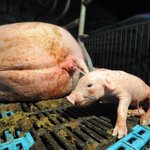
Animals raised for food in the United States nowadays are kept in filthy, windowless sheds on vast industrial "factory farms," where thousands of them are crowded into wire cages, metal crates, or other severely constrictive arrangements.
Written by: Nic

ALT image from: https://weanimalsmedia.org/
26
Did you know that According to Wayne Pacelle, each year, in the US, the food industry raises 10 billion animals (which is more than the human population on Earth)? Fish, chickens, cows, pigs, and sheep are some examples of animals raised for food in terrible conditions.
1
49
Dog Racing, also known as greyhound racing involves the racing of greyhounds around an enclosed track. These dogs race in order to chase electronically powered rabbits. Before the 20th century the chase was done by sight and overtime has changed to smell
britannica.com/sports/dog-ra…

ALT image source: https://news.paddypower.com/greyhound-racing/2020/04/17/greyhound-racing-explained-glossary/
1
62
Animal abuse in sports: Rodeo
Rodeos feature performers who are kept as captive animals. Most of them are usually tame, but are provoked by humans because of the harsh treatments that they inflict.

1
28
The rules from the Rodeo association are not strictly enforced and the fine for mistreating an animal on the rodeo grounds are only $250. Lastly, many animals from rodeos that are sold for slaughter are extremely bruised.
1
24
Haber, a meat inspector, claims that the only places where the skin was attached to their flesh were the head, neck, legs, and belly.
-Kimberley
Sources:
peta.org/issues/animals-in-e…
earthandanimals.com/advocate…
25
Animal protection retweeted

Stereotypical behavior—repetitive, abnormal behavior—has only been observed in captive animals – wild animals have not been shown to develop these, making captivity the direct cause of these abnormal behaviors. #EndWildlifeTrade
Animal protection retweeted

The vast majority of hens in the egg industry are kept in factory farms like this one. Birds spend most of their short lives crammed together in filthy cages, unable to stretch their wings or rest comfortably.
Start making a difference for hens today: mercyforanimals.org/pledge