

Sharing my journey from 0 to $100k MRR🎯 🧑💻 https://xitter.gq/t.co/SmStznIccU - social media scheduler 🦸🏻 https://xitter.gq/t.co/sWzn2gBVeS - simple Intercom alternative Write about SaaS & AI.
░░░░░ $100K MRR
Joined September 2022
- Tweets6.9K
- Following437
- Followers1.2K
- Likes7.7K






Pinned Tweet
I sold my startup this month. It was a really interesting time building an OKR management tool.
I started Focus 3 years ago. Here are a few insights during the journey.
I’ve built 3 startups before PostHero.
One I sold. One was okay. One failed.
Each one taught me something different about growth.
1. The good: Focus
I sold it in 2022. SEO was the main growth channel, and it worked.
But looking back, my biggest mistake was not building a personal brand. I never shared the story, the numbers, the mistakes. I would be much further today if I had started posting back then.
2. The okay: Kepler Leads
My first startup. I hired a team, we built the product, and it had sales. Just not big enough.
The insight came in 2017: writing articles on the internet was the way to grow a business. SEO and content became my main channel, and I’ve used that lesson in everything since.
3. The bad: ClawPlane
It was a trend, and I was a bit late. I put all my effort into building the product and wrote only a few posts about it.
The product wasn’t the problem. Distribution was. I should have been much harder on getting it in front of people.
3 products, and the pattern is clear.
None of them won or lost because of the product. They won or lost because of distribution.
So with PostHero, I’m doing what I skipped before: building in public and sharing the whole story, good and bad.
What’s the one lesson your last project taught you?
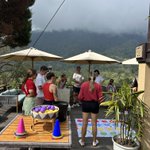
Last Wednesday I hosted a founders meetup in Bali.
One question: what’s your best distribution channel?
6 founders. Different products. Almost every answer = SEO or social.
Few things that stuck with me:
1. SEO is not dead. People who say it is just aren’t doing it. The founders in the room are getting great results with the boring stuff: quality content, backlinks, good site structure. Slow. Still works.
2. Social is slow, then sudden. One founder has 500k on Instagram now. His first 300 followers took 3 months. Then one reel blew up and the next 3 months took him from 300 to 100k.
Same guy. Same effort. Totally different curve once he found what works.
3. How he found it is the real lesson.
He posted 4-5 times a day. Not to look busy, to learn faster. More posts = more data = faster to hit something that goes viral.
And he didn’t guess what to post. He watched competitors, found their viral stuff, added his own 2 cents.
Not copying. Taking a proven idea and making it his.
That’s exactly why a lot of people use PostHero on LinkedIn: check competitors, find what already went viral in their space, adapt it to their niche.
So if you’re stuck on distribution:
Pick one channel.
Post more than feels comfortable.
Study what already works.
Wait for the curve.
What’s your best channel right now?

Last weekend I drove 1.5 hours to the north of Bali for a friend’s birthday.
Mountains. A chalet. Cold air, which in Bali feels like another country. We played games, did charades, ran a live auction for the kids. Laughed more in 2 days than in some full months.
3 years ago I would’ve said no.
Back then 1.5h each way = a “lost day.” And a lost day = falling behind.
So I just worked. Every day. Weekends too. Until one day I realized I wasn’t feeling great. Nothing dramatic. Just empty. The kind of tired sleep doesn’t fix.
So I paused. Started caring about the emotional side too, not only the to-do list. Started saying yes to stuff like this weekend.
Plot twist: I don’t work less now. I work better.
Came back Monday with more ideas than the whole week before. Clearer head. Less forcing. Actually enjoying the work again.
Founders love talking about hardwork. Time with your people is the most underrated one.
The road north is still 1.5h. It just doesn’t feel like a lost day anymore.

You can now run your whole content workflow from Claude.
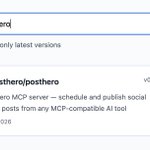
PostHero MCP is live: write posts in your voice, make carousels and reels, check what’s performing.
Setup takes 30 seconds:
Customize → Connectors → Add custom connector → name it PostHero → paste mcp.posthero.ai/mcp

This tweet was written and scheduled without opening a single app.
I just asked Claude. It's connected to PostHero through MCP, so it drafts, schedules and checks my analytics right inside the chat.
Setup takes 1 minute: add mcp.posthero.ai/mcp as a custom connector in Claude.
1,964 posts were created in PostHero last week.
Almost 2,000 in a single week. When I started, that number sounded impossible.
Grateful for everyone who trusts PostHero to run their content.


In 2022 I sold my startup Focus.
It grew almost entirely on SEO. And SEO worked.
But looking back, I made one big mistake.

When I sold Focus, the traffic went with it. I had to start from zero again.
A personal brand works differently:
- It stays with you after you sell
- People trust a founder more than a landing page
- Every new product launches to an audience that already knows you
It's hay burning season in Bali.
After the harvest, farmers burn what's left on the rice fields.
So the streets are full of smoke and everything smells like a campfire.
Not the best time to go out.
But a perfect time to stay home, lock in and focus on building new things (or marketing, finally).
Bali has seasons too. They're just a bit different.


3. I started with the wrong problem.
PostHero began as an AI writer for LinkedIn. Writing help is a real need, but it's a brutal one to build a business on. You're competing with ChatGPT and Claude, and it's hard to win. The problem worth owning was managing all your accounts in one place, not writing the posts.
None of these killed the product. But each one cost me time I can't get back.
The lesson I keep relearning: a real problem isn't always a good problem to build on. Sometimes it's real but unwinnable, because someone bigger already owns it. Pick the problem you can actually win.
Easy to miss when you're solo, with nobody to tell you you're aiming at the wrong target.
Here's a really difficult lesson to learn about social media growth:
When you put follower count first, you won't even notice the trade-off.
Every little sacrifice feels temporary while you're still climbing.
Copy that viral post.
Chase the algorithm.
Write what performs, not what matters.
Future-you will have the audience!
But the skills that make you good at this, unfortunately, don't have an off switch.
You spend a year training yourself to game the system, then you hit the number, sit down to monetize it, and can't.
What a nightmare.
The muscle that knows how to connect disintegrated, while the muscle that knows how to perform is the only one left.
Your authentic voice stopped showing up.
Your unique perspective stopped showing up.
Your actual expertise stopped showing up.
Everyone moved on, assuming your content is just noise.
And the old, "I have something valuable to say" version of you is probably gone too.
Replaced by someone who only understands engagement and vanity metrics and virality.
You don't pay for this choice in followers or likes.
It's in the disappearance of everything else that makes social media actually worth it.
A day in the life of a solo founder in Bali (6 years here):
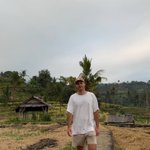
6:30 - rice field walk before I touch my phone
7:30 - gym, then a proper breakfast
9:00 - deep work on Posthero while the US sleeps
12:00 - lunch with founders, always someone mid-launch
13:00 - back to shipping, one client call
16:00 - beach volleyball, the best reset there is
18:00 - sunset, coconut, slowing down
19:00 - dinner with friends
21:30 - asleep, phone in another room
People assume Bali means barely working. I work more focused hours here than I ever did in an office. The difference is I actually want to.


