

Bio-AgriTech, Aquaculture, Bioeconomy, Real Estate, Geopolitics, Faith, Startups, VC +...
B.C. Canada
Joined September 2009
- Tweets23.4K
- Following4.9K
- Followers4.1K
- Likes25.7K




Arno Neumann retweeted

Musk convinced one of OpenAI's founding scientists to leave and build Tesla's eyes instead. To make the pitch, he name-dropped the one person in the world ranked above him. That person, Ilya Sutskever, now runs a $32 billion AI company. So does the recruit: Andrej Karpathy.
The man Musk had to impress first was Jim Keller. Keller is widely considered the greatest chip designer alive, the engineer behind the chips inside Apple's early iPhones and iPads starting in 2010, the architecture powering most AMD computers, and the custom hardware running Tesla's AI. When someone like that needs convincing, the credential has to mean something real.
Musk told him Karpathy was the second-best person in the world at teaching machines to see. The person above him, Ilya Sutskever, had co-authored the 2012 paper that proved computers could reliably identify faces, objects, and scenes from photos, setting off the modern AI boom. Being ranked second to the man behind that discovery was about as high a compliment as the field allowed. Karpathy joined Tesla that summer, two years after helping to start OpenAI as one of its 11 founding scientists.
At Tesla, he made a call that shocked almost everyone in self-driving. He pulled the radar sensors from every single Tesla, the ones Waymo and nearly every competitor called non-negotiable for safety, and built Autopilot on cameras only: eight arranged around the car, all feeding a single system watching everything at once. His reasoning: a human driver navigates on two eyes and a brain. Anything a camera can see, a well-trained AI can handle.
He also built what Tesla called the Data Engine. Every car on the road quietly collected footage of situations the AI had never seen before: a child running into the street, black ice on a highway. Over a million Teslas on real roads sent that footage back, and Karpathy's team used every clip to keep teaching the system. The cars got smarter by simply driving everywhere, all the time.
Karpathy left Tesla in July 2022. Two more stops followed: a year back at OpenAI, then nearly two years running Eureka Labs, an education startup he built on one thesis: AI could be the world's best personal tutor, available to anyone. In May 2026, he joined Anthropic to work on how the next generation of AI models are built and trained.
Ilya Sutskever, the man Musk had ranked above him in 2017, left OpenAI in May 2024 and started Safe Superintelligence, built around a single mission: make AI safe before it grows too powerful to control. That company has no public product. It is valued at $32 billion.
The two people from that 2017 pitch are now each running a major AI company. For a recruitment credential, it has held up.

Arno Neumann retweeted

Yüksek lisans/doktora tezi yazanlar ve her disiplinden akademisyenler için, bugün literatür taramasını kolaylaştıracak ve zevkli hale getirecek bir uygulamadan bahsetmek istiyorum. Eğer Google Akademik’de alt alta makale listesi incelemekten sıkıldıysanız, gelin bakalım 😊
Bu araç, openknowledgemaps.org/ Üyelik vs. istemiyor. Açık erişimli bir araç. Türkçe arama da yapabiliyorsunuz.
>>>Anahtar kelime yazıp aratıyorsunuz, size en alakalı 100 makaleyi güncel olarak görsel bir harita şeklinde sunuyor.
>>>Benzer konulara sahip makaleleri, küme içinde topluyor. Böylece, çalışma alanınızda öne çıkan alt başlıkları saniyeler içerisinde görebiliyorsunuz.
>>>Harita üzerinde makalelerden hangisinin açık erişimli olduğunu açıkça belirtiyor.
>>>BASE ve PubMeb gibi iki büyük veri tabanı kullanması da güzel bir özelliği.
Sizler için hazırladığım kısa tanıtım videosunu aşağıda bulabilirsiniz.
📍Bu paylaşımım hesabımdaki diğer yapay zekâ araçları tanıtımında olduğu gibi, herhangi bir sponsorluk ya da ticari bir işbirliği değildir. Sadece bizzat deneyimlediğim akademik verimliliği artırdığına inandığım araçları araştırmacılara yol gösterme niyetiyle paylaşmaktayım.
Arno Neumann retweeted

PhD Students - Will your next paper be accepted or rejected.
Find out through a peer-review by Review-it.
1. Go to review-it.ai/
2. Upload your paper.
3. Review-it will review your paper.
It will identify:
- The strengths in your paper
- The weaknesses in your paper
- The grammatical and typo issues in your paper
- The overall quality score of your paper
Before uploading your paper, read their data safety policy to know that how they handle your data security.
Try Review-it today: review-it.ai/


Arno Neumann retweeted

I'm obsessed with cognitive biases.
A "cognitive bias" is a systematic error in thinking that destroys decision-making.
11 most powerful (and dangerous) cognitive biases I've found: 🧵
1. Survivorship Bias:

Arno Neumann retweeted

A Princeton classics professor is teaming up with computer scientists to develop AI-based tools to fill in the gaps of fragmented ancient texts that are written on stone, papyrus and parchment.
Learn more about the humanities at Princeton: bit.ly/477GuL2
Arno Neumann retweeted

40 Essential Websites Every PhD Student Should Know
1️⃣ Google Scholar – Find academic papers
2️⃣ ResearchGate – Connect with researchers
3️⃣ Academia. edu – Share and discover research
4️⃣ Connected Papers – Explore related papers
5️⃣ Semantic Scholar – AI-powered research search
6️⃣ Open Research Library – Free research books
7️⃣ JSTOR – Access journal articles
8️⃣ DOAJ – Directory of Open Access Journals
9️⃣ CORE – Aggregator of open access research
🔟 ArXiv – Preprints in science & tech
1️⃣1️⃣ SSRN – Social sciences & humanities papers
1️⃣2️⃣ Scopus – Citation and research tracking
1️⃣3️⃣ Web of Science – High-impact journals
1️⃣4️⃣ ORCID – Researcher identification
1️⃣5️⃣ Google Keep – Quick research notes
1️⃣6️⃣ Mendeley – Reference manager
1️⃣7️⃣ Zotero – Free reference tool
1️⃣8️⃣ EndNote – Citation & research organizer
1️⃣9️⃣ Overleaf – LaTeX for academic writing
2️⃣0️⃣ Grammarly – Improve writing quality
2️⃣1️⃣ ProWritingAid – Advanced writing analysis
2️⃣2️⃣ Hemingway Editor – Simplify writing
2️⃣3️⃣ IThenticate – Plagiarism detection
2️⃣4️⃣ Turnitin – Academic integrity checker
2️⃣5️⃣ Copyscape – Plagiarism checker for web
2️⃣6️⃣ ResearchRabbit – AI research assistant
2️⃣7️⃣ Sci-Hub – Access paywalled research
2️⃣8️⃣ Library Genesis – Free books & articles
2️⃣9️⃣ Trello – Organize research tasks
3️⃣0️⃣ Notion – Research management hub
3️⃣1️⃣ Evernote – Note-taking & organization
3️⃣2️⃣ Scrivener – Writing tool for dissertations
3️⃣3️⃣ Publish or Perish – Citation analysis
3️⃣4️⃣ Thesis Whisperer – PhD advice blog
3️⃣5️⃣ PhD Comics – Academic humor & insights
3️⃣6️⃣ PhDForum – Online community for PhD students
3️⃣7️⃣ Latex Templates – Thesis & research formatting
3️⃣8️⃣ DataCamp – Learn data skills
3️⃣9️⃣ Coursera – Free academic courses
4️⃣0️⃣ Udemy – Research & academic skills courses
📌 Save & Share with fellow researchers!
#PhDLife #ResearchTools #AcademicSuccess

Arno Neumann retweeted

🚨 In 1992, a MIT lecture quietly revealed more about product and sales than most 2-year MBAs ever will.
Most people have never seen it.
It came from Steve Jobs and instead of teaching theory, he broke down how great products actually win.
Watching it today feels unreal.
He explained that people don’t buy products they buy meaning. The best products aren’t just functional, they connect with how people see themselves. That’s why some ideas spread effortlessly while others die, even if they’re technically better.
He also made it clear that marketing isn’t about features. It’s about clarity. If you can’t explain why your product matters in simple terms, it won’t matter at all. Complexity doesn’t impress it confuses.
And his biggest edge? Obsession with experience. Not just what the product does, but how it feels. The small details, the simplicity, the story that’s what separates good from unforgettable.
That’s why this MIT lecture still hits hard.
Because while most people are building products…
Very few understand why people actually buy them.
Arno Neumann retweeted

Napoleon Hill spent 25 years interviewing 500+ of the most successful people in history.
From Henry Ford to Thomas Edison, he discovered how history's top 0.1% think differently from the rest of us.
Here are 13 of the most unconventional mental habits he found:

Arno Neumann retweeted
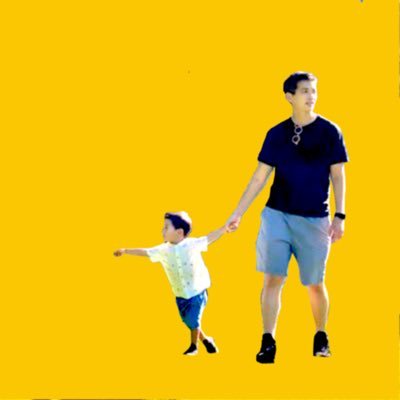
Lee Kuan Yew talks about talent spotting candidates: he was so inspired by how the Apollo 13 astronauts salvaged the 1970 lunar mission that he adopted NASA’s psychological assessment tests for the Singaporean government.


Arno Neumann retweeted
Two big steps towards our vision for @NotebookLM as the ultimate research platform:
• Integrating Deep Research, with a set of only-at-Notebook features that let you explore the retrieved sources
• Launching a series of Featured Notebooks curated by @GoogleResearch
These developments are designed to enhance the full life cycle of research and scholarship: using the power of AI to assemble the knowledge base you need to advance your understanding, and then making your work accessible and intelligible to a wider audience using all the explanatory tools that Notebook offers.
If you've used DeepResearch in the Gemini app, you already know that it's a pioneering advance in assembling complex, grounded information on any topic imaginable—collecting an entire trove of material for you and writing a nuanced research report that summarizes the findings.
But because NotebookLM is designed to manage and explore potentially hundreds of sources, the Deep Research report is only the beginning of your journey. In our integration, Deep Research gives you an overview all of the sources it found during its research phase, with annotated commentary explaining how each source related to your original query. You can then choose to import some or all of the sources to the notebook, along with the report itself, which you can then explore or transform using the full suite of tools that Notebook offers: grounded chat with citations, Mind Maps, Audio/Video overviews, and much more.
And it's that suite of tools that make the @GoogleResearch Featured Notebooks so compelling as well. Each notebook contains a curated collection of articles on a specific topic, published by the Google Research team. Think of them as a kind of knowledge base of Google's best thinking on a series of compelling research questions: How do scientists link genetics to health? How will quantum computing be useful?
If you're a specialist in these fields, you can read the original papers or ask nuanced questions in chat and advance your understanding of the latest developments. But these notebooks can also make the complex but important topics understandable to non-specialists or students. Each notebook comes with pre-generated audio and video overviews, flashcards, and other Studio artifacts designed to make the scientific and technological concepts accessible and interesting. And you can always explore the material with our new "Learning Guide" chat mode that effectively gives you a personal tutor to enhance your understanding.
There's much more to come on this front, but you can see in these two announcements how we see Notebook as both a workbench for conducting research and a publishing platform for sharing the results of that research once you're ready to make it public.
Deep Research is rolling out this week to all users. The first two Google Research notebooks are live now, both of them deep dives into our most recent discoveries involving genetics and health. (Links in the following tweets.) We'll be publishing new notebooks in the series every other week or so for the next few months.

Arno Neumann retweeted

92% of businesses fail to scale.
Here’s how to be among the 8% that succeed:
There’s one powerful framework that can help:
The Growth Paradigm Model.
Developed by Shift Paradigm, it’s a great approach to sustainable business growth.
Successful growth strategies require:
✔️ Clear objectives
✔️ Structured processes
✔️ Cross-functional alignment
✔️ Data-driven decision-making
Here’s how to apply it:
1. GTM Objectives
Not all goals drive sustainable growth.
Set clear market and audience objectives.
Align product and brand strategies.
Create targeted go-to-market plans.
2. Process & Planning
Structure creates scalability.
Optimize budgets and marketing performance.
Refine revenue processes.
Maintain consistent messaging and campaigns.
3. Technology & Data
Your tools define your capabilities.
Implement a robust data architecture.
Build a scalable tech stack strategy.
Automate whenever possible.
4. People
The right team makes the difference.
Design optimal organizational structures.
Invest in onboarding and training.
Boost engagement and retention initiatives.
5. Analytics Engine
What gets measured gets improved.
Track all key aspects of business.
Build a comprehensive analytics ecosystem.
Structure decision-making around data.
6. Programs
Execution is everything.
Optimize sales and marketing enablement.
Generate consistent demand.
Drive customer engagement and loyalty.
Winning growth strategies don’t happen by accident:
They’re designed, implemented, and optimized systematically.
P.S. Which area of the Growth Paradigm Model needs your focus right now?
♻️ Repost to help more businesses scale!
----
📌 Get my top 100 infographics for free:
1) Follow me.
2) Subscribe to my free newsletter at WildCapital.co
.
You’ll receive them directly in your welcome email.

Arno Neumann retweeted

Securitize to become first U.S. public company offering end-to-end tokenization infrastructure. The $1.25B SPAC merger positions it to tap into a projected $19T market for tokenized real-world assets.
BlackRock-linked tokenization firm.
#AndTheIornyIs that Securitize chooses a traditional off-chain IPO 😉
Securitize to go public via SPAC deal
buff.ly/KndZyo6

Arno Neumann retweeted

FREE Look at Nvidia’s Journey
On its way to $5 Trillion $NVDA
Arno Neumann retweeted

Proposals fail because of two misplaced paragraphs.
Most researchers bury their motivation on page 3.
They lead with background instead of urgency.
The Why-What sequence flips this completely.
Here's a 15-part structure I use that makes it simple.
Let's break it down into 7 broad steps:

ALT how to write a research proposal
Arno Neumann retweeted
PhD Students – How to create a diagram in seconds?
First, why do you need diagrams?
You need diagrams for:
→ Your research papers
→ Your presentations
→ Your posters
→ Your thesis
→ And much more
Now it’s easy to create diagrams.
Meet @answerthisio: a tool to make diagrams in seconds.
It works in 5 simple steps.
1. Go to answerthis.io?fpr=faheem89 and log in.
2. Click on Diagrams from the left menu.
3. Enter your diagram description
4. Select the type of diagram e.g., flowchart.
5. Get your perfect diagram
You can create the following types of diagrams.
↳ Flowchart
↳ Mind map
↳ Gantt chart
↳ Timeline
↳ Pie chart
↳ State diagram
↳ Git graph
↳ User journey
Anything you'd like to add?