

ἀκρόκομοι Kali Yuga Pervert
Joined November 2020
- Tweets1.8K
- Following844
- Followers1.4K
- Likes133K


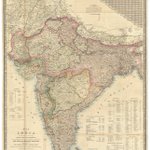

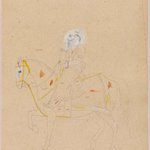
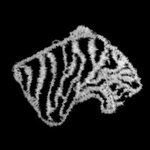


Some of the Earliest Known or Existing Sikh Art of the Gurus and Their Close Associates from the Ram Rai Darbar in Dehradun (Made Before 1688)


27
824


There is nuance;
Henry Lawrence to the Govt. 17 Dec. 1846: “For the past day or two, the Rani has been directing all her efforts toward bringing the various chieftains, both major and minor, into her fold, in order to unite them around a new plan for the kingdom's independence…”

Follow @Ascndro on Instagram for posts on Sikh history, politics, philosophy and theology.
instagram.com/ascndro?mdxt=M…

ਅਸਕਿੰਦ੍ਰੋ retweeted
In the letters home from Sikh soldiers serving in France, we find instances of them requesting their layman relations for the provision of opium (aphīm), often with instructions on how to smuggle it in.
Kartar Singh tells to label the narcotic as ‘a preperation for the beard’.


“One great feature with regard to the Sikh, who is one of the most warlike and powerful of Indian tribes, is the fact that he is never allowed to cut his hair or beard. This is the law of his caste. He rolls up his beard, no matter how long, and tucks it away under his ears. His hair, which is always washed with curds, is treated in the same manner.
The Sikhs proved themselves a great fighting race in the Sikh War, and in some of their battles, though victory was said to be ours, in reality it was a draw. They come from the Punjab, the land of the five rivers, as it is generally described, and are an intellectual race, with a predilection for opium-eating, which enables them to overcome fatigue.”
- “Kitchener’s Hospital for Indian Troops”, Cayley Calvert, published in the Brighton Hove and South Sussex Graphic Newspaper, July 1915, p.11.


ਅਸਕਿੰਦ੍ਰੋ retweeted
“Death was at our heels. From the left, we were attacked with shrill hurrahs. Little Schultz admitted to me later he'd had a vision of a long tall Indian behind him with a knife, reaching out to grab him by the scruff of the neck.”
Ernst Jünger, Storm of Steel, Chapter XI


In the letters home from Sikh soldiers serving in France, we find instances of them requesting their layman relations for the provision of opium (aphīm), often with instructions on how to smuggle it in.
Kartar Singh tells to label the narcotic as ‘a preperation for the beard’.
“One great feature with regard to the Sikh, who is one of the most warlike and powerful of Indian tribes, is the fact that he is never allowed to cut his hair or beard. This is the law of his caste. He rolls up his beard, no matter how long, and tucks it away under his ears. His hair, which is always washed with curds, is treated in the same manner.
The Sikhs proved themselves a great fighting race in the Sikh War, and in some of their battles, though victory was said to be ours, in reality it was a draw. They come from the Punjab, the land of the five rivers, as it is generally described, and are an intellectual race, with a predilection for opium-eating, which enables them to overcome fatigue.”
- “Kitchener’s Hospital for Indian Troops”, Cayley Calvert, published in the Brighton Hove and South Sussex Graphic Newspaper, July 1915, p.11.

