

Swiss Astrophysicist at @Caltech. Studying the First Galaxies with the Largest Telescopes on Earth & in Space. 🇨🇭🇺🇸🏖🔭
- Tweets2.9K
- Following321
- Followers787
- Likes2.4K







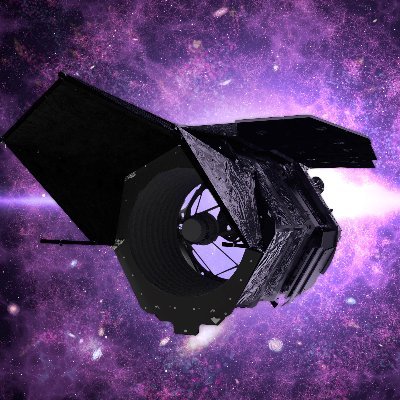

ALT This test image captures the very first photons of starlight to reach the Wide Field Instrument on NASA’s Nancy Grace Roman Space Telescope. It was taken as an initial performance assessment with the detector array still stowed as it was for launch, far from best focus. Roman’s primary science instrument has opened its eyes to the universe for the first time, revealing a sea of out-of-focus stars, each spread out over many thousands of pixels. The image, which zooms into one detector and zooms again to a single star in the insets, offers a baseline the Roman team will work from to align the telescope’s optics and tune the focus. The team will soon activate the instrument’s fine-guidance system, which will mean Roman can lock onto targets. They’ll also focus the observatory, which will shrink each star’s light to appear as a crisp point, rather than the broad, donut-like features seen here (which appear as expected given the instrument’s present configuration).








ALT This image contains a montage of the 2025 NASA Hubble Fellowship Program (NHFP) awardees. Each image shows a close-up of the person's face framed in a six-sided shape, so the images fit together in a honeycomb pattern that mimics a telescope mirror's layout. The Einstein Fellows, clustered on the left, are framed in blue for their theme "How does the universe work." In the center cluster are the Hubble Fellows in orange; their theme is "How did we get here?" On the right are the Sagan Fellows in green with the theme "Are we alone?"

ALT Six images show a small portion of the sky in various hues of color that represent infrared wavelengths. The three images across the top are in shades of purple, violet, teal, blue, and green. The bottom three images shows gradients of green, yellow, red, and orange. The first three images across the top are one large observation of the sky, SPHEREx detects infrared light, which is invisible to the human eye. To make the images shown here, science team members assigned a visible color to each infrared wavelength captured by the observatory. With each detector capturing 17 unique infrared wavelength bands, there are 102 hues in this image. To detect so many infrared colors, SPHEREx uses color filters set on top of the detectors. (If the detectors are like SPHEREx’s eyes, the filters are like color-tinted glasses). A standard color filter blocks all wavelengths but one, but the SPHEREx filters are more like rainbow-tinted glasses, in that the wavelengths they block change gradually from