

N 4°12' 0'' / E 73°32' 0''
Joined August 2008
- Tweets13.6K
- Following1.4K
- Followers1K
- Likes2.7K




atollscape retweeted

Also, one question I keep coming back to is, how will Henley & Partners and Eagle Hills work together.
The Maldives already has a partnership with Henley & Partners for residency programmes. In other countries, Henley & Partners has entered into exclusive agreements. I’m not sure whether the Maldivian agreement is exclusive.
But if it is, Eagle Hills has to channel its residency applicants through Henley & Partners. And would Eagle Hills agree to that? I find that highly unlikely.
Perhaps one of our journalist friends could investigate and write an investigative piece on this. Direct Q on this issue to economic minister, housing minister and the AG

This is the Maldives first residency programme under the SEZ township framework, facilitated through Henley & Partners.
Few Maldivians know about it.
Originally launched as Project AYLA with funding coming via UAE, it has since been rebranded as Project Laurel, with financing now reportedly coming from the US

atollscape retweeted
Maldives Ethnography #RayyithungeBinaaveshi
#ViluntheriRaajje


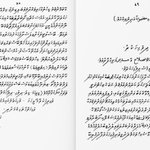
In November 1983, the small Provençal town of Valbonne played host to a roundtable for Ethnographers. Among the presenters was B. Koechlin, a French ethnographer, who stood before colleagues with a curious offering: a Maldivian poem.
hasaeed81.wordpress.com/2025…

atollscape retweeted

The small-leafed orange mangrove propagule, known locally as Kan'doo (Bruguiera cylindrica), has historically served as an important traditional and survival food #Maldives . While it is most famously remembered as a crucial staple during the WWII famine (bodu thadhu), it was historically maintained and cultivated in the northern islands. The processing of Kan'doo is a multi-step, labour-intensive process required to remove its natural bitterness and make it completely safe and edible: #Sgpgef
atollscape retweeted
Direct historical justification for abolishing the legal fiction of kingly Bandaara (vacant state sea) and codifying lagoons as an inalienable Sovereign Community Commons (Environmental Waqf/Hima).
By Nazim Sattar on
@IndependentMV

This is fascinating.
Part three: The Cannanore covenant maldivesindependent.com/hist… via @IndependentMV

atollscape retweeted

Concept Paper: Ethnobotanical Study of Native Healing Plants in the Grea... youtu.be/b7UkP38cphs?si=hT15…

atollscape retweeted

Bill on leasing uninhabited islands and lagoons tabled in parliament. Read #Maldives #Land #Islands #Lagoons
majlis.gov.mv/storage/action…
atollscape retweeted

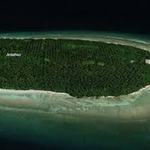
Keylakunu (Video shot in 2016 ), an uninhabited island (Video shot in 2016 ), located in the south, is uniquely famous for having the only true forest-like environment #maldives. Unlike typical Maldivian islands, it has no central lagoon and is surrounded by a dynamic shoreline.
The mass die-off of Kan'doo (Small-leaved Orange Mangrove) in HDh. Keylakunu and across other northern islands during 2020 and 2021 was caused by hypersalinity.
Because of its geomorphology, the island harbors an extraordinarily dense and rare forest of Avicennia marina (Grey Mangrove, or Barugas) along with Kandoo (Bruguiera cylindrica). The Kandoo die-off specifically impacted low-salinity-tolerant species that were trapped as the tides and saline intrusion overwhelmed the enclosed wetland areas. #Sgpgef
atollscape retweeted
Could @mvpeoplesmajlis please make the recording of #RayyithungeBinaaveshi session available for the public @HassanZiyau? Also, the Binaaveshi committee is unlisted on website so we are unable to acesss yaumiyyya/audios of meetings @ali_niya @SalleHoarafushi @waddey_ @husnfirey


#RayyithungeBinaaveshi aa behey vaahaka dhakkaa Mi committee Rayyithunnah sirru kureetho? Keevvetho Majlis feed nethee?
atollscape retweeted
Mahal~
The Biopolitics of the Maldivian Ocean Commons
Undisciplining Natural Capital: Undisciplining Natural Capital dvipa.substack.com?utm_sourc…


atollscape retweeted

Multiple ethnographic undertakings, by Koechlin and Romero Frias quoted this in their work emphasizing the importance of preserving the island and community spirit encapsulated in these verses but also the importance of celebrating this work itself.
atollscape retweeted

Palestinian families have their tents torn down by wind and rain and are forced to walk to find shelter elsewhere


atollscape retweeted

The Buried Buddha of Thoddoo — 1958–59
As the Thoddoo dagaba excavation continued in 1958–59, workers lifted a sandstone slab inside the mound. Beneath it lay a large statue of a robed monk, closely resembling Buddha images from Sri Lanka.
The sculpture had been deliberately buried upright and sealed under stone and sand — almost certainly hidden when the Maldives converted to Islam in 1153 and Buddhist worship was outlawed.
Eyewitnesses described the atmosphere as charged with awe and fear. Some shouted at the statue as if it were a villain from folklore. By the next morning, its head had been smashed off. Though reattached, suspicion lingered and tensions rose.
The statue was transported to Malé and placed under a verandah at Mulee-aage, where officials debated what to do with it. Within days, however, a group stormed in and destroyed it. Only the head survived, now kept in the National Museum.
One of the Maldives’ most remarkable archaeological finds was not lost to time, but to vandalism and fear.
This is the second of four posts on the Thoddoo discoveries of 1958–59. Next: the Roman Coins found in Thoddoo.
Photo: Ali Najeeb, Thoddoo dagaba excavation, 1958–59.


atollscape retweeted
Naifaru Abdul Hakeem Kaanna Kaleyfaanu — better known as Naifaru Dhon Kaleyfaanu — was one of the country’s most respected traditional healers. Based in Naifaru, Lhaviyani Atoll, he was sought after for his deep knowledge of traditional medicine at a time when formal healthcare was still limited in the islands. Beyond his role as a hakeem, he also served as Atoll Chief of Lhaviyani, making him a figure of both healing and leadership.
His legacy lives on most visibly through his children. He was the father of Dr. N.D. Abdulla Abdul Hakeem, the first Maldivian doctor to complete formal medical studies abroad and later the country’s pioneering ophthalmologist. Dr. Abdul Hakeem went on to establish eye care services in the Maldives, performing the nation’s first corneal transplants and leading eye camps across the islands for decades.
Another of Dhon Kaleyfaanu’s sons, N.D. Abdul Azeez, became a leading conservationist and a pioneer of Maldivian tourism development, co-developing Ihuru and later serving as Director of Agriculture. Other family members, too, went on to hold important roles in public life, carrying forward the values of service and care instilled by their father.
Naifaru Dhon Kaleyfaanu is remembered not only for the countless lives he treated with his medical knowledge, but also for setting the foundations of a family whose contributions to medicine, environment, and nation-building continue to shape the Maldives today.


atollscape retweeted

📢 Call for Research Papers & Policy Briefs
Be part of shaping the Maldives’ future! 🌍✍️
