AI for atomic scale engineering: advanced materials + synthesis copiloting.
Boston, MA
Joined June 2022
- Tweets36
- Following48
- Followers153
- Likes3





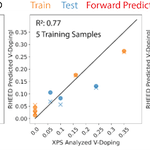


Materials innovation doesn't have a discovery problem. It has a scale-up problem, and that's what Atomscale is built to solve.
We drilled to the bottom decades ago and Feynman was right: there is plenty of room. Now the work is different, navigating what we found and bringing it back up, from atom to scale.
Read more below about our thesis and vision for the next era of materials engineering.
#AdvancedMaterials #DeepTech #MaterialsScience #Semiconductors

We’re hiring a Full Stack Software Engineer to help shape the next generation of our platform.
You’ll build end-to-end features that enable materials process engineers and scientists to connect, analyze, and act on complex materials data.
This role spans the full stack, turning deep process intelligence into intuitive tools and automation to deliver real impact for engineers and advanced materials manufacturing.
More details here: atomscale.ai/careers/softwar…
#Boston #DeepTech #Startup #hiring
🚀 We’re hiring!
Atomscale is looking for a talented Applied AI/ML Engineer to join our team in Boston, MA.
If you’re excited by the idea of applying machine learning to real-time materials processing and enabling atomic-scale precision in manufacturing, we’d love to talk. This role bridges AI, high-performance computing, and advanced materials science—helping shape the future of semiconductor and nanotech innovation.
Join us at the intersection of AI and materials, where your models directly impact how next-generation materials are discovered and produced.
👉 Learn more and apply here: atomscale.ai/careers/applied…
#hiring #machinelearning #artificialintelligence #materials #deeptech #startup #atomscale #Boston
Atomscale exists to build the bridge between raw experimental data and actionable insight to unlock the future of materials science.
Read on:
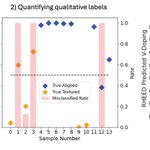
In materials science, data is not the problem—context is. Modern synthesis techniques operating at atomic precision now generate exponentially more raw data than they did even a decade ago. Yet, despite this explosion of data, the field continues to face a critical bottleneck: a scarcity of labeled data. Without it, the application of AI and Machine Learning (ML)—technologies with huge potential to improve empirical design and process optimization—remains largely untapped in materials development and scale-up.
Labeled data is the cornerstone of effective AI and ML models. It enables algorithms to find patterns, predict outcomes, and optimize processes. In sectors like natural language processing or computer vision, large labeled readily available datasets have catalyzed decades' worth of progress in just a few years. But in materials science, the situation is very different. While experimental tools and simulation engines are vastly more powerful today, the raw data they generate still depends heavily on manual interpretation by domain experts to be transformed into structured, labeled insights and applied in synthesizing the actual materials.
This human-in-the-loop approach—tedious, expensive, and error-prone—is incompatible with the scale of challenges facing several critical industries. Advanced semiconductors, solid-state batteries, next-generation photonics, and quantum computing all rely on successful integration of new materials and devices. Yet every step toward innovation introduces complexity at the atomic level: defects, interfaces, novel phases, and unpredictable interactions. Without high-quality, contextualized data at scale, humans and even the best AI tools are flying blind.
At Atomscale, we believe this bottleneck must—and can—be broken. Our platform is purpose-built to automate the extraction, integration, and labeling of data across the entire materials lifecycle. Whether it’s microscopy images, spectroscopic data, synthesis logs, or modeling output, our system transforms heterogeneous data into a unified, labeled foundation that can be readily compared across samples and materials systems. Since each of these raw data sources captures just a small slice of the state of the material, we build task-specific models to distill as much signal as possible from each measurement to build this unified foundation. Using models instead of manual effort to achieve this reduces bias and provides the scale needed to input data to our AI agents, which can monitor and deliver feedback on complex processes to enable commercialization of new transformative materials and accelerate production scaling.
This is speeding up scaling of materials platforms by applying computation to model the physical world in real-time in a way that’s never been done before, enabling a new era of materials engineering. By automating the creation of labeled datasets at scale, we give our customers the power to identify trends, predict performance, and optimize process variables faster and more reliably than ever before. For companies racing to commercialize new materials, Atomscale delivers a critical capability: data-driven decision-making at the atomic scale.
In the years ahead, the pace of innovation will increasingly depend not just on how much data we can gather, but how intelligently we can use it. Labeled data is the bridge between raw experimental output and actionable insight. Atomscale exists to build that bridge—for every lab, every fab, and every breakthrough yet to come.

AI agents are poised to transform the commercialization of advanced materials. At Atomscale, we’re driving this transformation with our next-generation AI agents, purpose-built for atomic-scale engineering.
Read on:
The development of new materials and their integration into devices remains one of the most challenging and costly barriers in advancing foundational technologies. Recent advances in both artificial intelligence and state-of-the-art computational resources are creating a transformative era for materials synthesis empowered by AI agents. These digital collaborators will serve as intelligent decision-making layers that help increase engineering precision to accelerate laboratory breakthroughs and enable industrial-scale production of next-generation materials.
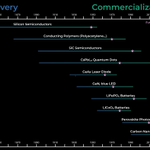
From novel semiconductors for next-generation computing to advanced cathode materials for high-performance batteries, progress in advanced materials production is hindered by long development cycles and high costs. As established materials platforms have matured (e.g. silicon, lithium cobalt oxide (LCO), etc…), the gap between successful lab-scale POCs and scalable industrial application has only widened, with commercialization efforts frequently spanning over a decade and costing hundreds of millions to billions of dollars.
The combination of artificial intelligence and state-of-the-art computational resources is laying the groundwork to address challenges at the atomic scale that were previously too complex to consider. The attention on generative models has highlighted the use of AI to model atomic interactions and predict new materials, but an even more massive opportunity exists to leverage AI agents to dynamically control and optimize precision materials synthesis – enabling production of more performant and higher quality materials and devices.
AI agents do not replace human experts; instead, they augment the decision-making process by acting as effective copilots for human-in-the-loop synthesis. They integrate orders of magnitude higher resolution real-time data analysis with expert context, offering actionable insights that would not otherwise be available with human analysis alone. Agents can be tasked to rapidly identify causes of process variances, assess many parallel opportunities for optimization simultaneously and can be employed to dynamically control processing based on real-time metrology and characterization. Natural language interfaces offer an opportunity to embed rich empirical process context that is difficult to document with rigid data models alone. This intelligence can help shorten commercialization timelines and optimize material performance at the atomic scale.
At Atomscale, we are advancing this approach with our next-generation AI agents. Our platform integrates custom AII with real-time in-situ monitoring to streamline the engineering of atomic-scale materials. By analyzing continuously streamed characterization and metrology data on the fly using proprietary models and augmenting these results with agent-driven decision support, our system provides context-aware analysis of materials synthesis. This allows our platform to suggest precise adjustments to growth parameters during or after synthesis, thereby supporting more controlled and efficient material development.
AI agents are positioned to play a significant role in accelerating the commercialization of new materials. Through massively scalable data analysis and context aware decision-making, these tools can help streamline the development process and more effectively transition laboratory innovations to commercial applications.
If you are interested in exploring how AI agents can support and enhance your materials research and development efforts, please contact us.

Exciting news — Atomic Data Sciences is now Atomscale!
Our new name reflects our evolution from automating data analysis in materials science to building a comprehensive intelligence layer for atomic-scale engineering. As we grow, our mission remains clear: to drive breakthroughs in advanced materials synthesis from R&D to production with state-of-the-art AI.
We're more focused than ever — visit us at atomscale.ai!