
Partner @bessemervp w/ @anthropicAI @perplexity_ai @waymo @clickhousedb @canva @saronic @49ers @servicetitan @silanamotech
CA
Joined March 2008
- Tweets8.2K
- Following546
- Followers22.1K
- Likes6K






Byron Deeter retweeted

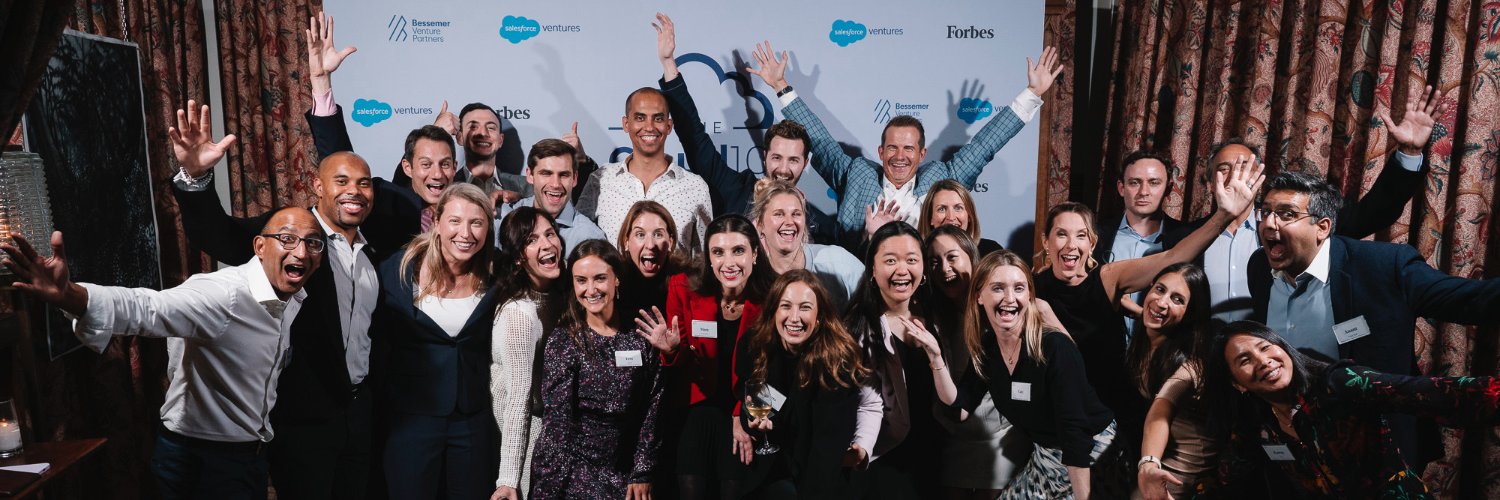
Today’s a special day for our friends at @AnthropicAI —and last week, we had a blast at HQ where we hosted 100+ founders for Anthropic x Bessemer’s second Founder Day. 🚀
We heard from @izrailevsky of @ClickHouseDB, @anuraggoel of @render, & Jesse Pedersen of @LuxuryPresence on what’s working in production and the future of agents.
Then, @jarredsumner (Bun), @shamantri (Superlink), and @slashdotpeter (OpenMeter) shared more about building at the frontier.
A special highlight was @katelyn_lesse who discussed the future of engineering in an age defined by compounding intelligence.
A big thank you to the entire Anthropic team for a great afternoon, including @jneuwirth4, @jozhukennedy, Max Kirby, Alek Hunter Kemeny, Gaby Wilkerson-Melnick, @RLanceMartin, and John Robison.
We’re excited about what’s next. ✨

ALT Anthropic X Bessemer Founder Day


Byron Deeter retweeted

Bessemer's Byron Deeter says Anthropic is now the largest investment in the firm's 116-year history
"It feels sort of like Christmas as everyone's unwrapping this gift of the Anthropic S-1"
"We were fortunate to invest early in what was the $14 billion pre-money round, Series D"
"This is now the largest investment in Bessemer Venture Partners' 116-year history by cost basis, nonetheless value"
Anthropic's S-1 shows revenue of $16.3B in H1 2026, up 14x from H1 2025, with the IPO expected the week of Nov 16 under $ANT
The biggest winners of this IPO already got in years ago
via @CNBC, featuring @bdeeter
Byron Deeter retweeted
"AI is the mega trend of the next several decades, and this is the first opportunity to truly get pure-play software exposure."
@bdeeter joined @BloombergTV following @AnthropicAI's S-1 filing to discuss signals of IPO readiness, why it could open the floodgates for a 2027 class of AI IPOs, and the thesis we've been building toward across our portfolio.

Anthropic’s IPO is what markets “have been waiting for, says Byron Deeter from Bessemer Venture.
He tells Ed Ludlow why 2027, post-Anthropic IPO, will be the year public market investors really get to participate in the AI wave bit.ly/4esWCty


Byron Deeter retweeted

The fun bit about the oil analogy...back in the 1880s, oil was for refined for...wait for it...lighting kerosene lamps. The big use cases - cars, planes, plastics (all of which consume A LOT of oil) - didn't come around until decades later! With AI, the first use case was a consumer chatbot. Now coding, legal, and so on. On a relative basis, with Intelligence, we're still doing the equivalent of lighting kerosene lamps! So many amazing use cases for Intelligence still to come...we can't even imagine them yet!

“Intelligence is a bigger market than oil.”
@spdholakia on @twentyminutevc with @HarryStebbings — 31 years in software, and he’s felt this kind of magic only a handful of times.
Every prior time, a trillion-dollar supercycle followed. His most contested claim: in AI, capital is the moat.
Watch the full episode to learn more → youtu.be/-r2_5LboWL8?si=pYks…
Byron Deeter retweeted

If you’re ever sad, just remember the world is 4.543 billion years old and you somehow managed to exist at the same time as Mike Evans


Byron Deeter retweeted
Last chance for AI 100 📣 In partnership with @NewcomerMedia, the AI 100 is the new definitive ranking of the top private AI companies.
Nominations close today, and selections begin tomorrow. Eligible companies either build AI or the systems AI runs on, at any stage of fundraising.
Submit your company today: theai100.com

ALT The AI 100
Byron Deeter retweeted

George Kittle now owns the #49ers franchise records for receiving yards, receptions, TDs by a TE 👏

Byron Deeter retweeted

Your creativity is the limit in terms of what you can have Computer do for you. This is the kind of project that you can let an agent run for hours to come back with something great.

Byron Deeter retweeted
1/ CEOs, the AI-native CFO is one of your highest-leverage hires.
Only 24% of finance leaders are actively deploying AI today. Most are blocked by data quality, system fragmentation, and compliance concerns.
8 signs on what separates a great CFO from an average one, and the questions to ask when you're hiring. 🧵
Byron Deeter retweeted

#49ers LB Fred Warner had a career-high 17 tackles today, the most by any player in a game this season and the most by a Niner since Chris Borland in 2014.

Byron Deeter retweeted

JUST IN: Investigation reveals former Anthropic researcher Jacob Coxon reportedly worked with a “doomer PR firm” while launching his viral campaign warning of AI’s existential risks.
Byron Deeter retweeted

He can’t be stopped!! This is before practice! Are you kidding me @JuiceCheck44 🧃


Byron Deeter retweeted

🚨🚨HISTORIC🚨🚨
#49ERS QB BROCK PURDY HAS THE HIGHEST CAREER PASSER RATING OF ANY QUARTERBACK WITH AT LEAST 1,000 PASS ATTEMPTS.
Purdy’s 104.9 rating is ahead of Lamar Jackson, Aaron Rodgers, Patrick Mahomes, and every Hall of Famer.
INSANE STAT.
🤯🤯🤯

Byron Deeter retweeted

Today we announced the Claude-led discovery of a molecular machine that we suspect could represent a new gene editing mechanism. Its precise function, biotechnological utility (if any), or level of significance is not yet clear, but at minimum it is work I would have been proud to do as a PhD student. The work was done mostly, though not entirely, by Claude: our life sciences team suggested a broad area of research, Claude read through the literature and a bunch of genome data and discovered something interesting, then Claude proposed experiments to verify the discovery and our team carried them out.
It’s easy to dismiss this as a one-off or curiosity, but we’ve repeatedly seen a pattern where AI performance in new intellectual domains goes from weak to superhuman in a matter of a few years. In 2023 models struggled to do math at the level of an average high-school student. In 2024 they started to do well on math competitions for the best high-schoolers in the country, in 2025 they started to solve minor open problems, in early 2026 more significant open problems, and in late 2026 they are beginning to solve the top few open problems in all of mathematics. We believe AI for biology is on a similar exponential trend.
The main difference between biology and mathematics, of course, is that math can be done purely theoretically, while biology requires experimentation. Some have used this to draw the conclusion that AI’s utility in biology will be limited. We think this is wrong. As we’ve demonstrated today, humans can collaborate with AI to perform the experiments, validate key results in a few weeks and, if necessary, work with the AI to iterate on what they find. Eventually it may even be possible for Claude itself to safely perform the experiments by autonomously controlling lab equipment, with appropriate safeguards in place, but we aren’t doing that today (our lab is also a BSL1/BSL2 facility that doesn't handle materials dangerous to humans).
More broadly, biomedical advancement has many stages — from fundamental biology discoveries, to translational research, to drug discovery, clinical trials, and finally the actual delivery of medicines and health care to patients. We are also interested in these later stages, but even simply accelerating the first stage of fundamental biological discoveries has the potential to speed up and broaden the entire pipeline. Improving our understanding of biology and sharpening biologists’ tools can drive forward all of the later stages, for example by identifying new drug targets, finding new therapeutic modalities, allowing for more precise measurement, and speeding up the experimental loop which itself further accelerates our understanding of biology. This will not in itself speed up clinical trial times, but if it succeeds it could greatly increase the number of promising candidates that go into the pipeline — an increase in throughput even though latency remains.
In Machines of Loving Grace, I wrote about AI’s potential to “cure most diseases in 5-10 years” — a goal that sounds impossible, but one I believe is just barely possible if AI is applied to every stage of the pipeline. The first step is showing that AI can first help with, and then drive, biological discoveries.
Claude’s discovery is the latest in a line of related prior work that goes back decades, beginning with systems like CRISPR, and continuing with discoveries like the bridge recombinase and VIPR in the past few years. Recently, there has been heightened interest in systems based on reverse transcriptase (RT) enzymes, the enzyme underlying the system Claude identified. And most recently, a Stanford team working independently described a novel RT system with an associated non-coding array that is in some ways similar to the one Claude found, though they are distinct systems that evolved independently from each other. I believe that we’re at the very beginning of finding such systems and developing them into powerful tools for biotechnology.
I’m proud of the resources Anthropic has invested in accelerating the public benefits of AI through the life sciences, and we’re aiming both to grow our life sciences team and to work with other scientists to extend this approach to a broad range of problems. If you have a proposal for a research collaboration or are interested in joining our life sciences team, please reach out.

Claude has discovered a previously unknown enzyme system hidden in the DNA of bacteriophages. Beside the enzyme’s gene sits a long array of repeating DNA—a structure that looks somewhat similar to CRISPR.
We don’t yet understand what this system does, but only a handful of known systems share its features, and all of them are able to cut, copy, and paste DNA. Historically, the discovery of such programmable systems has helped revolutionize medicine. CRISPR, for instance, is now the foundation of genetic medicines. But it will take much more work to learn what this system does, and whether it can be put to similar use.
Read more: anthropic.com/news/claude-di…

Byron Deeter retweeted
With @elonmusk & @sama both agreeing with @DarioAmodei 's recommendations, all eyes now turn to @Google !
@sundarpichai are you also supportive? Can we make progress on this critical issue at this critical time together as an industry?

Byron Deeter retweeted

I agree with Dario that we need to pace the frontier. This has been a primary topic of discussions we've had at OpenAI in recent weeks.
Committing to having independent evaluators with employee-like access is a great idea, and we will do the same. We'll have more to share soon.

We Must Pace the Frontier: I’ve written a new essay on why the AI industry should slow down, with a three-part plan for doing so.
Anthropic is unilaterally committing to the first of these steps. We’ll provide third-party evaluators with permanent, employee-level access to our systems, so that they can verify adherence to our safety measures, report on incidents, and assess models’ alignment during training.
You can read the full post here: darioamodei.com/post/we-must…
