Bangladesh Perspectives (@bdperspectives) header
Bangladesh Perspectives (@bdperspectives) profile picture

To Get Updates on Bangladesh Policies and Politics, follow us on X ( Twitter) #BDpolitics #BangladeshNews #BangladeshUpdates #Bangladesh 🇧🇩

Dhaka
Joined January 2024
Photo by Bangladesh Perspectives (@bdperspectives)Photo by Bangladesh Perspectives (@bdperspectives)Photo by Bangladesh Perspectives (@bdperspectives)Photo by Bangladesh Perspectives (@bdperspectives)Photo by Bangladesh Perspectives (@bdperspectives)Photo by Bangladesh Perspectives (@bdperspectives)Photo by Bangladesh Perspectives (@bdperspectives)Photo by Bangladesh Perspectives (@bdperspectives)Photo by Bangladesh Perspectives (@bdperspectives)Photo by Bangladesh Perspectives (@bdperspectives)
⁨A Planned Campaign of Disinformation on Facebook, Followed by Attacks on Minorities in Pirganj: by Jamaat-Shibir and BNP-Linked Groups --- History bears witness, and present-day realities are cited as evidence of what the author describes as a recurring pattern: “BNP-Jamaat rule or influence means systematic persecution, looting, and a reign of terror against the country’s minority communities.” A similar incident has reportedly unfolded in Chak Karim (Telipara) village, under Sadar Union of Pirganj Upazila in Rangpur district. Extremist cadres allegedly affiliated with Jamaat-Shibir launched a violent attack on the Hindu neighbourhood of Chak Karim after raising what the statement describes as fabricated and deliberately orchestrated allegations of religious defamation against an ordinary young villager, Sourav Chandra Mohanta, on Facebook. According to the statement, electricity to the area was deliberately cut off in advance, after which an armed group of approximately 50 to 60 people attacked three Hindu households, vandalising their homes and carrying out extensive looting. The statement argues that this was neither an ordinary nor an isolated incident. It characterises the episode as part of what it calls a longstanding and far-reaching conspiracy by the BNP-Jamaat alliance, alleging that its political agenda is to exploit religion to undermine Bangladesh’s secular ethos and force members of minority communities to leave the country. It further alleges that Jamaat-Shibir and their allies deliberately incite mob violence, engaging in the destruction of innocent people’s lives and property.⁩ #SaveBangladesh #JamaatShibirViolence #BNPJamaat
4
6
138
Why do the BNP and Jamaat appear so reluctant to challenge Pakistan’s distortion of the history of 1971? Pakistan’s military surrendered on 16 December 1971, but the truth about its atrocities and military failures remains contested. Bangladesh’s Liberation War was not an Indian conspiracy—it was a struggle for freedom won through the courage, sacrifice and blood of millions of Bangladeshis. Our history is not Pakistan’s propaganda. Our freedom is not negotiable. No political alliance or diplomatic convenience can justify forgetting the sacrifices of 1971. Bangladesh belongs to the spirit of its Liberation War- not to the shadow of those who deny it. #Bangladesh #Pakistan #LiberationWar1971
9
1
20
399
Bangladesh Perspectives retweeted
From Promising Freedom of Expression to Arresting One Critic Every Week: Prime Minister Tarique Rahman’s Government Faces Growing Questions Over Its Commitment to Free Speech. Despite Prime Minister #TariqueRahman’s pre-election pledges to uphold citizens’ freedom of expression, particularly their right to criticise the government, his administration’s record since assuming office tells a very different story. Over the past eight months, at least 30 people have been arrested in #Bangladesh for criticising the #BNP government, the Prime Minister, his family members, ministers, or ruling party MPs. That amounts to approximately one arrest every week for speech critical of the government or the ruling party. The latest incident occurred on 25 October 2026, when Sathi Akhter, a small business owner in Bhaluka, Mymensingh, was arrested after expressing frustration over the deteriorating law-and-order situation and regret for voting for the BNP during a Facebook Live broadcast. According to a report by The Dacca, at least 50 people have been sued or arrested in connection with criticism of the BNP or its government since the party assumed power in February 2026. A closer examination of these cases reveals several disturbing patterns: 1. Ruling party activists frequently initiate complaints and facilitate illegal arrests: Cases are often lodged by leaders and activists of the BNP and its affiliated organisations, including Jubo Dal, Swechchhasebak Dal, and Chhatra Dal. Of the 50 people arrested or sued since February over speech critical of the BNP or its government, at least 18 were the subject of complaints filed by BNP leaders or members of its affiliated organisations. In at least ten incidents, ruling party activists themselves apprehended the individuals concerned before handing them over to the police. 2. Unrelated criminal charges being used to detain government critics: Where the allegedly objectionable speech is difficult to prosecute as a criminal offence, the authorities appear to have resorted to alternative charges. In at least seven cases, individuals who criticised the Prime Minister on social media were reportedly picked up over their posts, only to be subsequently shown as arrested in older, unrelated cases involving allegations under the Anti-Terrorism Act or vandalism. 3. The actual scale of arrests linked to political expression is considerably broader: Importantly, these figures do not include the scores of individuals detained under the Anti-#Terrorism Act for expressing support for the #AwamiLeague or chanting political slogans such as Joy Bangla. Nor do they include arrests under the Cyber Security Act, 2026. According to the Human Rights Support Society (HRSS), 61 people were arrested under the Cyber Security Act between March and August 2026, compared with just 17 during the corresponding period of the previous year. This represents an increase of approximately 259%. Although these arrests cannot all be categorised as cases involving criticism of the government, the sharp increase raises additional concerns about the use of criminal law to regulate expression. From Pre-Election Promises to Post-Election Repression Before the election, Tarique Rahman went so far as to share a cartoon depicting himself, apparently to demonstrate his willingness to tolerate criticism and encourage citizens to express their opinions freely. Eight months into his premiership, however, the emerging record presents a striking contradiction. Report: thedacca.com/one-arrest-a-we… … @hrw @amnestysasia @ESandersFCDO @StateDRL @article19org @Irenekhan @CIVICUSalliance
🤖 Made with AI
2
16
4
19
23,113
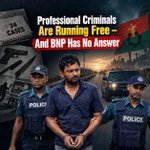
Professional Criminals Are Running Free - And BNP Has No Answer A man with 34 cases of robbery, dacoity and murder is found attempting another highway robbery. This is not a policing success story. It is an admission of systemic failure. When such dangerous criminals remain active on major highways, it means the justice system and law enforcement have both collapsed under the current government. BNP promised order. What it has delivered is open hunting grounds for career criminals. Read more: prothomalo.com/bangladesh/cr… #SaveBangladesh #BNPMisrule
1
8
17
351
The Death of Tahsif Sauri: Can Mahmudur Rahman Escape Responsibility for the ‘RAW Agent’ Label? A young officer who was branded an agent of India’s intelligence agency by a newspaper without evidence, and who lost his job, dignity, and freedom of movement because of that label, has been found dead in the Turag River. The body of former Bangladesh Air Force Flight Lieutenant K. M. Tahsif Sauri was recovered by the Tongi outpost of the River Police from the Rajabari Ghat area at around 4:30 p.m. on Wednesday. He had been missing since the night of October 27. The inquest report found no visible signs of injury on his body, although blood was coming from his nose. His body was sent to Shaheed Suhrawardy Medical College Hospital for an autopsy. This death has brought renewed attention to a news report, an editor, and a disturbing culture in which people can be branded traitors without due process. The August 5 Video and the ‘RAW Agent’ Label Tahsif’s name came under public scrutiny after a video showing then-Prime Minister Sheikh Hasina leaving the country from Kurmitola Airport on August 5, 2024, began circulating. The incident took a new turn on August 4, 2025, when the daily Amar Desh published a report titled “RAW Network Exposed Inside the Air Force.” The report claimed that Flight Lieutenant Rifat Ashrafi had recorded the video on his mobile phone and that Tahsif had posted it on his own Facebook account. The report directly linked the incident to an alleged RAW network. However, reports in other media outlets indicate that it is not even clear whether Tahsif personally recorded the video. Nevertheless, after August 5, both officers were retired from the Air Force. Tahsif’s classmate and colleague, KSM Intisar Inzimam, claims that Tahsif was subjected to a smear campaign following the leak of the video. According to him, no police case had been filed against Tahsif, as far as he knew. No case, no trial, no verdict—only a newspaper report, and on that basis alone, an officer was turned into a foreign agent. What Tahsif Said Three Months Before His Death About three months before his death, Tahsif raised questions during a YouTube podcast: “What propaganda is the report published by Amar Desh serving?” He said, “Even if I recorded the video and circulated it, what is the proof they are having?” When asked why he had lost his job, he replied, “I won’t say everything; I have certain limitations of my own. I think they did this because of these allegations—look at the Amar Desh report. They wrote that I had made the video go viral.” He added, “It could also be that this is why I am no longer in the Air Force.” He explained, “I had to face a lot of social embarrassment because of a completely false report,” and “My passport was withheld for two years.” Speaking about the process of leaving the Air Force, he said: “I was told to write and sign an application for voluntary retirement, and that if I did so, they would no longer harass me. But even after submitting it, I said that I should be arrested and court-martialed. None of that happened. They would take me to different places on different days without telling me where I was going… What happened to me was unfair.” He did not, however, express hostility toward the Air Force itself. He said: “I have no resentment toward the force. My resentment is toward the people who intentionally served someone’s interests and harassed someone.” He described the entire experience this way: “Changing a truth, changing a narrative, putting someone through social embarrassment… so that they cannot protest against injustice or establish the truth… these are injustices.” 🔗 youtu.be/7vo2VDj7hlg What Tahsif’s Statements Reveal First, publishing a video and engaging in espionage are not the same thing. Tahsif denied the allegations that he had recorded and circulated the video and challenged his accusers: even if he had done so, where was the proof? The burden of producing evidence rests with the accuser. Even if we assume, for the sake of argument, that he recorded or published the video, that might at most constitute a breach of discipline. It does not establish that someone is a foreign agent. The Amar Desh report never demonstrated, with evidence, the connection between these two allegations. Nevertheless, it treated that connection as established fact. Second, Tahsif paid the price for an unsubstantiated report with his career, freedom of movement, and social standing. When discussing his dismissal, he himself pointed to the Amar Desh report. His statement, “I have certain limitations of my own,” suggests that there may have been more he knew but could not disclose—and now may never be able to disclose. The investigation must establish who withheld his passport for two years and under what authority. Third, if Tahsif’s account is accurate, his retirement was not truly voluntary; it was obtained under the condition that the harassment would stop. Media reports have referred to his compulsory retirement, while Tahsif said he was made to sign an application for voluntary retirement. This discrepancy raises serious questions about the transparency of the process. Most significantly, Tahsif himself had demanded arrest and a court-martial. A person seeking to evade justice would ordinarily try to avoid a formal proceeding; Tahsif said he wanted one. No such proceeding took place. Instead, according to his account, he was taken to undisclosed locations on different days, raising serious concerns about potential violations of his human rights. In the same podcast, while speaking about his duty to his country, Tahsif said: “There is no greater glory than to die for a noble cause, and there is no nobler cause to die for than one's country.” The officer who regarded giving his life for his country as the highest honor was himself branded a foreign agent. This contradiction raises serious questions about a process in which labels of patriotism and treason are handed out without evidence. Mahmudur Rahman in the Dock The starting point of this entire controversy was a newspaper report, and as its editor, Mahmudur Rahman bears editorial responsibility for what was published. According to Tahsif’s account, the loss of his job, the withholding of his passport, his alleged transportation to undisclosed locations, and his social humiliation all began with that report. Mahmudur Rahman cannot simply evade questions about the responsibility attached to a report that, according to Tahsif, pushed a young officer’s life progressively toward the brink. Tahsif did not name anyone directly. However, his description of a process involving the intentional advancement of someone’s interests, the manipulation of narratives, and the use of social humiliation to silence dissent closely parallels the Amar Desh report and the events that followed it. Alleged Links to Turkish Intelligence and Strategic Propaganda Mahmudur Rahman returned to Bangladesh in September 2024 after spending nearly six years in Turkey. According to his critics, his journalism and activities had been controversial in the past as well. There have been allegations that, while living in Turkey, he became deeply involved with influential intelligence and political networks there and worked on behalf of Turkish intelligence. Further allegations suggest that, as part of international geopolitical and intelligence maneuvering, he may have sought to advance his own agenda or serve the interests of another foreign state by systematically targeting important and sensitive individuals within Bangladesh, branding them as RAW agents to gain strategic advantage. It is necessary to investigate seriously whether the same alleged tactic was used against Tahsif. These are extremely serious allegations. If true, they would pose a grave threat to national security. If false, Mahmudur Rahman should publicly address them. As of the writing of this article, no statement from him or Amar Desh has been identified. Suspicions of Murder and Attempts to Conceal Evidence The moment Sheikh Hasina left Bangladesh on August 5 was a turning point in the country’s history. There are rumors that Tahsif possessed sensitive and confidential information and evidence relating to Kurmitola Airport and its surrounding areas during that period. If such material were made public or brought to light through an impartial investigation, it could potentially expose the nature of certain groups’ activities or particular intelligence-related propaganda operations. This raises serious questions: Was Tahsif deliberately discredited by being branded a RAW agent to conceal the truth, silence him, or destroy his credibility? Was there any attempt to influence or orchestrate the circumstances surrounding his mysterious death? These questions are now being raised with increasing urgency. Mahmudur Rahman must answer the following questions: - On the basis of what investigation and evidence was Tahsif described as part of a “RAW network,” and why has that evidence still not been made public? - What journalistic principle permits someone to publicly label an officer a foreign agent without a criminal case or a judicial finding? - Did Tahsif receive any threats before his death, and who currently possesses the information and evidence he may have had concerning August 5? - While living in Turkey, with whose support and in the interests of which foreign agency did he allegedly embark on a campaign to spread fabricated and baseless RAW-related propaganda against Bangladeshi citizens and officials? - Was there any secret understanding or collusion connected to his report, published while he was editor of Amar Desh, concerning the political upheaval of August 5 or efforts to protect the interests of particular groups? The Time to Investigate Is Now The autopsy report may help determine whether Tahsif’s death was accidental, a suicide, or a homicide. But accountability for the circumstances that, according to his account, pushed him into such a precarious position cannot wait for the autopsy results. An independent and transparent investigation is now imperative. It must examine his mobile phone, his last communications, and the circumstances surrounding his disappearance. The investigation must not exclude the Amar Desh report, its sources, or its editor. It is time to conduct a thorough investigation into whether Mahmudur Rahman or anyone else had any involvement in this death. The state has a responsibility to ensure that the justice Tahsif said he had sought but never received during his lifetime is, at the very least, pursued through the establishment of the truth after his death. #Bangladesh
11
1
17
1,024
Even a Bangladesh Bank Official Is Not Safe Under BNP Rule A Bangladesh Bank Additional Director withdraws 5 lakh taka. On his way home in broad daylight, a private car blocks his auto-rickshaw on the Dhaka-Tangail highway. The money is snatched. The robbers escape. If a senior bank official can be robbed so openly near the capital, what safety exists for ordinary citizens? This is not a random crime. This is the direct result of a government that has lost control of the streets. Read more: prothomalo.com/bangladesh/di… #SaveBangladesh #RuleOfLaw #BangladeshCrisis
1
9
20
360
In BNP’s Bangladesh, Freedom Has a Price Tag Three days of torture in the Teknaf hills. Four lakh taka paid for release. A government that cannot stop armed gangs from kidnapping and torturing citizens in broad daylight has no right to claim it is governing. Law and order has not merely deteriorated — it has been abandoned. When families are forced to negotiate with criminals instead of relying on the police, the state has surrendered. Read more: bddigest.com/news/61658/ #SaveBangladesh #BNPMisrule
8
1
15
258
Three Minority Homes Vandalized in Rangpur Over False Blasphemy Allegations RANGPUR, BANGLADESH — Three homes belonging to members of the minority community in Rangpur were vandalized after allegations of religious desecration spread through the area, triggering anger and unrest among local residents. According to local reports, rumors accusing members of the community of offending religious sentiments prompted a mob to gather and head toward the families’ homes. The situation quickly escalated into an attack that left the houses badly damaged. Images from the scene show the extent of the destruction. Tin-sheet walls and roofs were torn apart, household belongings were scattered across the floors, and furniture, televisions, kitchen utensils, and other personal items were smashed. The affected families say they have suffered significant losses and are now living in fear following the incident. The allegations that reportedly triggered the violence have been described as baseless, raising serious concerns about how rumors can be used to target vulnerable communities. The attack has prompted calls for a thorough investigation and accountability for everyone involved, including those who spread the allegations and those who took part in the violence. Community members are also urging authorities to ensure the safety of the affected families and prevent further attacks against religious minorities. No one should have to fear for their home or personal safety because of their religious identity. Authorities must act swiftly to establish the facts, bring those responsible to justice, and ensure that every citizen is protected under the law. #Bangladesh #SaveBangladeshiHindus
13
2
24
923
Tarique Rahman’s Mecca Agreement: At What Cost to Bangladesh? The reported agreement with Saudi Arabia remains shrouded in secrecy, raising serious questions about Bangladesh’s national interests and the safety of its young people. Why should Bangladeshi lives be put at risk in a conflict that is not ours? 🇧🇩 Bangladesh deserves transparency, accountability, and answers - not silence. #Bangladesh #MeccaPact #ForeignPolicy
2
12
14
476
Two Bangladeshi citizens, Nazrul Islam Abdul Basir and Sweety Akhtar, were executed in Saudi Arabia on October 14. Bangladesh reportedly learned of their executions only afterward, despite their names appearing on a prisoner list shared with its consulate. Instead of answers and accountability, BNP’s Foreign Affairs State Minister Shama Obaed reportedly called the executions a “major lesson for us.” A lesson? Two lives are gone. Where was the government’s intervention to save them? Now BNP seeks closer alignment through the Mecca Defence Pact. What does that mean for millions of Bangladeshi migrant workers if the government cannot ensure timely consular attention and legal assistance for citizens facing execution? No more silence. No more lessons after lives are lost. BNP must explain what went wrong and what concrete safeguards it will establish to prevent similar tragedies. #Bangladesh #HumanRights #MigrantWorkers #BangladeshCrisis
1
11
23
568
A PUJA MANDAP IS NOT A POLITICAL COURTROOM. An Awami League leader was handed over to police from a Durga Puja mandap following an accusation alleged to be false. Now the question is, who gave these people the authority to decide who deserves to celebrate and who deserves to be treated as a suspect? A religious festival is not a political checkpoint. A citizen's political identity must never become an excuse for public humiliation or intimidation. Is this the democracy Bangladesh was promised, or the rule of political vendettas dressed up as justice? People have the right to celebrate Durga Puja in peace. No political party owns the mandaps. No mob gets to decide who belongs. #DurgaPuja #Democracy #RuleOfLaw #Bangladesh
4
7
162
Why Do the BNP and Jamaat Regard Pakistan as Their Qibla? —— Why has no one ever answered the question of why certain political parties in Bangladesh feel such deep affection for a country whose army, even after signing the Instrument of Surrender on 16 December 1971, refused to use the word “surrender” in its official statement? The ISPR said that day that hostilities had ceased following an arrangement between local commanders. That was it. The document of defeat was signed at Dhaka’s Racecourse Ground, while the people of Pakistan were told that an “arrangement” had been made. This legacy of lies has never ended. Husain Haqqani, who later became Pakistan’s ambassador to Washington, wrote that he was fifteen at the time. His father returned home after hearing the news of the surrender on the BBC, but young Haqqani shouted that it was all foreign propaganda against Pakistan. Just four days earlier, Radio Pakistan had announced that there was no question of surrender. An entire nation was kept in the dark as it was led to defeat. An inquiry commission was subsequently established: the Hamoodur Rahman Commission. It heard testimony from more than two hundred witnesses. It called for the public trial of six generals, including Yahya Khan. It demanded courts-martial for six officers, including Niazi. It also recommended the establishment of a separate tribunal to investigate atrocities committed in East Pakistan. And what was the outcome? Nothing. The accused retired with full pensions and even received military salutes after their deaths. Eleven of the report’s twelve copies were destroyed. The remaining copy was buried for nearly three decades. So how did the report finally reach the people of Pakistan? Not through their own government. In August 2000, India’s India Today published excerpts from it. Four months later, embarrassed by the disclosure, the Pakistani government released the report. It took twenty-nine years for a country to read its own investigation into its defeat—and even then, had a newspaper in an enemy country not exposed it, the wait might have been even longer. It is also worth examining who helped cover up this entire affair. In 1971, two men served as the army’s public faces: Brigadier A. R. Siddiqi in Rawalpindi and Major Siddiq Salik in Dhaka. The morning after the operation on the night of 25 March, Siddiqi was sitting in Dhaka Cantonment, eating oranges handed to him by Tikka Khan. Tikka told him they had just arrived fresh from West Pakistan. This scene appears in Siddiqi’s own diary. Neither man was ever held accountable. On the contrary, both later wrote books about 1971, and one of them even received an award from Zia-ul-Haq in 1985 before becoming head of public relations for the three armed services. In Pakistani school textbooks, the chapter on 1971 is titled “The Fall of East Pakistan.” The causes listed include an Indian conspiracy and espionage by Hindus. The number of civilians who died does not appear in any textbook. Not even a single figure is given. In 2019, ISPR chief Asif Ghafoor declared at a press conference that Pakistan would not have been divided in 1971 if today’s media had existed back then. Journalists sitting before him brought up the name of Anthony Mascarenhas. The army itself had taken that journalist on a tour of East Pakistan. Realising that what he had witnessed could never be published in Pakistan, he fled to London and wrote an article titled “Genocide,” published in The Sunday Times on 13 June. The media existed in 1971, too. It simply was not allowed to do its job. In 2022, outgoing army chief Bajwa announced that he would correct the historical record, claiming that the fall of East Pakistan was not a military failure but a political one. According to his figures, 34,000 Pakistani troops faced 250,000 Indian soldiers and 200,000 members of the Mukti Bahini. In other words, he was unwilling even to count the 92,000 who surrendered as soldiers, yet had no qualms about inflating the numbers of those who defeated them. Within a week, Pakistan’s own foreign minister declared that the fall of Dhaka had been a military failure. Two different versions of history from the same state in the same week. Last year, following a four-day conflict with India, Prime Minister Shehbaz Sharif stood before soldiers in Sialkot and declared, “You have avenged the war of 1971.” He repeated the same statement in Muzaffarabad and Quetta. Taking a jab at Modi, he also asked who had trained the Mukti Bahini in 1971. According to this logic, 1971 was a defeat at the hands of India, and striking Indian bases is enough to avenge that defeat. The people of East Pakistan do not exist in this calculation. Neither do our mothers, sisters, brothers, or our people. Our country itself has disappeared from the narrative. All that remains is “India’s conspiracy.” On 5 December, the current ISPR chief, Lieutenant General Ahmed Sharif Chaudhry, sat at a press conference and called Sheikh Mujibur Rahman a “traitor.” Even in 2025, the spokesperson of the Pakistani army was still calling a man whose call gave birth to an independent country a traitor. The occasion was an attack on imprisoned Imran Khan. Here, the man who gave birth to Bangladesh was reduced to a convenient pretext for smearing a jailed politician. Now, let us look at our own house. What explains this fawning attitude in Bangladesh’s power politics towards an army that does not tell the truth even to its own people, whose inquiry report remained hidden for twenty-nine years, and whose chief still calls the Father of our Nation a traitor? Whenever the names of Pakistan and the BNP, currently in power, and Jamaat-e-Islami, which shares power in Parliament, appear in the same conversation, the tone of both parties softens. Their eyes seem to light up whenever they look towards Islamabad and Rawalpindi. Every time an insult comes from across the border, they remain silent—or else explain it away as “diplomacy.” When we see such desperate yearning for Pakistan from these two parties, we cannot help but ask one question about the very country that sat down to breakfast, eating oranges, on the morning after 25 March 1971. Is this relationship purely diplomatic, or is it a bond in which the greater the humiliation, the deeper the allegiance? The ISPR does not even allow the truth to reach the people of its own country. Why, then, do these two parties in Bangladesh look so eagerly towards that very narrative? They may refuse to say it openly, but the people understand perfectly well: this is the desperate longing of an illegitimate child without a recognised father for an illegitimate father.⁩
9
2
11
324
Diplomatic Protocol or Structural Mismanagement? Recalling a sitting ambassador to Dhaka right on the eve of a high-profile state visit breaks standard diplomatic convention. When head-of-government summits take place, local embassy leadership plays a fundamental role in coordinating bilateral talks, trade agendas, and strategic agreements. Sending a headquarters secretary to replace the sitting envoy at the last minute signals administrative friction and poor coordination within foreign policy machinery. Diplomatic ties with key development partners require absolute consistency and structural stability, not sudden operational disruptions. #ForeignPolicy #Diplomacy #Governance #Bangladesh
5
6
117
"For fifty years, #Bangladesh has built increasingly sophisticated systems for counting the dollars arriving from its citizens’ #labour. It has not developed an equally serious public account of who gains power from those dollars, who bears the costs of separation and care, and how securely the workers themselves are protected... That is the unfinished history of the #remittance economy. The question for the next fifty years is whether Bangladesh will continue to measure the success of migration mainly by what it extracts from workers, or whether it will also measure that success by the freedoms and protections it makes possible for them and for the people they leave behind". The above lines are quoted from Dr. Lubna Ferdowsi's latest article for the @dailystarnews. She argues that remittances have not only improved household incomes and living standards but also reshaped social hierarchies, religious practices, gender relations and local power structures. Gulf earnings have enabled #migrants and their families to acquire wealth, social prestige and influence over community institutions, including religious establishments. The article also examines how religious interpretations associated with #SaudiArabia have travelled alongside remittances, sometimes reinforcing #conservative social norms and influencing debates over #women's freedoms, cultural practices and religious identity. The analysis also highlights the contradictory impact of #migration on women. While remittances have expanded access to education, financial security and economic opportunities, they have not necessarily translated into greater autonomy or decision-making power. Meanwhile, migrant workers themselves remain vulnerable to exploitation, excessive recruitment costs, weak legal protections and inadequate consular support, as illustrated by the recent executions of two Bangladeshis in Saudi Arabia. Ferdowsi argues that Bangladesh must look beyond remittance figures and assess migration through its wider consequences for individual freedoms, gender equality, social power and the protection of citizens abroad. Article: thedailystar.net/slow-reads/… ...
4
122
How Pakistan Actively Works Against Bangladesh’s Interests Two Bangladeshis were executed in Saudi Arabia on October 14. Reports circulating online allege that a Pakistani national recorded them and alerted Saudi authorities. If that allegation is true, serious questions must be asked. Why should Bangladesh ignore conduct that could put its citizens at risk simply because Pakistan speaks the language of friendship? Bangladesh deserves answers, not diplomatic theatrics. #Bangladesh #Pakistan #JusticeForBangladeshis
4
11
2
29
660
Execution of Bangladeshi Couple in #SaudiArabia: Humaiun Kobir Follows Shama Obaed in Blaming the Victims. "People go to Allah's house with pious intentions. It is not right to engage in such activities there." This is what Bangladesh's State Minister for Foreign Affairs, Humaiun Kobir, said regarding the execution of two Bangladeshi nationals by the Kingdom of Saudi Arabia (#KSA) over allegations of an "immoral act" inside a mosque in Mecca. Watch: facebook.com/share/v/1CNCLPi… The remarks are deeply troubling. Rather than focusing on the circumstances surrounding the detention, prosecution, sentencing and execution of two Bangladeshi citizens, the junior foreign minister appears more concerned with passing moral judgment on the deceased. This amounts to victim-blaming at a time when critical questions about the case remain unanswered, including whether the two individuals received a fair trial, had access to legal representation, and were afforded appropriate consular assistance. Contradictory Messages from the BNP Government. On the one hand, senior #BNP government representatives have publicly stated that Bangladesh is seeking an explanation from KSA, particularly over the apparent failure to notify Bangladeshi diplomatic authorities before the executions. On the other hand, the same government's top diplomats are making statements that appear to presume the guilt of the executed individuals, even before receiving the relevant judicial documents or establishing the facts. Previously, another State Minister for Foreign Affairs, Shama Obaed Islam, advised Bangladeshi expatriates to respect the laws of their host countries and suggested that the executions should "serve as a lesson". Remarkably, she made those comments while acknowledging that Bangladesh had not yet received detailed official information from KSA regarding the case. The message conveyed by both ministers is deeply problematic: instead of demanding accountability and transparency over the execution of their own citizens, they appear to be shifting responsibility onto the deceased. According to media reports, the Bangladesh Consulate General in Jeddah was not notified before the executions. These circumstances warrant scrutiny, not premature moral condemnation. The #Bangladesh Govt should therefore seek the complete court judgment, arrest reports, witness statements and other evidence to independently assess the claims. There is also the fundamental question of proportionality: whether imposing the death penalty for the alleged conduct can be justified under int'l human rights standards. The most disturbing aspect of the two ministers' statements is the apparent willingness to accept the KSA authorities' account before Bangladesh has independently established what happened. Diplomatic relations with Saudi Arabia are undeniably important. Millions of Bangladeshis live and work in the kingdom, and the bilateral relationship carries enormous economic and strategic significance. However, maintaining cordial relations with #Riyadh must not come at the expense of seeking accountability when Bangladeshi citizens are executed under circumstances that remain, at the very least, insufficiently explained. ... @KSAMOFA @KSAmofaEN
1
3
185
The president of Ward No. 41 Jubo League was harrased by a mob while he was praying at the Puja mandap in Shankhari Bazar and handed over to the police. This is a typical act by BNP leaders. During he tenure of Sheikh Hasina and Awami League, BNP leaders not only celebrated religious festivals but also became members of Puja organizing committees. But after August 2024, by the grace of the sly and Machiavellian businessman Nobel Laureate Yunus and his successor, the dark prince of kleptocracy, Tarique Rahman, communal harmony is disappearing, while allegations of systematic political persecution of minorities and opposition groups emerge beneath the surface. Ordinary Hindu devotees are facing insecurity on the one hand, while artificial controversies and political theatrics are allegedly being orchestrated on the other to disrupt their sacred religious celebrations. #DurgaPuja #AwamiLeague #HumanRights
12
12
285
State Minister Ishraque’s Vigilante-Style Anti-Drug Raid Raises Serious Questions About the Rule of Law in #Bangladesh. It was a scene straight out of an action movie: State Minister Ishraque Hossain chasing suspected drug users and low-level drug dealers through the streets of #Dhaka, accompanied by an armed entourage, while brandishing a small firearm himself. But this was no conventional anti-drug operation conducted by law enforcement agencies. Instead, it appeared to be a vigilante-style raid led by a serving government minister, accompanied by a group of armed associates. Videos and images of yesterday’s (17 October) incident in Dhaka’s #Gandaria neighbourhood have since gone viral, raising serious questions about the minister’s conduct and the apparent disregard for established law enforcement procedures. The most obvious question is: Why is a government minister personally conducting armed raids, a responsibility that belongs to duly authorised law enforcement agencies? Ishraque Hossain is the local Member of Parliament and State Minister for Liberation War Affairs. Neither his parliamentary position nor his ministerial portfolio gives him the authority to personally conduct armed anti-drug operations. Even more remarkably, Ishraque himself uploaded videos of the operation to his verified Facebook page at approximately 5:15 pm yesterday, apparently presenting the episode as an achievement. News: thedailystar.net/news/bangla… The footage has prompted widespread questions on social media about the open display of firearms, the legality of the operation, the apparent involvement of private armed associates, and the minister's willingness to take law enforcement into his own hands. The larger issue is not whether drug-related crimes should be tackled. They absolutely should. The question is whether a government minister can bypass established legal procedures and assume the powers of the police simply because he holds public office. Such conduct raises fundamental concerns about the rule of law, the limits of executive authority, and the accountability of public officials. Ministers are expected to uphold the law and strengthen the institutions responsible for enforcing it, not substitute themselves and their personal entourages for those institutions. At a time when public concerns about rising crime and the effectiveness of law enforcement are already mounting, this extraordinary episode raises an even more troubling question: If a serving minister resorts to vigilante-style policing, what does that say about the state of law enforcement and the rule of law in Bangladesh under Prime Minister #TariqueRahman's government? …
3
1
7
143
Let us begin with a case. In Chattogram, a BNP leader filed a case alleging disrespect to the national flag. The allegations were so absurd that even the BNP expelled the leader from the party. In other words, the very party that is now in power had, at one point, acknowledged through its own action that the case was unjustified. Yet Sannyasi Chinmoy Das has remained behind bars for nearly two years in connection with that very case. The person who initiated the case has been disowned by his own party, but the accused remains imprisoned. Do those in power have an answer to this glaring contradiction? While Chinmoy was delivering a speech at Laldighi Maidan, a group of young men hoisted a saffron flag on a separate stand above the Bangladeshi national flag at New Market Square, nearly one kilometre away. One person delivered the speech; others raised the flag. Yet it was the former who ended up in prison. If this is the logic being applied, the speaker at any public gathering could be held responsible for any incident occurring anywhere in the surrounding area. During a clash among lawyers near the court premises, lawyer Alif was killed. Chinmoy was also shown as arrested in connection with that murder case. Yet when Alif was killed, Chinmoy was sitting inside a police prison van, already detained in police custody. How could someone whom the state itself had confined be responsible for orchestrating another person's murder in full view of the state? No explanation has been forthcoming to this day. What better definition of a travesty of justice could there be? Chinmoy's mother has died. While she was alive, she had only one wish: to see her son's face one last time. The state denied her that wish. Even accused murderers are sometimes permitted to attend the final rites of their loved ones. Here, however, a mother's final plea was rejected. Before the eyes of the entire country, a religious minority was humiliated in broad daylight, and no one appeared to feel the consequences. Now let us turn to the statistics that the government used to demonstrate how well Hindus were doing in Bangladesh. Last year, the country had 33,000 Durga Puja mandaps—2,000 more than the previous year. On paper, that figure looks impressive in an official government statement. But during the same year, groups of Muslim clerics reportedly went from one mandap to another, tearing off the beards of the demon Mahishasura depicted in the idols, allegedly claiming that the beards insulted the image of Islam. In a country where religious insult can supposedly be found in the facial hair of a demon sculpted from clay, measuring security by counting Puja mandaps is absurd. The greatest irony is that Jahangir, the then Home Affairs Adviser, described such arrangements as a “conspiracy” and threatened to arrest the organisers themselves. Those who had already been subjected to attacks were the very people who received the threats. And this was not an isolated incident. Deepu Chandra Das. Matua community families in Abhaynagar, Jashore. Hriday Ravidas of Kishoreganj. Families in Gangachara, Rangpur. The dismissal of 94 out of 99 Hindu trainees from SI training over an alleged failure to eat breakfast. The demolition of a Durga temple on railway land in Khilkhet in a manner described as deeply disrespectful. These are not merely a list of unrelated mishaps. The circumstances of each incident differ, but the religious identity of those affected remains the same. To dismiss the fact that 94 out of 99 people belonged to the same religious community as mere coincidence would be an insult to statistics themselves. The question now is: what are those in power doing? The case filed by the BNP originated with a leader whom the party itself expelled, yet the accused in that case remains behind bars. Jamaat-e-Islami shares in parliamentary power, but finding its voice on the question of minority rights requires a microscope. One party makes promises, another shares in the exercise of power, and in between, a sannyasi spends year after year in prison. When the government holds power, how long should it take to bring an end to a case that is being questioned on such fundamental grounds? Both parties owe the public an answer to this simple question. Then why do Hindus in Bangladesh remain silent? The reason is not an inability to speak; it is a calculation of risk. Most want the situation to change. But speaking out carries the fear of being singled out, and at the furthest end of that fear lies the possibility of losing one's life. There is also a sense of inferiority born of being a numerical minority—a feeling that forces people to diminish themselves in their own country, day after day. And then comes the most difficult question: who will stand behind them? If someone dies or is arrested while protesting today, will anyone stand by their side tomorrow? Chinmoy's case itself offers a troubling answer. The man who took to the streets to speak up for his community has found that even the protests demanding justice for him remain weak. No struggle by a minority has ever succeeded without the support of a larger force, and Bangladesh's Hindus do not have such a force standing behind them. On one side, the beard of a demon depicted in a religious idol is torn off. On the other, a man sits in prison, unable to see his mother's face one last time. Between these two scenes stands a country where the phrase “A Bangladesh for All” is no longer a slogan of unity. It has become a cruel joke.⁩ #Bangladesh #SaveBangladeshiHindus
14
20
429
No citizen should have to celebrate their most sacred festival under fear and intimidation. The BNP government must move beyond promises and ensure year-round protection, impartial investigations, and justice for every victim. #Bangladesh #DurgaPuja
3
7
244