

Co-Founder @looplyhqcom | Founder @ShippedNews | Building AI that finds buyers from their signals & cold emails them from your own inbox | Bootstrapped
San Francisco, USA
Joined February 2021
- Tweets1.3K
- Following2.6K
- Followers8K
- Likes14.7K




Pinned Tweet
I've been stuck at €0 MRR since July.
So I built this for fun. Building it makes me happier than staying at zero.
@ShippedNews : breaking news for builders on X shippednews.com/?utm_source=…
- Big tech racing to build AI assistants
- Cloud deals between giants
- Founders deciding what stays free
Every story names its source and shows it.
It's free.
Granola came with a feature.
@firefliesai came with a whole team. 👀
Fred went from notetaker to teammate: prep, follow-ups, dictation, agents.
Most AI launches have a cinematic video.
Few have something you'll actually open every morning.


Many startups today are marketing companies pretending to be tech companies.
As a result, customers are paying the price.
We don’t spend millions on ads and billboards convincing people we’ve built something nobody else can.
We don’t want to hide behind words like branding, design, and taste to justify charging more for fewer features.
We’d rather put that marketing budget back into building great products and making software more affordable.
Today, we announced several new products to help you cancel a dozen subscriptions and save your team $100,000+ a year.
Fred isn’t just a cute little AI teammate. He packs a punch.
Here’s everything we announced that will be rolling out over the next couple weeks.

1
8
156
Most underrated founder in AI.
No billboards, no hype. Krish has been building an AI teammate for almost 10 years, long before anyone said “AI agents”.
This week Fireflies turned Fred into one. @firefliesai @krishramineni

Hi, I’m Benjamin.
28, originally from Paris, France, and on January 7 I started building @looplyhqcom as its founder.
Early on, one thing I needed to figure out : with no funding and no ad budget, what can a team of 4 actually run to get a product in front of people ?
Most people expect one channel doing all the work. For us, it’s several small ones, every week.
What we run, with the numbers :
→ Ads : $0. Looply is bootstrapped, so everything below is organic.
→ Posts : 4 of us, each from our own account, on X and LinkedIn. Text, images, short videos and GIFs, and we answer the people who comment.
→ Free guides : 7 so far, from TEAM on September 7 to GPT6 on October 11. Prompts we write and test in Claude and ChatGPT, published in Notion, each shown on an example run, in English and French. You get one by commenting a keyword under our posts.
→ The Opus guide : 8 people asked for it on LinkedIn within 4 hours of the post, before any paid boost.
→ Cold email : sent with Looply itself, from 4 prompts, each with one job. Find the signal, check the fit, write the email, read the reply.
→ SEO : a blog, comparison pages for Looply vs other tools, and 1 free outbound stack cost calculator.
For months we spent more time on the product than on marketing. Now the pieces feed each other : the posts lead to the guides, the guides start conversations in the comments, and the blog and comparison pages stay up on the days nobody posts. All six still run, and marketing now runs at full force.
My biggest takeaway from running all six : you can build something useful and still struggle because nobody knows it’s there.

The signal part is why we built Looply: job changes, fresh funding, people engaging with your topic. Try it free for 7 days:
looplyhq.com/?utm_source=x&u…

1
31
Benjamin retweeted

Hi, I’m Anwesha 👋
25, grew up in kolkata, india, and since september i've been at @looplyhqcom as head of content.
the question i needed answered before i could write a single post: what actually happens inside the software i write about, between someone posting on linkedin and a message reaching them?
most people picture a bot blasting thousands of messages. it's slower and more careful than that.
the path, step by step:
→ the signal: 4 kinds. someone posts, likes or comments about your keywords, engages with a page or profile you pick, changes jobs into a role you sell to, or works at a company that just raised funding
→ the lead: 1 person with 1 dated signal, like "recently changed jobs". then it's scored against your ideal customer
→ the email: sent from your own outlook or smtp inboxes, with follow-ups and a daily cap per inbox. the first one is written by ai from the signal, and you can approve each one before it goes
→ linkedin: from your own account, 20 invites and 40 messages a day by default, monday to friday. connection requests, messages and voice messages in the same sequence as the emails
→ the replies: 1 shared inbox. ai drafts an answer, and a person reviews it before it goes out
→ the tools around it: 10 integrations, from hubspot and pipedrive to clay, slack and lemlist
so it fits together like this: the signal picks the person, the score checks the fit, and email and linkedin run as one sequence with a human checking along the way. growth is $97 a month, scale is $247, and there's a 7-day free trial.
when my parents ask what i do, i say i write things on the internet for a software company. this is the software.
my biggest takeaway two months into writing about it: the clearest way to explain a product is to follow one person all the way through it.

Flai just raised $27M, and its revenue grew 20x in a year.
At its 2025 seed it was 3 people. Now it's about 40.
What got them there, per TechCrunch :
→ Referrals : dealers recommended Flai to other dealers.
→ Speed : the software can be live in a dealership 10 days after signing.
→ Focus : one market, car dealers. Now 10+ of the top 50 US dealer groups.
Half of Flai's revenue now comes from new customers. The rest comes from the ones they already have.
What I'm taking from it for Looply :
→ Make the first customers want to tell others.
→ Cut the time between yes and the first useful thing. @looplyhqcom starts from your website and suggests your ideal customer and the signals to watch.
→ Stay in one market until it's won. Ours is B2B outbound : founders, SDRs, sales teams and agencies.
The CEO says he knows how hard the first customer was.
That part never makes the headline.

Looply sends from your own inboxes, and you can approve each email before it goes. Free for 7 days:
looplyhq.com/?utm_source=x&u…
1
29


Benjamin retweeted
Most lead scores are a gut feeling with a number on it.
Someone looks at a company, likes the signal, and writes "8/10".
Nobody can say where the 8 came from.
Nobody can check it either.
A score is only useful to me if it shows its work :
the words in the source that earned each point,
and what's still missing.
So we stopped scoring in our heads.
Every point now has a line behind it.
If there's no line, the point doesn't count.
It makes the scores lower and the lists shorter.
And it makes the emails better.
I'd take fewer leads with a reason over more leads with a number.


UPDATE: 702 views on the launch post so far, and SHIPPED NEWS has already posted 3 stories since it went out.
xitter.gq/benjaminatsf/status/21…

I've been stuck at €0 MRR since July.
So I built this for fun. Building it makes me happier than staying at zero.
@ShippedNews : breaking news for builders on X shippednews.com/?utm_source=…
- Big tech racing to build AI assistants
- Cloud deals between giants
- Founders deciding what stays free
Every story names its source and shows it.
It's free.
1
13
290
Benjamin retweeted
somewhere in your spreadsheet is a lead that never got an email, because a louder signal went first 🫠
we wrote up how to stop that, and we're handing it out for free. no course to sit through, nothing to sign up for.
inside:
→ 5 copy/paste prompts for Claude Opus 5.5: score a batch of signals, compare your best three, draft one email, sort the replies, review the week
→ a business brief you fill in once, then paste into the first prompt
→ a full worked example on made-up companies, with the real outputs
→ a checklist for before scoring, before sending and after replies
→ your first week laid out: brief, score, write, reply, learn
it's the same signal-first idea behind one of our own linkedin campaigns: 572 invited, 133 replies. everything runs in your own chat, no looply account needed.
Like + comment "OPUS" and I'll send it.
Apple racing to turn Siri into an agent.
xitter.gq/ShippedNews/status/211…

NEW: APPLE IS RACING TO BUILD AN AGENTIC SIRI TO RIVAL @OpenAI'S DOTS AND META'S MUSE, PER BLOOMBERG'S MARK GURMAN
CEO JOHN TERNUS IS PUSHING AI CZAR CRAIG FEDERIGHI TO SPEED UP THE SIRI ROADMAP
SOURCE: theverge.com/ai-artificial-i…

1
34
Benjamin retweeted
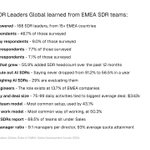
Allo studied 72,339 cold calls placed through its power dialer, July to September 2026.
What it found:

Benjamin retweeted

NEW: @dhh SAYS OMARCHY WILL STAY FREE FOREVER, WITH NO MONETIZATION PLAN ON THE WAY
"I'M ALREADY RICH AND THE OMACOM FOUNDATION IS A WELL-FOUNDED NONPROFIT"


10 signals. 4 CONTACT. 1 first email of about 68 words.
That's one chat with Claude Opus 5.5, run on 22 Oct. Fictional companies, real Claude Opus 5.5 output.
What I'd copy from it :
1/ Write the exclusions before you score.
The brief said "Current customers (Lumen Path)". Lumen Path had a fresh HubSpot job post. It still went to SKIP.
2/ Let your own checks change the label.
Tallis Software had a Salesforce job post. Once the check said Salesforce only, the row read "Rule now confirmed" and stayed on SKIP.
After the checks, 3 rows were still CONTACT.
3/ Make it a rule : only CONTACT rows go into your sending tool.
In the example, one SKIP and one HOLD still got an email. The reply step caught both, after they were sent.
4/ Ask for one email, with sources.
Its own note : "The body is about 68 words. Each personal detail has a source."
5/ Run the same order on real people.
Use @looplyhqcom to score each person against your ideal customer : title, location, industry, company size. Then check the top ones by hand before anything goes out.
The scoring is the fast part. The checks are still yours.
6
12
403
Looply finds people engaging with posts about your keywords and scores them against your ideal customer. 7 days free:
looplyhq.com/?utm_source=x&u…

1
79