
I’m building Vulcan Forge: a spec-driven AI software delivery platform for product managers, not engineers.
Mission Viejo, CA
Joined December 2007
- Tweets3.4K
- Following544
- Followers1.2K
- Likes2.6K





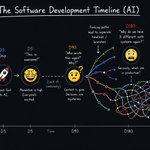


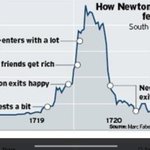
In trying to make sense of the different experiences people have with AI, I've found that the "ai is amazing" side is mostly focused on speed and especially *coherence*. They're rightly pointing out that AI can generate coherent code at massive scale at speeds never seen before. And that code works! (Because it's coherent).
On the other side, the "ai is not so great" side, they're focused on *consequences*. Yes, the code works, but what are the consequences of running it? Does it do anything useful? Does it do it without breaking something else? What happens when something goes wrong?
And they, also rightly, point out speed is not the same as progress. Just because AI can run fast doesn't help if it's running in the wrong direction.
When AI is moving fast, especially at scale, and moving in the right direction, it's usually re-implementing something: optimizing it, breaking monoliths into better separate code, etc.
That's because those kinds of refactors and optimizations leverage the existing code to provide an explicit answer to the question the AI is really asking. The AI never asks "What problem do I have to solve?" It only asks, "What constraints must my solution be coherent with?"
Specifying those constraints explicitly is such a monumental task, we call it software engineering. So we don't have a lot good specs for AI to work with that aren't just existing codebases.
1
117
One of my favorite misconceptions about interest rates:
- low rates are loose money
- high rates are tight money
Really, if rates are low, lenders don't want risk so compete to lend to the best credits only (everyone else locked out).
High rates mean that there is a ton of demand for lending from credits that are good enough--meaning more money creation.
I think the AI capex boom is exactly this. We're seeing the first stages of the re-industrialization of America. After AI data centers, there will likely be a ton of follow-on industries:
- electricity generation and distribution
- oil & gas infra
- roads
- chips
- general manufacturing
Maybe not all of it is exactly inside America, but it's all moving and that investment is creating a massive demand for capital. And unlike the last 20 years, where all the lending demand was basically refinancing, this stuff is new lending that actually has to clear a hurdle rate--so it should be productive in the best possible way.
Not all of it, of course...

What if 5%+ rates aren't happening despite the AI boom… but partly because of it?
zerohedge.com/the-market-ear…

59

I read this and sounds sensible.
@profplum99 keeps pointing out that Australian bonds are experiencing the same yield spike, but debt to GDP is like 25% to 30%--so it's not this.
He says it's bond index funds setting marginal prices badly (sell what's cheap, but what's expensive)
I just keep having to remind myself of this because it's so much more intuitive that profligate spending got us here

For a decade, financial repression muted the bond market. QE and zero rates bought up the curve and crushed term premia. Any political promise, however mad, cost nothing on the day it was made. That's the soil populism grew in. Perhaps not the cause, but the permission. That era is over. Inflation has taken the central banks' cover away, and markets are pricing fiscal risk again. French 10-year yields went from 3.53% in June to 4.70% today. This isn't markets against democracy. It's markets defending reality. The cost of fantasy now lands in voters' pockets, through mortgages and budgets. That's how the fever breaks. Populists may still win, but the bond market will housetrain them fast. Think Meloni, not Truss.
I think that's good news.
2
3
1,226
The weird thing to me is it this doesn’t even require “economics” to see how this is a bad idea.
You’d just have to be able to imagine yourself as the property owner/builder for 1 minute to see it.
But…I know, good governance isn’t the point

Aren’t leftists simply cute? They introduced rent caps in Berlin and were seriously surprised that the number of apartments available for rent immediately dropped by 60%. Who would have thought that a capped price would reduce rental supply, right?
Now the same geniuses talk about nationalizing apartments. Then they will be surprised again that nobody will build apartments in Berlin anymore. Why build real estate if it will be taken away from you?
Anyone with even the most basic understanding of economics knows that this is how things work. How can the left be so ignorant?

2
117
It’s going to be crazy when oil goes down to $30 and diesel is at ATH and the economy is getting crushed because no one can make money. Even the refineries will be screwed because their capacity will be offline.

🇺🇸🇪🇺 What makes this fuel crisis different from the usual oil shock is that diesel is increasingly decoupling from crude.
Crude has pushed back above $100 a barrel, but diesel has surged past $200 in the U.S. and Europe.
The gap between the price of oil and the price of the fuel made from it has become huge.
And that's because the problem isn't only oil supply anymore. It's refining.
Russian refinery output is down around 30% from a year ago after repeated Ukrainian drone attacks.
Middle Eastern diesel exports fell to roughly a quarter of their prewar level by August, while China has also cut refinery production and restricted fuel exports.
Put it all together and global production of refined fuels was more than 4 million barrels a day lower in August than a year earlier.
So even if there is enough crude around, the world is struggling to turn enough of it into diesel, petrol and jet fuel and then get those fuels where they're needed.
That's how you end up with crude around $100 to $110 while diesel blows through $200.
And diesel is a particularly painful place to have a shortage. It keeps trucks moving, powers industry and is used for heating, accounting for roughly a third of global oil demand.
Source: Financial Times / Writer: Julie

120
In a lot of companies I worked at, my job often boiled down to predicting these kinds of exploits before we implemented something.
No the funnest guy in the design meeting, but always wanted come reporting time.

Case study from a recent audit:
A B2B commodities firm paid sales bonuses based on the nominal value of contracts signed. The plan never specified that bonuses for year T were tied to cash actually collected in year T.
Therefore, sales reps quickly optimized for paper volume:
- They pushed long-term offtake agreements that would take years to generate cash
- Many deals had a 90%+ likelihood of being canceled
- Some reps went further and created fake counterparties just to sign contracts and inflate their bonus (before you ask, yes this is fraud)
The result was predictable: bonuses owed exceeded cash collected from "closed deals", and the firm developed cash flow issues despite record contract volume on paper.
The fix was to align payouts with realizable outcomes (cash receipts and contract performance), and add verification controls on counterparties.
Incentives beat lectures.
167
There is no plan?
There is only one plan. The problem is executing the plan is painful to people, so we wander from painful accident to painful accident while officials try to contain the damage and convince voters that they're on the same side

There was a nice story that I certainly believed for a moment there. That some of the greatest macro traders of our time were in charge of the US fiscal outlook and would get the house in order.
The smartest most principled people that understood markets. They’d get the debt issue sorted right?
Bessent and Warsh, disciples of Druckenmiller, all students of Soros. There was levels of 4d chess that would surely pan out.
Sadly, this Druckenmiller oped has decimated that idealistic fairytale.
There is no plan.

1
1
145
This stuff really does feel like something "extraordinary" is going on...somewhere. But I don't know where, even after listening to a bunch of podcasts on it.
*something* is driving up bond yields. People say inflation or corporate debt issuance, etc. But that doesn't make much sense to me.
What makes more sense to me is a lowering of the rate of money-creation, i.e. less lending for whatever reason. It's crazy that it's getting so hard to track this stuff that the first "real sign" of it is the intervention against it.
But anyway, when the gov does stuff like this, it usually causes a temporary rush of money into stocks...

Historic intervention is coming.
Despite several announcements by the US Treasury about imminent intervention, yields still won't fall.
This includings doubling buybacks to $4+ billion per operation and the Treasury considering using its $950 billion General Account for these purchases.
Reports now state that US Treasury Bessent "will do whatever it takes" to lower yields.
In addition to buybacks, this could include selling short-term debt, possible elimination of long-dated bonds, and more.
Meanwhile, on Friday night, President Trump even said that he could use the US Military to lower yields, though it is unclear exactly how he would do so.
The reality is that the Fed cannot cut rates in this environment and the Trump Administration knows this.
So, direct bond market intervention is the only solution to drive interest rates and yields lower over the short-run.
Our view? Don't fight the Treasury.
1
1
310
AI-productivity in the wild:
I'm finding the past 2 months of journaling every trade to be inspiring. It's keeping me motivated, making it easier to keep my rules in mind and focus on the "data series" of trading vs any individual trade.
I'm trading better than I ever have.

1
1
80
Something I think about: the world is going through a population implosion on-par with the Black Death (over the next 20 years), just as there's a promising set of technologies that might end the need for most human input into economic production (not there yet).
What if both these things happen? Could we live in a world where we still have markets, but consumption is not tied to work?
It's hard to imagine because the history of socialism is so tied to command-and-control economies. But could we have a liberal economy where most people get the currency they need to bid on goods and services without having to have a job?
Obviously, some people would still need to work and some people would make money by owning stuff--but if the UBI wasn't means-tested, the salaries or profits or dividends earned would just enable additional consumption.
For some people, the money might be motivating. Others may work because they find life without work boring. And many, many people would just sit staring at screens. But...so?
This doesn't actually seem that far off from the experiences I hear about, where some welfare recipients seem wholly supported by the state. The difference would be in the universal scale of it.
We know that the currency itself isn't meaningful at all. The limiting factor is the actual physical productive capacity--so you need the tech-driven productivity boom that AI + Robots promise.
Once you have that, markets can still force people to make consumption trade-offs, sending price signals.
The big thing would be figuring out how to prevent politicians from getting elected by just offering more and more currency--but as long there are no price controls or whatever, would a slow "political" inflation even matter anymore? Would the UBI sterilize the Cantillon effect?
Asset-holders would probably love it, as their assets would keep marching up.
Obviously, people who work for a living might care, but with prices steadily marching up, could they keep demanding wage increases to offset?
Why wouldn't this work, assuming that the automated economy could make more than anyone could really use?
1
2
232

Wait, so the yield impact is determining the quantity? Sounds like YCC to me.
BREAKING: US Treasury Secretary Bessent says Treasury buybacks announced yesterday could now MORE than double, exceeding $4 billion per operation.
Bessent said buybacks will increase “by at least double,” adding, “we have a big toolkit, so we’ll see.”
This comes just hours after the US 30Y Treasury Yield erased all of its decline following Wednesday’s announcement.
As predicted in post #8 of our analysis below, buybacks and broader intervention are likely to be much larger than markets expect.
This is a band-aid on a gushing wound.
118
This right here is so damning.
Who ever built a functioning company (let alone industry) on a tech where performance is so completely unknowable that subjective opinions are diametrically opposed like this?

96
I'm not saying that the damage being caused right now is no big deal, but I wonder...
What if we'd forced the straight closed like 10-15 years ago? What would the world look like now? What would the past decade have looked like?
In 15 years, will all this have "worked out ok"?

Iran’s security council has released a list of demands to reopen Hormuz, including:
- Lifting Iranian sanctions
- Unfreezing Iranian assets
- War reparations
- Lifting of the naval blockade
- Ending the regional war
- Ending threats against Iran
127
The blank stare are real.

If you're a dude who's even moderately on his own path, your 'risks' will be unfathomable to the regular person
if ur on ur own shit you'll have evolved out of the normie risk paradigm within like first 2 months. After that, it is own pasture/own scoreboard
And here is what else is interesting. Once out of gates, Even if "level" (let's say in terms of $$) is same as someone else (from someone else 'in the game'), the way YOUR risks are angled will be hyper-specific to you. It should make ppl on same level confused. "what the fuck?".
True leverage is building wings/hands around yourself. And cuz ur shape is unique, the bolt-ons will be as well.
Nobody has full context, and everyone disagrees until you win & then they say "yeah we knew x,y,z". All noise. See it, act, win.
Every1 at every level is copy & pasting. If you have even a modicum of originality, you will just perpetually get blank stares
pure signal
144
I use AI more than anyone I know. Running 3-6 work streams, multiple projects going, cranking on a big one that's been dragging on.
Not using it to go faster. Tackling problems that are FAR out of my reach without it. The rest of the world feels far away at times...

197
I spent some time on this kind of thing a few years ago. My conclusion was that the only kind of inflation that matters is food inflation.
Everything can kind of be papered over, but when food prices go up (due to oil or whatever), countries get pushed into fiscal minefields.

The more you study China’s worsening involution problem the more you come to realize A) how low-IQ most Western economists are with occasional exceptions like Setser and Pettis and B) that Xi is in a much worse position than the media would like you to think.
People should be actively discussing the delta in margin profile between Chinese domestically consumed goods vs foreign exports, the lack of corrective mechanisms due to a weak capital markets structure, zombie companies, poor worker productivity and what that means for wage growth (or lack thereof) which in turn requires consumption price deflation to prevent unrest and why an exogenous price shock from rising oil prices could lead to Xi getting dragged through the streets.
Instead these clowns are focused on counting barrels and trying to guess at reserve capacity.
Unserious profession.
1
144
