
Central Vic Australia
Joined May 2009
- Tweets12.5K
- Following1K
- Followers327
- Likes82.6K
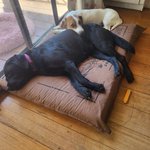

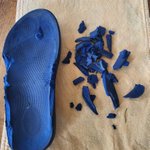


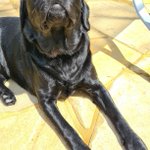
💜 Pam Leversha retweeted

“He looked at each one of us in turn, and then he did it again, and we all laughed out loud at his surprised, delighted expression, he made us laugh out loud at that moment as he had made us laugh so many times before, and we laughed now, even as the tears started to stream down our faces.
Stan had this superpower. He had this genius.
Every dog in the world has it.
He could raise our spirits even at the worst of times.
He could make us smile when our hearts were breaking.
Even on this day, this terrible day, his last day, he lifted us up." - from Man & Dog
💜 Pam Leversha retweeted

Harold Cottam, age 21, sat unlacing his boots for bed shortly after midnight on April 15, 1912, while the Titanic sank in the dark 58 miles away.
His coat was already off in the radio room of the passenger ship Carpathia, yet he kept his headphones on for a few extra minutes to send the Titanic routine traffic.
Back through the static came an urgent call from coordinates reporting that the Titanic had struck an iceberg and was sinking.
Cottam ran to the bridge and burst into the cabin of sleeping captain Arthur Rostron to wake him.
Rostron ordered the ship turned toward the distress position at once, then paused in the quiet cabin to ask if Cottam was sure the signal was real.
The Carpathia had a top speed of 14 knots, so Rostron woke the off duty stokers and shut off cabin heat and hot water to send all steam to the engines.
Cabins went cold while the deck shook underfoot as the ship pushed past 17 knots through pitch darkness straight toward the ice.
Rostron posted extra lookouts on the bow, bridge wings, and mast, steering around tall icebergs by starlight without slowing down.
Inside, the crew turned all three dining rooms into medical wards with a doctor in each, readied hot soup and blankets, and cleared officer cabins.
They hung rope ladders, chairs, and canvas mail sacks along the hull, and poured oil down the forward lavatory pipes to calm the sea.
At four in the morning, Rostron spotted green flares from a lifeboat and stopped the engines at the ice field.
The shaking deck went still in the dark, and ten minutes later sailors pulled the first survivor aboard.
Daylight soon revealed dozens of massive icebergs surrounding the Carpathia on every side.
For over four hours in rough swells, crewmen hauled shivering adults up on ropes and lifted babies and small children aboard in canvas bags.
By half past eight, 705 survivors were safe aboard, and Rostron steered through thick fog to Pier 54 in New York on the rainy night of April 18, 1912.
Survivors pooled money to give a medal to every crew member, and on March 1, 1913, President William Howard Taft awarded Rostron the Congressional Gold Medal at the White House.
All 705 people who reached New York that rainy night were alive because a 21 year old with his boots unlaced kept his headphones on for a few extra minutes before bed.

💜 Pam Leversha retweeted

How about this terrifying news tidbit
"A recent 2024 study showed us that individuals who survive a COVID-19 infection... on average will lose somewhere in the neighbourhood of two to six IQ points per infection" along with other organ damage etc cbc.ca/radio/quirks/beyond-l…

💜 Pam Leversha retweeted

A reminder about how easily C0V1D spreads:
- In a small store (~15x15 feet).
- Only you and the person at the counter
- They're fine except for a little throat-clearing.
- Early morning, few/no other customers yet.
- 2-3 minutes, max.
- You're INFECTED
💜 Pam Leversha retweeted
This tweet is for folks who've been protecting themselves (and others) from C*V1D and other diseases by masking, etc., but who are growing weary or under pressure to drop your mitigations: DON'T DO IT.
I know it sucks, BELIEVE ME, I do. But guess what?
💜 Pam Leversha retweeted

I just say ‘ I’m not a member of your religion’. I’m not participating in the destruction of my own rights.
💜 Pam Leversha retweeted

20 novembre 1972, McCartney enregistre un titre ébauché en 1970.
Il est des titres qui passent presque inaperçus à leur sortie. Jusqu'au jour où on decouvre l’un des nombreux trésors cachés de Paul. Une composition d’une sophistication mélodique remarquable qui masque sa complexité derrière une apparente simplicité. Tendre, mélancolique et étrangement envoûtante, la chanson possède cette qualité que McCartney atteint dans ses plus beaux moments : une mélodie qui semble familière dès la première écoute et bouleversante à la dixième. Loin de la puissance immédiate de ses grands standards, cette chanson agit plus lentement. Elle s’installe. Puis elle ne vous quitte plus. Un chef-d’œuvre discret et peut-être l’une des démonstrations les plus pures du génie mélodique de McCartney.
En juin 2022, le critique Alexis Petridis a publié dans le Guardian une véritable lettre d'amour pour ce titre. Il décrit notamment la chanson comme "l’une des plus belles mélodies que McCartney ait jamais écrites […] absolument magnifique, inexplicablement émouvante."
Tout est dit.
"Little Lamb Dragonfly", Paul McCartney & Wings, 1973.
💜 Pam Leversha retweeted
It goes without saying that I would love to see him again.
It goes without saying that I would give everything I own for one more day with him. One more walk.
And yet - didn’t he teach me that everything ends?
Didn’t he teach me to be grateful for what we had?
All good things come to an end, and all of that.
It still seems impossible – unimaginable – that he is gone forever.
And yet, and yet - if someone can still make you smile, and still make you laugh, and still make you cry , and still lift you up - then how can they be said to be gone?
Deep in the pockets of coats and jackets, even now I still fish out a poo bag or a dog treat that has somehow lingered. When I think of him, big emotions – laughter and tears and everything in-between – are never far away.
In my heart, in my mind, in some unbreakable part of my soul – I see him.
I feel him.
He is here. from Man & Dog.

💜 Pam Leversha retweeted

I have never encountered a movement that has spread so quickly and successfully, and so fiercely rejected any challenge to its orthodoxy. One day, we woke up to all-gender bathrooms and sensitivity training that no one had asked for. It was clearly a top-down order that literally happened overnight.
The only thing more extraordinary than the rapid spread of this new orthodoxy is how little scrutiny it has faced, and the aggressive intolerance directed toward those who question it. And it has been utilized as the most effective tool to shut everyone up—a step toward a more authoritarian society
💜 Pam Leversha retweeted

They’re waging lawfare to force women’s rape crisis centres to admit men.
These are same people who said only a few days ago - “Powerful men use the law to intimidate women they've abused into silence.”
The lack of self awareness is almost impossible.

🏳️⚧️⚖️ UPDATE 🏳️⚧️⚖️
Two trans women and a women’s support service are bringing a challenge to EHRC guidance which is harming women’s organisations and upending trans people’s lives
goodlawproject.org/forced-to…

💜 Pam Leversha retweeted


ALT Blonde-haired woman wearing pink hat w/flower and light purple KN95 respirator with caption: Everyone in medicine thinks they love science until the science is aerosol science.
💜 Pam Leversha retweeted

Doctors: Think of shared air as an invisible cloud of potentially infectious particles. You can't see what you're breathing in. Or what you're breathing out.

💜 Pam Leversha retweeted

Stop getting infected with that damn virus. It’s going to give you Alzheimer’s Disease.

Scientists discover link between Alzheimer's and long COVID on MRI scans radiologybusiness.com/topics…

💜 Pam Leversha retweeted

Big Red was a familiar face on the streets. We fed him every day, looked out for him and did what we could to make his life a little easier ❤️
But one day, someone shot him.
We rushed him to safety, removed the bullets and made a promise that he’d never have to return to the streets again.
Today, Big Red lives in England with a wonderful family who absolutely adore him. He’s safe, loved and living a life we could only have dreamed of for him.
It breaks our hearts that it took someone trying to end his life for him to finally get the life he deserved. But seeing how happy he is today makes us happier than words can describe.
You deserve every bit of this happiness, Big Red 🐾
💜 Pam Leversha retweeted

A LONG COVID conference. Roughly 60-70 people. I count FIVE masks.
I genuinely want to study what happens in the brain when someone acknowledges the evidence of harm from airborne infections, then sits unmasked in a crowded room.
The cognitive dissonance must be performing Cirque du Soleil.


💜 Pam Leversha retweeted

I don't show my sons COVID info from social media.
I have the obvious concern that “If they see Long COVID researchers without masks, they will give up masking.”
But maybe I've got it wrong.
Maybe they would see the handful who are masking.
Thank you.
💜 Pam Leversha retweeted

In my ongoing quest to find the limits of Opus 5.5, I directed it to audit my old scientific field, theoretical astrophysics. We indexed about 150,000 papers, audited 50,000 for issues, and did progressively more thorough checks on thousands more. We found nearly 1000 major errors that got cited many times, most are still uncorrected. This survey enabled me to estimate the efficacy of peer review for correcting errors (not very good) and to identify dozens of open questions that anyone with spare Claude Max tokens could answer today (.md context files included).
Bottom line: AI can speed up quantitative science by >1000x with no further model improvement required. But I'm seeing no evidence of this being pushed within universities, only academics complaining about labs dropping math proofs.
Among my fellow reformed academic high agency founders, however, several are speed running entire disciplines.
This survey has implications for how science will be run in the very near future. Hint: Academic publishing is dead. It was already a very stupid way to record and promulgate knowledge, and had been so for decades, even before all that publicly funded knowledge was locked behind paywall cartels. Now AIs can generate thousands of novel, correct papers per day, it is no longer meaningful for humans to consider a research paper a "unit of science" or to even bother much with the 99.9% of science which, up to this point, was necessary drudgery. Time to discover something like General Relativity or Evolution every week. LFG!!
Enjoy: science.caseyhandmer.com/phy…

💜 Pam Leversha retweeted
Children are not information-processing machines.
They need to know that you care about them. If they think that you don't care, they don't learn very effectively.
💜 Pam Leversha retweeted

It’s always amazed me that the Greens party is all for it. What was once a political party wanting a clean environment is now a political party in complete support of injecting dangerous & medically unnecessary chemicals into children.
