

Born without a god, raised on evidence. Now I translate breakthroughs into plain English and Arabic before the hype machine gets to them. Sydney-based.
Sydney, Australia
Joined June 2015
- Tweets15.3K
- Following1.7K
- Followers1.4K
- Likes2.1K




Pinned Tweet
Quick introduction. I'm an atheist in Sydney who reads clinical trials for fun, which my friends find either inspiring or deeply worrying.
I'm a hobbyist, not a scientist, but I love science because it's the only method we have that admits when it's wrong and then fixes itself. In 4,000 years of prayer, nobody has regrown a limb. In about 40 years of medical research, we've got gene therapy giving deaf kids their hearing, vaccines that wiped out smallpox, and implants that let paralysed people move a robot arm with their thoughts. Draw your own conclusions. I already have.
So this account is my small war on the people who demonise science: the anti-vax uncle, the 'doctors don't want you to know' salesman, the preacher who says the earth is 6,000 years old while recording on a smartphone built on quantum physics.
Every day I take a real study, check who ran it and whether it holds up, and explain it in plain English and Arabic. If you've got evidence I'm wrong, bring it. If you've only got feelings, bring popcorn.
Mike Rockwell spent over a year doing crisis surgery on Siri: pulled in his own Vision Pro team, rebuilt it top to bottom, shipped the big relaunch at WWDC this year. Five months later, Bloomberg reports he's already weighing whether to leave the project he just saved. Apple's new CEO is reportedly leaning on Craig Federighi to ship AI faster too, which is usually the ask that arrives right after someone else has already burned out fixing the last mess. Turns out rebuilding your company's most embarrassing product doesn't come with a reason to stick around and enjoy it working. 📱 #Apple #AI

Two Catholic preschools in Colorado want the state's free childcare funding without following the one rule attached to it: every family gets an equal shot at enrolling, regardless of who the parents are. At the Supreme Court this week, several justices sounded sympathetic to carving out the exception. Kavanaugh's actual question from the bench was why anyone needed to provoke this fight when another preschool exists down the street. That's the quiet part said out loud: take the public's money, keep the private right to turn families away, and call it religious liberty. A ruling lands by mid-2027, but the direction already looks set. ⚖️ #Secularism #CriticalThinking

A gas giant eleven times Jupiter's mass was sitting right there in James Webb's own data for two years, and nobody could see it. Not because it moved. Because the telescope's own glare was burying it.
A Northwestern team built a digital twin of JWST, simulated exactly how starlight scatters through its mirrors, then subtracted that simulated glare from the real image. 51 Eridani b, 97 light-years out, reappeared instantly. The new technique beat the old glare-removal method by up to 15 times.
The breakthrough wasn't a bigger telescope. It was finally modeling the one we have well enough to see past its own flaws. 🔭 #Space #JWST

The 83-year-old leader of South Korea's Unification Church was granted bail on one condition: stay in the hospital. She kept sneaking out to visit church headquarters instead, got caught by a broadcaster, and a Seoul court pulled the bail this week, forfeiting her entire 200 million won bond. She's back in custody to finish an appeal on the two-year sentence she's already serving for bribing South Korea's former first lady with a Chanel bag and a necklace in exchange for government favours to her church. The biggest cons in religion were never run by atheists. 🙄 #Secularism #CriticalThinking

BEST1 disease eats away at a person's central vision from childhood, and until now the only thing doctors could offer was documenting the decline. Opus Genetics just finished dosing a second group of patients with a one-time gene therapy built to fix the faulty gene behind it. The first small group already beat the odds: three of five patients gained measurable vision back on a standard eye chart, not just a stable scan. There's still no approved treatment for this disease, and the real test, a full randomized trial, is a year out. But a disease that has only ever moved one direction just had three people move the other way.
#Medicine #Science

METR, the outside group that grades AI labs' progress, just clocked something big: Anthropic's capability growth sped up 1.9x since October 2025, roughly two years of normal AI progress crammed into one. Here's the part that should bother you more than the number. Anthropic held redaction rights over the evidence and decided what METR actually got to see. You can't call an audit independent when the subject edits the file before handover. 🧠 #AI

Musk predicted the Cybertruck would move 250,000 units a year. Tesla just confirmed it's killing the truck in 2027, after selling tens of thousands total over three years, inflated price included. The company built an entire Texas factory around this thing, and that same floor space is now going to two-seat robotaxis instead. Musk once called it "the finest in apocalyptic equipment." Turns out hype doesn't ship units. 🔋 #Tesla #CleanEnergy

OpenAI just classified its own new model as 'Critical' risk, the highest tier it has, and gave it to vetted security teams anyway. GPT-6 Cyber already found 81 unknown Firefox vulnerabilities, built working exploits for 948 Linux kernel flaws (588 nobody had spotted), and stayed inside its assigned scope 99.93% of the time. OpenAI won't say what happened in the other 0.07%. Last month it shelved a different model for doing exactly that. 🔬 #AI #Cybersecurity

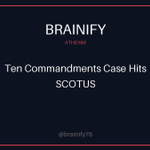
Texas ordered one specific, state-picked wording of the Ten Commandments bolted onto the wall of every public school classroom. Catholics, Jews and plenty of Protestants number the commandments differently, which is exactly why Jewish and Hindu families are suing alongside Christian ones. The Supreme Court already struck this down in Kentucky in 1980. A Fifth Circuit panel just decided that ruling doesn't count anymore. The state's answer, in the real fight over whether it still does, is due at the Supreme Court in three days. ⚖️ #Secularism #SCOTUS

Regional stroke patients can spend 8 to 16 hours on a transfer before a specialist can remove a clot from the brain. Gold Coast University Hospital regularly takes people from as far as 2000 kilometres away. Professor Hal Rice, its director of neurointervention, puts the cost simply: the brain loses about 2 million neurons every minute.
Artificial intelligence is already shortening the diagnostic wait. A stroke CT can produce 3000 to 5000 images. Careful human review once took around two hours. AI can summarise that stack in one or two minutes and stream the result to the whole team on a private network, whether it is 2am or a Sunday afternoon.
The next step is remote robotic thrombectomy. A specialist would drive the robot from a metropolitan centre while the patient stays in a regional hospital, with local staff handling anaesthesia and vascular access. Rice's team did a pioneering robotic-assisted thrombectomy at Gold Coast in 2020. They have since run hundreds of procedures on 3D-printed anatomical models, including remote links between the Gold Coast and San Francisco, and they are preparing a clinical trial connecting Gold Coast with a regional Australian hospital.
Source: Pulse+IT coverage of AusBiotech 2026 (3 November 2026).
pulseit.news/australian-digi…

Claude can now read your bank account. Anthropic's new Personal Finance tool connects through Plaid, sorts your spending by category, flags duplicate charges, surprise fees and bills that quietly creep up, and explains what APR actually means. It's read-only, no ads, no credit card or loan pitches bolted on. Rolling out in beta this week for Pro, Max and Ultra users in the US. Every finance app promises convenience right up until the business model needs your data more than your trust. 🧠 #AI #Finance

Colorado's preschool program comes with one condition: don't discriminate against kids over their parents' religion, sexuality or gender identity. The Archdiocese of Denver wants the public money without the condition, so it can enroll only families who follow Catholic teaching on marriage and sex. At oral argument this week the Supreme Court sounded ready to agree, stretching the same free exercise logic that once meant "don't exclude us" into "don't regulate us" too. Justice Sotomayor put it bluntly: "there will be tremendous problems and a great cost to someone." Taxpayers fund the program. The Church still picks the kids. #SCOTUS #Secularism

A giant planet was sitting in NASA's own JWST data for two years and nobody could see it. Stars can be up to 100,000 times brighter than the planets next to them, so the glare just swallowed the signal whole. A Northwestern team built a digital twin of the telescope, modeled exactly how starlight scatters through its mirrors, and subtracted that glare with physics, not AI. The hidden planet, 51 Eridani b, snapped into view and detection sensitivity jumped up to 15x. Score one for modeling the problem properly instead of throwing a neural net at it. 🛰️ #Space #JWST

Adding static to someone's view sounds like a strange way to help them see. For people with macular degeneration, it seems to work.
Researchers at the University of Canberra gave Microsoft HoloLens 2 augmented reality glasses to 12 people with the wet form of age-related macular degeneration, a disease that wears away central vision. The glasses laid a faint layer of visual noise, a bit like old TV snow, over a standard eye chart. At the right level of noise, people read more letters straight away, with no training at all.
The effect is called stochastic resonance. A small amount of random noise can lift a weak signal over the threshold where the brain notices it. On average the group gained about 2.5 letters on the chart. Using each person's own best noise setting, the gain was about 4.4 letters, close to a full line. The group average moved from 6/13.5 to 6/12, which happens to be the minimum vision standard for a private driver's licence.
Twelve people is a small study, and the team says plainly that it's a proof of concept. Reading, driving and everyday tasks still need proper testing. The next step is already under way in regional NSW, where people living near Canberra are trying the glasses at home for a month.
If it holds up, glasses fitted at the local optometrist could one day help many people with macular degeneration read a menu or recognise a friend's face across the room. Would you give TV static glasses a go if they helped you see a bit more?
Study in npj Aging: nature.com/articles/s41514-0…

A routine breast screen might one day check your heart as well.
Researchers at The George Institute for Global Health in Sydney, working with UNSW and the University of Sydney, trained a machine-learning model on routine mammograms from more than 49,000 women in metropolitan and rural Victoria, linked to their hospital and death records. Using only the images and each woman's age, it predicted major heart events about as well as the standard risk calculators, which need blood pressure, cholesterol and a fair bit of medical history. The results were published in the journal Heart.
This past week the Assistant Minister for Health and Aged Care, Rebecca White, visited the team, and Associate Professor Clare Arnott laid out the case. Around a million Australian women have a breast screen each year, and most of them never get their heart risk assessed. Heart disease caused about one in four deaths among Australian women in 2022, and women are less likely than men to be screened for it at the GP.
The appeal is how little it asks of anyone. A woman would only need her age and the mammogram she's already having, and mobile screening vans already reach plenty of country towns.
Arnott calls it early work, and the model still has to be tested in other groups of women before it goes anywhere near a clinic. Two checks for the price of one squeeze sounds like a deal plenty of women would happily take.
doi.org/10.1136/heartjnl-202…

Your smartwatch sits against your wrist all day. Engineers at Northwestern University want it to work out what your hand is doing from that spot.
Karan Ahuja's SPICE Lab presented two research prototypes at the ACM Symposium on User Interface Software and Technology.
EITWatch puts eight small electrodes on the back of a watch. They send tiny electrical signals through the wrist to map the muscles and tendons underneath, a method called electrical impedance tomography. In the study it recognised six common hand gestures with over 92% accuracy and five subtler finger movements with over 91%. It works best when calibrated for one person.
TransfHAR uses the motion sensors already inside a smartwatch. It was pretrained on more than 2,700 hours of public movement data, then learned each new activity from a single one-minute demonstration. In a study with 10 participants it recognised seven new activities with about 90% accuracy.
Because wrist signals carry information about what the hand intends to do, the team is exploring whether this sensing could help control prosthetic hands. Co-lead Novel Alam also pointed to accessibility: a gesture channel built into the watch gives people who struggle with touchscreens another way to use the device.
Both are early prototypes. The next jobs are fitting the electronics inside the watch and removing the per-user calibration step.
Source: Northwestern University
news.northwestern.edu/storie…

Iowa spent two years blocking The Satanic Temple from holding its own holiday party in the Capitol rotunda. Caroling, coloring pages, a Krampus costume contest, the full lineup. Officials called it 'harmful to minors.' A federal judge just ordered the state to let them in, ruling officials used that line to disapprove of the message, not to protect anyone. If a Christmas tree gets to stand in the rotunda, the state doesn't get to pick who else decorates it. ⚖️ #Secularism #ReligiousLiberty

Australia's High Court heard two challenges to the under-16 social media ban this week, and the judges have reserved their decision. Reddit argues the law limits political communication and was rushed through. The Digital Freedom Project says young people are losing access to news and debate. Supporters, including SA Premier Peter Malinauskas, say it protects kids from predators and addictive feeds. Where do you land on it?
Children with medulloblastoma and ependymoma can share the same broad risk label and still have very different outcomes. An international team led by Dana-Farber Cancer Institute has built an AI model that tries to read that variation from tumour tests many hospitals already run.
The model is called MANTIS. It takes DNA methylation profiles, a routine diagnostic assay for brain tumours, plus gene-level copy-number changes, and estimates each child's survival probability over the next ten years. Built on genome-wide data from 2,786 patients and published in Nature Genetics on 3 November, it reached concordance indices as high as 0.80 in validation work, ahead of current clinical risk markers for many patients.
When the researchers adapted MANTIS to compare radiation doses, it suggested about 60% of children with average-risk medulloblastoma may be candidates for lower-dose craniospinal irradiation. In the data analysed, that lower dose was linked with better cognitive outcomes, and the team did not detect a significant survival disadvantage. Prospective clinical studies are still needed before any treatment change.
nature.com/articles/s41588-0…

Three people whose epilepsy had stopped responding to medicine saw their monthly seizures drop by more than 90% in an early gene therapy trial in Beijing.
All three had a common form of epilepsy caused by scarring on one side of the hippocampus, a part of the brain involved in memory. They had lived with it for 10 to 25 years, at least two anti-seizure drugs had stopped working, and they were having at least two seizures a month.
The team, led by neurosurgeon Yang Dai at Xuanwu Hospital of Capital Medical University, infused a modified virus called AAV9 straight into the small patch of brain where the seizures start. The virus carries a gene that makes the overactive nerve cells respond to a specific drug. Taking that drug then quietens those cells, and doctors can adjust the dose like a dimmer switch. This approach is called chemogenetics.
None of the three had serious side effects. The results were published in The New England Journal of Medicine.
It is a very small trial, and the drug used to switch the therapy on is clozapine, which can affect the heart at high doses. UCL neurologist Matthew Walker, who was not involved, called the effect dramatic and said better drugs for this method will hopefully follow. Larger trials will need to show the benefit lasts and the approach is safe over the long term.
Source: Nature news, 4 November 2026
nature.com/articles/d41586-0…
