
Mostly satire. Thought Criminal.
Vancouver, British Columbia
Joined November 2015
- Tweets24.7K
- Following865
- Followers619
- Likes15.8K


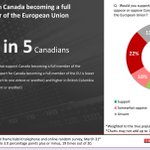


EU doing EU things.

A Letter to America, From a Frenchman Who Loves You
Yesterday, the Prime Minister of Poland posted this: "Restoring the rule of law is our duty. After years of PiS-led lawlessness, this is a difficult process, sometimes painful, and it requires decisive action. There is no other way."
Read it slowly. "There is no other way." In today's Europe, that is the sentence a government says right before doing something it could not do through the normal rules.
I'm French. I'm the grandson of a farmer from Brittany. I taught myself to code at twelve, spent a year in Silicon Valley when I was young, and today I build a tech company between Paris and San Francisco. I'm writing to you because I watch what is happening to my continent, and I'm afraid you are about to take the same road.
Let me tell you what "rule of law" means in Europe now.
When Donald Tusk came to power in December 2023, one of his first moves was to take over Poland's public broadcaster. Rather than pass a media law the president would veto, his government used corporate law to replace its leadership, and the state news channel briefly went dark. When that was blocked, it put public TV into liquidation. When the Constitutional Tribunal ruled against the government, the government stopped recognizing its rulings. Tusk himself said openly that restoring the rule of law would sometimes require decisions that would not fully meet the criteria of legality.
And Brussels? For years, the European Commission froze billions in EU funds to Poland over "rule of law" concerns under the previous conservative government. Once Tusk was in, it unfroze the money and closed its proceedings.
That's the lesson. In Europe, the rule of law is no longer a principle. It is a label. When a conservative government reshapes the courts, it's an assault on democracy. When a pro-Brussels government ignores a court, it's "restoring the rule of law."
It isn't only Poland. In Romania in December 2024, the Constitutional Court annulled the first round of a presidential election after the wrong candidate came first. In France, a TV channel, C8, lost its broadcasting license in 2025, and this week a member of parliament declared that shutting down CNEWS, the most-watched news channel in the country, is "a priority." In Germany, domestic intelligence labeled the main opposition party extremist. In Brussels, the Digital Services Act gives unelected commissioners the power to fine platforms up to 6% of global revenue, and its first fine ever went to X, with more investigations into "disinformation" still open.
There are no gulags here. Let me be precise about that. But there is a reflex: an elite that knows better than the people, that decides what the people are allowed to read, and that corrects their vote when it comes out wrong.
Now let me tell you why you are the first power on earth.
It's not oil. It's not size. It's not luck. Europe has had all of those. You are number one because you built your entire system on a radical idea: the individual comes before the state. Your First Amendment doesn't say "speech shall be protected unless it's disinformation." It says Congress shall make no law. Your Constitution protects private property against the government that wrote it. And your culture lets people fail and try again.
In France, a founder who fails carries it for life. In America, a founder who fails is called experienced. In Europe, we passed a law to regulate artificial intelligence before we had an AI industry. You built the industry. That's not an accident. That's what happens when a society trusts its citizens more than its bureaucrats.
Your system is not perfect. Your politics are loud, ugly and polarized, and I see it. But it is fairer than ours, because it was designed by people who distrusted power, including the power of good intentions. That distrust is the most valuable thing you own.
So here is what worries me as I watch you vote on Tuesday.
From Paris, when I look at the Democratic side, I recognize the European reflex. I saw an administration lean on social media platforms to take down posts; Mark Zuckerberg later wrote to Congress that the government had repeatedly pressured Meta to censor content and that he regretted not pushing back. I saw a proposal to tax unrealized gains, meaning taxing wealth you haven't even sold. I hear calls to end the filibuster, add seats to the Supreme Court, and add new states to the Senate. Each one can be defended on its own. Together, they look like what Europe did: when you can't win under the rules, you change the referee. And a majority that rewrites the rules in its favor doesn't plan on being a minority again.
The twentieth century already ran the collectivist experiment, and it ran it to the end. Every time a state decided that individuals were a means to a collective goal, and that some category of people stood in the way of justice, it ended in camps and mass graves. Tens of millions dead. But it never started with camps. It started with good intentions, a moral elite, and a list of things that were too dangerous to say, too much to own, too misinformed to count.
I'm not telling you Democratic voters are Bolsheviks. Most of them are your neighbors and they want good things. I'm telling you the reflex is real, that I live under it every day, and that you are the last big country on earth built to resist it.
When Europeans want to build something, we look at you. When we leave, we go to you. If you become us, there is nowhere left to go.
Keep your First Amendment. Keep your property. Keep your right to fail. Vote on Tuesday.
From Paris, with love, and with fear.


Great to see Bagholder back in fine form

"ALL THE BUNK TERMITE ANAL-ISTS LIKE GOLDMAN BALL SACHS COMING OUT WITH SHIT "REVUSIIBS"- TO HELP OUT FKG SHORTS SHIT SOROS WOUKD BE PROUD. SHORTS LAUGING AT RETAIL HURRY SHORT MORE PUTS CONGRATS SHORTS ASSHOLES." $INTC
Aaaand we just raised rates. Winning.

#BREAKING: Statistics Canada says the economy stalled for a second month in a row in August, and early estimates suggest growth declined in September. bnnbloomberg.ca/business/eco…

When your economy is based on real estate development projects backed by bank loans which are conditional on preselling condos which is built on the foundational idea that condos only go up.
Yep, then you're screwed.


Upset election results are more of an indictment of the incumbent than an affirmation of the winner.
But humility is not exactly a defining trait of winning politicians.


Just going for a nice little vacation in Florida.

Brazilian senator Flávio Bolsonaro has left Brazil and is headed to the United States after losing Sunday's presidential election, two sources have confirmed to CNN. cnn.it/4eVQqdE

Canada U.S. trade deal incoming
cbc.ca/news/politics/europea…


Four investigations Democrats could launch if they win Congress bbc.in/4zVQH8H

This is what democracy and multilateralism winning in Brazil looks like.

Brazil’s Federal Police has canceled Bolsonaro’s passports and are currently searching for him, CNN Brasil reports. cnn.com/2026/10/27/americas/…

bsilly, TLA retweeted

Repost if you wish @rickygervais would host another awards show.
The fundamental flaw of Marxism. Capital and labor are not separate things.
Human capital (labor/knowledge) is the only capital that matters. The society that gives the individual the freedom to maximize their personal human capital wins.
bsilly, TLA retweeted

Recently I was talking with a guy from the bourgeoisie. Good schools, good job, good manners.
I asked him: "Do you think there are too many people on Earth?"
He said yes. Without a second of hesitation.
I asked him why.
He gave me two reasons. First: there aren't enough resources. Second, and I'm quoting him word for word: "I'm afraid of the masses."
That second sentence chilled me. Because it admits what the first one disguises.
This guy didn't come up with that opinion on his own. Nobody is born a Malthusian. You become one. And this belief has a history, authors, institutions, and funders.
It starts with Thomas Malthus, an English clergyman who argued at the end of the 18th century that population would always grow faster than food, and that famine would take care of the surplus. There were 1 billion of us. Today there are more than 8 billion, and humanity has never eaten better in its entire history.
In 1968, Paul Ehrlich publishes The Population Bomb. He predicts that hundreds of millions of people will starve to death in the 1970s. It doesn't happen. Norman Borlaug and the Green Revolution feed the world. Ehrlich never apologizes, and gets invited on every show for the next fifty years.
In 1972, the Club of Rome, founded by an Italian industrialist and a Scottish scientist, commissions a report from MIT: The Limits to Growth. Computer models, collapse scenarios, resource depletion. The book becomes the bible of an entire generation. Degrowth is its direct descendant.
In 1980, economist Julian Simon makes a bet with Ehrlich: the price of five metals, chosen by Ehrlich himself, will fall within ten years. By 1990, all five had fallen. Simon wins. Why? Because a human being is not a mouth to feed. A human being is a brain that solves problems. The ultimate resource is us.
Fifty years later, the story hasn't changed. It just changed outfits. It's no longer "there won't be enough wheat," it's "your child has a carbon footprint." Studies get published explaining that not having children is the most ecological thing you can do. People discuss it at Davos, between two private jets.
Bill Gates said it himself on the TED stage in 2010. He presents an equation to bring CO2 emissions down to zero, and the first term of that equation is P. People. He then explains that with vaccines, healthcare, and reproductive health, we could lower population projections by 10 to 15%. Nobody is talking about killing anyone. It's more subtle, and in my view more disturbing: a large part of the elite sincerely sees human beings as a variable to be reduced in an equation.
And what happens when a technocratic elite actually takes this dogma all the way? You get China. In the late 1970s, Song Jian, a missile engineer for the regime, discovers the Club of Rome's work, runs his own projections, and convinces the Communist Party. The result: the one-child policy. Hundreds of millions of abortions and sterilizations, many of them forced. Today China sits around 1 child per woman and is set to lose a massive share of its population by the end of the century.
Meanwhile, look at the numbers. South Korea: 0.8 children per woman. Taiwan: 0.7. Spain: 1.1. Japan: 1.14. And France, long the champion of Europe, has dropped to 1.56. In 2025, for the first time since World War II, my country recorded more deaths than births.
Elon Musk has been saying it for years: population collapse is a far bigger danger to civilization than climate change. If people don't have more children, civilization will crumble. Japan will eventually cease to exist if nothing changes. And just yesterday: so many cultures are dying out. People call him alarmist. The curves prove him right.
Now do a simple exercise.
Take all 8 billion humans and pack them into a cube. It would be less than a kilometer on each side. All of humanity, in a volume smaller than a single neighborhood.
Even better: if all of humanity lived at the density of Paris, it would fit in an area smaller than France. The rest of the planet would be empty.
And the next time you fly, look out the window. Paris to San Francisco is hours over Greenland, the Canadian Arctic, deserts, forests, mountains. Emptiness. Thousands of miles without a single light. Cities cover roughly 1% of the Earth's land.
We are not too many. We are tiny.
And above all, we are far too few for what lies ahead.
If we want to leave this cradle, build cities on Mars, mine asteroids, build orbital habitats, and then head for the stars, we won't need 8 billion humans. We'll need a trillion. Just to get started. Every human is a genetic and cultural lottery ticket. The more humans there are, the more Newtons, Pasteurs, and Von Neumanns. The more engineers, builders, artists, and explorers. Genius is a law of large numbers.
So let me be clear.
Everything you think you know about overpopulation is dogma. A dogma born with an English clergyman, turned into equations by the Club of Rome, enforced with a truncheon by the Chinese Communist Party, and recycled today by the degrowth left and the salons of Davos.
It's not science. It's a worldview in which humans are a problem rather than a solution. And behind the resources argument, there is almost always what the guy I was talking to was honest enough to say out loud.
Fear of the masses.
The problem was never that there are too many of us. The problem is that soon there will be too few.

Not a bad starting salary for a 26 year old with no prior work experience.

Emily Lowan's new job - Estimated annual package value $186,657.65 Includes estimated private-sector health and dental premiums; excludes pension value and actual transportation costs. This doesn't include anything the Green Party pays her/reimburses. #bcpoli

Remembering Elizabeth Holmes making up fake claims on 60 minutes.
youtube.com/shorts/9-ez6KXLz…
