

ex marketing strategist making sense of ai. i run chasing next where i teach orgs, teams, and small businesses to get good at using ai for work.
Joined November 2024
- Tweets3.1K
- Following562
- Followers1.1K
- Likes6.7K





Pinned Tweet
if you want to immediately wow a small business client:
1. set up a gmail read only connector
2. have ai scan their email and flag spend that looks off
did this as a first win for a client and it caught a few spend increases employees didn't tell them about + got a 'wait, how did it know that?'
easy way to show your value in minutes.
how i run a weekly seo audit as a non-technical founder:
1. told claude code i'm non-technical, plus my goal: show up when people search my product category and turn that traffic into inquiries
2. connected free data sources: google search console, ga4, and bing webmaster tools
3. added the dataforseo api to check rankings on a short list of searches i want to win and see who's on page one
4. built a weekly skill that compares new data to a running tracker (my biz goals, open to-dos, a watch list, and recent updates to follow)
5. scheduled the skill to run weekly, delivered as an email with the resend api (shows what moved, whether new tactics worked, content ideas from searches, and recos for this week ranked by impact)
(bonus layer: connect ai apis to ask buyer questions and see if you show up in the answers)
4
8
304
what ai could do for me as a non-technical founder each year:
> 2023: advise me on running my business
> 2024: create front-end pages (gave up on back end...)
> 2025: help string together saas tools into a product
> 2026: fully rebuild my site/product and ditch saas
> 2027: ???
2
3
119
how i keep my ai-coded site from leaking data as a non-technical founder:
1. had claude research how hackers exploit sites and get personal data in 2026
2. turned that into a security audit skill
3. run it in claude code before anything goes live
4. schedule a standing codebase audit every week
5. run it through codex sometimes for a second pov
it catches stuff to patch every single time.
as a non-technical marketer w/ over 10 years of experience, building has become the comfortable, easy thing for me to do.
marketing is 100% the hard part.
pretty crazy. i couldn't have imagined i'd be saying that a few years ago.
1
2
147
a habit worth getting into: turn off auto-renew on annual software subscriptions.
tools are moving so fast that by the time next year's renewal hits, you could be paying more for something there's now a better, cheaper version of.
what i do:
1. turn off auto-renew the day i buy
2. only lock in annual for foundational tools i know i'll keep (workspace, quickbooks)
3. go monthly on everything else
4. reassess tools every few months and shuffle if something better's out and friction to switch is low
(i have a grok bot routine that helps with the last one)
2
139
if your team uses microsoft copilot, here's what changed at ignite yesterday:
available now:
1. home: chat and cowork merged. quick questions and multi-step tasks run from one place
2. office in copilot: work on word, excel and powerpoint files directly inside copilot
3. brand kit in cowork: set it up to generate outputs in your style
4. managed runtime: apps your team builds stay in your tenant and visible to IT
5. new plugins: dynamics 365, salesforce, plus prebuilt skills for sales, service, finance, legal
coming in a few weeks:
6. copilot code: describe an app or dashboard for copilot to build, then share it like a doc
early access (frontier) only:
7. workspaces: people and agents work on projects w/ shared context (a notebook evolution)
8. autopilot: agent you @ mention in teams or outlook. follows up and runs recurring work
9. today view: see what needs attention in mail, calendar, and teams. drafts for approval
10. agent 365 business analytics: measures ai value (work completed, spend, adoption, roi)
i'm most intrigued by workspaces and autopilot. autopilot takes ai from passive to active participant, while workspaces makes ai a collaborative team tool.
both send microsoft in the direction other platforms have been heading the past few months.

3
8
668
agree with claire's take on "slop for good", but a lot of teams are stuck in a loop:
1. people send out ai work they didn't review
2. it falls on others to filter and make sense of
3. "ai slop" becomes a label at their company
4. everyone else gets scared to use ai at all
there's a fine line between helpful ai outputs and true slop, which takes time (and some missteps) to learn.
culture can change when team members learn they must be the filter.
slop shows up as too much info with no clear pov. so each person's job is to cut it down to what the team truly needs to know and give it direction.
if it's helpful, it doesn't matter if ai made it... it's "slop for good" if it gets you closer to the goal.

I’ve been pushing people to recognize what I call “slop for good.”
It’s so silly that leaders are demanding that internal content be rewritten simply because it *sounds* like AI. If it’s written by AI, is good and simple to understand, and does the job, why are you wasting time obscuring it?
Waste of time imo
2
206
was talking about exactly this last night. where i think it goes:
the future is personal ai hubs with dynamic visual interfaces.
data feeds are hooked up on the back end, with all your dashboards and apps centralized in one place talking to each other, showing you the most useful info visually.
shopping is a good example: today ai researching for you helps some, but people like scrolling and to see products. in the future you'll get a product feed like today's sites, but curated with pics from all of them. clothes shown on you, ranked by what'd fit best. if you always go cheapest or like a certain brand, it highlights that.
there will be a shift towards the visual feel of sites today, just living all together in one ai interface with way more of your data behind it and new ways to interact with info.

humans are fundamentally visual creatures yet nearly every ai product today is optimized around text.
i suspect that’s going to change dramatically in the next year or so.
if you want to create entirely new behaviors at scale, especially social & networked behaviors, you have to tap into the power of visual experiences.
this is why image gen in chatgpt is such an enormous growth vector. ai is so powerful at unlocking new forms of expression, interaction, & sharing that simply aren’t possible with traditional mechanics. but today these things exist as tools without networks.
2
155
something i find weirdly comforting: how much effort it still takes to make something good with ai.
i go through endless rounds of revisions to add or edit anything on my site. i'm steering design choices, user flow, copy, backend functionality, nitpicks, catching errors...
even as ai's gotten better, going with whatever it gives you gets you a sloppy mess.
while i'm slogging through the back and forth, i think about how many people are just full sending whatever ai hands them.
so i've started taking pride in the parts that suck.
being obsessive about details is how you stand out.
2
5
233
my wisprflow subscription renewal is coming up. whats the best speech to text tool these days?
bonus points if it's cheap or free.
7
5
322
if you're a marketing leader being told to hire a marketing engineer, read this.
hire them. but at a medium or large company, the role looks different than what you see on social.
one person can't get into every system, and your specialists won't love being told to change how they run their channel.
so before they start, get the basics in place for everyone:
- skills: finding indiv use cases, building assistants
- access: ai platform, connectors, clear rules
- support: role-based training, time to experiment
- responsibility: part of everyone's job, culture of sharing
the marketing engineer will have greater impact because the rest of the team is capable and included enough to buy-in and help design new systems.


bad culture makes ai seem like it's the bad thing.
if ai feels like it's failing on your team, check these first:
- are people sharing what works or guarding it?
- do they get time to experiment or see it as more work?
- do people feel safe suggesting ideas for ai to help?
- is it safe to say "i tried this and it didn't work"?
5
270
how i get way more out of podcasts, youtube videos, and articles with ai:
1. pull the transcript
- podcasts: happyscribe
- youtube: grab it right from video page
- articles: obsidian web clipper chrome extension
2. send it to my agent (it knows my business & goals)
3. ask for the best ideas and ranked actions to take
4. work through or schedule them while they're fresh
5
15
702
the more ai can make for you, the more prioritization matters.
there's always more to do. more content, more channels, more tools and review, and things still take time. you can work all day and it still feels like it's not enough.
i find setting goals in a hierarchy helps a lot (quarterly, monthly, weekly, daily).
tolstoy said it best: "a man on a thousand-mile walk has to forget his goal and say to himself every morning, 'today i'm going to cover twenty-five miles and then rest up and sleep.'"
i'm redesigning the learner experience on my site for teams, managers, and people learning on their own.
if you've taken an online ai course, what made you stop halfway?
1
5
247
how i turn a framework i see on x into a deck made for my business in minutes:
1. keep a claude code setup that knows your business
2. save a deck style you like (mine is an html presentation i've refined over time)
3. drop in the post and say "adapt this to my business and create a deck in my style"
4. tell it what you want out of it:
- framework applied
- view of blind spots
- opportunities, ranked
- what you're already doing well
5. let a background agent run it while you work on something else
super, super cool way to make someone's free framework personal to you.


how i'd teach myself marketing engineering if my company wasn't helping:
1. pick a side project outside work
- a personal brand
- a research project related to your job
- a side project or idea you've had
2. install claude code
- coding tools get you the most from ai
- excellent tool for non-coders too
- place to learn technical skills for bigger workflows
3. create a folder and start building your context
- give info like background/goals ai needs to work well
- structure a dedicated folder where ai work happens
- sessions and capabilities compound as volume grows
4. connect data sources and tools
- have ai recommend tools to help, most have free tiers
- use a scraper like apify or firecrawl for research
- learn about connectors, apis, mcps, clis, safety, limits
5. create a reusable workflow to run
- build a skill for a task that repeats
- tune it until it's good enough to use
- if helpful, set it up to run on its own as a routine
made a free interactive course that walks through this:
want to run claude + obsidian but dont know where to start? this is for you.
walks through set up, structure, & processes to create an ai system that gets better the more you use it.
get the setup top ai users have, interactive & personalized.
free. link below ↓


1
3
235
i tracked ai marketing job postings for 2 months. here's what they're actually asking for:
- 86% mention governance or responsible ai
- 76% want the hire to build ai workflows
- 76% want them getting other people to use ai
- 67% ask to measure ai's impact
- 65% ask for agents
- 25% name the platform they want agents built on
- 20% mention ai content creation or coding
claude got named about 2x as often as chatgpt.
what ai marketing roles ask for:
- automate marketing workflows
- set ai guardrails and brand voice rules
- drive ai adoption across the team
- write the ai roadmap
- know the martech stack
- connect ai to live data
- build agents yourself
- train the team to run them
- run pilots
- write playbooks and prompt libraries
- pick and prioritize use cases
- evaluate ai tools and vendors
- build dashboards
- measure the impact
- show up for ai search (geo, aeo)
- know claude (chatgpt also mentioned)
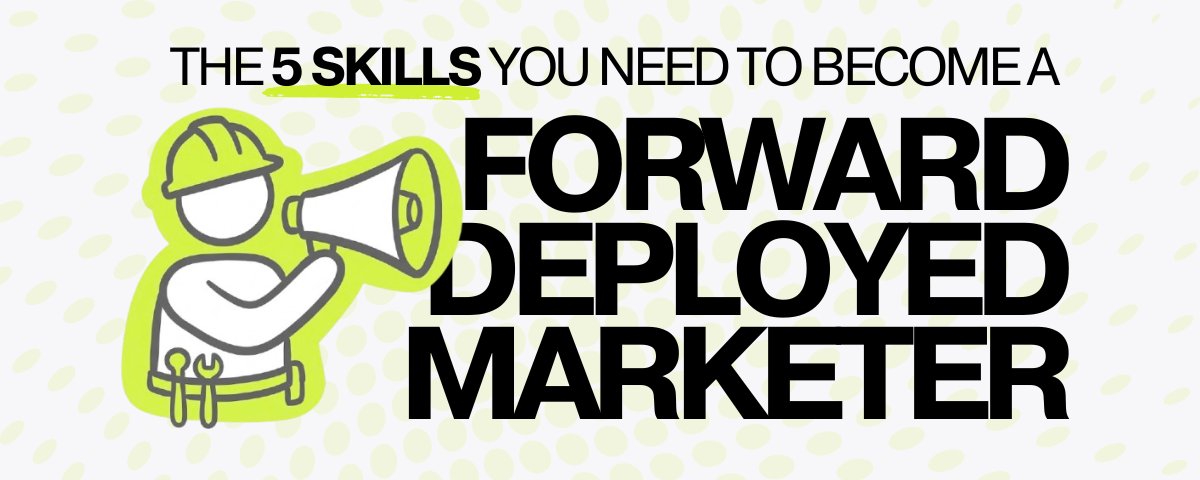
if you want to become a marketing engineer, these are the 5 skills to build first:
1. know your company's data
- what platforms you use
- what each platform holds
- what you could gain if they talked to each other
2. how to connect that data to ai
- apis, clis, connectors, and mcps
- most major platforms have them
3. how to handle security and permissions
- how to safely store credentials
- read vs write permissions
- spend caps so you don't get a surprise bill
4. how to let ai write the code
- get comfortable in claude code or codex
- start by building a small tool that helps your work
5. how to maintain what you build
- bugs, old credentials, models changing outputs...
- know how to tune, fix, or retire what's slipped
if you want an ai role, the easiest one to get is probably at your current company.
i've talked to people who got pulled into ai roles, here's what they had in common:
- curious and already systems thinkers
- tinkered with ai in their own work first
- shared what worked with their team
- became known early as the ai person
when a role opened, they were the obvious fit. plus they already knew the business.
since almost nobody has years of experience with ai yet, internal hires have a leg up on outsiders.
1
3
170