
Led by Dr. Anna Gunz, this unique program considers all environmental factors when addressing the impact on children's health.
- Tweets30
- Following48
- Followers31
- Likes0








ALT Lauren is smiling and is standing in front of a stone wall. She is wearing glasses and a white coat that has the Schulich School of Medicine logo on it.

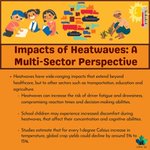
ALT Impacts of Heatwaves: A Multi-Sector Perspective - Heatwaves have wide-ranging impacts that extend beyond healthcare, but to other sectors such as transportation, education and agriculture. - Heatwaves can increase the risk of driver fatigue and drowsiness, compromising reaction times and decision-making abilities. - School children may experience increased discomfort during heatwaves, that affect their concentration and cognitive abilities. - Studies estimate that for every 1-degree Celsius increase in temperature, global crop yields could decline by around 5% to 15%.

ALT Transportation Sector - Extreme temperatures can lead to road buckling and pavement damage, disrupting transportation infrastructure. - Heatwaves increase the risk of tire blowouts and mechanical failures in vehicles. - Extreme heat can cause delays or cancellations in air travel. WHY? - Heat puts additional stress on various vehicle components, such as the engine, transmission, and brakes. - Paved surfaces like roads and railways, which are often made of steel, asphalt or concrete, are vulnerable to the quick and occasionally severe effects of heat. - Asphalt is a temperature-sensitive material, so when hot, it melts. - Concrete and steel expand causing pavement blowups and buckling WHAT CAN BE DONE? Transport agencies should always make frequent maintenance checks and repairs Transportation planners can modify roads, bridges using resilient and heat-tolerant materials Implement restrictions for older roads, bridges, and rail to reduce traffic on vulnerable infrastructure

ALT Education Sector - Many Ontario elementary school classrooms are not air conditioned, hindering educational activities and health during heatwaves. - This leaves staff and students with pre-existing health conditions including asthma and heart problems at greater risk of symptoms of heat stress. PROTECTING CHILDREN Parents and teachers should encourage children to wear hats, light clothing and use sunscreen at school Ensure heat safety training for students and staff, familiarizing them with symptoms of heat-related illnesses Teachers should monitor hydration levels of all children, especially those with special needs Create shaded areas and cool spaces for children during recess and lunchtime During a heatwave, outdoor sports should be modified to increase rest periods or postponed Measures like electric fans and scheduled access to cooling zones should be implemented In the case of an emergency, dial 911 and seek immediate medical assistance

ALT Agriculture and Food Security Sector - Heatwaves cause plants to have reduced photosynthetic ability causing fruit shedding and wilting which reduces growth and yield. - Livestock are vulnerable to extreme heat, leading to increased mortality, lower fertility, and reduced production of eggs, milk, and other goods. - Also, it impacts food storage and transport processes can see major food losses, shortened shelf life, and waste. - Reduced food availability and increased costs associated with extreme heat can impact food access, leading to higher prices that many people, especially those with low incomes, cannot afford. ADDRESSING THESE IMPACTS Providing shade, shelter, unlimited hydration and monitor livestock Encourage farmers to adopt techniques that are more resilient such as, heat-tolerant crop varieties Investing in improved food storage and cold chain infrastructure to reduce food waste Strengthen social safety nets and support systems. E.g., targeted food assistance


ALT Wildfire Smoke & Health Wildfire smoke is a complex mix of gases, water vapour and fine particles. The smoke particles can be carried over long distances and can have damaging effects on air quality and human health when inhaled. Who is at greatest risk from wildfire smoke? -People who have lung or heart conditions -People with weakened immune system -Children (< 18 years of age) -People of low socio-economic status -Pregnant women -Older Adults -Outdoor workers

ALT How Smoke Affects Your Body? Short-term effects -Eye irritation -Runny nose and sinus Irritation -Coughing -Headache -Increased fatigue -Shortness of breath -Chest pains -Wheezing (including Asthma attacks) -Fast heartbeat -For pregnant women, there is a risk of pre-term births, miscarriages, and growth impairment of organs. Long-term effects -Our understanding of the specific impacts of wildfire smoke on long-term health is limited compared to air pollution exposure. However, the effects depend on the level of exposure. -To minimize health risks, it is important to prioritize measures that reduce exposure to wildfire smoke. -The combined effects of high temperatures and wildfire smoke should be considered, as these can worsen chronic health issues and increase health risks. Note: In the case of an emergency dial 911 and seek immediate medical assistance

ALT Minimizing Risks and Actions to Take Stay Indoors and Limit Outdoor Activities -Seek shelter in well-ventilated places, preferably with Heating, Ventilation, and Air Conditioning (HVAC) systems. -Find the closest cooling shelter if it's hot and no air conditioning is available. Reduce Indoor Air Pollution Sources -Avoid using smoke-producing appliances like wood stoves and candles. -Refrain from smoking tobacco. Monitor Air Quality -Use the Air Quality Health Index (AQHI) to determine the current air quality and adjust activities accordingly. The AQHI index values are grouped into health risk categories as shown below:

ALT Minimizing Risks and Actions to Take Wear a Mask -It's important to note that masks are not a perfect solution for prolonged outdoor activities. -Surgical masks filter approximately 20% of fine particles. -Well-fitting N95 masks filter around 80% of fine particles. Prioritize Mental Health -Maintain a healthy lifestyle and stay connected with friends. If experiencing symptoms of stress, anxiety, or depression, seek assistance from a healthcare provider. Engage the Authorities -Contact local, regional, and national representatives to express concerns about climate change and the impact on public health. Note: Consult your physician or local health authority for additional advice.

ALT Dr. Eric Lavigne is smiling and is standing in front of a white wall. He has brown hair and is wearing a light-blue collared shirt.

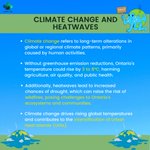
ALT CLIMATE CHANGE AND HEATWAVES - Climate change refers to long-term alterations in global or regional climate patterns, primarily caused by human activities. - Without greenhouse emission reductions, Ontario's temperature could rise by 3 to 8°C, harming agriculture, air quality, and public health. - Additionally, heatwaves lead to increased chances of drought, which can raise the risk of wildfires, posing challenges to Ontario's ecosystems and communities. - Climate change drives rising global temperatures and contributes to the intensification of Urban Heat Islands (UHIs).

ALT HOW HUMAN ACTIVITIES CONTRIBUTE TO CLIMATE CHANGE 1. BURNING FOSSIL FUELS Burning fossil fuels emits carbon dioxide, a greenhouse gas that traps heat and warms the Earth's surface. 2. DEFORESTATION Clearing forests for agriculture, logging, and urbanization reduces the Earth's capacity to absorb carbon dioxide through photosynthesis. 3. AGRICULTURE Practices, including synthetic fertilizers, and livestock production, emit significant amounts of methane and nitrous oxide. 4. INDUSTRIAL PROCESSES Industrial activities such as, manufacturing, refining and food production burn fossil fuels emitting large amounts of greenhouse gases.

ALT URBAN HEAT ISLAND EFFECT An Urban Heat Island refers to a phenomenon where a metropolitan area is a lot warmer than the rural areas surrounding it. UHI effect occurs because: - Cities, with their dense buildings and paved surfaces, trap and amplify heat more than natural environments. - Human activities in these areas, including energy consumption, transportation, and industrial processes, generate waste heat. - Urbanization leads to the loss of vegetation and an increase in impermeable surfaces, reducing cooling from evapotranspiration and transpiration. - Urban areas use of heat-absorbing materials like asphalt and concrete, which store heat during the day and release it at night.

ALT WHAT CAN WE DO? Some measures communities can take to mitigate climate change, UHIs and their potential heat-related impacts: - Minimizing waste heat production by retrofitting buildings and implementing sustainable transportation. - Enhancing Urban Green Spaces through tree planting and implementing green roofs. - Employing climate-responsive urban design and planning, including using reflective building and paving materials. - Developing and Implementing Heat Emergency Plans that focus on vulnerable populations. Note: For guidance about protecting yourself and loved ones, from the effects of climate change, please visit our previous posts on Heatwaves and Child health, Mental health and Heat Safety Guide.

ALT Heather is smiling and is standing in a forest. She has curly brown hair and is wearing a colourful scarf and a burgundy jacket.

ALT Global Impact of Heatwaves on Children Key facts - 1 in 3 children live in countries that face extreme high temperatures. - Children living in low- and middle-income countries are the least likely to have comprehensive heat plans in place making them more vulnerable to extreme weather events. - Children born in recent years will experience 7 times more heatwaves than their grandparents. - Additionally, due to environmental racism, communities inhabited by Black, Indigenous Peoples and people of colour are often used as sites for industry and waste management. Thereby, reducing the air quality and producing heat which can be a challenging due to their compounding effects on human health and well-being. - By 2050, virtually all children worldwide will face more frequent heatwaves.

ALT Global Perspectives and Experiences Meet 15-year-old Lana from St. Mary's First Nation, New Brunswick. During heatwaves, she experienced a disruption of traditional practices in her community, such as gathering medicinal plants and participating in cultural ceremonies. Lana is deeply concerned about the consequences of rising temperatures, particularly on cedar trees which are used daily for protection and ceremonies. She fears that because of heatwaves future generations would lose their cultural identity. Meet Bella, a 13-year-old from Texas, she remembers experiencing a severe drought last summer. Bella and her community took measures to conserve water and energy. They adapted by taking shorter showers, avoiding the use of appliances during the hottest hours, and limiting lawn watering. With thousands of heat-related deaths in United States each year, this emphasizes the need for immediate action to create a safer and cooler planet for future generations.

ALT Meet Fatima, a 16-year-old from Pakistan. Heatwaves in Pakistan have claimed lives, causing glacial melting, wildfires, and disrupted daily life. In her community, people suffered from heatstroke. Children couldn't play outside, and schools closed in June and July. Despite Pakistan's low carbon emissions, they bear the brunt of the crisis. Fatima emphasizes the urgent need to reduce global carbon emissions to prevent further suffering in her community and beyond. Meet Nkosi, a 19-year-old from Zimbabwe. He became a climate activist at age 10 to fight for a better future. In his home country, the land is dry and cracked, crops fail, and animals perish. Walking 5 kilometres to school under the scorching sun without shade is a reality. Writing final exams in the sweltering heat is expected, even though it makes it incredibly difficult to succeed. Nkosi and thousands of school children in his city face these hardships daily, highlighting the urgent need to address climate change.

ALT NEXT STEPS? 1. PROTECT children by adapting social services and health systems to provide support, especially in climate vulnerable countries. 2. PREPARE children to live in a climate-changed world through education. 3. PRIORITIZE children when providing urgent finance and resources to address climate change. 4. PREVENT a climate catastrophe by drastically reducing greenhouse gas emissions. As a result, all governments must reconsider their national climate plans and policies in order to raise ambition and action. Note: Contact the representatives in your region to voice your concerns and engage in advocacy for mitigation efforts. For guidance about protecting yourself and loved ones, please visit our previous post on Heatwaves and Child health and Heat Safety Guide. Disclaimer: These following are conclusions modified from the report: The coldest year of the rest of their lives (unicef)

ALT References 1. Baker III , O. (2021, August 31). Indigenous communities in N.B. say climate change is threatening their way of life. CBCnews. https://www.cbc.ca/news/canada/new-brunswick/indigenous-medicine-climate-change-1.6151893 2. Dunne, D. (2021, September 27). Children today face seven times more heatwaves than their grandparents, study finds. The Independent. https://www.independent.co.uk/climate-change/news/children-climate-crisis-heatwaves-study-b1926526.html 3. MacDonald, E. (2020, September 1). Environmental racism in Canada: What is it, what are the impacts, and what can we do about it?. Ecojustice. https://ecojustice.ca/news/environmental-racism-in-canada/ 4. UNICEF. (2022, October). The coldest year of the rest of their lives. UNICEF. https://www.unicef.org/media/129506/file/UNICEF-coldest-year-heatwaves-and-children-EN.pdf

ALT Dr. Ens is smiling and is wearing glasses and a dark blue, short-sleeved top. She has long hair and is posing outside with trees in the background.
ALT Wildfire Smoke & Health Wildfire smoke is a complex mix of gases, water vapour and fine particles. The smoke particles can be carried over long distances and can have damaging effects on air quality and human health when inhaled. Who is at greatest risk from wildfire smoke? -People who have lung or heart conditions -People with weakened immune system -Children (< 18 years of age) -People of low socio-economic status -Pregnant women -Older Adults -Outdoor workers
ALT How Smoke Affects Your Body? Short-term effects -Eye irritation -Runny nose and sinus Irritation -Coughing -Headache -Increased fatigue -Shortness of breath -Chest pains -Wheezing (including Asthma attacks) -Fast heartbeat -For pregnant women, there is a risk of pre-term births, miscarriages, and growth impairment of organs. Long-term effects -Our understanding of the specific impacts of wildfire smoke on long-term health is limited compared to air pollution exposure. However, the effects depend on the level of exposure. -To minimize health risks, it is important to prioritize measures that reduce exposure to wildfire smoke. -The combined effects of high temperatures and wildfire smoke should be considered, as these can worsen chronic health issues and increase health risks. Note: In the case of an emergency dial 911 and seek immediate medical assistance
ALT Minimizing Risks and Actions to Take Stay Indoors and Limit Outdoor Activities -Seek shelter in well-ventilated places, preferably with Heating, Ventilation, and Air Conditioning (HVAC) systems. -Find the closest cooling shelter if it's hot and no air conditioning is available. Reduce Indoor Air Pollution Sources -Avoid using smoke-producing appliances like wood stoves and candles. -Refrain from smoking tobacco. Monitor Air Quality -Use the Air Quality Health Index (AQHI) to determine the current air quality and adjust activities accordingly. The AQHI index values are grouped into health risk categories as shown below:
ALT Minimizing Risks and Actions to Take Wear a Mask -It's important to note that masks are not a perfect solution for prolonged outdoor activities. -Surgical masks filter approximately 20% of fine particles. -Well-fitting N95 masks filter around 80% of fine particles. Prioritize Mental Health -Maintain a healthy lifestyle and stay connected with friends. If experiencing symptoms of stress, anxiety, or depression, seek assistance from a healthcare provider. Engage the Authorities -Contact local, regional, and national representatives to express concerns about climate change and the impact on public health. Note: Consult your physician or local health authority for additional advice.

ALT An infographic titled, "Nature Prescriptions, Connecting Patients to Nature," that contains the following information: "Nature prescriptions are written prescriptions for experiences in nature that are made between a healthcare provider and a patient. Healthcare providers can explore the patient’s preferences, interests, and any potential challenges to ensure a personalized approach. Patients and their families gain access to designated spaces to connect to nature both inside and outside Children’s Hospital. For more information, ask your healthcare provider at Children’s Hospital." The infographic has a green background with white and black text.

ALT An infographic titled, "Benefits of Nature," that contains the following information: "Physical health and Well-being Studies have shown that nature increases physical activity thereby improving immune function and overall health. Mental health and Well-being Nature has a profound impact on mental health, reducing symptoms of anxiety and depression, and improving mood. Stress Reduction Spending time in nature helps to reduce stress and increase relaxation, leading to improved sleep patterns and a greater sense of calm. Emotional support Nature has been shown to boost resilience by providing a nurturing environment that can offer comfort, and a sense of serenity for patients and their families. Get ready to discover the healing power of nature!" The infographic has a green background with white and black text.

ALT White and black text is set against a green background which reads, “We are thrilled to launch our Nature for Healing Program, a ground-breaking initiative designed to harness the incredible power of nature for the well-being of pediatric patients at the Children’s Hospital. With growing evidence indicating the positive impact of nature on physical and mental health, the Nature for Healing Program aims to enhance both patient and family experience at Children’s Hospital through the use of Nature Prescriptions! Save the date! 07/06/2023” In the top right corner, there is a picture of hands pressing soil down around a plant, and in the bottom left corner there is a picture of a child smelling a flower. The ChEHC ON logo is in the bottom right corner.

ALT Dr. Luginaah is smiling and is leaning on a stone wall with his hands clasped. He is wearing glasses, a grey suit, and a light purple shirt.

ALT A green textbox contains white text which reads, “Planetary Health and Nature for Healing Survey. All are welcome! Link in caption.” Behind the textbox is a picture of a forest, and the ChEHC ON logo is in the bottom right corner.

ALT An infographic series titled, “Heat Safety Guide – Staying Cool and Protected.” It contains the following information: “Heat Plan Heat plans are a coordinated strategy to protect public health and safety during heatwaves. This involves measures such as early warnings, cooling centres, and targeted support for vulnerable populations. Heat warnings are issued by Environment Canada to alert about extreme heat conditions. Temperature thresholds vary based on the region. In typically warmer climates like Southern Ontario, a heat warning is issued after a daily maximum temperature of 31 degrees Celsius or higher for two consecutive days, or: A humidex of 42 degrees Celsius or higher for two consecutive days. These are then communicated through official websites, emails and media platforms.”

ALT “Response Measures Collaborate for Action: Communities join forces with local healthcare providers, emergency services, and community organizations to coordinate a comprehensive response plan. Cooling Off: Various cooling stations are available for public use such as: spray pads, local libraries, emergency shelters, shopping malls, and religious centers. Staying Informed: Municipal regions provide educational resources on their website about recognizing heat-related illnesses and preventive measures. Support for the Vulnerable: Equitable access to safe and cooling environments are ensured through collaborative efforts with community social services and organizations. Medication Awareness: It is recommended that you consult your doctor or pharmacist regarding the side effects of your medications which could be triggered by extreme heat.”

ALT “Blackout during a heatwave Dealing with heat during a blackout can be challenging, but here are some steps you can take: Open windows and use battery-powered fans or hand-held fans to circulate air. Have essential supplies ready: flashlights, batteries, candles, and matches. Keep the fridge and freezer closed to maintain food freshness. For cooling effects use damp cloths or icepacks. Check on vulnerable neighbours, especially older adults and young children. Store an ample supply of water to stay hydrated. Find a local cooling centre as a refuge for a cool environment. If feasible, consider installing a backup generator for emergency power needs.”

ALT “Park Safety during a heatwave Check the weather forecast to avoid going during extreme heat and go during a cooler time of the day. Pack essentials like water, umbrella, cellphone, sunscreen. Wear proper clothing that is lightweight, breathable, and a hat. Do not leave children or pets in a parked vehicle. Visit the park safety kiosk upon arrival to grab a map, gather information and safety guidelines. Water, Rest and Shade: Remember to take frequent breaks and in shade. Avoid strenuous activities like hiking or biking. Call the park headquarters or 911 in the case of emergency.”

ALT Wuraola Dada-Phillips is smiling and is standing in front of a cream-coloured wall. She is wearing a light purple blazer and a silver and gold necklace.

ALT An infographic titled, “Heatwaves and Mental Health”. It contains the following information: “Key Facts -Prolonged exposure to high temperatures and heat-related stress can negatively impact mental well-being. -For every 1 degree increase in monthly average temperature, mental health-related deaths increase by 2.2%. -Heatwaves have been linked to a rise in hate tweets and online aggression on platforms such as Twitter.”

ALT An infographic titled, “Understanding the Impacts.” It contains the following information: “Heat-related Anxiety and Stress: Extreme temperatures raise concerns about personal safety and coping uncertainty, while also increasing cortisol, the stress hormone. Sleep Disturbances and Fatigue: Temperatures >25 degrees Celsius can disrupt sleep patterns, leading to insomnia, poor-quality sleep and fatigue. Agitation and Irritability: Feelings of discomfort during heatwaves make individuals more prone to frustration, anger, conflicts and mood disturbances.”

ALT An infographic titled, “Understanding the Impacts.” It contains the following information: “Aggravation of Existing Conditions: Heatwaves can exacerbate symptoms of mental health conditions like bipolar disorder or schizophrenia, particularly in individuals with pre-existing conditions. Loneliness and Social Isolation: Heatwaves can restrict social interactions and outdoor activities, necessitating support for at-risk individuals, including the elderly, low-income individuals, and those with chronic diseases.”

ALT An infographic titled, “Do certain psychiatric medications predispose you to heat-related issues?” It contains the following information: “Yes – High temperatures can interfere with physiological functions necessary for the processing of medications for mental health. Antipsychotics and Anticholinergic antidepressants can impair the body’s thermoregulation, reducing sweat production and heat dissipation, potentially leading to hyperthermia (heat stroke). Mood Stabilizers such as Lithium: During heatwaves sweating and dehydration can increase lithium levels, posing a hazard for dangerous toxicity. Disclaimer: This information is not intended as medical advice. It is essential to consult with your doctor regarding your medications.”

ALT An infographic titled, “Taking Care of Your Mental Health During Heatwaves.” It contains the following information: “Consult your doctor about medications. Monitor your health and seek guidance from your pharmacist if necessary. Stay hydrated and seek cool areas to stay alert and maintain mental well-being. Try to get some sleep and create a cool sleeping environment by keeping curtains closed and opening windows. Manage heightened emotions by recognizing and assessing reactions, seek support and communicate with loved ones. Try mindfulness exercises such as, journalling and meditation for effective emotion management.”

ALT Dr. Garcia-Bournissen is wearing a long-sleeved, green patterned shirt and has a nametag attached to the front of his shirt.