

Autor přehršle vynálezů, které nefungovaly a několika, které fungovaly... aspoň chvíli. 😎
Ležící
Joined February 2014
- Tweets19.6K
- Following108
- Followers317
- Likes321K




🇨🇿🇮🇱🇺🇦 Pavel Riedl ⚡️🔋🚗 retweeted

"How scared are you, 1 to 10?"
"NINE."
Italy has had FSD for one week.
Summer tires. Night. Snowy downhill.
And it does this... 🇮🇹❄️
🇨🇿🇮🇱🇺🇦 Pavel Riedl ⚡️🔋🚗 retweeted

Die Volkswagen-Softwaretochter Cariad hatte in der Spitze rund 6.500 Beschäftigte.
Das gesamte AI-Kernteam bei Tesla umfasst nach Angaben von Elon Musk nur rund 300 Ingenieure.
FSD 15 ist mindblowing!
Warum bekommt Volkswagen das nicht hin? Volkswagen wird von Verwaltern geführt. Ein Mastermind wie Elon Musk macht den Unterschied.
🇨🇿🇮🇱🇺🇦 Pavel Riedl ⚡️🔋🚗 retweeted
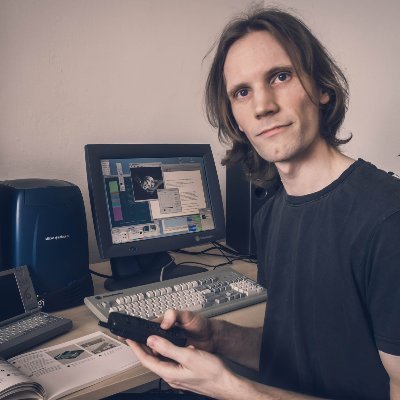
🔋Volkswagen, oprava starých EV a problém s díly🔋
Geopolitická situace způsobila, že po elektromobilech je velký hlad, a to zejména po těch levných. Vlivem toho, že starých elektromobilů logicky zas tolik není, to způsobilo, že ceny brutálně vystřelily. Lidi kupují i takzvaná 100km auta za ceny klidně přes 200 tisíc korun, což mi ještě loni touhle dobou přišlo jako úplně sci-fi. Ale holt taková je doba, a když vidím, jak se situace vyvíjí, ani nečekám, že by se to mělo brzy otočit.
Všichni se bojí trakčních baterek (a u pár vybraných modelů úplně po právu), ale baterka nebývá z mé zkušenosti moc často problém. Naopak kazit se umí kde co okolo. U těch starých elektromobilů mi přijde, že největším strašákem je palubní nabíječka. Samozřejmě kazit se umí i v úplně nových autech (zdravíme Porsche i koncern Stellantis...🤭), ale u těch starých je to strašně častý problém. Typicky jde o problém, který začne kondenzátory, které zdegradují tak, že se dostanou úplně mimo specifikaci. Pak už je to jen o náhodě, zda něco ochrání zbytek součástek a vyhodí chybu nabíječky, anebo dojde k nějakému zásadnímu selhání, při kterém se spálí nějaké výkonové součástky, případně i propálí desky plošných spojů.
Ti první, kterým se něco takového na starém EV stane, mají výhodu, že tou dobou je ještě k sehnání starý díl někde na vrakáči za pár šupů, takže ho stačí vrazit místo rozbitého a doufat, že nějaký čas vydrží. Tak to ještě třeba šlo řešit u VW e-Up! první generace (2013-2019) třeba 4-5 let zpátky.
Jenže teď už ne. Ani v Litvě a Polsku už prakticky nic není, protože VW group danou nabíječku vyrobil v miliónu modifikací a jen několik málo je kompatibilních s instalací do e-Upu. Když začnete hledat přímo kompatibilní typ, zjistíte, že z desítek kusů jsou k dispozici tři. Jeden za 250€, kde prodejce nereaguje a stránka vypadá jako scam a dva okolo 1000€, kde ale vůbec netušíte, v jakém stavu budou.
Obecně staré auto je levné na opravy jenom do doby, dokud jsou plné vrakáče dílů z bouraček. Proto je výhodné kupovat modely/motorizace aut, kterých se vyrobilo hodně. Déle trvá, než zdroj vyschne. Kdo má skutečnost už s opravdu starými auty (zejména pak vzácnějšími), ten ví, že od určitého času je dobré se díly předzásobit.
No a tady s elektromobily je to podobné. Těch vyrobených v roce 2015 moc nebylo ani celkově po světě. Výrobci se k těm prvním generacím kolikrát ani moc nehlásí a nejradši by zapomněli, že to existovalo. Ta nabíječka tedy nejde sehnat pořádně ani nová, když jsme to zjišťovali.
Nebylo tedy na výběr - když není náhradní díl, tak se ten původní musí opravit. K mému překvapení jsem na internetu našel pouze zkušenosti, že lidi nenašli uvnitř žádnou závadu a výměna těch tří největších kondíků "na slepo" nic nezměnila (i když byly trochu mimo specifikaci). Každý pak koupil někde náhradní díl, když to ještě šlo.
Na tomto konkrétním voze se závada projevovala výrazným zpomalováním nabíjení (až na nejnižší možné proudy) a obvykle výpadky do chyby, které okolo 80% nabití už byly tak četné, že dál se nešlo dostat. Problém se týkal jen AC nabíjení. DC bylo v pořádku.
Po otevření bylo z tištěného spoje kolem cívek vidět, že docházelo k výraznému přehřívání (140+°C) a evidentně neoptimální funkci modulu. Všechny tři velké kondenzátory byly opravdu mírně mimo specifikaci, ale ne nijak zásadně a spíš to byl důsledek dlouhodobého přehřívání. Oprava si nakonec vyžádala výměnu těch menších SMD kondenzátorů okolo (stabilizace napájecích větví pro budiče výkonových tranzistorů, nábojová pumpa atd.). Ty byly úplně mrtvé a většina pod sebe stihla i vytéct. Kupodivu dodavatel nabíječky místy použil levné typy s maximální teplotou 85°C vhodné tak do spotřební elektroniky a ne pro automotive. Pomohla tedy výměna kondenzátorů (za dražší, na vyšší teplotu), mírná úprava chlazení a oprava plošného spoje. Nyní je nabíječka plně funkční a auto zas nabíjí - plnou rychlostí 16 A a do 100%.
Ve výsledku bych řekl, že jde o opravu tak za 15-20 tisíc korun (materiál + diagnostika + práce) a je jasné, že budou potřeba lidé, kteří tohle budou časem dělat. Ti totiž jediní dělají rozdíl, jestli půjde o fatální závadu, která auto popraví, anebo o stále poměrně levnou závadu, kdy po opravě není důvod, aby ta nabíječka zase na dlouho bezproblémově sloužila.
Mimochodem, dneska už jsem ve stavu, že kdybych si koupil nějaké staré EV, asi bych se na podobné komponenty podíval dovnitř preventivně. Ono totiž vyměnit umírající kondenzátory, dokud to ještě funguje, je daleko menší práce, než řešit, co se po cestě ještě spálilo...🤷
(U těch problémů s trakčními baterkami je samozřejmě nebezpečí pro lidi, kteří se orientují na nejlevnější ojetiny v nabídce - tam je zastoupení problémových kusů razantně větší kvůli snaze lidí se toho rychle zbavit, dokud to ještě jezdí.)


🇨🇿🇮🇱🇺🇦 Pavel Riedl ⚡️🔋🚗 retweeted

On every Tesla fans Christmas list! 👀
This is good
It looks like an armoured tank
via @supercarblondie


🇨🇿🇮🇱🇺🇦 Pavel Riedl ⚡️🔋🚗 retweeted

I love these guys Klangphonics #klangphonics
🇨🇿🇮🇱🇺🇦 Pavel Riedl ⚡️🔋🚗 retweeted

Tak si včera manželka vyzvedla nového služebního Enyaqa.. Bluetooth, asistenční systémy a prostředí konektivity fungovalo přesně do prvního “vypnutí motoru”.. dneska už v servisu.. první den..
jste banda dementů @skodacz, když ani neumíte předat funkční auto z výroby do prodeje
🇨🇿🇮🇱🇺🇦 Pavel Riedl ⚡️🔋🚗 retweeted

Researchers published the most uncomfortable paper on vibe coding.
ETH Zurich tested 100 developers in a controlled, commercial-grade vibe coding environment to see who actually succeeds.
And the results are a brutal reality check.
For the last two years, the hype has been nonstop: English is the new programming language. Just describe what you want, iterate on the output, and let the LLM handle the rest.
So researchers put that claim to the test.
They took 100 university students and placed them in a purpose-built vibe coding environment designed to mirror commercial AI tools.
Eight experts curated the exact tasks.
Then they measured three things:
- Written communication skills
- Domain-general cognitive ability (raw reasoning)
- Actual computer science achievement
Writing skill mattered. If you can’t structure your thoughts and specify intent clearly in plain English, the AI builds garbage.
But here is the part the hype cycle completely missed.
Computer science fundamentals were a massive predictor of vibe-coding performance.
Even after controlling for general cognitive skills and raw intelligence, CS knowledge still heavily dictated who succeeded and who failed.
Why? Because vibe coding removes syntax. It does not remove engineering.
Anyone can prompt an AI to generate a clean UI.
But the second the app breaks under the hood, you have to iterate from observed behavior. If you don’t understand how software actually works, you don't even know what to ask the AI to fix.
Natural language lowers the floor.
Computer science still decides the ceiling.

🇨🇿🇮🇱🇺🇦 Pavel Riedl ⚡️🔋🚗 retweeted

I explained the fake capitalism. Today, the real one.
In 2014, Tesla's lobby had a wall covered in patent plaques. Elon Musk had it taken down. Then he published a post: Tesla will not sue anyone who uses its technology in good faith.
His reasoning was simple. Patents don't make you a technology leader. History shows they barely protect you against a determined competitor. What protects you is attracting the best engineers in the world and moving faster than everyone else.
SpaceX goes even further. Virtually no patents. Musk told Jay Leno: "Patents are for the weak." They're used like landmines, he said. They don't move anything forward. They just stop others from following you.
Think about what that means. The man running the most advanced rocket company on Earth is telling the world: copy me if you can. That's confidence. That's capitalism.
Real capitalism has one rule: you win by building something better. Not by owning a permit. Not by owning a regulator. Not by owning the paperwork. Your only moat is speed, talent and execution. The day you stop shipping, someone eats you. Good. That pressure is what gave us reusable rockets and electric cars people actually want to drive.
Now compare. Gates in 1991: patent everything, make the next startup pay. Microsoft in 2023: please license AI, we have 350 governance people ready.
One builds a better product. The other builds a better toll booth.
And here's the confusion poisoning the West. Millions of people say they hate capitalism. Ask them what they hate and they describe monopolies protected by law, billionaires writing the rules, regulators who go work for the companies they used to oversee, foundations shaping public policy nobody voted for.
None of that is capitalism. It's the opposite. It's what happens when money stops competing in the market and starts competing for the state. State fraud with a corporate logo on it.
People are right to be angry. They're just angry at the wrong word.
Which brings me to the real job of the state in the 21st century.
Not "regulating AI." Not handing out licenses. Its job is to make capture impossible. To guarantee that no fortune, however large, can buy the rules of the game.
That means shutting down the model Gates and Soros run at scale: foundations, NGOs, think tanks, funding for international agencies, all used to shape policy nobody voted for, with a tax break on top.
Concretely.
A company should never be allowed to lobby for a licensing regime in its own market.
A regulator should never go work for the companies they oversaw. Not after two years. Never.
A foundation that funds political advocacy shouldn't get a tax break for it.
Every rule that touches a market should expire unless it's voted again.
And it has to apply to everyone. Left or right, Seattle or Austin. The rule isn't "our billionaires good, theirs bad." The rule is: you win in the market, or you don't win.
Musk tore down a wall of patents. The state's job is to tear down every toll booth.


Microsoft already ran this play. Now the same people want to run it on all of AI. Here's how the scam works, piece by piece.
May 1991. Bill Gates writes an internal memo about software patents. He admits that if people had patented the ideas the industry was built on, everything would be at a standstill. His conclusion isn't "let's fix the system." It's: patent as much as we can. Because a startup with no patents of its own will have to pay whatever price the giants decide.
Read that again. The richest man in the world describing a weapon, and choosing to use it.
Fast forward to May 2023. Microsoft's president walks into Washington and asks for a new federal agency and a licensing regime for powerful AI models. Even the data centers that train them would need a license.
A company begging to be regulated. Ever seen a wolf ask for a fence?
It makes perfect sense once you understand the four pieces.
Regulation is a fixed cost. Writing the rules costs nothing to the people who write them. Complying costs millions. Microsoft bragged it had nearly 350 people working on AI governance. A garage startup has three people, total. Same rule, same paperwork, same audits. For Microsoft it's a rounding error. For you it's death.
Licensing is a permission slip. Before: you build, the market judges. After: you ask, a committee judges. And that committee will be staffed by people who used to work for the incumbents and will work for them again.
Compliance is the bill. Lawyers, auditors, reports, "independent evaluations." The bigger you are, the cheaper it gets per dollar of revenue. The smaller you are, the more it becomes a tax on existing.
Lobbying is the steering wheel. The incumbents sit in the room where the rules get written. They make sure the threshold lands just above where they already stand. Then they pull the ladder up behind them.
Put the four together and you get the most profitable product in tech: a moat paid for by taxpayers, enforced by the state, branded as "safety."
That's not capitalism. Capitalism is: you build something better, you win. Someone builds something better than you, you lose. This is crony capitalism. You stop competing on product and start competing on access to power. The state becomes your bouncer.
And it's perfectly legal. No law broken, nobody goes to jail. That's what makes it the perfect scam: the victims are companies that never got the chance to exist. Nobody marches for a startup that was never founded.
Now look at the Paris Call. Voluntary today. No deadlines, no sanctions. That's always how it starts. A pledge. Then a "standard." Then "best practice." Then a law that copies the standard word for word. And who wrote the standard? The ones who signed first.
Europe has seen this movie. We missed search, social, cloud, smartphones. Same pattern every time: Americans built, we regulated, and we called it sovereignty. GDPR didn't weaken Google and Meta. It made them stronger, because they were the only ones who could afford the compliance army.
If we make the same mistake with AI, we stay what we've been for thirty years. Customers. Tenants. Their bitches.
AI is the first technology since the early internet where five people in Paris or Lorient can go head to head with a trillion-dollar company. That window is open right now. Licensing is how they close it.
So next time someone tells you AI needs a license, ask one question: who wrote the exam?

🇨🇿🇮🇱🇺🇦 Pavel Riedl ⚡️🔋🚗 retweeted

BREAKING: Tesla Robotaxi has passed 6 million miles driven autonomously.
Tesla's safety report shows, to date:
- zero people injured
- zero airbag deployments
- zero pedestrians or cyclists hit across the fleet
The fleet reached 3.1 million autonomous miles on October 18 and has now passed 6 million.
- Austin leads all markets with ~2.1 million miles
- followed by Dallas at ~608,000
- Houston at ~226,000
Logged conditions include:
- ~862,000 miles after dark
- ~113,000 in the rain
- ~575,000 in rush hour
Source: Tesla


🇨🇿🇮🇱🇺🇦 Pavel Riedl ⚡️🔋🚗 retweeted

Es ist wirklich unfassbar, dass der gängige und akzeptierte Umgang mit solchen Meldungen in der gesamten VW-Community lautet:
„Auto abschließen -> 20 Minuten weggehen -> Weiterfahrt versuchen“
Es kann mir doch keiner sagen, dass die nicht insgeheim denken: „Mist, hätte ich mir lieber einen Tesla geholt.“.

🇨🇿🇮🇱🇺🇦 Pavel Riedl ⚡️🔋🚗 retweeted

Tesla just made a decision that quietly changes how you should think about buying a car.
Elon Musk said cars will remain at AI4. Not "for now." Not "until the next upgrade." Remain.
His reasoning: AI4 is already enough to solve superhuman driving.
That means AI5, the chip fans have been waiting on for years, isn't what the car needs to get there. Meanwhile, AI5 is being tuned to help mass-produce Optimus robots.
For years the story was "wait for the next chip, the next hardware, the next version." Now the message from the top is that the hardware in the car is done. What's left is software, data and training.
Translation: the brain in your Tesla is considered finished, and the next chip race is about robots.
Here's what this means for owners, for buyers, and why this may be Tesla's biggest strategy shift in years 🧵
🇨🇿🇮🇱🇺🇦 Pavel Riedl ⚡️🔋🚗 retweeted

Here is my initial FSD v15 review after driving with it all afternoon and evening:
First off, Elon was right. This update is a BANGER! Tesla Reality View is out of this world and so insanely cool I’m still trying to process it all.
FSD V15.0.1 brings so many improvements behind the scenes, in addition to the wildly cool UI.
Tesla Reality View IS AMAZING! Pictures and video don’t do it any justice, this is something that has to be experienced to truly understand. Got to take a few friends tonight on drives to show them and every single person was blown away by it. The amount of detail it shows and generates is wild and so impressive. It shows reflection in the car, buildings, trees, turn arrows on the display and more.
FSD v15 now has pothole avoidance! I had it swerve and avoid/straddle a few potholes tonight that were difficult for me to see in the dark.
Another great new feature in FSD v15 is speed camera slowdown. As you approach a speed camera, it automatically slows smoothly to the speed limit if you are in a quicker profile. This is a huge quality of life improvement especially as more cities get speed cameras.
Parking seems near unchanged from the last build, I feel it picking spots quicker especially at the supercharger I went to tonight. Seems to be preferring to park in the first or second open spot it sees which is great, but it tried to park in one handicap spot- otherwise good. By far, the coolest part is Tesla Reality View. Holy crap is it insane to watch while parking. It’s the best backup/360 camera money can buy and such a detailed and clear view.
Another new change I haven’t seen many people talk about is the turn signal fade. On FSD, the turn signal sound gets quieter after a few clicks. This is so nice if you’re sitting at a red light and makes drives more peaceful.
Quiet Mode is also so nice at night. It darkens the display and just shows arrival time; music, climate on the bottom and a quick grok button on the top. Another feature that makes it feel like a Robotaxi UI and a peaceful supervising experience.
Another improvement is much better handling of dips and speed bumps. The past couple updates it’s been a bit too fast in my Model Y, and it’s now so smooth.
The nag is definitely reduced. The last couple versions of v14.3 had been sometimes a bit strict, but definitely more relaxed in v15.0.1. Another thing I noticed is way less wiper washing, a very welcome change.
Personalized parking preferences are SO cool. At home, I can click on a person icon on the map and choose street parking or driveway, and it backs into the driveway EXACTLY in the spot I park my Model Y. It leared where I park and knows it.
It also now lets you choose which lot you want to park in if the mall or store has multiple lots, you can select it on the map, worked at the mall, Costco, and Home Depot tonight.
I need to touch on Tesla Reality View again because it’s just that cool. It really feels like you’re in a video game like NFS or GTA. I’m blown away by this and didn’t expect it at all. Tesla teams COOKED with it, I’ve seen so many on X now wanting Teslas because of it. I drove down Rodeo Drive tonight as well as by the SpaceX Falcon 9 and the views were so cool. Another place it’s cool is in wooded areas or tree filled streets, the way it shows everything is spectacular. Parking garages also give a cool look to them with the roof incorporated into the top of the UI. I didn’t think FSD could get this much better, as it was already so good and it did.
I absolutely can’t wait to see what else is coming in the future and driving this more on road trips.
@elonmusk, you were right- V15 is incredible and super human! Huge congrats to the Tesla team on this, what a sick update. @TeslaSI and UI teams did a fantastic job, thank you all.

🇨🇿🇮🇱🇺🇦 Pavel Riedl ⚡️🔋🚗 retweeted

First time experiencing @Tesla FSD V15 visualizations. This is in Downtown Toronto.
Videos do not do it justice. This is like a video game IRL. HOLY.
🇨🇿🇮🇱🇺🇦 Pavel Riedl ⚡️🔋🚗 retweeted

In 1906, the scientist Francis Galton visited a livestock fair in Plymouth and accidentally stumbled on something that explains why central planning fails.
Around 800 visitors had paid sixpence each to guess the weight of a slaughtered ox. Galton collected the tickets and analysed them, expecting the crowd to do badly. Individual guesses were all over the place, but their average was 1,197 pounds - the ox weighed 1,198. While supposed experts - butchers and farmers - guessed poorly on their won, taken together, ordinary fairgoers had come within a pound of the truth.
Nearly a century later, in 2004, the journalist James Surowiecki popularised this effect in The Wisdom of Crowds. His argument was that in large, diverse and independent groups, individual errors cancel each other out, and the collective estimate moves towards the truth.
This helps explain why government bureaucracies so rarely match the efficiency of free markets. Friedrich Hayek called this the “knowledge problem.” The information an economy runs on is scattered across millions of people, each knowing their own circumstances, preferences and opportunities. No planner can gather it all. Markets don’t need to: through prices, they condense that dispersed knowledge into a single number that anyone can act on. The result is what Hayek called “spontaneous order”, complex coordination that no one designed.
Markets condense dispersed information into a market price. When planners abolish markets and try to design an economy and fix prices, they replace the judgement of millions with the guesses of a small group working from incomplete information. As Galton’s ox shows, no committee of experts, however clever, knows as much as all of us together. Central planning fails because bureaucrats fail to guess what the market could have told them.
