
waking up research @ oai || mit, imo 2023
Joined January 2024
- Tweets297
- Following814
- Followers2K
- Likes1.3K




Pinned Tweet
parameter golf was a blast.
2,000+ submissions. 1,000+ verified github accounts. ideas ranging from quantization and depth recurrence to TTT LoRA, SSMs, H-nets, JEPA, and more.
autoresearch made iteration dramatically faster — and led to emergent bulletin boards, issue threads, unofficial leaderboards, and agent-built writeups that helped everyone learn from everyone else.
it felt like a glimpse of where interaction with AI is headed: humans setting taste and direction, agents helping explore, coordinate, and share what works.
our goal was simple: make ml research accessible to anyone, anywhere.
it was amazing to see that happen.
full recap: openai.com/index/what-parame…
future events: jobs.ashbyhq.com/openai/form…

Alex Zhao retweeted

EFFECTIVE SWARM RIDING FOR ENGINEERS
I think we are entering an era where software development feels a lot more like magic.
But you need the right attitude, the right infra, and some incantations.
These are some things that have worked well for me & I hope for you! 1/N

> heavily mischaracterize the essence of a business or asset class and where its pricing power comes from
excellent insight from @MajmudarAdam

New Situational Awareness letter is littered with many instances of the same flawed trope that has become very common in AI market predictions:
step 1. heavily mischaracterize the essence of a business or asset class and where its pricing power comes from
step 2. declare that AI will replace xyz parts of the business which seem salient
step 3. "therefore this business has no moat anymore"
step 4. "if you are really AGI pilled you know this business will be worth nothing in 5 years"
For example, Leopold says "the majority of real estate value today reflects the value of their physical structures" and that robotics will crash the cost of building structures and there's plenty of land to build stuff so cost of real estate drops to zero.
What... the value of real estate especially at the high end is heavily location driven and that is a fundamental scarcity driven by zoning and network effects that compound on the order of decades to centuries. You aren't going to create another Manhattan, Shenzhen, Deer Valley, Hamptons with just dropping construction costs. In fact, those things will become disproportionately more scarce with respect to the rest of the economy's dropping costs (see: Baumol's cost disease), driving their prices even higher (opposite of the half baked "AGI pilled" conclusion here.
Similarly he talks about all of NVIDIA's IP/talent being commoditized by AI and CUDA moat eroded therefore rip NVIDIA. This one is more directionally valid but also NVIDIA is much more than just CUDA/software talent, they have very complex and deep supplier networks, are potentially far ahead on networking technology, may be able to compound their chip building expertise/operational scale/capital scale into farther compounding compute buildout. (that being said, being short NVIDIA broadly seems valid, but the analysis feels a bit half baked)
But in general we see this trope in a lot of places. Ex: the Citrini Intelligence Crisis post "DoorDash dies because anyone can code a DoorDash app" - but was the app really the barrier to creating DoorDash? Or more egregiously "Amazon dies because anyone can code Amazon and agents will be buying stuff for you" - but wasn't Amazons edge their physical logistics network? Who else can deliver something to you consistently by tomorrow, or maybe even within the next 4 hours?
The point is, many of the great businesses have structural advantages that are still very AGI proof. AGI converts anything bottlenecked by intelligence to being able to substitute for the cost of compute. Any business where intelligence of some form (whether it be experiential like consulting, or more organizational/communication flows based) is the source of pricing power will suffer, yes.
But network effects (especially physical networks), process power (reality still has a rate limit for signal release/learning), fiat (ie. regulatory), positional scarcity still remain very powerful forces to maintain pricing power.
(Btw, this isn't meant to be a dunk on SALP letter. Many good ideas in there still.)


jesus christ

NVIDIA Board reinstates Jensen Huang as President, CEO and Board Director.
Read the release: nvidianews.nvidia.com/news/n…

8
472


this is the beginning of something great

We fully support OpenAI's transparency initiative. Thanks to @merettm @markchen90 @gdb @sama for leading the way.
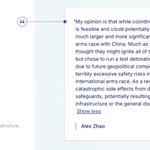
We all got into this field to build safe AGI that is genuinely good for humanity. One of the hardest parts of AI safety is coordination, and this is a step in the right direction. Many more steps like this will be needed to deliver safe, contained, and aligned AGI in the next few years.
We're committed to sharing our pre-training progress on a common held-out evaluation set. With OpenAI's permission, we report MAI-2 Base on their evaluation set. Its log-perplexity is 0.819, putting it in the same ballpark as the GPT-5.6 Sol base model. Our model uses the same tokenizer as OpenAI, so the numbers are directly comparable.
In the future, to be able to compare across labs we might need to report bits-per-byte (BPB) rather than perplexity since different labs use different tokenizers. We will also need different evaluation datasets - the fact we have access to OpenAI's evaluation dataset is a special case.
Safety and alignment is now the mission. It's the absolute number one most important focus for our industry. And it begins with small, practical steps like these towards better coordination on pacing.

1
21
1,022
great take

Lots going on in energy! TL;DR: I'm optimistic and everything will be fine.
Last week, every major grid operator answered FERC on large loads and they all roughly point in the same direction. DCs that can “flex” will get connected first. PJM, MISO, NE, and NY all proposed some version of “non-firm” service, where you get on the grid sooner if you accept curtailment when prices spike and/or the system gets tight. DCs will also pay for the upgrades they cause. Much of this (and more) is in the permitting bill that passed the Senate last week.
As part of this, I expect designs to push toward DCs that stay grid-connected but carry their own gen & batteries on site. The batteries let a campus ride through faults instead of tripping offline (PJM already proposed making ride-through mandatory so one fault doesn’t cascade into a big load drop). I suspect they’ll also be "encouraged" to provide grid-forming support that steadies voltage, freq, etc. nearby, so a big load = an asset to the grid operator. Additionally, queues will shrink as study fees & collateral reqs flush out more speculative projects.
In Texas, TCEQ started issuing permits again after a ~2 mo freeze, and SpaceX was first out the door. However, this is purely temporary BTM & new grid connections are still on hold until ERCOT finishes its audit in Dec.
Incoming Gov. Hinojosa has promised a data center moratorium until the legislature passes new protections, but her asks on power & water are generally aligned with what “good” DC developers have already proposed or are doing. Chiefly, no water or power cost increases for local communities. Tax breaks and union labor will be the real negotiation, but, cautiously, I expect they'll find an agreement here given what's at stake.
All of this is to say, I think we are reaching some sort of consensus and I’m increasingly more positive on DC buildout in the USA. We had a surge of activity and it took time for institutions to catch up, but I think we’re close to a good place that can handle it, while also refurbishing & growing our industrial base.
Candidly, what will be important going forward is that industry leaders (Google, Meta, Ant, OAI, Crusoe, SpaceXAI, etc.) don't give politicians a reason to fight them over something relatively unimportant, like tax breaks or NDAs. There's also greater national issues around transmission (much needed, and often an inter-state issue) and supply chain policy that I think we should see coalitions form around. IMO, these will be the important focus areas as vertical integration and broader scale continue to grow.
Disagree? lmk why
9
1,257
Alex Zhao retweeted

We decided to provide more transparency into pretraining progress at OpenAI for the sake of moving toward shared safety bars. In “Perplexity and Intelligence” I argue for common limits based on perplexity and other measurements, with progress beyond them gated on our ability to understand AI behavior.
openai.com/index/perplexity-…

ah yeah

NEWS: Wall Street execs and NSA have told Congress that outages were caused by patching vulnerabilities identified by AI models, sources say
AI did not cause outages but found so many issues that the rush to fix them before an attack overwhelmed systems
washingtonsun.com/technology…

3
818
in general chinese ai is tough because the chinese enterprise market is small and cost of manufacturing labor is lower
at the end of the day chinese models serve american companies and customers, on american chips in america owned by american neoclouds

Just read a Chinese article calling this "the darkest moment for Chinese AI." Seeing pushback in the comments, but basically it lays out the bear case quite extensively:
1. Getting compute is harder whichever way you go. Buying advanced NVIDIA chips is difficult, renting GPUs overseas is coming under pressure, and proposed restrictions on chipmaking equipment could make domestic alternatives harder to produce too.
2. Catching up could get a lot more expensive. If learning from leading models’ outputs aka distillaion becomes harder, Chinese labs have to spend more on their own data, experiments and training. That gets uncomfortable if investors are also losing patience. Independent labs don’t have an advertising or e-commerce business to pay the bills.
3. Robot-brain startups could find their advantage disappearing. Frontier labs are moving into robotics, potentially eating into what specialist models can offer. Meanwhile, robots still have to make economic sense against China’s relatively low labor costs.
4. More users don’t necessarily mean enough revenue. China has huge digital audiences, but getting people and businesses to pay sustainably for AI is another question. Everyone is competing on price, American models are getting cheaper too, and research isn’t getting cheaper.
5. Even the areas where China already leads face risks. Optical-component suppliers are benefiting from AI infrastructure spending, but proposed US restrictions could threaten access to major customers.
That’s a lot hitting at once. The worry is that companies keep making better models while needing more money to stay competitive, without earning enough to fund the next round.
Now, it feels like every six months it is a "darkest moment" for Chinese AI. But I think these are real concerns. We'll focus on this topic at @techbuzzchina (and present some hope, I think) next week.
9
630


the conclusion i drew:
these are exactly the highest-priority most critical organizations that the USG is privately encouraging maximally rapid patching
and recent daybreak/glasswing releases, plus some new tranche of public CVE's, caused lots of patches to all be rushed out at once
some of which were migrations that hit minor hiccups, which were all resolved quickly and were NOT cyber incidents

Alex Zhao retweeted

there is no bubble, enterprises just adopted ai slower than expected
at customers we're seeing creation of terabytes of data every day, thousands of boxes, and 100x pay-willingness for tokens. actually ai-native companies is at ~0% right now and will at some point be 100%


Alex Zhao retweeted

(1/10) Today, we’re sharing new research from @OpenAI: How does CoT monitorability (no-CoT capability and CoT controllability) evolve over the model training lifecycle?
We emerged with unsurprising but sobering findings: as we scale toward more intelligent systems, models are becoming harder to monitor through their CoT. 🧵

> A decade ago, a big data center in the U.S. was 50 megawatts, and the industry used 5.5 billion gallons of water. The new centers use far less water today to do the same amount of computation, but there are many more of them.
finally
forbes.com/sites/christopher…

1
21
1,122
Alex Zhao retweeted

ChatGPT and Codex are helping engineers build for the physical world.
We’re sharing our progress across mechanical design, electrical engineering, and simulation—from helping our hardware teams iterate faster to testing new workflows with industry collaborators.
