
Computational Linguist and Professional Nerd at Georgetown University he/him pronouns, ALL the prepositions @complingy@sigmoid.social @complingy.bsky.social
Washington, DC
Joined December 2018
- Tweets4.8K
- Following1.2K
- Followers4.8K
- Likes7.6K






Nathan Schneider retweeted

Today, the ACL Anthology switched to a new system for how author pages work. From now on, ORCID iDs will be the main mechanism for matching papers to the correct author. 🧵⤵️
Evidence of disagreement on what to call existential-sentence BE in English: xitter.cf/complingy/status/12592…

Terminology question for #LinguisticsTwitter: In an English existential sentence like "There is cake" or "There is cake in the kitchen", the be-verb
27%is a copula
24%is not a copula
49%show results
94 votes • Final results Nathan Schneider retweeted

Rolling applications beginning this Friday, July 11:
Post Doctoral Associate - Empirical Approaches to Legal Interpretation (start date Fall 2025). Details below!

Nathan Schneider retweeted

Happy to share that our paper, "Natural Language Processing RELIES on Linguistics," will appear in Computational Linguistics!
Preprint: arxiv.org/abs/2405.05966

Nathan Schneider retweeted

📣 New Paper ⚖️🧑⚖️🏛️ Large Language Models for Legal Interpretation? Don't Take Their Word for It 👩⚖️🏛️⚖️ with @BRwaldon, @complingy, Amir Zeldes, and @kevin_tobia papers.ssrn.com/sol3/papers.…
I think "whom" refers to EJ (so "whom alongside Billy Joel" can be considered the plural subject) but I'm not sure it is a syntactic modifier of EJ. It follows a comma and seems to be an elaboration/supplement.
Interesting, I didn't know the term "picture noun"; it looks like it comes from Binding Theory: lingref.com/cpp/tls/2004/pap… There are also concepts like "shell noun" and "transparent noun". Here, NP-external morphosyntax can be sensitive not just to the head noun but its dependent.
"absolute two favorite artists" is an odd ordering too!
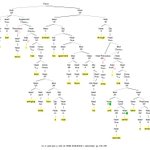
Here's what I've got for the CGEL-style tree. CC: @DailySyntaxTree

ALT syntax tree for "NEVER TOO LATE, the Elton John documentary, whom alongside Billy Joel are my absolute two favorite artists"
Wow that's quite a use of "whom"! (a) It's a subject so "who" would be expected, (b) it's anaphoric to a dependent of its head rather than the head itself, (c) I would have expected singular agreement in the relative clause but it's plural.
Ph.D. deadline is *Dec. 1*. "Current research priorities include computational psycholinguistics, computational models of discourse, and linguistics-based language modeling." Ph.D. admits are offered a full funding package.
Also note that Georgetown is accepting applications for M.S. & Ph.D. in Computational Linguistics (core faculty: Ethan Wilcox @weGotlieb, Amir Zeldes, and myself).
Announcement: list.elra.info/mailman3/hype…
General advice for a Ph.D. statement of purpose
nschneid.medium.com/inside-p…

Also "watch TV"—one never "sees TV". It's almost like a compound; or we could say "to TV-watch". (Linguists call this noun incorporation.)