





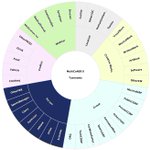

Will be at #emnlp2023 as a co-organizer of the BLP and CALCS workshops. Looking forward to present the MultiCoNER v2 paper, a dataset on fine-grained complex NER in 12 languages.
Feel free to say hi. Will be happy to talk about research and music!
Sudipta Kar retweeted

First CFP - The Third Workshop on Bangla Language Processing (BLP 2027)
Theme: Beyond Text: Bangla in the Era of Reasoning, Agents, and Multimodal Intelligence
Co-located with NAACL 2027, San Francisco, California, United States, June 2027
Workshop website: blp-workshop.github.io/
Apologies for cross-posting.
Foundation models are moving language technology beyond text generation toward reasoning, retrieval, agents, speech, and multimodal interaction. However, many of these advances remain concentrated in resource-rich languages. Despite a long history of NLP and speech research, Bangla remains underrepresented in frontier AI systems, particularly in reasoning, agentic applications, culturally grounded knowledge, speech-native models, multimodal understanding, and safety. Further challenges arise from dialectal, code-mixed, transliterated, and diaspora varieties, as well as related languages such as Assamese.
The Third Workshop on Bangla Language Processing (BLP 2027) aims to bring together researchers working in NLP, speech, multimodal AI, and human-centered computing to advance language technologies that can understand, reason, communicate, and act effectively in diverse Bangla settings. Building on BLP 2023 and BLP 2025, this edition focuses on linguistically inclusive, culturally grounded, trustworthy, multimodal, and accessible AI.
We invite original research papers presenting new methods, datasets, benchmarks, evaluations, applications, and analyses. Bangla is the primary focus, while comparative studies involving related or underrepresented languages are welcome when they offer insights transferable to Bangla and other low-resource settings. We particularly encourage research that addresses real-world linguistic diversity and practical constraints on data and computation.
Topics of Interest
We welcome papers on topics including, but not limited to:
Foundation Models: Bangla and multilingual large language models; pretraining, adaptation, and instruction tuning; synthetic data; efficient models; cross-lingual transfer; and robustness to dialects, code-mixing, and transliteration.
Reasoning and Agents: Verifiable, symbolic, and neuro-symbolic reasoning; retrieval-augmented generation; long-context understanding and memory; tool use, planning, and code generation; and single- and multi-agent systems.
Speech and Conversational AI: Automatic speech recognition, speech synthesis, and AudioLLMs; spoken question answering and dialogue; code-switched speech; speaker and language recognition; and conversational systems.
Multimodal and Grounded AI: Vision-language and audio-visual models; multimodal question answering and reasoning; document and scene understanding; multimodal generation; and culturally grounded multimodal evaluation.
Trustworthy and Human-Centered AI: Safety and alignment; adversarial robustness; hallucination and factuality; bias, fairness, and interpretability; cultural understanding; human-AI interaction; accessibility; and responsible deployment.
Resources, Evaluation, and Efficient NLP: Corpora, datasets, and benchmarks; representative resources for underrepresented varieties; human and LLM-based evaluation; data-efficient learning and inference; and core NLP tasks such as machine translation, information extraction, question answering, and summarization.
Planned Shared Tasks
BLP 2027 also plans to organize three shared tasks:
Task 1 - Adversarial Prompt Classification: Identifying benign and adversarial prompts in Bangla, including jailbreaks, prompt injection, and code-mixed or transliterated attempts to bypass LLM safety safeguards.
Task 2 - Multilingual Question Answering: Culturally and regionally grounded open-ended QA in Bangla, English, Assamese, and Hindi, with monolingual QA and multilingual QA settings based on the MultiNativQA resource.
Task 3 - BLP Datathon: Collecting regional Bangla speech recordings and identifying where open-source automatic speech recognition (ASR) models struggle with different dialects and accents through community-driven participation.
Detailed task guidelines, datasets, evaluation procedures, and participation timelines will be announced separately at blp-workshop.github.io/share….
Important Dates
Paper submission deadline: February 15 (Monday), 2027
Notification of acceptance: March 26 (Friday), 2027
Camera-ready deadline: April 16 (Friday), 2027
Workshop: June 2027, co-located with NAACL 2027 (exact date TBA)
All deadlines are 11:59 p.m. Anywhere on Earth (AoE).
Submission Details
We welcome original, unpublished research, including completed work and promising work in progress. Submissions will undergo double-blind peer review, with acceptance decisions made by the workshop program chairs.
Submission categories are:
Full papers: Up to 8 pages.
Short papers: Up to 4 pages, including work in progress and innovative research ideas.
Shared-task system papers: Up to 4 pages.
Camera-ready versions may use up to 9 pages for full papers and 5 pages for short papers, subject to the final proceedings guidelines. Accepted papers will be presented orally or as posters.
All submissions must follow the official ACL/ARR two-column formatting guidelines. Authors should use the official style files without modification. We recommend checking submissions with ACL PubCheck, which should also be used for camera-ready papers. For double-blind reviewing and anonymity requirements, please consult the ARR anonymity guidelines.
Further details on submission procedures, including any ARR-reviewed paper route, will be announced on the workshop website.
Submission portal: TBA
Invitation to Review
Researchers with relevant publication experience who are interested in joining the program committee are invited to complete this reviewer interest form: forms.gle/zZiZvDQRjALHcGfG7
Mentoring Program
We offer a mentoring program to support students and newcomers. It includes pre-submission mentoring to help finalize paper drafts and a buddy program during the in-person workshop. If you would like to receive mentoring, please sign up using the mentoring registration form.
Sponsors
We invite companies and institutions to partner with us in advancing Bangla language technology and research. Sponsoring BLP 2027 provides an opportunity to engage with leading researchers, industry professionals, and emerging scholars from around the world while supporting innovation and collaboration in Bangla language processing.
Workshop Organizers
- Firoj Alam, Qatar Computing Research Institute, Qatar
- Sudipta Kar, Oracle Health AI, Seattle, USA
- Shammur Absar Chowdhury, Qatar Computing Research Institute, Qatar
- Nishat Raihan, University of Notre Dame, USA
- Md Arid Hasan, University of Toronto, Canada
- Naeemul Hassan, University of Maryland, USA
- Enamul Hoque Prince, York University, Canada
- Tasnim Mohiuddin, Qatar Computing Research Institute, Qatar
- Md Tahmid Rahman Laskar, Dialpad, Canada
W/
@cryptexcode, @shammur_absar, @_aridhasan, Nishat, @Enamul_Hoque, @tahmedge Naeemul Hassan, Tasnim Mohiuddin
🤖 Made with AI

Sudipta Kar retweeted

📢 Call for Mentors & Mentees! BLP 2027 @ NAACL 2027 is pairing early-career researchers with experienced mentors to guide their first papers in Bangla & low-resource NLP.
📝 Form: forms.gle/abTEW9o4gmoRzLc56
🌐 blp-workshop.github.io/
#BLP2027 #NAACL2027 #NLP #ACL #EMNLP #ARR
@firojalam04 @cryptexcode @Enamul_Hoque @mtaasnim @_aridhasan @MdNishatRaihan @shammur_absar
🤖 Made with AI

insecurity about your life choices and who you are - because you should not have situations where you need to write with a pen.
I mean it.
1
10
Sometimes chatting with Claude (Sonnet 5) feels like talking to a manipulative online influencer come therapist. You ask for suggestions on buying a pen that requires some web searches. After a few turns, you don't decide on any pen, and full of guilt and (cont.)
1
85
Late tweet about #Fable. Gave it the task of creating a STT app. It created. I started the app, it created many threads and had to restart my laptop as it froze in a minute.
Engineers, Fable is taking your job.
66
We often show the shiny side of our jobs on social media and do not share the negative impact on our health, family lives, etc. There should be more conversation on this. AI startups left and right are the talk of the town now but it takes a huge toll in personal live.

It is a hard and sad decision. I shared this message with folks at Thinky. Thank you all for the time together♥️ Just as the last sentence in my message: The future worth building is human.

2
561
Well that is strange!
There are people who will pay, will discuss in detail when we meet next time 😉
2
35
I know a lot of shady people trying to get into the spotlight by not building, but by connecting and exploiting other people. But this is new to know that there are paid services to help with this kind of shady activities. It baffles me, how can these people sleep at night..

1
1
268

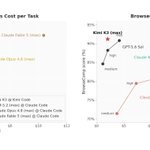
Big week. Inkling and then Kimi K3. Open source is here to stay.

Introducing Kimi K3: Open Frontier Intelligence
🔹 2.8 Trillion Parameters, 1 Million Context, Native Multimodal
🔹 Kimi Delta Attention enables up to 6.3x faster decoding in million-token contexts
🔹 Attention Residuals deliver ~25% higher training efficiency at <2% additional cost
🔹 Built for long-horizon agentic coding and self-evolving workflows
Kimi K3 is now live on on Kimi.com, Kimi Work, Kimi Code, and the Kimi API.
Open Weights by July 27, 2026.
🔗 API: platform.kimi.ai
🔗 Tech blog: kimi.com/blog/kimi-k3


And it will go up unless I don't buy the stock. If you want it to go down, let me know. I will buy some.
53
Before joining industry, every work was about making it perfect. Then, I learned about iterative development. Start with something working end to end, iteratively improve and create versions. Don't spend 1 year (or more) to develop a perfect thing.
#GPT 5.6-Sol needs to learn it.
2
83
With Fable 5, end to end task completion is okay. But the design decisions that we make everyday (e.g., latency, cost effectiveness) in software development, this part is still a great weakness. Some design choices are simple common sense to humans, but not for the model.
110

