

Head of Research @iotex_io | PhD @UWaterloo | Applied Cryptographer | Researcher | Entrepreneur
Joined November 2016
- Tweets176
- Following441
- Followers818
- Likes232





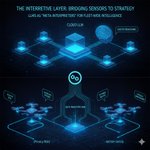
Based on the latest research from @AnthropicAI, the NIST standardized elliptic curves that have been widely used to secure Internet communications were generated randomly.
anthropic.com/research/ecdsa…

3
94
OpenAI's drop of 722 AI-generated math papers sparked alarm: could AI find classical breaks in cryptography's core math before quantum computers arrive? After a week of debate, Stanford's Dan Boneh and @a16zcrypto weighed in. Here's the state of play.

AI is getting better at solving hard math problems, especially given recent drops. But what does that mean for the cryptography that protects everything from private messages to healthcare to banking and crypto wallets?
Stanford cryptographer Dan Boneh, with @eddylazzarin, @SuccinctJT, @liz_harkavy, and @smc90, makes sense of the warnings sounded recently. They cover:
- what’s fact vs. assumption
- what’s new and what risks cryptographers have long prepared for
- where quantum computing doesn't (and does) fit
- opportunities for builders
Highlights:
00:37 – What sparked the most recent debate about AI and cryptography
01:35 – Signal vs. noise: What the math does and doesn’t tell us
05:29 – Why cryptography depends on open problems
09:25 – Why the stakes go beyond blockchains
10:43 – How AI could strengthen confidence in cryptography
13:50 – Considerations for users and institutions
20:10 – Where AI and quantum threats overlap
22:32 – Building systems that can change cryptographic methods
23:59 – Hash-based versus lattice-based cryptography
33:07 – Opportunities for builders, and better security tools
38:14 – What comes next if there were a cryptographic break?
2
4
425
@drakefjustin: brace for "bunker mode." Move funds to never-used addresses whose pubkeys stay hidden behind a hash. His worst case: ECDSA falls to GPU clusters before Q-day, "in months not years." Long-term fix: go all-in on hash-based crypto.

2
1
63
🧵 AI just hit 89.3% accuracy predicting real-world events on Polymarket. Humans? 98.2%. But the gap isn't the story. The real story is what happens when crypto and AI finally merge—and why most builders are getting it completely wrong. 👇

Google just proved a quantum computer could crack a Bitcoin private key in 9 minutes — within a single block time. Their new whitepaper rewrites the quantum threat timeline for all of crypto. 🧵🔐

Human customers number in billions.
Machine customers will number in trillions.
A single warehouse robot makes more data queries per hour than a human does in a lifetime.
When machines become the buyers, the infrastructure serving them needs to be rebuilt from scratch.

The next customers of physical-world data won't be humans.
They'll be machines and robots.
• Warehouse robots navigating crowded environments
• Traffic systems coordinating intersections
• Drones monitoring agriculture and energy grids
They all need the same thing: perception, verification, automation.
The machine and robot economy is just beginning.
Every AI in the world can read the entire internet.
None can tell you if it's raining outside right now.
That gap — digital intelligence vs. physical reality — is the most underrated infrastructure problem in tech.
That's what we've been building for.

Microsoft's Maia 200 delivers 3x the performance of Amazon's latest chip and beats Google's TPU—while cutting costs 30%. The hyperscale AI race just changed 🧵

What if AGI doesn't emerge from one superintelligent system, but from thousands of AI agents coordinating like an economy? Google DeepMind just released a framework that changes how we think about AI safety 🧵

I am thrilled to be featured in @ForbesTechCncl's most recent Expert Panel article regarding the biggest hurdles #DePIN network must overcome to earn mainstream confidence.

Whats Preventing Depin From Reaching The Mainstream Market hubs.li/Q03VtWjx0 from @del_hemant @akhilesh_a3 @cloudeagleai @wittycircuitry @digs4uonly @cryptoxfan @icerideshare @NicolaSfondrini @cypherpunkx @atf_grp @dogtownmedia @c_randieri @shellibrunswick @anabheri and more
My latest thought leadership piece is out! 👇
The Dawn Of Real-World AI: Ushering IoT Into An Agentic Era hubs.li/Q03STzKK0 Written by @cryptoxfan of @iotex_io

This could become a perfect #DePIN use case for the real-world AI.😎

Elon Musk came up with a pretty incredible idea during the Q3 Earnings Call, that no one is really talking about.
His words: “Actually, one of the things I thought, if we've got all these cars that maybe are bored, while they're sort of, if they are bored, we could actually have a giant distributed inference fleet and say, if they're not actively driving, let's just have a giant distributed inference fleet.
At some point, if you've got tens of millions of cars in the fleet, or maybe at some point 100 million cars in the fleet, and let's say they had at that point, I don't know, a kilowatt of inference capability, of high-performance inference capability, that's 100 gigawatts of inference distributed with power and cooling taken, with cooling and power conversion taken care of. That seems like a pretty significant asset.”
So basically, each car has ~1 kilowatt of high-performance AI inference capability, Tesla wouldn’t need to build giant data centers — the fleet is the data center.
Tesla could turn their entire fleet into a giant distributed inference network, spread across the world, powered by the batteries and AI in the car already.
Mind blown.

The "unbreakable" security in Intel, AMD & NVIDIA CPUs/GPUs just fell to a $1,000 attack. TEEFail exposes how confidential computing's most trusted environments leak cryptographic secrets through DDR5 memory. Every cloud security team needs to read this 🧵

2
198
🧵 Google just dropped something that could change wearables forever: Coral NPU delivers 512 GOPS of AI performance while sipping just milliwatts of power. Your smartwatch might soon be smarter than your laptop. Here's how they cracked the code:


🚀Kick off the Chapter 3 of @iotex_io!
introducing: the open ecosystem for physical intelligence.
a unified foundation where real-time, verified data from machines powers intelligent systems that sense, reason, and act in the real world.
today marks a new chapter for IoTeX.
visit the new website: iotex.io
since 2017, we've connected millions of smart devices to blockchain and helped launch the global DePIN movement.
we built a high-performance L1 for machines, then modular infrastructure for DePINs.
now, we're expanding into AI.
this is chapter 3 for IoTeX.
and the next evolution for AI.
📣The IEEE #DePIN Workshop is ongoing in Pisa, Italy now.

Just attended a brilliant keynote by @KoschigRobert at the #IEEEICBC DePIN workshop!
Insightful take on sustainable token models for decentralized physical infrastructures 💡


It is great to see that @iotex_io has been named an IDC Innovator in the IDC Innovators: Decentralized Networking as Type of DePINs, 2025 (my.idc.com/getdoc.jsp?contai…).
Capabilities that demonstrate @iotex_io's continued innovation include:
- Scalable and robust blockchain to empower #machine and #agent economy
- Modular infrastructure to build community-driven #DePIN and #PhysicalAI applications
- Seamless and trustworthy connection among physical world, Web3 and AI agents

Big milestone: IoTeX has been named an IDC Innovator for DePIN.
IDC is one of the most respected research firms in tech.
Their reports guide decisions for Fortune 500s, governments, and investors.
This recognition signals that DePIN is no longer just a crypto-native trend but a transformative thesis for the world.
IoTeX stood out for pioneering a full-stack framework that connects real-world devices to blockchain in a secure, scalable, and modular way.
From supply chain asset tracking to decentralized identity and physical AI, IoTeX is enabling real-world machines to interact autonomously and verifiably.
As industries explore decentralized networks for IoT, robotics, and AI, recognition like this helps move DePIN from Web3 to the enterprise.
Proud to be recognized in this report alongside DePIN pioneers @helium, @XNET_Mobile, and @wifimapapp.
Read more: my.idc.com/getdoc.jsp?contai…

Another exciting #DePIN research event co-located with the first-ever #DePIN #unConference (depin.trustsquare.com/). Come to join us for insightful discussion on challenges and solutions regarding #DePIN deployment and adoption!


The 3rd International Workshop on Decentralized Physical Infrastructure Networks (#DePIN 2025) will happen this Friday in Pisa, Italy with great speakers from academia as well as leading #DePIN projects. The workshop program can be found at icbc2025.ieee-icbc.org/works….
It is a great opportunity to meet academic and industry researchers and share the latest progress of your #DePIN projects.
🚨 Call for DePIN Lightning Talks!
IoTeX is co-organizing the 3rd International DePIN Workshop at IEEE ICBC 2025, taking place on June 6, 2025, in Pisa, Italy.
We’re inviting short lightning talks (10–15 minutes) from DePIN projects, researchers, practitioners, and builders working on any aspect of DePIN, including:
– Protocols
– Deployments
– Economics
– Interoperability
– Infrastructure coordination
– And related topics
📄 Apply here: forms.gle/gGJJ3GLGiMvMhNW69
🔗 Workshop info: icbc2025.ieee-icbc.org/works…
This is an opportunity to share your insights and connect with the global DePIN community. ⚡🌍
#DePIN #Blockchain #IoT #ICBC2025 #LightningTalks #IoTeX @IEEEorg

📢The submission deadline for the 3rd International Workshop Decentralized Physical Infrastructure Networks (#DePIN 2025) has been extend to March 16, 2025. You can still submit your latest #DePIN research at edas.info/N33474.
🤝This is a great opportunity to meet fellow #DePIN researchers, discuss the cutting-edge #blockchain, #IoT and #AI technologies, and shape the #DePIN future together.
