







Pinned Tweet
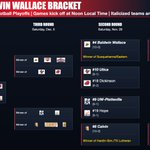
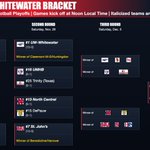
ICYMI - here are your @ECACSports #d3fb bowl matchups


Who's ready to go bowling?! Frank & JB (@D3FBHuddle) are, and we're going live at Noon EST to tell you who's getting one more game this season in the @ECACSports D3FB Bowl Games! Join us live or watch the replay -- but get excited for postseason college football!
xitter.gq/i/broadcasts/2KoejJvdj…

In The (D3FB) Huddle retweeted

Saturday night football is on deck! 🏈
John Carroll has an 8-2 record thus far and will represent the NCAC in the Extra Points Bowl at the 2026 @opendorse Bowl Series on Saturday at 6:00 PM. 🏟️
#ncacfb #d3fb #D3BowlSeries

In The (D3FB) Huddle retweeted

Remembering Fred Mitchell, a @WittFootball standout whose legacy lives on through the @FMAFredMitchell:
#d3fb yd3.org/stories/fred-mitchel…

In The (D3FB) Huddle retweeted

D3 is somehow required to set a higher GA & ticket price than D2 & even FCS in some cases. It’s hard to understand this decision.
Long but worth the read from @FrankRossi ✍️
THE $25 QUESTION: HOW THE NCAA PRICED PLAYOFF FOOTBALL DIFFERENTLY AT EVERY LEVEL
By Frank Rossi — @D3FBHuddle
Anyone walking up to the gate at a Division III playoff game this Saturday will pay $25, and that number was set in Indianapolis rather than by the school hosting the game. It's the same price in Collegeville as it is in Claremont, it's the same in the first round as it is in the quarterfinals, and students pay $8 even when the game is on their own campus. A Division II host, meanwhile, is working from a $20 floor, and an FCS host has a $25 floor that rises to its regular-season price if that's higher. Both of those levels also have published ways to ask the NCAA for something different. As far as I can tell, Division III doesn't.
When you line the three systems up next to each other, the division with the smallest stadiums, the least media money, and the most free or nearly free regular-season Saturdays has ended up with the least flexible playoff ticket in NCAA football below the FBS. Some people will look at that and see fairness, and they have a point that I'll get to. But I don't think the people who designed this were picturing a D3 crowd in late November when they did it. @CouchCru17 has been pressing on this for a few days now, and on Wednesday he reported, citing @wagssid, that D3 is looking to show increased revenue to maintain its deal with @espn, adding that he wasn't sure attendance had been part of the discussion. His take was that, at best, the change is tone deaf and hurts fans and families, and "at the worst it's a cash grab." I haven't been able to confirm the ESPN connection on my own, but it's a fair question, and the NCAA should answer it directly.
HOW DIVISION III GOT TO A SINGLE PRICE
Until this year, D3 hosts had a fair amount of room to price their own games. Christopher Newport sold its home playoff game last season in three tiers, $25 for chairbacks, $15 for reserved bleachers, and $10 for general admission. Under the new model that $10 seat costs $25.
The change worked its way through the D3 governance structure over the winter and spring. At its February meeting, the Championships Committee reviewed a set of proposed minimum prices for preliminary rounds and asked staff for more on a model that would standardize prices outright. By its March 31 call it had decided it preferred standardization, and in April the Management Council agreed. The summary of that council meeting is explicit that standardized adult and student prices would replace the minimum-price approach, and the committee finalized the numbers over the summer for 2026-27.
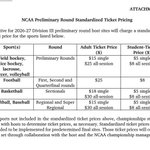
The committee's own presentation lays out why. It says the goal was to generate additional revenue and to "more accurately price DIII events," and that fixed prices would cut down on the variation fans saw from one site to the next in the same sport. Football, basketball, baseball, and softball were priced a bit above the other sports because of what the committee called historically higher demand, and student tickets were set at a flat 70% discount off the adult price, which is how $25 turns into $8. The football row of the price table lists $25 and $8 for the "First / Second Round & Quarterfinals."
Saint John's shows what this looks like for a host. The Johnnies play their second-round game Nov. 28, and the school is selling tickets at the NCAA's $25 for adults and $8 for anyone from age 5 through college age with a college ID, with regular-season passes not honored. During the season the same school charges $15 for adults and $7 for youth, and CSB/SJU students get in free on an all-sports pass. A Johnnie student who has walked into Clemens Stadium for nothing since September will now pay $8 to watch the same team on the same field.
THREE LEVELS, THREE SETS OF RULES
At the FCS level, the NCAA sets a minimum rather than a price. A ticket has to be at least $25 or the host's regular-season single-game price, whichever is higher, and from the second round through the semifinals a host can't price below its regular-season level. Hosts are free to go higher and to sell different seating tiers, the NCAA doesn't set a student price, and the host manual tells schools to contact the NCAA if they want an exception. Promotional pricing outside the normal parameters is allowed with prior approval.
The FCS manual is also the clearest about the thinking behind its system. It describes the championship as a premium event that "should be priced accordingly," and it requires each visiting school to buy at least 200 tickets for a preliminary-round game. FCS hosts guarantee the NCAA a minimum return that climbs as the bracket goes on, from $50,000 in the first round to $60,000, $70,000, and $80,000 in the second round, quarterfinals, and semifinals. Everything about that structure assumes the later games are worth more and lets the price follow.
Division II also uses a minimum. It set its floors in July, in the same Management Council release that carried the emergency eligibility legislation, and the football minimum is $20 for adult general admission. The D2 host manual says the NCAA establishes all ticket prices with input and a recommendation from the host, so a D2 school still has a real say above the floor and can sell seating tiers. The manual permits a $3 ticket for students of the two schools playing, from the first round through the semifinals, and it allows ticket promotions with advance NCAA approval. Kutztown's page for Saturday's game against Fayetteville State lists $30 covered reserved, $25 reserved, $20 general admission, and $5 for students and seniors 65 and over, and it notes that nobody gets in free, Kutztown's own students, staff, and players' parents included.
Division III is the only one of the three with a single standardized price: $25 for adults and $8 for students at every site, one price for every seat, listed for the first round, second round, and quarterfinals, with no published exception process.
That makes the comparison a little uncomfortable for D3. The cheapest seat at a D2 playoff game is $20, and the cheapest seat at a D3 playoff game is $25. A D2 student can get into a game involving her own school for $3, while a D3 student at her own school pays $8.
THE EXEMPTION QUESTION
This is the part of the story that I think gets lost. The FCS and D2 rules aren't just lower or more flexible on paper; they also give a host somewhere to go. The FCS host manual tells schools to contact the NCAA if they want an exception, and the prechampionship manual allows promotional pricing outside the normal parameters with prior approval. D2's manual says ticket promotions have to be approved by the NCAA in advance, which is another way of saying they can be approved.
I haven't found anything comparable in the Division III materials. The committee's documents describe one price for every site, and Saint John's is telling its fans the price was set by the NCAA, which is accurate. If there's an exception process for a D3 host that wants to let its own students in for less, or run a family-pack promotion for a first-round game the week before Thanksgiving, it hasn't been published anywhere a host or a fan would find it. That's worth asking the national office about directly, because a standardized price with a workable exception process is a very different policy from a standardized price with none.
NOT EVERY ROUND IS THE SAME GAME
The question I keep coming back to is why a first-round game should cost the same as a quarterfinal. A D3 first-round game is often an at-large team against a regional opponent on the Saturday before Thanksgiving, with a good part of the student body already packing to go home. A quarterfinal in the middle of December is one of eight games left in the country, with two weeks of buildup behind it. Every other pricing system I know of in sports treats those as different products, including the FCS system run out of the same national office. The D3 model treats them as identical.
If the real goal is revenue, I'd expect the design to run the other way, with the early rounds kept affordable where the bracket is widest and the crowds are most local, and the price stepping up as the field narrows and the games become events. What D3 did instead was raise the floor the most in the rounds where demand is softest.
There's also a smaller problem with the table itself. The D3 bracket has five rounds before Salem, the first, second, and third rounds followed by the quarterfinals and semifinals. The football row in the published table names only the first round, second round, and quarterfinals, which reads as though it was built for a different bracket, and somebody ought to clarify what applies to the third round and the semifinals before Dec. 5.
WHO IS ACTUALLY IN THE STANDS
The committee's presentation says the new prices line up with observed fan purchasing behavior, and across every sport and site that may well be true. It's harder to see at a D3 football stadium in late November, where the crowd is mostly parents and families of players, students, nearby alumni, and people from town who show up because it's their college. Very few of them are shopping around, and plenty of them have been paying little or nothing all season. A family of four with two college-age kids that used to pay $10 a head now pays $66, and they pay it again every week the team keeps winning.
D3 doesn't have a ticket shortage in the playoffs. What it usually has is open bleacher space by the second half of a cold afternoon, and raising the entry price on seats that were already going unsold doesn't capture any demand that wasn't being met. It just tests how much of the existing crowd is willing to stay.
The new NESCAC hosts make the point better than I can. Trinity (Conn.) and Amherst are each hosting the first NCAA playoff game in program history on Saturday, in a conference that kept its teams out of the postseason for 51 years. It should be the easiest game in the bracket to fill, and neither school got any say in what that afternoon would cost its own community.
HOME-FIELD ADVANTAGE AND THE MONEY
Reasonable people are going to split on the home-field question. One view is that this is a national championship, the higher seed already gets the game, and the size of the crowd shouldn't be a competitive weapon, so a neutral standardized price is fine even if the stands end up a little thinner. I lean the other way. The home crowd is something the higher seed earned over ten weeks, and in D3 a lot of that crowd is students who walked in free all fall. Charging them $8 at their own stadium on the day they're told it's the biggest game of the year is an odd way to reward the season they helped build, and if attendance drops, the host gives back some of what it earned and the game loses the atmosphere that makes playing it on campus worthwhile.
The revenue side has its own irony. Under the NCAA's hosting rules, all of the ticket revenue goes into championship receipts rather than staying with the host, so the school setting up the bleachers doesn't see the upside either way. The April Management Council summary notes that the D3 budget for FY26 is about $1.5 million higher than FY25, partly because of an increase in championship ticket sales, so ticket money is clearly part of how the division pays for things like the per diem increases schools have been asking for. That's a fair need. But a model that shrinks crowds could easily sell fewer tickets at a higher price, and nobody has published anything showing that trade comes out ahead.
WHERE THIS SHOULD GO FROM HERE
To be fair to the committee, the old approach had real problems. Prices varied a lot from site to site within the same sport and round, some hosts almost certainly underpriced their games, and D3 championships cost a great deal to run when travel, lodging, officials, and streaming are all funded centrally. A single price is simple to explain and easy to audit, and those are legitimate goals. The trouble is that consistency became the objective rather than a means to one, and a single price for every site and every round is consistent without being accurate, which was the committee's own stated aim.
None of this requires scrapping the policy. The price could step up by round so the early games stay accessible and the quarterfinals and semifinals carry more. Host-school students could get in free or close to it, the way the D2 manual already contemplates with its $3 ticket. Hosts could be allowed at least one cheaper general-admission tier, as D2 and FCS hosts are. D3 could publish an exception process like the ones the other two levels already have. And the committee could release this postseason's attendance and revenue next to the last few years', so that if $25 really does maximize net receipts, the numbers can show it, and if it doesn't, there's time to fix it before 2027.
The NCAA was right that D3 playoff pricing deserved a look. It just landed on the one model that ignores the two things that make D3 playoff football different from the levels above it, which are where the demand actually is and who is actually sitting in the stands.
SOURCES
NCAA Division III Championships Committee presentation on 2026-27 standardized ticket prices; Reports of the NCAA DIII Championships Committee, Feb. 16-17 and March 31, 2026; NCAA DIII Presidents and Management Councils Summary of Actions, April 2026; NCAA.org, DII Management Council release, July 21, 2026; 2026-27 NCAA Division II Football Host Operations Manual; 2026-27 NCAA Division I Football Prechampionship Manual and Preliminary Rounds Host Operations Manual; NCAA 2026-28 general bid specifications; Kutztown University ticket page; Saint John's University athletics; Christopher Newport University athletics (2025).

In The (D3FB) Huddle retweeted

Really appreciate this breakdown of a news story that's been taking up a lot of (understandable) attention in the D3 space.
THE $25 QUESTION: HOW THE NCAA PRICED PLAYOFF FOOTBALL DIFFERENTLY AT EVERY LEVEL
By Frank Rossi — @D3FBHuddle
Anyone walking up to the gate at a Division III playoff game this Saturday will pay $25, and that number was set in Indianapolis rather than by the school hosting the game. It's the same price in Collegeville as it is in Claremont, it's the same in the first round as it is in the quarterfinals, and students pay $8 even when the game is on their own campus. A Division II host, meanwhile, is working from a $20 floor, and an FCS host has a $25 floor that rises to its regular-season price if that's higher. Both of those levels also have published ways to ask the NCAA for something different. As far as I can tell, Division III doesn't.
When you line the three systems up next to each other, the division with the smallest stadiums, the least media money, and the most free or nearly free regular-season Saturdays has ended up with the least flexible playoff ticket in NCAA football below the FBS. Some people will look at that and see fairness, and they have a point that I'll get to. But I don't think the people who designed this were picturing a D3 crowd in late November when they did it. @CouchCru17 has been pressing on this for a few days now, and on Wednesday he reported, citing @wagssid, that D3 is looking to show increased revenue to maintain its deal with @espn, adding that he wasn't sure attendance had been part of the discussion. His take was that, at best, the change is tone deaf and hurts fans and families, and "at the worst it's a cash grab." I haven't been able to confirm the ESPN connection on my own, but it's a fair question, and the NCAA should answer it directly.
HOW DIVISION III GOT TO A SINGLE PRICE
Until this year, D3 hosts had a fair amount of room to price their own games. Christopher Newport sold its home playoff game last season in three tiers, $25 for chairbacks, $15 for reserved bleachers, and $10 for general admission. Under the new model that $10 seat costs $25.
The change worked its way through the D3 governance structure over the winter and spring. At its February meeting, the Championships Committee reviewed a set of proposed minimum prices for preliminary rounds and asked staff for more on a model that would standardize prices outright. By its March 31 call it had decided it preferred standardization, and in April the Management Council agreed. The summary of that council meeting is explicit that standardized adult and student prices would replace the minimum-price approach, and the committee finalized the numbers over the summer for 2026-27.
The committee's own presentation lays out why. It says the goal was to generate additional revenue and to "more accurately price DIII events," and that fixed prices would cut down on the variation fans saw from one site to the next in the same sport. Football, basketball, baseball, and softball were priced a bit above the other sports because of what the committee called historically higher demand, and student tickets were set at a flat 70% discount off the adult price, which is how $25 turns into $8. The football row of the price table lists $25 and $8 for the "First / Second Round & Quarterfinals."
Saint John's shows what this looks like for a host. The Johnnies play their second-round game Nov. 28, and the school is selling tickets at the NCAA's $25 for adults and $8 for anyone from age 5 through college age with a college ID, with regular-season passes not honored. During the season the same school charges $15 for adults and $7 for youth, and CSB/SJU students get in free on an all-sports pass. A Johnnie student who has walked into Clemens Stadium for nothing since September will now pay $8 to watch the same team on the same field.
THREE LEVELS, THREE SETS OF RULES
At the FCS level, the NCAA sets a minimum rather than a price. A ticket has to be at least $25 or the host's regular-season single-game price, whichever is higher, and from the second round through the semifinals a host can't price below its regular-season level. Hosts are free to go higher and to sell different seating tiers, the NCAA doesn't set a student price, and the host manual tells schools to contact the NCAA if they want an exception. Promotional pricing outside the normal parameters is allowed with prior approval.
The FCS manual is also the clearest about the thinking behind its system. It describes the championship as a premium event that "should be priced accordingly," and it requires each visiting school to buy at least 200 tickets for a preliminary-round game. FCS hosts guarantee the NCAA a minimum return that climbs as the bracket goes on, from $50,000 in the first round to $60,000, $70,000, and $80,000 in the second round, quarterfinals, and semifinals. Everything about that structure assumes the later games are worth more and lets the price follow.
Division II also uses a minimum. It set its floors in July, in the same Management Council release that carried the emergency eligibility legislation, and the football minimum is $20 for adult general admission. The D2 host manual says the NCAA establishes all ticket prices with input and a recommendation from the host, so a D2 school still has a real say above the floor and can sell seating tiers. The manual permits a $3 ticket for students of the two schools playing, from the first round through the semifinals, and it allows ticket promotions with advance NCAA approval. Kutztown's page for Saturday's game against Fayetteville State lists $30 covered reserved, $25 reserved, $20 general admission, and $5 for students and seniors 65 and over, and it notes that nobody gets in free, Kutztown's own students, staff, and players' parents included.
Division III is the only one of the three with a single standardized price: $25 for adults and $8 for students at every site, one price for every seat, listed for the first round, second round, and quarterfinals, with no published exception process.
That makes the comparison a little uncomfortable for D3. The cheapest seat at a D2 playoff game is $20, and the cheapest seat at a D3 playoff game is $25. A D2 student can get into a game involving her own school for $3, while a D3 student at her own school pays $8.
THE EXEMPTION QUESTION
This is the part of the story that I think gets lost. The FCS and D2 rules aren't just lower or more flexible on paper; they also give a host somewhere to go. The FCS host manual tells schools to contact the NCAA if they want an exception, and the prechampionship manual allows promotional pricing outside the normal parameters with prior approval. D2's manual says ticket promotions have to be approved by the NCAA in advance, which is another way of saying they can be approved.
I haven't found anything comparable in the Division III materials. The committee's documents describe one price for every site, and Saint John's is telling its fans the price was set by the NCAA, which is accurate. If there's an exception process for a D3 host that wants to let its own students in for less, or run a family-pack promotion for a first-round game the week before Thanksgiving, it hasn't been published anywhere a host or a fan would find it. That's worth asking the national office about directly, because a standardized price with a workable exception process is a very different policy from a standardized price with none.
NOT EVERY ROUND IS THE SAME GAME
The question I keep coming back to is why a first-round game should cost the same as a quarterfinal. A D3 first-round game is often an at-large team against a regional opponent on the Saturday before Thanksgiving, with a good part of the student body already packing to go home. A quarterfinal in the middle of December is one of eight games left in the country, with two weeks of buildup behind it. Every other pricing system I know of in sports treats those as different products, including the FCS system run out of the same national office. The D3 model treats them as identical.
If the real goal is revenue, I'd expect the design to run the other way, with the early rounds kept affordable where the bracket is widest and the crowds are most local, and the price stepping up as the field narrows and the games become events. What D3 did instead was raise the floor the most in the rounds where demand is softest.
There's also a smaller problem with the table itself. The D3 bracket has five rounds before Salem, the first, second, and third rounds followed by the quarterfinals and semifinals. The football row in the published table names only the first round, second round, and quarterfinals, which reads as though it was built for a different bracket, and somebody ought to clarify what applies to the third round and the semifinals before Dec. 5.
WHO IS ACTUALLY IN THE STANDS
The committee's presentation says the new prices line up with observed fan purchasing behavior, and across every sport and site that may well be true. It's harder to see at a D3 football stadium in late November, where the crowd is mostly parents and families of players, students, nearby alumni, and people from town who show up because it's their college. Very few of them are shopping around, and plenty of them have been paying little or nothing all season. A family of four with two college-age kids that used to pay $10 a head now pays $66, and they pay it again every week the team keeps winning.
D3 doesn't have a ticket shortage in the playoffs. What it usually has is open bleacher space by the second half of a cold afternoon, and raising the entry price on seats that were already going unsold doesn't capture any demand that wasn't being met. It just tests how much of the existing crowd is willing to stay.
The new NESCAC hosts make the point better than I can. Trinity (Conn.) and Amherst are each hosting the first NCAA playoff game in program history on Saturday, in a conference that kept its teams out of the postseason for 51 years. It should be the easiest game in the bracket to fill, and neither school got any say in what that afternoon would cost its own community.
HOME-FIELD ADVANTAGE AND THE MONEY
Reasonable people are going to split on the home-field question. One view is that this is a national championship, the higher seed already gets the game, and the size of the crowd shouldn't be a competitive weapon, so a neutral standardized price is fine even if the stands end up a little thinner. I lean the other way. The home crowd is something the higher seed earned over ten weeks, and in D3 a lot of that crowd is students who walked in free all fall. Charging them $8 at their own stadium on the day they're told it's the biggest game of the year is an odd way to reward the season they helped build, and if attendance drops, the host gives back some of what it earned and the game loses the atmosphere that makes playing it on campus worthwhile.
The revenue side has its own irony. Under the NCAA's hosting rules, all of the ticket revenue goes into championship receipts rather than staying with the host, so the school setting up the bleachers doesn't see the upside either way. The April Management Council summary notes that the D3 budget for FY26 is about $1.5 million higher than FY25, partly because of an increase in championship ticket sales, so ticket money is clearly part of how the division pays for things like the per diem increases schools have been asking for. That's a fair need. But a model that shrinks crowds could easily sell fewer tickets at a higher price, and nobody has published anything showing that trade comes out ahead.
WHERE THIS SHOULD GO FROM HERE
To be fair to the committee, the old approach had real problems. Prices varied a lot from site to site within the same sport and round, some hosts almost certainly underpriced their games, and D3 championships cost a great deal to run when travel, lodging, officials, and streaming are all funded centrally. A single price is simple to explain and easy to audit, and those are legitimate goals. The trouble is that consistency became the objective rather than a means to one, and a single price for every site and every round is consistent without being accurate, which was the committee's own stated aim.
None of this requires scrapping the policy. The price could step up by round so the early games stay accessible and the quarterfinals and semifinals carry more. Host-school students could get in free or close to it, the way the D2 manual already contemplates with its $3 ticket. Hosts could be allowed at least one cheaper general-admission tier, as D2 and FCS hosts are. D3 could publish an exception process like the ones the other two levels already have. And the committee could release this postseason's attendance and revenue next to the last few years', so that if $25 really does maximize net receipts, the numbers can show it, and if it doesn't, there's time to fix it before 2027.
The NCAA was right that D3 playoff pricing deserved a look. It just landed on the one model that ignores the two things that make D3 playoff football different from the levels above it, which are where the demand actually is and who is actually sitting in the stands.
SOURCES
NCAA Division III Championships Committee presentation on 2026-27 standardized ticket prices; Reports of the NCAA DIII Championships Committee, Feb. 16-17 and March 31, 2026; NCAA DIII Presidents and Management Councils Summary of Actions, April 2026; NCAA.org, DII Management Council release, July 21, 2026; 2026-27 NCAA Division II Football Host Operations Manual; 2026-27 NCAA Division I Football Prechampionship Manual and Preliminary Rounds Host Operations Manual; NCAA 2026-28 general bid specifications; Kutztown University ticket page; Saint John's University athletics; Christopher Newport University athletics (2025).
In The (D3FB) Huddle retweeted

Source: Muskingum (D-III - OH) making a coaching change after two seasons under Matt Nardo
footballscoop.com/2026/11/18…

In The (D3FB) Huddle retweeted

Some #d3fb 40-team playoff bracket facts you might or might not already know:
- The NACC and NEWMAC got multiple playoff teams in for the first time, leaving the MASCAC, UMAC & Landmark as the active conferences to never produce multiple playoff teams since expansion in 1999.
In The (D3FB) Huddle retweeted

𝑳𝒆𝒂𝒗𝒊𝒏𝒈 𝒂 𝑳𝒆𝒈𝒂𝒄𝒚
A huge 𝑻𝒉𝒂𝒏𝒌 𝒀𝒐𝒖 to this Senior Class for the impact they've had on Bethel both on and off the field!
39-9 overall record (2023-26)
2 MIAC Championships
3 NCAA Playoff Appearances
5 Playoff Wins
2 NCAA Quarterfinal Appearances

In The (D3FB) Huddle retweeted

Good read here on the pricing of #d3fb playoffs by @NCAADIII ... but skip the replies at the bottom.
THE $25 QUESTION: HOW THE NCAA PRICED PLAYOFF FOOTBALL DIFFERENTLY AT EVERY LEVEL
By Frank Rossi — @D3FBHuddle
Anyone walking up to the gate at a Division III playoff game this Saturday will pay $25, and that number was set in Indianapolis rather than by the school hosting the game. It's the same price in Collegeville as it is in Claremont, it's the same in the first round as it is in the quarterfinals, and students pay $8 even when the game is on their own campus. A Division II host, meanwhile, is working from a $20 floor, and an FCS host has a $25 floor that rises to its regular-season price if that's higher. Both of those levels also have published ways to ask the NCAA for something different. As far as I can tell, Division III doesn't.
When you line the three systems up next to each other, the division with the smallest stadiums, the least media money, and the most free or nearly free regular-season Saturdays has ended up with the least flexible playoff ticket in NCAA football below the FBS. Some people will look at that and see fairness, and they have a point that I'll get to. But I don't think the people who designed this were picturing a D3 crowd in late November when they did it. @CouchCru17 has been pressing on this for a few days now, and on Wednesday he reported, citing @wagssid, that D3 is looking to show increased revenue to maintain its deal with @espn, adding that he wasn't sure attendance had been part of the discussion. His take was that, at best, the change is tone deaf and hurts fans and families, and "at the worst it's a cash grab." I haven't been able to confirm the ESPN connection on my own, but it's a fair question, and the NCAA should answer it directly.
HOW DIVISION III GOT TO A SINGLE PRICE
Until this year, D3 hosts had a fair amount of room to price their own games. Christopher Newport sold its home playoff game last season in three tiers, $25 for chairbacks, $15 for reserved bleachers, and $10 for general admission. Under the new model that $10 seat costs $25.
The change worked its way through the D3 governance structure over the winter and spring. At its February meeting, the Championships Committee reviewed a set of proposed minimum prices for preliminary rounds and asked staff for more on a model that would standardize prices outright. By its March 31 call it had decided it preferred standardization, and in April the Management Council agreed. The summary of that council meeting is explicit that standardized adult and student prices would replace the minimum-price approach, and the committee finalized the numbers over the summer for 2026-27.
The committee's own presentation lays out why. It says the goal was to generate additional revenue and to "more accurately price DIII events," and that fixed prices would cut down on the variation fans saw from one site to the next in the same sport. Football, basketball, baseball, and softball were priced a bit above the other sports because of what the committee called historically higher demand, and student tickets were set at a flat 70% discount off the adult price, which is how $25 turns into $8. The football row of the price table lists $25 and $8 for the "First / Second Round & Quarterfinals."
Saint John's shows what this looks like for a host. The Johnnies play their second-round game Nov. 28, and the school is selling tickets at the NCAA's $25 for adults and $8 for anyone from age 5 through college age with a college ID, with regular-season passes not honored. During the season the same school charges $15 for adults and $7 for youth, and CSB/SJU students get in free on an all-sports pass. A Johnnie student who has walked into Clemens Stadium for nothing since September will now pay $8 to watch the same team on the same field.
THREE LEVELS, THREE SETS OF RULES
At the FCS level, the NCAA sets a minimum rather than a price. A ticket has to be at least $25 or the host's regular-season single-game price, whichever is higher, and from the second round through the semifinals a host can't price below its regular-season level. Hosts are free to go higher and to sell different seating tiers, the NCAA doesn't set a student price, and the host manual tells schools to contact the NCAA if they want an exception. Promotional pricing outside the normal parameters is allowed with prior approval.
The FCS manual is also the clearest about the thinking behind its system. It describes the championship as a premium event that "should be priced accordingly," and it requires each visiting school to buy at least 200 tickets for a preliminary-round game. FCS hosts guarantee the NCAA a minimum return that climbs as the bracket goes on, from $50,000 in the first round to $60,000, $70,000, and $80,000 in the second round, quarterfinals, and semifinals. Everything about that structure assumes the later games are worth more and lets the price follow.
Division II also uses a minimum. It set its floors in July, in the same Management Council release that carried the emergency eligibility legislation, and the football minimum is $20 for adult general admission. The D2 host manual says the NCAA establishes all ticket prices with input and a recommendation from the host, so a D2 school still has a real say above the floor and can sell seating tiers. The manual permits a $3 ticket for students of the two schools playing, from the first round through the semifinals, and it allows ticket promotions with advance NCAA approval. Kutztown's page for Saturday's game against Fayetteville State lists $30 covered reserved, $25 reserved, $20 general admission, and $5 for students and seniors 65 and over, and it notes that nobody gets in free, Kutztown's own students, staff, and players' parents included.
Division III is the only one of the three with a single standardized price: $25 for adults and $8 for students at every site, one price for every seat, listed for the first round, second round, and quarterfinals, with no published exception process.
That makes the comparison a little uncomfortable for D3. The cheapest seat at a D2 playoff game is $20, and the cheapest seat at a D3 playoff game is $25. A D2 student can get into a game involving her own school for $3, while a D3 student at her own school pays $8.
THE EXEMPTION QUESTION
This is the part of the story that I think gets lost. The FCS and D2 rules aren't just lower or more flexible on paper; they also give a host somewhere to go. The FCS host manual tells schools to contact the NCAA if they want an exception, and the prechampionship manual allows promotional pricing outside the normal parameters with prior approval. D2's manual says ticket promotions have to be approved by the NCAA in advance, which is another way of saying they can be approved.
I haven't found anything comparable in the Division III materials. The committee's documents describe one price for every site, and Saint John's is telling its fans the price was set by the NCAA, which is accurate. If there's an exception process for a D3 host that wants to let its own students in for less, or run a family-pack promotion for a first-round game the week before Thanksgiving, it hasn't been published anywhere a host or a fan would find it. That's worth asking the national office about directly, because a standardized price with a workable exception process is a very different policy from a standardized price with none.
NOT EVERY ROUND IS THE SAME GAME
The question I keep coming back to is why a first-round game should cost the same as a quarterfinal. A D3 first-round game is often an at-large team against a regional opponent on the Saturday before Thanksgiving, with a good part of the student body already packing to go home. A quarterfinal in the middle of December is one of eight games left in the country, with two weeks of buildup behind it. Every other pricing system I know of in sports treats those as different products, including the FCS system run out of the same national office. The D3 model treats them as identical.
If the real goal is revenue, I'd expect the design to run the other way, with the early rounds kept affordable where the bracket is widest and the crowds are most local, and the price stepping up as the field narrows and the games become events. What D3 did instead was raise the floor the most in the rounds where demand is softest.
There's also a smaller problem with the table itself. The D3 bracket has five rounds before Salem, the first, second, and third rounds followed by the quarterfinals and semifinals. The football row in the published table names only the first round, second round, and quarterfinals, which reads as though it was built for a different bracket, and somebody ought to clarify what applies to the third round and the semifinals before Dec. 5.
WHO IS ACTUALLY IN THE STANDS
The committee's presentation says the new prices line up with observed fan purchasing behavior, and across every sport and site that may well be true. It's harder to see at a D3 football stadium in late November, where the crowd is mostly parents and families of players, students, nearby alumni, and people from town who show up because it's their college. Very few of them are shopping around, and plenty of them have been paying little or nothing all season. A family of four with two college-age kids that used to pay $10 a head now pays $66, and they pay it again every week the team keeps winning.
D3 doesn't have a ticket shortage in the playoffs. What it usually has is open bleacher space by the second half of a cold afternoon, and raising the entry price on seats that were already going unsold doesn't capture any demand that wasn't being met. It just tests how much of the existing crowd is willing to stay.
The new NESCAC hosts make the point better than I can. Trinity (Conn.) and Amherst are each hosting the first NCAA playoff game in program history on Saturday, in a conference that kept its teams out of the postseason for 51 years. It should be the easiest game in the bracket to fill, and neither school got any say in what that afternoon would cost its own community.
HOME-FIELD ADVANTAGE AND THE MONEY
Reasonable people are going to split on the home-field question. One view is that this is a national championship, the higher seed already gets the game, and the size of the crowd shouldn't be a competitive weapon, so a neutral standardized price is fine even if the stands end up a little thinner. I lean the other way. The home crowd is something the higher seed earned over ten weeks, and in D3 a lot of that crowd is students who walked in free all fall. Charging them $8 at their own stadium on the day they're told it's the biggest game of the year is an odd way to reward the season they helped build, and if attendance drops, the host gives back some of what it earned and the game loses the atmosphere that makes playing it on campus worthwhile.
The revenue side has its own irony. Under the NCAA's hosting rules, all of the ticket revenue goes into championship receipts rather than staying with the host, so the school setting up the bleachers doesn't see the upside either way. The April Management Council summary notes that the D3 budget for FY26 is about $1.5 million higher than FY25, partly because of an increase in championship ticket sales, so ticket money is clearly part of how the division pays for things like the per diem increases schools have been asking for. That's a fair need. But a model that shrinks crowds could easily sell fewer tickets at a higher price, and nobody has published anything showing that trade comes out ahead.
WHERE THIS SHOULD GO FROM HERE
To be fair to the committee, the old approach had real problems. Prices varied a lot from site to site within the same sport and round, some hosts almost certainly underpriced their games, and D3 championships cost a great deal to run when travel, lodging, officials, and streaming are all funded centrally. A single price is simple to explain and easy to audit, and those are legitimate goals. The trouble is that consistency became the objective rather than a means to one, and a single price for every site and every round is consistent without being accurate, which was the committee's own stated aim.
None of this requires scrapping the policy. The price could step up by round so the early games stay accessible and the quarterfinals and semifinals carry more. Host-school students could get in free or close to it, the way the D2 manual already contemplates with its $3 ticket. Hosts could be allowed at least one cheaper general-admission tier, as D2 and FCS hosts are. D3 could publish an exception process like the ones the other two levels already have. And the committee could release this postseason's attendance and revenue next to the last few years', so that if $25 really does maximize net receipts, the numbers can show it, and if it doesn't, there's time to fix it before 2027.
The NCAA was right that D3 playoff pricing deserved a look. It just landed on the one model that ignores the two things that make D3 playoff football different from the levels above it, which are where the demand actually is and who is actually sitting in the stands.
SOURCES
NCAA Division III Championships Committee presentation on 2026-27 standardized ticket prices; Reports of the NCAA DIII Championships Committee, Feb. 16-17 and March 31, 2026; NCAA DIII Presidents and Management Councils Summary of Actions, April 2026; NCAA.org, DII Management Council release, July 21, 2026; 2026-27 NCAA Division II Football Host Operations Manual; 2026-27 NCAA Division I Football Prechampionship Manual and Preliminary Rounds Host Operations Manual; NCAA 2026-28 general bid specifications; Kutztown University ticket page; Saint John's University athletics; Christopher Newport University athletics (2025).
In The (D3FB) Huddle retweeted

Former @Bates_Football assistant coach @Coachcap77 named recipient of @NEFballWriters George C. Carens Award!
gobatesbobcats.com/news/2026…
#mesports #d3fb #GoBates @buntingthompson @LHSBlueDevils

ALT Former Bates assistant coach Skip Capone named recipient of New England Football Writers Carens Award


In The (D3FB) Huddle retweeted

ICYMI: Yesterday, @Nick_Karski looked back at Saturday's Cortaca Jug game in the Bronx and discussed what made the 67th edition of the rivalry a classic.


In The (D3FB) Huddle retweeted

SUNY Brockport, St. John Fisher and Alfred State Selected to 2026 ECAC Division III Football Bowl Games
empire8.com/news/2026/11/17/…
#E8 #E8Proud #LeadersCompeteHere #WhyD3

In The (D3FB) Huddle retweeted
Longtime Methodist coach Keven Williams, who spent nearly two decades with the program and over a decade leading the team, has stepped down
footballscoop.com/2026/11/18…

In The (D3FB) Huddle retweeted

There was once a time where the idea of Mt Union NOT making the playoffs and @DePauwTigersFB having the 2nd longest consecutive appearances made never would’ve crossed my mind.
What a job @qbdietz has done for the DPU program.
#DePauwNeverQuits #UGotaWana

Longest #D3FB playoff appearance streaks:
10: North Central (IL)
6: Cortland, DePauw, Endicott, Springfield, Trinity (TX)
5: Hardin–Simmons, Susquehanna, Wartburg
Streaks ended:
33: Mount Union
5: Bethel (MN), Wisconsin–La Crosse
4: Randolph–Macon
The mayor will be there for coverage #d3fb

FB | (GAME INFO) Football Hosts Eastern in NCAA Opening Round: What to Know
@LandmarkConf x @SURiverHawksFB
#ALLIN x #GOSUSQU x #SURIVERHAWKS x #d3fb
suriverhawks.com/news/2026/1…

3
596
In The (D3FB) Huddle retweeted

I have officially entered the Transfer Portal as a Graduate Transfer...
-1 year of Eligibility Remaining
-1603 yards and 17 touchdowns in last 15 full games
-Two D3 Team of the Week appearances, Two New England Gold Helmet Awards, and 3 Nescac Player of the Week honors over that stretch along with being a multiple time All-Nescac Selection and an All-Region selection
-Running back with Slot receiver capabilities
-3.57 GPA
Bates Football Highlights
In The (D3FB) Huddle retweeted
Sources tell @FootballScoop Manchester (D-III - IN) parts ways with head coach Vann Hunt
footballscoop.com/2026/11/18…

In The (D3FB) Huddle retweeted

Congratulations to Senior QB Shea Lynch on being named the 2026 New England Football Writers Division II/III Gold Helmet Most Valuable Player‼️🏆🏆
#BeachBall 🏈🐦🏖️#M2DEINB6VERLY ☀️🌊
