

I teach Middle East Politics, democratization, development, state building, and qualitative methods at UVa. Rationalist who believes irrationally in the Mets.
Washington, DC
Joined July 2014
- Tweets5.5K
- Following3.6K
- Followers1.1K
- Likes217K






Pinned Tweet
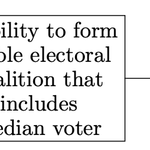
@GerryMunck'srecent tweet proposes that my new book, Qualitative Causal Inference and Explanation, makes an important contribution. This brief thread introduces the argument and its potential importance. 1/7


@juandoming @yudapearl fascinating, but still minimizes my reliance on Pearl’s framework. Identification based on features of DAG that are then tested empirically. Difference is in the test: I can’t directly use d-separation.

@yudapearl @davidwaldnerdc Your causality starts right: the qualitative act comes first. Causal General AI complements it: unifies empirical and causal identification, proposes ontologies, discovers confounders, and keeps the model alive with continuous revision. @Ojo_Kritico

In a single case study I can’t adjust to block a path. I give new tools to check whether the path exists in the single case. @yudapearl @juandoming
David Waldner retweeted

Reading Pearl & Waldner on Causal Inference
Since @davidwaldnerdc's new book on qualitative causal inference draws on @yudapearl's seminal work on causal inference and DAGs (directed acyclic graphs), I have pulled 𝘊𝘢𝘶𝘴𝘢𝘭𝘪𝘵𝘺 off my bookshelf & will read them side by side

David Waldner retweeted
David Waldner’s Three Models of Inference
In his new book, @davidwaldnerdc makes a case that qualitative researchers have largely relied on a detective model of inference, while quantitative scholars have increasingly used an identification-based approach to causal inference.
The novelty of Waldner's book is that he elaborates an identification strategy suitable to qualitative research that he calls qualitative causal inference.
The more I think about this book, the more I am coming to the view that Waldner is on to something important.

The book concludes with a discussion of causal explanations, which are distinct from causal inferences. Qualitative causal inference promises explanations that satisfy explanatory depth, density, relevance, and unification. 7/7
For more on the book including the table of contents and some endorsements, see cambridge.org/core/books/qua…

All causal claims require an explicit identification strategy to rule out systematic bias due to confoundingness, endogeneity, spuriousness, or measurement error. Process tracing does not incorporate an identification strategy and so is vulnerable to false positives. 2/7
David Waldner retweeted
David Waldner on Qualitative Methods
Assisted by my Turkish coffee, I am digging into @davidwaldnerdc’s book for a second read.
Learning about front, back & side-door paths, invariant causal mechanisms, event-history maps, & the connection between causal inference & explanation

David Waldner retweeted
Qualitative Research Meets Causal Inference
This book by @davidwaldnerdc will be out in June
I have read it and think it is a landmark work - it shows how to validate causal claims in qualitative research and provide better explanations
For information: cambridge.org/us/universityp…

David Waldner retweeted

An MIT professor taught the same math course for 62 years, and the day he retired, students from every country on earth showed up online to watch him give his final lecture.
I opened the playlist at 2am and ended up watching three of them back to back.
His name is Gilbert Strang. The course is MIT 18.06 Linear Algebra.
Every machine learning engineer, every data scientist, every quant, every self-taught programmer who actually understands how AI works learned the math from this one man. Most of them never set foot on MIT's campus. They just opened a free playlist on YouTube and let him teach.
Here's the story almost nobody tells you.
Strang joined the MIT math faculty in 1962. He retired in 2023. That is 61 years of standing at the same chalkboard teaching the same subject to 18-year-olds.
The interesting part is what he did when MIT launched OpenCourseWare in 2002. Most professors were skeptical. They worried that putting their lectures online would make their classrooms irrelevant. Strang did not hesitate. He said his life's mission was to open mathematics to students everywhere. He filmed every lecture and gave it away.
The decision quietly changed how the world learns math.
For decades linear algebra was taught the wrong way. Professors started with abstract vector spaces and proofs about field axioms. Students drowned in the abstraction. Most never recovered. They walked out believing they were bad at math when they had simply been taught in an order that nobody's brain is built to absorb.
Strang inverted the entire curriculum.
He started with matrix multiplication. Something you can write down on paper. Something you can compute by hand. Something you can see. Then he showed his students that everything else in linear algebra eigenvectors, singular value decomposition, orthogonality, the four fundamental subspaces was just a different lens for understanding what the matrix was actually doing under the hood.
His rule was strict. If a student could not explain a concept using a concrete 3 by 3 example, that student did not actually understand the concept yet. The abstraction was supposed to come last, not first. The intuition was the foundation. The proofs were just confirmation that the intuition was correct.
The second thing Strang changed was the classroom itself. He said please and thank you to his students. Every single lecture. He paused mid-derivation to ask "am I OK?" to check if anyone was lost. He never used the word "obviously" or "trivially" because he knew exactly what those words do to a student who is one step behind. He treated 19-year-olds learning math for the first time the way he treated his own colleagues. With patience. With respect. With the assumption that they belonged in the room.
For 62 years.
The result is something that has never happened in the history of education. A single math professor became the default teacher of his subject for the entire planet.
Universities in India, China, Brazil, Nigeria, every country with a computer science department, started telling their own students to just watch Strang's lectures. The University of Illinois revised its linear algebra course to do almost no in-person lecturing. The reason was honest. The professor said they could not compete with the videos.
His final lecture was in May 2023.
The auditorium was packed with students who had never met him before. He walked to the chalkboard, taught for an hour, and at the end the entire room stood and applauded. He looked confused for a moment, like he genuinely did not understand why they were cheering. Then he smiled and waved them off and walked out.
His written comment under the YouTube video of that final lecture was four sentences long. He said teaching had been a wonderful life. He said he was grateful to everyone who saw the importance of linear algebra. He said the movement of teaching it well would continue because it was right.
That was it. No book promotion. No farewell speech. No legacy management.
The man whose teaching is the foundation of modern AI just thanked the audience and went home.
20 million views. Zero ego. The entire engine of the AI revolution sits on top of math that millions of people learned for free from one quiet professor in Cambridge.
The course is still on MIT OpenCourseWare. Every lecture, every problem set, every exam, every solution. Free.
The most important math course of the 21st century is sitting one click away from you. Most people will never open it.

David Waldner retweeted
David Waldner on Qualitative Research
This book by @davidwaldnerdc –out in June–is a major contribution to qualitative methods. It's full of ideas to improve causal inferences & explanations. It fundamentally reorients the discussion
For info on the book cambridge.org/pf/universityp…

David Waldner retweeted

NEW -
A Two-Path Theory of Context Effects: Pseudoenvironments and Social Cohesion - cup.org/3MOPb55
- Cara Wong, Jake Bowers, @dktr_dr, Mark Fredrickson & @AshleaRundlett
#OpenAccess

ALT BJPolS abstract from a scholarly article discussing social cohesion and individual perceptions within diverse neighborhoods. The text is set against a green background with a white border.
David Waldner retweeted

The @nytimes just published the report about my kidnapping, period in captivity & how I was freed. The report contains graphic details about the torture Kataeb Hezbollah subjected me to, in order to produce the false confessions.
The reporters writing the story were respectful and considerate, and did not push me to share anything I wished to keep private.
Like anyone else, I don't want the details about the worst moments of my life to be public. But I know that nearly all victims of the Iraqi militias cannot speak up: the militias either killed them, or they are in Iraq or have family in Iraq, and hence continue to be threatened by the militias.
I told myself in captivity that if I make it out alive, it'll be my duty toward the other victims of these militias who are overwhelmingly Iraqi (and Syrian), to expose their sadism and vileness. I made it out alive. I am safe. I can speak out.
David Waldner retweeted

After 10 years of doing research in Historical Political Economy, this fall I’ll finally get a chance to teach a survey course on the field.
I thought this would be an opportunity to create a syllabus with an overview of many essential contributions to this growing field.
(1/4)


