
Assistant Prof. @LKYSch @NUSingapore. PhD Duke University. Southeast Asia politics, mostly the Philippines.
Joined August 2012
- Tweets455
- Following1.1K
- Followers857
- Likes3.5K








Pinned Tweet
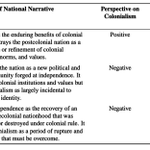
My new paper with @jiyoung_ko has just been published at @cps_journal!
We examine why citizens in formerly colonized nations hold starkly varying attitudes--admiration, resentment, or even indifference--towards their former colonizers.
Paper here: lnkd.in/gtirQpS3

Dean Dulay retweeted

左青龙高耸,右白虎低伏,后玄武层层有靠。明堂一片,圆泉化冲,车道似玉带环腰 😊。Traditional beliefs remain at the very heart of modern decision making in China. #帝王之选 #APECChina2026


Dean Dulay retweeted

Our book on Youth Activism in Asia now available open access:
fulcrum.org/concern/monograp…

Dean Dulay retweeted

Our paper, now out in AEJ: Applied, shows that a cost-effective at-scale preschool construction program in Mozambique improved development outcomes of primary-school age children living in extreme deprivation. Grateful for the fantastic team: Marina, Bruno, @ile_din, and Ana.

Forthcoming in AEJ: Applied Economics: "From Access to Achievement: The Primary School-Age Impacts of an At-Scale Preschool Construction Program in Highly Deprived Communities" by Bassi, Besbas, Dinarte-Diaz, Ravindran, and Reynoso. aeaweb.org/articles?id=10.12…

Dean Dulay retweeted

New Cambridge Element with Kai Quek: "Deescalating a Trade War" (cup.org/4vyFJDx).
We ask: when a rival state extends an olive branch, how should you reciprocate, and does the public even want you to? Especially relevant as the US-China trade war continues today. 🧵

Dean Dulay retweeted

“When forced to choose, most of the world still prefers working with Washington, and most of those who choose Beijing are likely betting on predictions about its economic rise,” writes @AdamYLiu1. foreignaffairs.com/china/how…

Dean Dulay retweeted
Friends in Singapore — my book has landed at Kinokuniya, Takashimaya. Mixed feelings about being shelved under Economics, though. It's a politics book! 😊
*Authoritarian Markets: The Politics of China's Banking Explosion* (Cornell University Press)
📷 Yishi

Dean Dulay retweeted

Speaking of recent wins (😉)— I’m so pleased to share my latest paper, written with @deandulay , published at the Journal of Current Southeast Asian Affairs (Scopus Q1). We use #Halalan2025 survey data to map and understand the contemporary Filipino voter.
We ask: what cleavages structure voter behavior in democracies where parties are weak, ideology diffuse, and competition personalistic? Using a nationally representative survey, our article offers one of the first comprehensive, data-driven mappings of the contemporary Filipino electorate based on political factional alignment. We find that Filipino voters are sharply divided along regional, age-based, education, and urban-rural lines, but less so along traditional left-right ideological axes or economic policy preferences. Our findings also shed light on how factional identity influences self-assessed voting behaviour. Duterte's alignment appears to be the most electorally potent and polarizing. In contrast, Marcos' alignment did not translate into increased support for Marcos-backed candidates. Opposition alignment, while predictive of support for aligned candidates, was less polarizing - opposition supporters were not systematically less likely to vote for candidates from rival factions.
All in all, our results challenge common assumptions about Filipino electoral behavior. It shows that the electorate is neither ideologically sorted nor economically polarized in the traditional sense. Rather, political alignments are structured more by regional affinities and personalistic loyalties than by programmatic visions. As such, scholars of Philippine politics must look beyond candidate charisma or viral misinformation to the deeper - and more enduring - cleavages shaping vote choice.
Link to the (open-access) article: journals.sagepub.com/doi/10.…

Finally! Can’t wait to read it. Sure to be excellent. 😊

My first book, Authoritarian Markets: The Politics of China’s Banking Explosion (Cornell University Press), is officially out today!
It explores the political foundations of China’s banking market development—and how that development both drove the rapid growth of the Chinese economy in the past three decades and incubated its deeply intertwined challenges: shadow banking, the housing bubble, and local government debt.
The China story isn’t sui generis—not once you see how contract-intensive markets expand in other autocracies. Authoritarian states produce authoritarian markets: markets with three coherent properties, the three “Rs”—rationed entry, reflective competition, and rigged regulation. I won’t give away details but post the epigraph to each chapter below :)
I hope you find the book readable, rigorous, and refreshing—a different set of three Rs, but ones I hope characterize the book as much as its argument.
Finally—here’s a promo code (40% off!): 09EXP40.
cornellpress.cornell.edu/boo…
p.s. So many teachers and friends to thank---see my acknowledgement :)

1
7
1,392
Dean Dulay retweeted

The idea that area studies and statistics are substitutes and not complements is so tiresome. You know what requires language skills? Running a field experiment with a team. Or collaborating with a government agency to get data. How do you think these projects happen?

Dean Dulay retweeted
Our Senate is indeed under attack. It is under attack from the criminals within it. When its leadership harbors a fugitive from international justice and allows him to escape (and even put on a show that endangered people’s lives just to do so), that is our Senate under attack. When senators suddenly reorganize themselves into a new majority not out of principle but out of fear — fear of impeachment, fear of ongoing prosecution, fear that their own kickbacks and abuses may someday catch up with them — that is our Senate under attack. When public office becomes an instrument not of public service but of self-preservation, the institution rots from within. The greatest threat to the Senate today does not come from imagined invaders outside its walls. The real danger to it are the Senators themselves, its latest leadership and majority nothing more than a ‘coalition of the charged’ seeking to remake our legislature into a disgraced house of mass murderers, thieves, and their protectors.

BREAKING: Nakaalis na sa gusali ng Senado si Sen. Ronald "Bato" Dela Rosa, ayon sa impormasyong nakuha ng isang senador mula sa Senate Secretariat. | via @RG_Cruz12479

Dean Dulay retweeted

Asian Political History Conference @UMich co-organized with @XiaoboLu1 @YuhuaWang5, @SlaterPolitics will be next week, on May 4 and 5! Cannot wait to learn from amazing colleagues!


Dean Dulay retweeted

A post of mine on industrial policy from last July is having a second life, so let me rewrite it more clearly now that I have more experience with X.
Can industrial policy work? Yes. The East Asian experience shows it can, at least partially. But its success rests on a key condition: labor control.
Japan, South Korea, and Taiwan industrialized rapidly under authoritarian (e.g., Park’s South Korea) or semi-authoritarian regimes (e.g., Japan). Wages and labor rights were systematically repressed to favor capital accumulation and export competitiveness. This was especially stark in South Korea during the 1980s and 1990s, when unions clashed with the state and big business. China’s recent experience basically follows the same pattern.
Authoritarianism in East Asia was not incidental to the success of industrial policy. It was functional. No labor repression, no successful industrial policy.
Let me be careful about what I am NOT claiming:
1) I am not claiming labor repression is sufficient for industrial policy to succeed. You need many other ingredients. Best counterexample? Brazil under import substitution: labor repression, but without the other key pieces, such as aggressive export orientation. Labor repression is a necessary condition. If you do not get the difference between necessary and sufficient, you have more important priorities than reading about industrial policy.
2) I am not claiming the only path to growth is industrial policy. Many countries have grown without it, or with pretty lousy and ineffectual versions of it. Best example? Spain.
3) I am not saying labor repression means wages do not grow. It means they grow less than they otherwise would have. Think counterfactuals.
4) I am not saying democracies cannot repress labor. They sometimes do. It just happens far less often, and often less effectively.
Continental Western Europe after WWII was not an example of industrial policy. France and, to some degree, Italy used some, but the mainstream view is that postwar growth was not driven by it. What many of these countries used was a form of “coordinated capitalism,” in which unions accepted slower wage growth in exchange for higher investment and faster growth. That has a flavor similar to my argument.
As far as I can tell, there is no clean example of large-scale industrial policy that has succeeded without labor repression. Why so many people on the left are in love with industrial policy is a mystery to me.
More generally, why so many people on the left admire China, given that its economic policy is 100% contrary to what they support (low taxes, little industrial regulation, little concern for the environment, labor repression, as little economic and political power to women and minorities as possible) is even more of a mystery except for some infantile contrarian positioning (“since this is not what The Economist like, I support it”)
Alexander Gerschenkron made this point better than anyone. But it was also Marx’s point about “primitive accumulation,” and Stalin’s logic in the five-year plans, which were all about repressing labor (mostly agricultural, but to a lesser degree in manufacturing too). I am not going to praise Stalin in public, but he understood economics better than the average poster on X.
Read Gerschenkron. Seriously.
The original post:
xitter.gq/JesusFerna7026/status/…


📦 Can industrial policy work? Yes—the East Asian experience shows it can (at least partially).
But its success rests on a key condition: labor control.
🇯🇵🇰🇷🇹🇼 Japan, South Korea, and Taiwan industrialized rapidly under authoritarian or semi-authoritarian regimes. Wages and labor rights were systematically repressed to favor capital accumulation and export competitiveness.
This was especially stark in South Korea during the 1980s–1990s, when unions clashed with the state and business. (If you’ve watched Squid Game, it’s in the backstory of Seong Gi-hun.)
⚠️ Authoritarianism wasn’t incidental—it was functional.
Not all authoritarian regimes succeed with industrial policy, but successful cases relied on the ability to suppress real wages and labor rights.
🇦🇷 This is why Latin America’s Big Push programs failed: their political base—urban working-class voters (e.g., Peronistas)—couldn’t sustain the wage repression required. The strategy collapsed under its own contradiction.
💥 You can’t push industrialization with cheap labor and depend politically on those who demand higher wages. The internal logic breaks. Latin America’s populism was a road to nowhere.
As far as I can tell, there are no examples of country-wide industrial policy success where real wages (and consumption) were not kept relatively low.
🇨🇳 China is not so different today.
🧾 Consumption as a share of GDP remains exceptionally low—even compared to countries at similar stages of development.
That wouldn’t be the case if China were a democracy. High savings and low consumption are features, not bugs, of its growth model.
🤔 That’s why I’m puzzled when advocates defend industrial policy from a progressive position that favors high wages and democratic institutions. You can’t have your cake and eat it too.
📚 This point isn’t new: @pseudoerasmus has made it for years. And long before him, it was central to Marx, Gerschenkron, and Dobb—and deeply embedded in the logic of socialist Big Push programs, from Stalin to Mao.


Dean Dulay retweeted

Our encomienda paper is now out at @EJ_RES! Ten years of hard work. Alternatively, 10 years spent trying to break down results that withstood everything we & others threw at them.
Thank you @fabiosanchez_to, @CamiloMatajira, Diego Duarte & @laurasotope!
academic.oup.com/ej/advance-…
Dean Dulay retweeted

The Philippines has seen a decline in coupling, especially post COVID.
One Filipino woman recently said "The reason Filipino women don't want to marry is that men expect them to have a job and still do everything in the house".
Also bear in mind, divorce is illegal.

The Philippines is a fantastic example of how deep and fast the drop in fertility is nearly everywhere on the planet.
Just last week, on March 30, 2026, the Philippine Statistics Authority released the 2025 National Demographic and Health Survey (NDHS). The total fertility rate for the last three years has reached 1.7 children per woman, a dramatic fall from 4.1 in 1993, and well below the replacement rate (around 2.1 for a country like the Philippines).
Since the NDHS computes the total fertility rate over three years, and it is dropping quickly, the total fertility rate for 2025 alone should be around 1.6, the same level as in the U.S. Let me repeat this: the Philippines and the U.S. have roughly the same total fertility rate.
But U.S. income per capita is about 7.3 times the Philippine income per capita (when adjusted for purchasing power parity). Or to put it differently, Philippine income per capita today is the same as the U.S. had in 1910. In that year, the total fertility rate of the U.S. was around 3.5. At the same level of income per capita, the Philippines has a total fertility rate that is less than half.
In some more urban regions, such as Calabarzon, the total fertility rate is 1.3. Historically, the rest of the country has followed the patterns of regions like Calabarzon with some lag, so the most likely scenario is that in a few years, the Philippines will have a total fertility rate of around 1.3 as well.
Compared with the United Nations World Population Prospects (WPP), the Philippines is now at the fertility level the WPP had forecast for 2047, despite the aggressive reduction it made to the Philippines’ forecast fertility between 2022 and 2024.
The Philippines is interesting because, compared with other Asian countries, it is a relatively religious and rural country without the Confucian obsession with education found in China or South Korea.
It is also a country that many still associate with high fertility. Just yesterday, one reader left a comment on my previous post on fertility, using the Philippines as an example of high fertility, that “refuted” my claims. No, it does not.
Finally, three technical points.
First, I am reporting total fertility, not completed fertility (and yes, I am keenly aware of the difference between the two). Looking at age-specific fertility rates suggests that completed fertility for younger women will actually be below the current total fertility rate.
Second, no, emigration does not matter here. I am talking about fertility rates, not birth rates.
Third, the official release:
psa.gov.ph/content/fertility…

Dean Dulay retweeted
The Philippines is a fantastic example of how deep and fast the drop in fertility is nearly everywhere on the planet.
Just last week, on March 30, 2026, the Philippine Statistics Authority released the 2025 National Demographic and Health Survey (NDHS). The total fertility rate for the last three years has reached 1.7 children per woman, a dramatic fall from 4.1 in 1993, and well below the replacement rate (around 2.1 for a country like the Philippines).
Since the NDHS computes the total fertility rate over three years, and it is dropping quickly, the total fertility rate for 2025 alone should be around 1.6, the same level as in the U.S. Let me repeat this: the Philippines and the U.S. have roughly the same total fertility rate.
But U.S. income per capita is about 7.3 times the Philippine income per capita (when adjusted for purchasing power parity). Or to put it differently, Philippine income per capita today is the same as the U.S. had in 1910. In that year, the total fertility rate of the U.S. was around 3.5. At the same level of income per capita, the Philippines has a total fertility rate that is less than half.
In some more urban regions, such as Calabarzon, the total fertility rate is 1.3. Historically, the rest of the country has followed the patterns of regions like Calabarzon with some lag, so the most likely scenario is that in a few years, the Philippines will have a total fertility rate of around 1.3 as well.
Compared with the United Nations World Population Prospects (WPP), the Philippines is now at the fertility level the WPP had forecast for 2047, despite the aggressive reduction it made to the Philippines’ forecast fertility between 2022 and 2024.
The Philippines is interesting because, compared with other Asian countries, it is a relatively religious and rural country without the Confucian obsession with education found in China or South Korea.
It is also a country that many still associate with high fertility. Just yesterday, one reader left a comment on my previous post on fertility, using the Philippines as an example of high fertility, that “refuted” my claims. No, it does not.
Finally, three technical points.
First, I am reporting total fertility, not completed fertility (and yes, I am keenly aware of the difference between the two). Looking at age-specific fertility rates suggests that completed fertility for younger women will actually be below the current total fertility rate.
Second, no, emigration does not matter here. I am talking about fertility rates, not birth rates.
Third, the official release:
psa.gov.ph/content/fertility…
Dean Dulay retweeted

Really proud of our new article in @apsrjournal! @nicoravanilla @MatthewJNanes
What does citizen contact do to police attitudes in conflict settings?
For those interested in bureaucrats, embeddedness, conflict, mix-methods (field experiment + inductive): doi.org/10.1017/S00030554240…


