

Travel photographer, expedition guide and storyteller. Exploring remote places, wildlife and cultures from the Arctic to Antarctica.
Orlando, FL
Joined January 2010
- Tweets20.8K
- Following15
- Followers34.2K
- Likes58
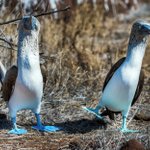





Blue-footed boobies, Galapagos Islands. Those blue feet are part of the courtship display - bright feet, careful steps, and a very serious dance.


A penguin at the equator feels geographically wrong. But the Galapagos penguin lives right around it, with some even north of it. Cold, fish-rich currents make it possible. Antarctica: penguins. Almost the equator: penguins again.


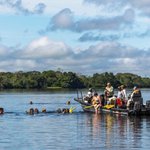
Yes, we swam in the Amazon. After piranhas by day and caimans at night, someone eventually asked: "So, swimming?" The brain hesitates. Then you get in anyway. That's travel: ending up inside a place and doing what sounded like a questionable idea back home.


Galapagos photos can make every landing look effortless. In reality, the ship stays at anchor and Zodiacs take us ashore - sometimes to a beach, sometimes through shallow water, sometimes beside lava rocks. Life jackets, cameras, wet feet, and no idea yet what we'll find.


Sally Lightfoot crabs get brighter with age. Young ones are dark and blend into black lava. Adults turn into a wild mix of red, orange, blue and yellow. They are also incredibly fast, so a close-up usually starts with the photographer running along wet rocks.


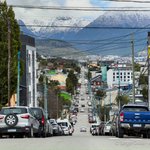
Antarctica does not begin with icebergs. For most travelers, it begins in Ushuaia: cars, shops, wires and houses, with snowy mountains behind them. Then you board a ship, enter the Beagle Channel, face the Drake - and a few days later the world is completely different.

At night in the Amazon, the animals seem to watch you. A flashlight passes over the bank and two bright points appear among the leaves. Then an eye. Then a snout. Sometimes a caiman leaves only its eyes and nostrils above the water.


Pelicans have all four toes connected by webbing. Great for swimming. Now imagine using those feet to sit on a thin branch. Basically climbing onto a stool in flippers. Somehow, it works. Once you notice details like this, you start looking at birds very differently.


Deception Island is Antarctica with black volcanic sand, steam and glaciers side by side. It's a flooded caldera, with geothermal water near shore and remains of an old whaling station. Same continent, completely different postcard.


This tiny animal feeds the largest animals on Earth. Antarctic krill forms huge swarms in the Southern Ocean, and whales eat it by the ton. Penguins, seals, fish and seabirds depend on it too. Hard to believe so much of Antarctica runs on something that fits on a fingertip.

Three whales, and next to the glacier they look tiny. That's Antarctica's scale problem: huge animals turn into dark streaks on the water when a wall of ice rises behind them. In the boat, the whales are what make you realize how enormous the glacier really is.

Antarctica in photos often looks sunny and calm. Then comes a normal day: wind, wet snow, spray, a boat bouncing on the waves, and so many layers you can barely turn your head. An hour later the postcard may be back. You never know which Antarctica you'll get.


For one evening in Chitwan, we became locals. Our lodge offered to dress us in traditional clothing before a Tharu performance. Of course we said yes. Then came drums, dancing and bright costumes. Much better than simply watching from the sidelines.


Nepal is much more than the Himalayas. In Chitwan we switched to open jeeps and went looking for wildlife: crocodiles, peacocks, deer and rhinos. After Kathmandu and Pokhara, the jungle feels like someone changed the country around you.


Antarctica usually means white snow, blue ice and a gray sky. Then, for a few minutes, everything turns pink, gold or almost violet. Same mountains, same ice, same water - a completely different picture. No whales. No penguins. No drama. Just light. Sometimes that's enough.


Galapagos flightless cormorant: wings spread, but it doesn't fly. Its ancestors did. Underwater it powers along with strong feet and catches fish and octopuses. In the last photo: penguin left, sleepy neighbor right, cormorant center. Four wings. No flying.


Red or white? On the Galapagos, the scenery can change completely from one landing to the next: red sand one day, white sand and blue water a few days later. Black lava, red shores, green mangroves. One archipelago. Which beach would you choose?


In Nepal, you usually look up at the Himalayas. We did the opposite: got up early in Pokhara and took a hot-air balloon over the valley. Watching the ground fall away and the mountains line up around us was a pretty good way to start the morning.


When I hear Nepal, I picture the Himalayas. Then you reach Chitwan and find a rhino standing waist-deep in the water, calmly minding its own business. That's what I love about travel: you come for the mountains and get a rhino.


