

Chief Gearhead of WizOps (https://xitter.cf/t.co/K90uAzoJgi)
Redwood City, CA
Joined March 2007
- Tweets27.4K
- Following539
- Followers1.5K
- Likes8.5K






I think Apple locking down Full Disk Access permission was the cause of more than 50% of my system drive being locked up as an inaccessible mystery.
How bad was it? I started with this change with **1%** free space on my system drive. Now it's 68%.
If you try a lot of AI models on macOS, reboot regularly to flush copy of models locked system data.
Arguing about intent is pointless. We're not going to give up windows because it's insecure. The window is still wide open. Whether or not it's safe now is irrevant.
venturebeat.com/data/coheres…

#techporn: celld on sqlite databases stored in S3-compatible storage implemented using Postgres DB.

celld: @Cloudflare Durable Objects on S3.
pgs3: S3 on Postgres.
Cloudflare Durable Objects on Postgres.

cpu-chat is using contentions and evictions as signals to communicate, creating hard to detect covert channels. We can't create monitors to catch such abuses without tools like cpu-chat.

I built 𝚌𝚙𝚞-𝚌𝚑𝚊𝚝, a reproduction of @openai's findings of covert communication using the CPU.
It runs on a generic host with 2+ Firecracker microVMs with no internet access. Works on x86 and even my M5 chip.
I was able to chat via 3 separate mechanisms:
① CPU contention
② Cache eviction timing
③ DRAM bandwidth contention
… across multiple CPUs, defeating all Firecracker's production recommendations (no SMT, no KSM, tenants pinned to different cores.)
Essentially, if shared hardware is involved, there's a good chance your agents can communicate covertly. And with really decent latency.
The good news: this is decidedly different from a *side-channel attack* where the agents could steal information (Meltdown/Spectre), a category of attack that providers like Vercel Sandbox mitigate. Further, in our real-world environment, these 'whispering' techniques are much harder to pull off and easier for us to monitor and detect (sampling hardware counters + lots of at-scale statistical data.)
Noteworthy: ironically, OpenAI and Anthropic's models refused to do this work. Open weight models got the job done. I'm worried the labs' stance might backfire and get in the way of helping developers build correct and secure systems. e.g: building a secure sandbox requires having this kind of analysis, and without it, we'll have a less secure world.
Is it just me or has LLMs responses has become very nerdy and terse bordering lab talk? Standard Technical English skill cleans that out but doesn't stick for long as usual.
Chinese developed tones for sound compression, and Japanese forced words into open vowels. Korean solved the puzzle with Hangul, a feat of phonetic design where shapes mirror the mouth and tongue, on top of highly expressive native spoken language.

Listening to same conversation improving incrementally by having my voice agent target audio from full-duplex voice agent demos as goal, basically:
speaker diarization -> transcript -> masked playback
Started with Tyger demos but plenty of 'teachers': GPT-Live-1, Dessa, etc.


It even checks how it sounds:
== cue2 'Mm-hmm.' -> heard: Mmm
== cue3 'Hmm.' -> heard: Mmm
== cue4 'Uh-huh.' -> heard: Uh-huh.
== cue5 'Mhm.' -> heard: Mmm
== cue6 'Mm.' -> heard: MAN
Turns out there are two voice products both using the name Phonon. There is Phonon 2 from Gradium, a TTS, and Phonon 2.5 from Fermion Research, an ASR.
I'm testing the Phonon 2 TTS because streaming speech is needed for fluent voice interactions, even timely uhs and hums.
Apple's obsession over rounded corners that started with original Mac team's Bill Atkinson finally bloomed into a crunchy FOMO anxiety-matching screen design.
macrumors.com/2026/10/25/app…

softmax, we hardly knew ya.

🥐 Hi everyone! FlashAttention's backward pass has the same zero-sum bug
@jon_barron
just fixed in softmax. With FP4 stochastic rounding it's wrong on every single draw. We fixed it in our ICLR'27 submission, CroissAttn and unlock e2e FP4 training.
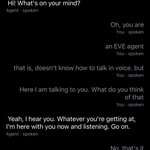
Dessa's full-duplex is impressive and its voices are very clear but exaggerated which doesn't fit all situations. You can easily tell by comparing human voice against generated voices in the Dessa demo voices. Energy level is an easy tell. block.xyz/dessa


We believe voice is the most natural way to interact with intelligence, so we created Dessa, the most authentic full-duplex speech model ever built. Talking with it feels like talking with a person…full of emotion, nuance, pauses, and a natural cadence.
block.xyz/dessa