
Aerospace, Engineering, Member @EAA, @AeroSociety, Winner RAeS ILAD 2023, Runners up 2024
Bengaluru South, India
Joined October 2009
- Tweets8.3K
- Following639
- Followers631
- Likes44.6K



Prasenjit Das retweeted

Fighter pilot training schools across the world will be teaching their students about this Su-57 engagement for years to come.
Prasenjit Das retweeted

단독보도입니다.
KAI가 KF-21 전자전기, EJ의 세부 내용에 대해서 처음으로 공개했습니다. 그라울러에 비견할만환 무장과 전자전 능력을 갖출 수 있을 것이지만 소요 문제, 그리고 미사일문제, 그리고 무인기와의 협업 등 넘어야 할 기술적/사업적 장벽이 상당히 있습니다.bizhankook.com/articles/kf21…

Prasenjit Das retweeted

Things I love about the A320 no. 89754: when the core of the vortex shed by the nacelle strake tip visualises a streamline over the wing surface. I've only ever seen it in CONF 1+F and FULL, though that could be simply because you do not normally get high enough alphas otherwise
Prasenjit Das retweeted

The F-15's air inlets are more than openings in the side of the jet. Each inlet is a variable geometry system that sets up the airflow for its engine across the whole speed range, out past Mach 2.
I put together a simplified animation of one inlet as a side cutaway. It's an original animation, not to scale, and the angles and linkages are approximate. The explanation below is based on NASA research reports.
What the ramps do:
The engine needs subsonic air at the fan face. In supersonic flight, the inlet slows the air through three oblique shocks and one normal shock. Where those shocks sit relative to the cowl lip matters. NASA describes a stability margin based on the distance from the nearest oblique shock to the cowl lip. If that margin is lost, the inlet ingests the shock and produces high distortion at the inlet face. The ramp schedules are designed for inlet and aircraft performance while keeping inlet operation stable.
The parts:
First ramp: the first ramp and upper cowl rotate as one assembly about a hinge point at the lower cowl lip, carrying the second and third ramps with it. This gives the inlet a variable capture area, lines it up with the approaching airflow, and minimizes spill drag.
Second ramp, third ramp, and diffuser ramp: linked together. The second ramp has no actuator of its own. Its position depends on the first and third ramps.
Bypass door: removes excess air from the inlet for inlet and engine matching. At supersonic speeds it is modulated to hold the proper throat Mach number.
Bleed: the second and third ramps have porous surfaces that pull off low energy boundary layer air, which exits through louvered bleed exits.
Three hydraulic actuators per inlet:
1. First ramp actuator
2. Diffuser ramp actuator
3. Bypass actuator
Control: each inlet has its own Air Inlet Controller, which schedules the ramps and bypass door using angle of attack, Mach number, and other air data.
What's simplified: the ramp angles, how far the first ramp rotates, the actuator mounting points, the linkage at the aft end of the diffuser ramp, and the bypass door details are approximations for illustration, not measurements from the jet. The deflected ramp shape is traced from a NASA side view diagram of the inlet, which is not labeled as a Mach 2 schedule. Not to scale.
Sources: NASA technical reports NTRS 19780022180, 19850004576, 19940006733, and 19950026591.


Prasenjit Das retweeted

There were two techniques for making these shapes at the time, many people decided to make the curved section as separate part, this is what the British did. This was done in two different ways, either by making a forging with a very rough "bent" shape and then machining to final form by copy-process from a master pattern, or to achieve higher production volumes, by forging with the blades straight, then bending them whilst hot.
The Germans, made the entire impeller as one piece in aluminium and then by quite sophisticated means, cold, bent the blades.
The AEG company in Germany in WW2, managed to make very good net-shape forgings which did not even need much machining at all.
You can read all about this in my translation of the chief designer of Daimler-Benz aero engines technical memoirs, Prof. Dr-Ing Karl Kollmann, who was their main supercharger designer in WW2, it is published by @ASMEdotorg .


Prasenjit Das retweeted

Представь: ты купил магнитофон, открыл инструкцию, а там принципиальная схема. Каждый транзистор, каждый резистор, каждый конденсатор.
В СССР это было нормой.
В паспорт многих радиоприёмников, магнитофонов и телевизоров вкладывали полную электрическую схему.

Prasenjit Das retweeted

Seems incredible to think that the A-12 Avenger II might actually have entered frontline service at some point. Was this design even aerodynamically sound?


Prasenjit Das retweeted

Re-up! 'Are orbital data centres all hype or the next infrastructure revolution?' #SpaceX #AI #ODC #datacentres aerosociety.com/news/powerin…

Prasenjit Das retweeted

Low cost, hi tech, dispersed, attritable, AI enabled, meshed, networked- with pvt sector innovating at speed and public sector producing at scale- is the way to go.
Can our political leadership and bureaucracy (both civil and military) cope up ???
What do you think !
youtube.com/watch?v=f-5IZBLf…

Prasenjit Das retweeted

how it feels to sit in an 'Analog Electronics' class, a mandatory core subject you thought would teach you how to design chips, build processors, and understand the technology powering the modern world, but it's just a professor who hasn't touched a real circuit since the invention of the transistor spending three hours deriving the voltage gain of an amplifier that doesn't exist, using assumptions that would get you fired from any semiconductor company, while 60 future electronics engineers blindly copy equations from a 2006 PowerPoint, half the class doesn't know the difference between a MOSFET and a BJT, the lab oscilloscopes haven't worked since independence, and the only thing getting amplified is everyone's hatred for engineering.
Prasenjit Das retweeted

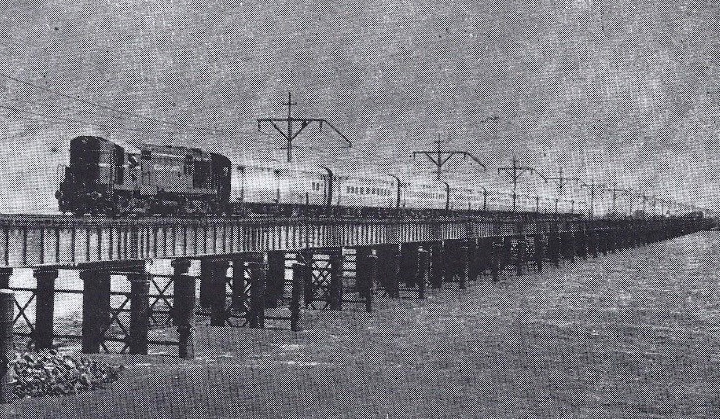
Finally got coloured n clear video of 162 km/hr High Speed trial run by @RailMinIndia using ICF RDSO coach hauled by WDM4 on Delhi Kanpur section way back in Sep 1971 to upgrade speed of Howrah Rajdhani which never happened till date
Video-Huntley Film Archives
@RDSOLucknow

Prasenjit Das retweeted

The China-developed world’s largest unmanned cargo aircraft, W5000, successfully completed a test flight on Saturday in Ordos, north China's Inner Mongolia Autonomous Region.
The aircraft has a maximum payload capacity of 5 tonnes and a cargo compartment volume of more than 65 cubic meters. With a maximum range of 2,600 kilometers, it is compatible with various standard aviation cargo containers. It is expected to enter commercial service by the end of 2027.

Prasenjit Das retweeted
Electric powered aircraft can reduce acoustic signature. Much of the noise though comes from the propellors. So it would be necessary to run the propellors at lower speed. Nevertheless a platform to be considered as a special ops transporter.

DARPA has a new drone you can barely hear. The XRQ-73 SHEPARD, built by Northrop Grumman, is a hybrid-electric aircraft in the roughly 1,250-pound class. Its engine generates electricity, which powers electric motors that turn the four ducted propellers. The idea is to cut the acoustic signature, making it harder to hear, while its small size and flying-wing design make it harder to see. The aircraft was originally expected to fly by the end of 2024, but it was delayed; it finally made its first flight this April. It features quiet operation, low fuel burn, plenty of electrical power for sensors, and it is environmentally friendly too 😀

Prasenjit Das retweeted
Wonderful! An individual prize winner at the light aircraft design competition 2026 from KPR engineering college Coimbatore.

Indian and Italian teams take home prizes as winners of this years RAeS International Light Aircraft Design Competition 2026 #avgeek aerosociety.com/news/raes-in…


Prasenjit Das retweeted

The B-21 Raider is designed to make one of the most complex aircraft in the world look deceptively simple: a smooth flying wing with no conventional tail. 🇺🇸
This footage captures the next-generation stealth bomber during flight testing, offering a close look at its underside, carefully shaped surfaces and distinctive flying-wing profile.
Every contour serves a purpose. The blended airframe and lack of vertical stabilisers help reduce radar reflections, while advanced flight-control systems compensate for the aerodynamic challenges of a tailless design.
Prasenjit Das retweeted

toyokeizai.net/articles/-/96… (accessed 15 November 2026)
Reading this article on Toyo Keizai Online (by Naoki Osaka) highlights both ‘the incompatibility between the government’s push to export the Shinkansen and the structure of JR following its split and privatisation’ and ‘the difference in enthusiasm between the government and the various JR companies regarding Shinkansen exports’.
In the article, Mr Takaoka, Managing Director of JR East, states clearly: ‘We are responding strictly in accordance with the Japanese government’s request’, ‘We have no choice but to await the outcome of discussions between the Japanese government and India’, and ‘We are not in a position to say “please stop”’.
It is evident that whilst the government is driving the project forward politically and diplomatically, JR—which is responsible for the actual technology—remains in a passive stance.
The privatisation and fragmentation of the former Japanese National Railways (JNR) were a system premised on the autonomy of domestic operations. However, in the export arena, the government’s policy of seeking to sell the Shinkansen as a unified ‘Japanese Shinkansen’ clashes with the structure whereby each company operates on the basis of its own existing systems; this creates a situation where it is difficult to take the lead in ensuring technical flexibility or adapting to the circumstances of the host country.
The discrepancies that arose in the Indian project regarding signalling systems and rolling stock also appear to stem from this structure. Might the division of roles—where ‘the government drives the project forward and JR responds to requests’—be one of the factors that, from the perspective of the partner country, tends to result in a situation that appears to be a ‘carbon copy’ of domestic practices?
(This is a slightly revised version of a text generated by Grok.)
Translated with DeepL.com (free version)
#BulletTrainIndia #MumbaiAhmedabad #MAHSR #MumbaiAhmedabadBulletTrain #IndianRailways #HighSpeedRail #Shinkansen

New speed record for rc planed, 790 kmph

Georgia Tech aerospace engineering student Tomas Salvo has developed the Reaper, a high-speed remote-controlled jet initially designed in his dorm room. During testing, the aircraft reached 790 km/h, potentially surpassing the existing RC jet speed record of 465.544 km/h. Built with carbon-fibre components and a Jetcat P250 engine, the aircraft is undergoing further development, with potential applications as a drone interceptor. Salvo hopes to commercialise the design and eventually develop a supersonic aircraft.
Video Credit: Georgia Tech
#engineering #technology #drones
2
119