

Clinical lecturer. Neuropsychiatry researcher. Catatonia, movement disorders, neuroimmunology, psychopharmacology & epidemiology. Christian. Views my own.
London, England
Joined December 2019
- Tweets1.4K
- Following1.3K
- Followers2.7K
- Likes2.6K




Pinned Tweet
📢Our new British Association for Psychopharmacology guidelines on CATATONIA are now out!📢
💠22 experts
💠3 continents
💠>500 references
Read the full #OpenAccess guideline here: doi.org/10.1177/026988112311….
@BAPsych #catatonia

Really enjoyed this article on paratonia, which is relevant to anyone who sees patients with dementia.
Their staging model below is particularly helpful.
doi.org/10.1002/mdc3.70836

Jonathan Rogers retweeted

If clinicians are no longer allowed to access patients notes for education and research studies this will have a disastrous effect on advancement of medicine
Have a listen if you're interested in how a motor examination can inform psychiatric practice.

📢NEW podcast: Motor signs of psychiatric disorders
'Movement disorders and motor signs are common, but are often something clinicians don't feel confident in assessing or managing'.
In this podcast, Dr Claire Jones speaks with Dr Jonathan Rogers about recognising relevant motor signs and understanding their significance for diagnosis, prognosis and treatment.
🎧Listen anytime, on the go, via the @rcpsych eLearning Hub.

Jonathan Rogers retweeted

1/ Some thoughts on CATATONIA...
In 20+ years of inpatient practice in LA, I saw maybe 20 cases and most resolved with brief treatment with lorazepam.
But now that I've been in SF since 2022, I've seen about 80 or more cases... it seems *very* common now!
You've heard of the Bush-Francis Catatonia Rating Scale. You may not have heard that there is now a Catatonia Quick Screen, which uses only 4 questions. It is actually performing really well, including - this paper(!) - with the original Bush-Francis data. doi.org/10.1111/acps.70135

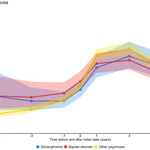
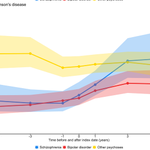
Psychomotor retardation looks a bit similar to parkinsonism. In this paper, we examine whether it might be a prodromal feature as part of depression: doi.org/10.1016/j.jad.2026.1….

Nice new study with a natural experiment suggests that for catatonia an IV diazepam challenge is non-inferior to a lorazepam challenge: doi.org/10.1016/j.genhosppsy….

Jonathan Rogers retweeted

3rd Multidisciplinary Symposium in Functional Disorders • City St George's, University of London 11/09/2026 with wide range of speakers and topics including Prof Jon Stone, Prof Mark Edwards, Prof Trudy Chalder, Biba Stanton, Clare Nicholson and Jonathan Rogers. 1/2
Jonathan Rogers retweeted

Very excited to share our pediatric catatonia clinical pathway in acute medical care settings consensus study is out in the Journal of the Academy of Consultation-Liaison Psychiatry.
There’s a link good til the end of May for the pdf here: authors.elsevier.com/a/1mvN4…
1/
Jonathan Rogers retweeted

Our paper is out: By analysing health records from millions of real-world patients from the literature, we can now finally answer the questions about the long-term outcomes of ECT. What we found, consistently, across well-designed studies from the UK, Canada, US, Sweden, Denmark, and Taiwan, is that ECT does not increase the risk for dementia, heart attacks or stroke, and is associated with a significant reduction in overall mortality.
cambridge.org/core/journals/…

Jonathan Rogers retweeted

The “freedom of speech” issue in academia is crucial & every university, every professional organisation, every grant-awarding body should explicitly sign up to it.
But it doesn’t end there. Short 🧵
Really interesting article about what the impact of AI on radiology has been. Not what you might expect.
This probably has implications for the rest of medicine. worksinprogress.co/issue/the…

The inaugural Catatonia Awareness Day!
Take the opportunity to learn one new thing about catatonia today.

For many years, catatonia was classified as a subtype of schizophrenia. That historical framing has had a long afterlife—and it continues to shape how catatonia is understood today.
When The Catatonia Foundation attended the annual meeting of the American Psychiatric Association, a number of senior clinicians told us, with confidence, “We know catatonia—it’s schizophrenia.” Their response reflects how deeply this earlier classification was embedded in medical training.
But catatonia is not schizophrenia.
Through decades of careful clinical observation and research, Dr. Max Fink and Dr. Michael Taylor demonstrated that catatonia is a distinct neuropsychiatric syndrome—one that can occur across many diagnoses, including mood disorders, medical conditions, neurologic illness, autism, and more.
This distinction is not academic. It directly affects treatment and outcomes.
The standard treatment for schizophrenia is antipsychotic medication—which can worsen catatonia and, in some cases, precipitate life-threatening complications if catatonia is not recognized. When catatonia is misclassified as schizophrenia, patients may receive the wrong treatment, delaying care that is specific, effective, and often life-saving.
Catatonia is treatable.
But only if it is correctly diagnosed.
January 16 is Catatonia Awareness Day—a day to correct outdated assumptions, improve understanding, and ensure catatonia is recognized and treated as the distinct condition it is, so no one suffers or dies because of a misconception.
#catatonia #catatoniaawareness #catatoniaawarenessday #maxfink

Thanks, @JRBneuropsiq! This was an idea I've been thinking about for years, but it was brought to life by some brilliant students.

Reduced striatal dopamine transmission as a transdiagnostic substrate of psychomotor retardation
Another great study by @ajlees
@ProfTonyDavid
@drjprogers
💫
academic.oup.com/brain/artic…

Jonathan Rogers retweeted

Catatonia can affect people at any stage of life—from childhood through older adulthood. It is not confined to a particular age, diagnosis, or life circumstance.
The signs of catatonia can occur at any age. Awareness that catatonia can affect children, adolescents, adults, and older adults is essential.
Recognizing that catatonia has no age limit helps ensure it is considered across the lifespan when concerning changes in movement, behavior, or responsiveness appear.
#catatonia #catatoniaawareness #catatoniaawarenessday #maxfink
Nice introduction to where we're at with causal inference at the moment.
bmj.com/content/391/bmj.r261…

Jonathan Rogers retweeted

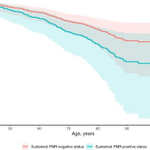
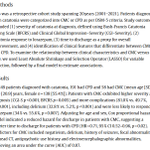
Just out - we show that six symptoms of midlife depression are associated with the later development of dementia. Publisher’s link not working, so here is a snap of the Abstract.

Jonathan Rogers retweeted

This really helps tune our priors on how frequently an underlying medical diagnosis might be driving the presentation.
And how important treatment for an underlying medical condition is to achieving good outcomes.

Another interesting catatonia paper.
249 patients with catatonia at the Mayo Clinic over 20 years, of whom 58 had an underlying medical condition and 191 an underlying psychiatric condition.
Lorazepam response worse if medical condition present.
doi.org/10.1016/j.genhosppsy…
