

Life is genre. Sometimes action, other times a thriller, romance or at best a comedy! 20 years of Content Creation- EX Zee tv, EX V18
mumbai
Joined July 2009
- Tweets10K
- Following3.3K
- Followers481
- Likes21.2K






Krishna Daswwani retweeted

🚨 India Moves to Bring Its Top Scientists Back from Abroad!
The Modi Government's Prime Minister Research Chair Scheme aims to attract Indian-origin scientists working overseas and strengthen India's research ecosystem.
> Over 3,600 researchers have reportedly applied.
> ₹200 crore allocated for FY 2026-27.
> Up to ₹14 crore in support for a Research Chair.
> Focus on AI, semiconductors, quantum computing, space and defence.
> Over 400 Indian institutions have reportedly applied to host researchers.
> Initial target of at least 120 researchers over five years.
As global competition for scientific talent intensifies, India is working to create opportunities for its researchers to return and build advanced research capabilities at home.
From brain drain to brain gain!


Krishna Daswwani retweeted

A. R. Rahman and Hans Zimmer’s wall-to-wall score in Nitesh Tiwari’s Ramayana (2026) is a seamless combination of the composers’ individual styles. More a brassy, bombastic score than one brimming with bhakti rasa (something the film isn’t going for either), though. The background score works incredibly well within the film and would be thoroughly entertaining as an extra-filmic listening experience once the original soundtrack album is released. There are at least 40 different musical cues in the score. Those who are familiar with the composers’ works can easily hear who composed what in the score. There are several cues that are entirely A. R. Rahman, some entirely Hans Zimmer, and some other cues where Zimmer and Rahman’s layers are in perfect harmony—for example, the Indian electric violin parts that find their space in between and over the phrases composed by Zimmer for Ram (can be heard in the track “Rama Theme”).
All the electric violin parts heard throughout the film (used for Dashanan’s Tapasya, Indra’s dive into the deep ocean, Bharat Milap sequence) are by A. R. Rahman. This is a brilliant choice; the instrument’s timbre is modest and muted compared to the traditional violin or sarangi (typically used in emotional sequences in such films) that even in high registers it doesn’t squeal, which might sound sappy and excessive to a Western audience (and a cello might sound too low and Western), and so it offers a perfect sonic solution for what the film is attempting here—to appeal to both Indian and international audiences. The distinct tone of this instrument is most pronounced in the Vanvas theme that is heard in the film when Ram, Sita, and Lakshman bid adieu to Dasarath and Kaikeyi in the throne room.
A. R. Rahman's rousing cry for Ram makes a moment in the leaving-for-exile episode pivotal (the film should have cut to intermission immediately after this episode). The film by itself does not earn the emotion an audience member might feel at this moment; the audiences’ past encounters with the story could do it instead, and A. R. Rahman’s high cosmic wail matches the register of this emotion. The visual in this sequence looks stunning on the big screen—the carriage lit in golden yellow passing through a sea of darkness, almost a painting.
Equally visually stunning is the moment when Ram meets Sita for the first time, a moment made all the more glorious by Rahman’s music. The ascending strings as Sita approaches the temple, the musicality of the Sanskrit verses themselves, the meditative melody the verses are set to, the musical conversation between male and female voices as Ram and Sita exchange glances, the rousing orchestral coda as Sita leaves—the spatio-temporal congruence and the emotional congruence between the music and the moving image in this sequence are magical.
There are several other cues that are entirely A. R. Rahman: a sweet female solo for Surpanakha who is now smitten by Ram; the music that plays in the Swayamvar sequence (music heard after Ram picks the bow is more Zimmer, a variation of the Rama theme)—the warm, whimsical, bouncy strings we hear as men fail to lift the bow (reminded me of the track “Shark” from Couples Retreat and the strings heard throughout the The Hundred-Foot Journey score); the orchestral version of the song "Jai Jai Ram" is played a few times in the film—when Dasarath makes Ram wear his crown and when a forest blooms and comes to life after Ram kills the giants whose spell the forest was under. While the melody of “Dharti hai ambar” is A. R. Rahman, the accompanying deafeningly gargantuan chorus and orchestral layers are typical Zimmer. In other moments, where there is chorus singing Sanskrit verses, for example, in the sequences where Ram fights the giants in the forest, the music is largely Rahman, even if entirely orchestral.
Ram and Ravan get distinct leitmotifs, the orchestral variations of which are heard throughout the film. The four-note Ravan motif is Zimmer, but there is a secondary theme, a low, grunting, rumbling male choir (singing some non-linguistic syllables) which is clearly Rahman and sounds derived from the track “Ravana Thandav.” And the thandav track is thunderous and effective within the film. The version played in the film’s prologue is much longer, with Zimmer’s Ravan theme dubbed over Rahman’s densely layered percussive Indian parts. This opening prologue is made all the more breathtaking by the accompanying score to which both Rahman and Zimmer seem to have contributed equally. There are several more interesting musical cues in the score. I can’t wait to listen to the original soundtrack album. Might watch the film again just to hear the score. For now, I’ll leave you with the beautiful Vanvas theme.
Krishna Daswwani retweeted

Ducked the stubble + Diwali air pollution for a few days to wake up daily to this glorious view of the Trishul-Nanda Devi range. Turkaura, near Ranikhet, Uttarakhand. No air pollution woes here.


Krishna Daswwani retweeted

There may be times in your life when you do everything you are supposed to do, and yet things don’t seem to work out. You accept that there is an infinite Ishwara, who is omnipotent, and surrender to that Ishwara, saying, “This limited mind of mine has not been able to solve this problem.” If you truly do that, really from the heart, and not to show off to anybody, some help comes.
#SriMspeaks


Krishna Daswwani retweeted
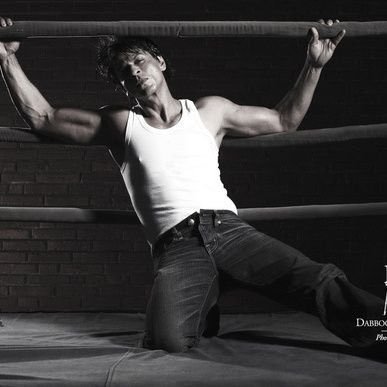
Viveck, you gave a boy from Delhi a start in this city. Thank you for everything.

Happy happy birthday dear @iamsrk , this year all eyes on King! May it be the success that you have envisioned. Have the greatest year ever! 💕💕


Krishna Daswwani retweeted

Elon Musk has proposed an unusual app concept that would allow people to publicly list their bills and outstanding debts, giving wealthy strangers and bored billionaires the opportunity to pay them off. The idea could create a platform where people struggling with everyday expenses receive financial help from individuals willing to step in and cover their costs.
The proposal has sparked curiosity about whether technology could connect people who need financial assistance with those who have the resources to provide it.

ALT Elon Musk has proposed an unusual app concept that would allow people to publicly list their bills and outstanding debts, giving wealthy strangers and bored billionaires the opportunity to pay them off. The idea could create a platform where people struggling with everyday expenses receive financial help from individuals willing to step in and cover their costs. The proposal has sparked curiosity about whether technology could connect people who need financial assistance with those who have the resources to provide it.
Krishna Daswwani retweeted

This is a masterclass in how to handle layoffs.
Today, Canva CEO’s announcement is next-level classy. Thoughtful, honest and generous.
CEOs worldwide should take note!
Canva is laying off 22% of its workforce, but look at how they’re handling it.
6 months of salary, 12 months of healthcare, career support, removal of the equity vesting cliff, a $10,000 fund for employees who want to start their own business, and even letting employees keep their MacBooks.
You can’t always avoid layoffs, but you can choose how you treat people when they leave.

Krishna Daswwani retweeted

Bengali aerospace engineer Rajib Dasgupta has been appointed Chief Engineer for NASA's International Space Station (ISS) Program. He completed his primary education in Bengal and earned a B.E. in Aerospace Engineering from IIEST Shibpur.


Krishna Daswwani retweeted

A bowl of rice puts more sugar into your blood than most desserts.
Dr. David Unwin breaks down what common starchy foods turn into once they’re digested:
- 150g white rice ≈ 10 teaspoons of sugar
- 150g boiled potato ≈ 9 teaspoons
- 2 thin slices of brown bread ≈ 6 teaspoons
- 1 banana ≈ 6 teaspoons
Then he gives the number that puts the rest in context. Your entire bloodstream, all 5 liters of it, holds about 4 grams of glucose. That’s a single teaspoon.
So one banana delivers six times the glucose your whole bloodstream carries at any moment. In a healthy body, insulin quickly moves the excess into your cells. In an insulin-resistant body, the system gets swamped and blood sugar spikes.
The part worth thinking about is what he says about young people. You can eat this way for years and feel fine, because your pancreas is working overtime to keep up. Feeling fine just means the bill hasn’t come due yet.
Compare that with steak and a big salad, or a three-egg omelette with cheese. Both are nutrient-dense, and both put almost no glucose into your blood.
None of these starchy foods taste sweet, and that’s why the comparison matters.
Starch is made of long chains of glucose, and digestion breaks it down into the same glucose that’s in table sugar. Unwin’s teaspoon figures come from each food’s glycaemic load, which measures how much a normal portion actually raises blood glucose. Each teaspoon equals 4g of sugar.
Krishna Daswwani retweeted

By sadhana, the sorrows of man can be removed. In meditation, the flow of the inner vritti is greatly intensified. The feeling arising from the downward power sends a wonderful glow through the body & one feels as if he is bathed in a kind of soft electricity.
Om Babaji Om!


Krishna Daswwani retweeted

Indian men, do your blood test today.
1. Complete Blood Count (CBC) with Differential
2. Thyroid Panel: TSH, Free T4, Free T3
3. Liver Function Test (LFT) Panel
4. Kidney Function Test (KFT/RFT) Panel (including eGFR)
5. Lipid Profile (Fasting Required) + APOB ( ask for this specifically)
6. Iron Studies: Serum Iron, Ferritin, TIBC, Transferrin Saturation
7. Blood Sugar Markers: Hemoglobin A1c (HbA1c), Fasting Blood Glucose (FBG - Fasting Required)
8. Fasting Insulin
9. Vitamins: Vitamin D (25-OH), Vitamin B12
10. Hormone Panel
Male: Total Testosterone, Free Testosterone, SHBG
11. Genetic test : Lp (a) done once in life.
Few test more to understand risk of metabolic syndrome:
1. waist circumference > 80 cm in males
2. blood pressure > 130/85
Getting fit ≠ healthy.
I have worked with runner having deranged blood markers, 25% + body fat and family history of heart disease.
Share this max with your friends and family.
In next tweet we learn about stress test, 2d echo, cardiac arrest and genetic heart condition that lead to sudden death.


Krishna Daswwani retweeted

#Kolkata is Kali’s land, Kalikshetra, her temples being Kalibari, the house of #Kali. The point to note is that there are as many kalibari as mishtir dokan in the city. Between Kalighat in the south (where the mythology of her body part lives), the Thanthania Kalibari of Maniktala (which Sri Ramakrishna used to frequent) and the Firingi Kalibari of Bowbazar (where the Portuguese poet, Hensman Anthony, or Anthony Firingi, worshipped) are all the fabled shops selling the best of #mithai and savouries. Of the estimated 300 Kali temples in the city, 28 are on this trail. The sweet shops are just as numerous. Some new, some old, some unknown and some very well-known. Like each kalibari, the shops have their own stories and secrets: talshansh of Nokur, rashomalai of K.C. Das, mihidana of Sen Mahashay, ledikeni of Bhim Nag, golapi pera or sherbet of Dwarik, kara paak of Girish, chap sandesh of Jadab, bhaja mishti (fried sweets) of Naba Krishna Guin, mishti doi of Amrita, hansh (swan) sandesh of Putiram, parijat of Makhan Lal, Indrani of Ganguram, mishti shingara of Gupta Brothers, kheer kodom and baked roshogolla of Balaram. The names of the shops do not matter. They are known by the names of the confectioner-owner, fondly and informally. Each a powerful brand, each an emblem of collective joy. Pix sourced


Krishna Daswwani retweeted

Sunidhi Chauhan x Shillong Chamber Choir harmonising on an unplugged version of her classic Kaisi Paheli Zindagani. Just pure and simple music. And what a joy to be able to sing together.
#shillongchamberchoir #scc #sunidhichauhan
Krishna Daswwani retweeted
Kolkata breakfast at a 250‑year‑old eatery once frequented by Sri Ramakrishna, Swami Vivekananda, Netaji Subhas Chandra Bose, and Rani Rashmoni. The wooden benches still remain at Shyambazar’s Adi Haridas Modak, and meals are still served on banana leaves. Must must visit!! #food
📹bakebytrisha.
Krishna Daswwani retweeted

🚨 This could be the end of Type 2 diabetes.
Researchers at ETH Zurich led by Martin Fussenegger built a small wireless implant that uses electricity to break down extra sugar in the blood.
It switches off when levels are normal — and means people won’t need diabetes drugs anymore.
Inside is a catalyst made of graphite felt coated with tiny gold and platinum particles, with no living cells or drugs. A glucose sensor worn on the arm watches sugar levels. When they climb after a meal, it signals a phone or smartwatch, which switches on the implant.
The catalyst then turns glucose into gluconate, a harmless compound the body flushes out in urine, and the system shuts off once sugar is back on target.
In diabetic mice, the device kept blood sugar under tight control for six weeks, the animals lost weight, and it caused no sign of tissue damage.
Because less sugar ends up stored as fat, the team sees it as a possible tool for both type 2 diabetes and obesity, without daily pills or injections. So far it has only been tested in mice, and human trials are still ahead.
source: Maity, D., et al. (2026). Wireless electrocatalytic closed-loop system for drug-free management of diabesity. Science.
