Co-Founder & CEO @darwin_robotics | Robot technicians for AI infrastructure| Prev. @google, @Theteamatx, @nvidia, @stanford
San Francisco, CA
Joined November 2018
- Tweets824
- Following570
- Followers812
- Likes7.3K




Pinned Tweet
We're just getting started.

Introducing Darwin Robotics.
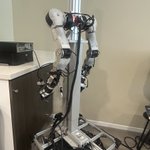
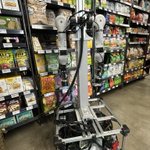
We're building general-purpose robot technicians that assemble, commission, and maintain data centers.
AI infrastructure is scaling rapidly, but bringing compute online still requires enormous amounts of physical work. Skilled technicians must install servers, connect cables, commission equipment, and maintain the infrastructure.
We create robot technicians that can take a work order and execute the physical tasks requirement to assemble, configure, and repair hardware. Instead of explicitly programming each workflow, our robots learn complex physical tasks from human demonstrations and improve through real-world deployment.
Here’s an early demonstration of Darwin performing learned cable manipulation on a server rack.
Our mission: Robots to build civilization.
If you're building or operating data centers, let's talk about deploying Darwin at your facilities.
darwinrobotics.ai


Sergio Charles retweeted

Practical robotics is nigh

10 Spicy Takes After Talking to 50 Friends at the Frontier of Robotics 🤖🔥
1/ Astra IS robotics' GPT-3 moment. Ironically, now that it's finally here, some in robotics seem reluctant to acknowledge it. Perhaps because it (sadly) didn't come from a robotics company?
2/ Robotics is becoming just another vertical for frontier labs. Not so different from coding in some respects. Why reinvent general intelligence for every industry?
3/ Robotics was too hard to underwrite until now. No convincing pretraining scaling law, no convergence on models, data, or hardware. No wonder some critics dismissed it as a fragmented industry playing an expensive "demo game". Astra may finally offer a credible path to scale.
4/ Robotics foundation-model startups have a case. But how strong is it? The argument: Astra handles System 2 (reasoning), while specialized models retain System 1 (skills) and System 0 (motor control). Fair. But isn't that already a narrower value proposition? And who says the boundary stops there?
5/ Follow the talent. Word is OpenAI reorganized its 30–40-person robotics team around the core Astra model. Hearing similar moves toward general models at @Tesla_Optimus. Org charts may tell us more than any demo.
6/ The robotics data gold rush is real. Million-hour procurement programs, some potentially reaching tens of millions of hours. Talk of budgets approaching $1B per frontier lab.
7/ Bullish on robotics hardware volumes. As intelligence becomes more accessible, the barriers to building useful robots could fall dramatically. The moat shifts toward reliability, dexterity, integration, and deployment.
8/ Robotics could fuel the next semiconductor and memory supercycle. A 100B-parameter model running on the edge requires ~50GB just for 4-bit weights. Now multiply that by millions of robots. Why do you think @JensenHuang is so obsessed with robotics? @elonmusk saw it coming: xitter.gq/elonmusk/status/211477…
9/ Is self-driving immune to the general-model threat? After coding and robotics, why assume self-driving remains the exclusive domain of proprietary, vertical models? Robotaxi increasingly feels like a solved problem to me. But if and when frontier labs move into self-driving, we could see an Apple vs. Android dynamic. Think about the implications for $TSLA, Waymo, and other OEMs.
10/ The next bottleneck may not be intelligence. It's deployment. Models are improving faster than our ability to deploy robots in the messy real world. Integration, hardware variance, failure recovery, and economics remain brutally hard. The real moat may be turning intelligence into reliable, profitable physical work.
--
I realize some of these takes may rub people the wrong way, especially those who have spent years doing the hard work of advancing robotics. That's not my intention.
I'm sharing them to spark debate, not to declare winners and losers. Astra has only been out for a month or so, and it's far too early to draw definitive conclusions. More importantly, when the TAM is this enormous - potentially the largest in tech - there should be plenty of room for different approaches and many winners.
++
Full diligence report: robonomics.substack.com/p/ro…
I’m speaking at the Imagination in Action Physical AI Summit at @MIT today about what we’re building at @darwin_robotics: robot technicians that assemble, commission, and maintain data centers.
If you’re building or operating data centers, let’s chat about deploying Darwin.
See you there!

More to come
We're building general-purpose robot technicians.
AI infrastructure is scaling rapidly, but the physical work required to build and maintain it isn't. Here's Darwin-0 performing a data center cabling task.
We deploy robots that can assemble, commission, and maintain the machines that power AI.
darwinrobotics.ai


Welcome to the singularity

We’re sharing a solution to the Navier-Stokes Millennium Prize Problem, one of the deepest problems at the frontier of mathematics.
The proof was produced by a group of agents, using an OpenAI next-generation model significantly more capable than GPT-6 Astra.
The problem concerns whether the description of smooth three-dimensional fluid motion modeled by the Navier-Stokes equations can break down. It has remained unresolved for roughly 90 years.


Sergio Charles retweeted

The sense of touch is the most criminally under-explored modality in robotics. Imagine doing sleight of hand wearing thick oven mitts. That's exactly how a robot feels today if it were alive. A magnetic piece snapping into place, a paper cup peeling out of a stack, a USB negotiating its way into the port - all invisible to the camera.
Learning how to feel must be a full-stack co-designed effort. We are open-sourcing a principled methodology called "T-Rex":
1. Tactile as first-class citizen of the model. Our mixture-of-transformer runs two clocks asynchronously: a slow visuomotor expert plans the motion, and a fast tactile expert refines it in real time with high-frequency corrections at 4 "touch ticks" per vision tick. Forces change faster than frames arrive, so the architecture had to as well.
2. Open data. The largest tactile dataset ever released to our knowledge: a 50-hour (~5,500 episodes) high-quality, carefully synchronized robot play corpus, collected on SOTA tactile hand hardware with 22 degrees of freedom. Available today on HuggingFace!
3. Training recipe: T-Rex extends our prior work, EgoScale. Human egocentric videos for pretraining, a diverse dose of tactile robot play for mid-training. Our experiments show this bridges contact-free pretraining to contact-rich manipulation remarkably well.
Pixels are cheap and everywhere, but they run out of steam at the moment of contact. Tactile will carry the last mile. The next scaling curve will be measured in hours of touch.
T-Rex is a great collaboration between NVIDIA and Berkeley: 🧵
I'm in total awe. But it does seem once one has a target, e.g. a lower bound, and quick verifiability, you can hillclimb quickly. Would be interesting to see evolutionary methods applied to the search itself

We asked an unreleased research version of Claude to take a stab at the Riemann hypothesis.
It didn’t solve it, but it did make strides on a related problem: it increased the lower bound for the fraction of zeros of the Riemann zeta function that satisfy the hypothesis from 41.6% to 67.2%.
anthropic.com/research/riema…

We're hiring AI researchers and engineers at @thesis_labs to build systems that automate AI research.
If you were impacted by the recent Amazon AGI Lab layoffs, we'd love to hear from you!
Apply: thesislabs.ai/careers
Sergio Charles retweeted

hello there the jacobian conjecture is false thanx to my close friend akhil for asking about it and my other close friend fable for working during the world cup final
((1+xy)^3 z + y^2 (1+xy) (4+3xy), y + 3 x (1+xy)^2 z + 3 x y^2 (4+3xy), 2 x - 3 x^2 y - x^3 z): \C^3\to \C^3, has jacobian determinant -2, and sends (0, 0, -1/4), (1, -3/2, 13/2), and (-1, 3/2, 13/2) to (-1/4, 0, 0)
Sergio Charles retweeted

Emerging autoresearch labs worth following:
@AutoScienceAI (@eliot_cowan)
One of the cleanest “AI builds AI” bets: agents that invent, test, and ship ML models; not just tune hyperparameters.
@intology (@zhouandy_)
Zochi and Locus are built for the full research loop: read, hypothesize, code, run thousands of experiments, learn from failures, repeat.
@thesis_labs (@eigentopology)
YC F25. Treating ML research as a compounding search problem, where every experiment improves the next one instead of dying in a Notion doc.
@Recursive_SI (@RichardSocher, @_rockt, @jeffclune)
A very ambitious new bet on AI systems that run open-ended experiments on how to make AI systems better. autoresearch with recursive consequences.
@EdisonSci (@SGRodriques, @andrewwhite01)
A newer FutureHouse spinout bringing AI scientists into biopharma R&D — where “deep research” has to survive real data, real experiments, and real timelines.
@HarmonicMath (@tachim, @vladtenev)
Math’s version of autoresearch: AI exploring new proofs, with formal verification as the anti-hallucination layer.
@readysetpotato (@Nick___Edwards)
An AI scientist for actual research workflows — papers, hypotheses, protocols, computational tools, and eventually lab automation.
@EvoScientist (@_xizhang)
A very early one to watch: multi-agent AI scientists with persistent memory, so failed ideas and experiments improve the next research cycle.
@SakanaAILabs (@hardmaru)
The original AI Scientist builders. Still one of the best technical follows for research artifacts, open source, and weird ideas that actually run.
not exhaustive - add the early teams I’m missing in the comment
Sergio Charles retweeted

as the technology becomes more science fiction i see a lot of commentators, technical staff etc trying hard to not think thoughts that feel science fiction as a defense mechanism. but you need to. it’s the only way you’ll make good choices for the future
Sergio Charles retweeted
the way humans do ai research is highly empirical, but it is possible there are very outsized theoretical and mechanistic improvements in model training. even the gradations of skill among human researchers mean some create 10,000x more progress given a compute budget. some invent the transformer or PPO
this is the ilya sutskever “age of research” bet, that you can find massive improvements on small models and small training runs. if Ilya thinks so maybe GPT7 and Claude Requiem think so too.
many of the brightest researchers don’t do fundamental deep learning research anymore. most have stopped being curious as to what a neural net is the way they used to be in 2017. probably because incremental engineering-based progress has been so guaranteed and low-hanging.
the rate and cost of progress today doesn’t necessarily predict the speed of RSI loop

Sergio Charles retweeted

Why does deep learning generalize? What does weight decay really do? Can algorithmic information theory address these questions?
In my latest preprint, I give a proof that the minimum neural weight norm matches the minimum program length (aka Kolmogorov Complexity), up to a logarithmic factor. In other words, the neural network with the smallest possible weight norm (that fits the data) must encode the shortest program (that fits the data).
The result only holds for fixed-precision neural nets: infinite precision nets can store infinite information with finite (small) weights.
arxiv.org/abs/2605.10878