

Research Scientist in Computational Biology and ML. Currently at @spc . @OwkinScience | @Polytechnique | @HECParis
France
Joined April 2012
- Tweets531
- Following344
- Followers911
- Likes1K




Pinned Tweet
sam3.cpp - Meta's SAM 3 in pure C++ with @ggerganov's ggml
- Supports SAM 3.1, 3, 2.1, 2 and EdgeTAM
- FP16, 4-bit quant (EdgeTAM in 15 MB)
- Apple Metal GPU, CUDA, CPU
- Text-prompted: "peach" → every peach
- Single-file C++14
Performance-wise:
- 100ms object detection, segmentation
- Video object segmentation @ 20FPS on M4 Pro with EdgeTAM
github.com/PABannier/sam3.cp…
Precision medicine was supposed to kill cytotoxic chemo.
Twenty years in, platinum is still the 1L backbone for lung, gastric, esophageal, cervical, ovarian, head and neck, and TNBC. The targeted-therapy revolution is mostly a lung adenocarcinoma story.

1
3
1,107

Most cancer therapies attack the tumor.
PD-1 blockade does something different: it attacks the tumor’s relationship with the immune system.
It can produce spectacular responses.
But only in some patients.
So the central question became: who is actually going to respond?
1
1
297

Two ways to spatially resolve protein expression, with very different physics:
Multiplex immunofluorescence (mIF)
Uses fluorescent dyes → fast, accessible, great for targeted panels (~5–10 markers).
Limitation: spectral overlap → fewer markers, semi-quantitative.
Imaging mass cytometry (IMC)
Uses metal-tagged antibodies + mass spec → 30–50+ markers with no overlap.
Trade-off: slower, more expensive, lower throughput.
👉 mIF = speed + practicality
👉 IMC = depth + high-dimensional biology
🤖 Made with AI

352
Cool read of the day! By @guillaumebalezo @TrulloRoger Albert Pla Planas @e_decenciere and Thomas Walter!
MIPHEI-ViT is a model that predicts multiplex immunofluorescence (mIF) directly from standard H&E pathology images.
They successfully predict 15+ protein markers, achieving high F1 scores like 0.93 for Pan-CK and 0.83 for α-SMA.


CRISPR isn’t just “gene editing”, it’s programmable biology.
Originally a bacterial defense system, CRISPR-Cas9 lets us cut DNA at precise locations using a guide RNA as a GPS. Once cut, the cell repairs the DNA, either introducing mutations or inserting new sequences.
That means we can:
• Knock out genes
• Fix mutations
• Rewrite biology
From curing genetic diseases to engineering crops, CRISPR turns DNA from something we read… into something we can edit.
🤖 Made with AI

140
I asked Claude for a project-based curriculum to become world-class at #ComputationalBiology and multi-omics.
It returned 25 projects. Every modality. Real public datasets. End-to-end. ~500 hours.
Thread 👇

1
1
192
Project 1: From FASTQ to a clean bulk RNA-seq count matrix
Project 2: Differential expression with pydeseq2 — count GLMs from first principles
Project 3: Functional interpretation — ORA, GSEA, and decoupler-py activities
Project 4: Single-cell RNA-seq fundamentals — from raw counts to clusters
Project 5: Cell type annotation and reference mapping
Project 6: Trajectory and RNA velocity in pancreatic endocrinogenesis
Project 7: scVI-based integration across the human pancreas atlas
Project 8: Spatial transcriptomics — Visium with cell2location deconvolution
Project 9: Imaging-based spatial transcriptomics with subcellular and neighborhood analysis
Project 10: Germline small-variant calling on a single human genome
Project 11: Somatic variant calling and mutational signatures in lung adenocarcinoma
Project 12: Structural variants and somatic copy number
Project 13: Population genetics on 1000 Genomes with scikit-allel
Project 14: DNA methylation arrays — preprocessing, M-values, and DMRs
Project 15: Whole-genome bisulfite sequencing — alignment, methylation calling, and DMRs
Project 16: Bulk ATAC-seq — peaks, footprints, and motif analysis
Project 17: Single-cell ATAC-seq with snapATAC2
Project 18: ChIP-seq and CUT&RUN — peak calling, IDR, and motif validation
Project 19: Hi-C — compartments, TADs, and loops with cooler and cooltools
Project 20: Targeted LC-MS metabolomics — quantification, QC, and case/control statistics
Project 21: Untargeted LC-MS metabolomics — peak detection, alignment, and identification
Project 22: CITE-seq with totalVI — joint protein and RNA modeling
Project 23: 10x Multiome (RNA + ATAC) with MultiVI and MOFA+
Project 24: Unpaired cross-modality integration with scGLUE
Project 25 (Capstone): TCGA-BRCA multi-omic integrative cohort analysis
claude.ai/public/artifacts/c…

104
I'm brushing up my bio engineering skills with this prompt. Works quite well.
First is to understand DNA sequencing, second is about the central dogma.
The prompt:
Make a technical educational infography that explains in details how DNA sequencing works from breaking DNA into fragments, building a library (what is a library), and how to align the sequences against a reference genome.
🤖 Made with AI


The beauty and utility of linear algebra, courtesy of the new ChatGPT image model (or: how the same few ideas and methods apply to just about any field in endlessly fascinating ways, including AI!).
No other subject in math has more practical explanatory bang for the buck.


1
4
578
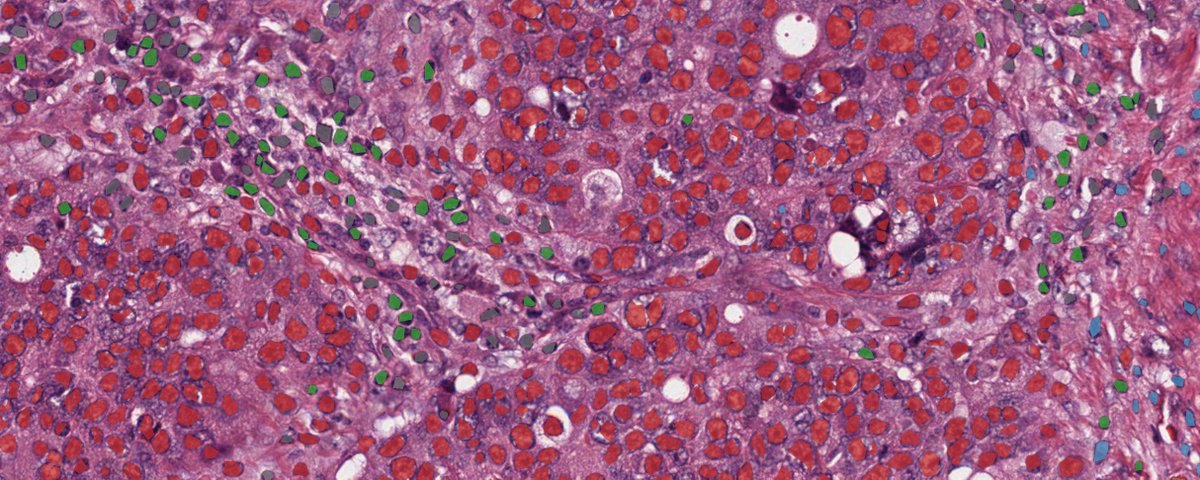
For my work, I need to visualize cell segmentation and tissue annotations on whole slide images. These are massive pathology scans, multi-gigabyte files with millions of cells.
Problem: my data format wasn't compatible with any existing WSI viewer out there.
So I figured why not just vibe-code my own pathology viewer that supports my exact format?
I genuinely had no idea how long a project like this would take me.
I decided to go with C++, mainly for performance reasons, but also because I'm familiar with the language and knew I'd need every bit of speed I could get.
I set myself one rule: I wouldn't write a single line of code. Claude would do it all.
I used @doodlestein's methodology, which breaks down like this:
Step 1: Write a ridiculously detailed plan
I drafted a comprehensive implementation plan and had it reviewed by multiple agents: Opus 4.5 (ultra thinking mode), Codex 5.2 (extra thinking), and Gemini. Then I let Claude Code synthesize all three perspectives into one coherent plan. It felt a bit like assembling a council of war advisors before a medieval siege.
Step 2: Break it into atomic beads
I created a series of small, sequential tasks that followed the implementation plan from step 1. Roughly speaking: GUI → canvas → opening a slide → rendering cells → rendering tiles. Each bead was self-contained and clearly scoped.
Step 3: Quality control throughout
During the process, I regularly checked in on Claude to make sure it was following professional C++ design patterns, the kind you'd expect from a world-class C++ programmer.
At one point, I started referencing the book C++ Software Design: Design Principles and Patterns for High-Quality Software by Klaus Iglberger. This seemed to activate some deeper part of Claude's internal knowledge. The code quality noticeably improved.
The part that surprised me the most:
Multiple times, Claude's first solution wasn't optimal. For instance, it couldn't efficiently render 1M+ cell polygons on the first try. The initial version was slow, jittery, borderline unusable.
So I told it to think deeply about the hot path. To use time-efficient data structures (e.g. building a spatial index) for the problem at hand. To multi-thread the rendering loop so it could determine what's visible to the user versus what's off-screen.
And surprisingly, it almost always one-shot the optimized solution. Once I pointed it in the right direction, it figured out the implementation with minimal back-and-forth.
Things that helped along the way:
Writing lots of tests. For the more difficult beads, I asked Claude to use a test-driven development approach. This gave it a clear objective to optimize against: make the test pass. It worked remarkably well.
Isolation before optimization. For performance-critical prompts, I learned to explicitly say: "First, isolate the part of the code we're trying to optimize before diving into the implementation." This prevented Claude from making sweeping changes when surgical precision was needed.
The viewer works. It's fast. It handles my weird data format perfectly.
And I still haven't written a single line of C++.

Just tried @lovable (cc @Henrik_wes @antonosika ) for the first time, and I'm in awe 😮
Two prompts and it created a neat 3d vector field visualizer with three.js.
Crazy how smooth the experience is! You are now a few prompts away from building very cool stuff. Wild...
Researchers at Google have developed an AI co-scientist system built on Gemini 2.0 that uses multiple AI agents to generate, debate, and evolve scientific hypotheses. The system has shown promising results in biomedical applications, successfully identifying new drug candidates for leukemia, discovering novel targets for liver fibrosis, and uncovering mechanisms of bacterial evolution!
storage.googleapis.com/cosci…
1
294
.@huggingface just dropped this playbook to help you scale your training! I've always wondered how research labs were scaling training over 1000s of GPUs from an engineering perspective. This guide explains it, thank you open source kings 🫡
huggingface.co/spaces/nanotr…

1
2
246
In the same vein, I recommend @StasBekman 's great guide on ML engineering which goes over concepts like SLURM, model/data parallelism. github.com/stas00/ml-enginee…

1
171
NVIDIA integrated DeepSeek R1 to find new optimized CUDA kernels for different flavours of attention!
developer.nvidia.com/blog/au…

Coding with AI-powered IDEs offers an underrated advantage: to get the best completions from the model, your code must be clear and readable.
This compels you to write clear and comprehensive docstrings.
If the docstrings are sufficiently clear, you may not even need to write the actual code, as the docstring can serve as the prompt.


Pro tip: Use @simonw 's llm CLI with custom prompting functions.
This will save you hours. I can no longer do without my rb alias 😁

2
443


I'm brushing up ViT and SSL for computer vision. Here is a list of papers I'll study. What did I forget?
VISION TRANSFORMER
- An image is worth 16x16 words: Transformers for image recognition at scale, Dosovitskiy and al.
- Training data-efficient image transformers & distillation through attention, Touvron and al.
1
1
388
SELF-SUPERVISED LEARNING
- Masked Autoencoders Are Scalable Vision Learners, He and al.
- A Simple Framework for Contrastive Learning of Visual Representations, Chen and al.
- IBOT : Image Bert Pre-training with Online Tokenizer, Zhou and al.
- Momentum Contrast for Unsupervised Visual Representation Learning, He and al.
- DINOv2: Learning Robust Visual Features without Supervision, Oquab and al.
1
1
232