
EEH is a young Elsevier journal, focusing on ecology, environment, and health. The account is operated by EEH editors, not a view of Elsevier.
Nanjing, China
Joined July 2021
- Tweets559
- Following287
- Followers359
- Likes331




Could nonstick cookware pose hidden risks?
A new EEH study finds that PTFE micro- and nanoplastics can cross the gut barrier and trigger oxidative stress, mitochondrial dysfunction & DNA damage in fruit flies.
🔗 doi.org/10.1016/j.eehl.2026.…
#Microplastics

26
What makes PM2.5 harmful? Its composition matters.
An EEH study of 212M+ outpatient records across 274 Chinese cities identifies black carbon as a major contributor to multi-organ health risks—and a potential early-warning target.
doi.org/10.1016/j.eehl.2026.…

17
🌍 Is global warming making the air we breathe more toxic?
A new EEH study finds atmospheric formaldehyde (HCHO) rises ~2.3% per °C of warming, potentially widening global exposure inequalities.
🔗 doi.org/10.1016/j.eehl.2026.…
#ClimateChange #AirPollution

34
Are we underestimating air pollution’s health risks?
A new EEH study introduces iDLM, revealing how repeated PM2.5 exposure may amplify mortality risks beyond traditional estimates.
🔗 doi.org/10.1016/j.eehl.2026.…
#AirPollution #EnvironmentalHealth

34
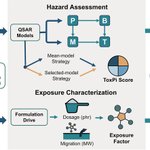
Which rubber additives pose the greatest environmental risks?
A new study in Eco-Environment & Health identifies 82 priority chemicals, with TMQ, 6PPD & IPPD topping the exposure-informed risk ranking.
🔗 doi.org/10.1016/j.eehl.2026.…
#EEH #EnvironmentalHealth

68
💧 A new strategy to tackle “forever chemicals”!
New in #EEH: A biomimetic capsule adsorbent selectively captures broad-spectrum PFAS from water. Its column treated ~18,000 bed volumes of PFOA-polluted water before breakthrough.
🔗 doi.org/10.1016/j.eehl.2026.…
#PFAS

33
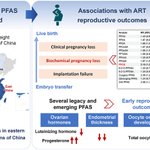
🧬 Can PFAS exposure affect reproductive outcomes?
New in #EEH: A multicenter study of 1,301 women found legacy & emerging PFAS in follicular fluid, with higher PFOS linked to increased biochemical pregnancy loss risk.
🔗 doi.org/10.1016/j.eehl.2026.…
#PFAS #ReproductiveHealth

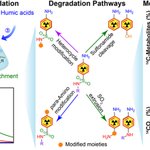
🌱 Can soil microbes help remove antibiotic pollution?
New in #EEH: Soil bacteria mineralized up to 65% of sulfonamide antibiotics via 12 degradation pathways, while soil organic matter accelerated the process.
🔗 doi.org/10.1016/j.eehl.2026.…
#Biodegradation

19
What drives coral reef resilience?
A new #EEH study tracks post-El Niño recovery in the Nansha Islands, revealing how energy-flow networks and key taxa shape reef resilience as coral cover rebounds.
🔗 doi.org/10.1016/j.eehl.2026.…
#CoralReefs #MarineEcology

1
47
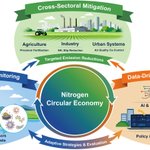
🌱 Ammonia is a critical yet under-regulated pollutant. A new #EEH commentary explores how advanced NH₃ monitoring, cross-sectoral mitigation & data-driven governance can support a nitrogen circular economy.
🔗 doi.org/10.1016/j.eehl.2026.…
#AirPollution #NH3

1
26
Heat-health science has a blind spot: the night.
In a new #EEH Comment, Ursula Debarnot calls for a 24-hour approach that captures indoor heat, sleep and recovery, and human diversity—laying the groundwork for fairer, more effective heat-adaptation strategies.

1
61
Antibiotic pollution reshapes aquatic life.
A new study in EEH found duckweeds stored sugars under stress, while fish converted sugars into lipids. Low-dose antibiotics increased probiotics, but high doses caused gut dysbiosis in snails.
#Antibiotics #WaterPollution #Microbiome

23
What makes ecology reviews highly cited? A new study in Eco-Environment & Health finds that writing style, authenticity, clout, and narrative structure all influence citation success.
Read more:
doi.org/10.1016/j.eehl.2026.…
#ScientificWriting #Ecology #AcademicWriting #EEH

21
Microplastics & nanoplastics can survive water treatment and react during chlorination/ozonation to form potentially toxic disinfection by-products (DBPs), posing emerging risks to drinking water and aquatic ecosystems.doi.org/10.1016/j.eehl.2026.…
#Microplastics #EnvironmentalHealth

26
Antibiotic resistance isn’t local—it travels.
New genomic evidence shows long-distance spread of “superbug” genes between animals & humans across China, driving >20% of human infections.
A wake-up call for #OneHealth strategies.
#AntibioticResistance #PublicHealth #EEH

1
1
27
Nighttime ozone isn’t harmless.
A multi-city study finds nocturnal ozone enhancement (NOE) is linked to higher cardiovascular mortality—independent of daytime exposure.
Air pollution control must consider both day & night.
#AirPollution #PublicHealth #Ozone #EEH

23
New in EEH:
Serum PFASs were associated with increased risks of multiple cardiometabolic diseases, with PFHxS affecting all 5 CMD categories. Inflammatory markers, especially serum ferritin, may play an important mediating role.
doi.org/10.1016/j.eehl.2025.…
#PFAS #PublicHealth #EEH

13