

Challenge your eye! Join a photo adventure with a local photography coach in Tokyo, Kyoto, and Osaka
Japan
Joined August 2014
- Tweets556
- Following4.4K
- Followers5K
- Likes467





Continuous shutter isn’t only spray and pray. It’s a diagnostic. Look at the frames afterward: if the subject sits in the same spot every time, you’re matching its speed. If it drifts forward or back, you’re panning too fast or too slow. That’s your answer for sharper photos.


1
69
The trick for panning below 1/15sec: let other traffic pass in front of the car you’re tracking. Your subject is only exposed for part of the frame, so it stays sharp while the background stays slow — and the passing traffic paints lights and color across the front of the shot.


1
66
Passion is a seductive thing. But passion without introspection leads to a dead end, and passion alone is merely a hobby. Ikigai asks for three more things: mastery, some good done in the world, and a way to put food on the table.


1
98
When night falls Osaka shows its most striking face. Neon spilling across narrow alleys, reflections shimmering on wet pavement, Tenma and Kitashinchi and Umeda all running hot at once. Cinematic is an overused word. It fits anyway.


1
91
Osaka is not Tokyo with different signage. Raw energy, working class character, old and new pressed hard against each other — a completely different photographic playground. Most visitors pass straight through the good parts without ever really seeing them. You shouldn't.


1
78
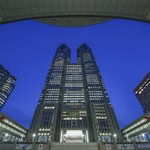
Get up there early. Haze builds over Tokyo as the day goes on, so the view you actually want is a morning view — Sunday morning, ideally, when the decks are quieter. And winter brings the clearest skies, which is your best chance of pulling Fuji out of the city haze.


1
88
You can’t fly a drone over metro Tokyo without a permit. So the next best thing is a list of observation decks that cost nothing — Carrot Tower, Bunkyo Civic Center, Tower Hall Funabori, Hokutopia, I-Link. Everyone loves free stuff, and there’s usually a catch. Not this time.


1
51
A punctum is a portal. The way light hits an object, a peculiar geometric coincidence, a hand gesture, a texture, a color — some small detail hooks us before we know why, and then we work the scene until we find the reason the photograph deserves to exist.


4
206
Roland Barthes 1980 "Camera Lucida" had 2 ideas in it: studium and punctum. Studium, as we’ve come to use it, is the reasoning behind the image. We frame it this way because it tells the story we want to tell. It covers the whole photograph, its context, the process of making it.


1
130
One of our junk lenses has fungus we couldn't clean out. Annoying by day. But at night, around neon and lit signs, that haze turns every shot into a soft mist. A defect we now shoot on purpose. Junk lenses have character you can't buy new.


6
217
The best lens we own cost 330 yen.
A Nikon Ai 50mm f/1.4, pulled from a junk box in a rural Hard Off, no faults whatsoever. We'll probably never get that lucky again. But we keep digging through the boxes anyway.


5
282
The strange thing about shooting Tokyo's old taxis: the photos look decades old the moment you take them. The Comfort's design barely changed from its predecessor — so even a shot from last year feels like a frame from an era long gone.


4
122
Here's what a disappearing taxi taught us: photograph things now, not later.
Nothing's promised to last. The Toyota Comfort felt permanent right up until Toyota stopped making it. Shoot what's around you while it's still around you.


1
5
97
A modernist pyramid sits near Tokyo Tower, doors open to anyone. Inside the Reiyukai Shakaden temple, by some accounts, is a reservoir holding 400 tons of drinking water — reserved for emergencies of an unspecified nature. Tokyo keeps its secrets.


1
86
One architect shows up three times on our list of Tokyo's strangest buildings: Kenzō Tange. St. Mary's Cathedral (1964), the Shizuoka Press Building (1967), Fuji TV's levitating sphere on Odaiba. A cathedral, a submarine, a spaceship — same mind.


4
123


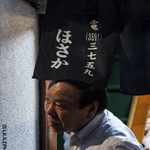
These days we mostly don't photograph people who are drunk or down on their luck. But if we can hide a face elegantly in the frame, we'll take the shot — we get the image, they keep their dignity. A small win-win on the street.


4
150
On the south side of Shibuya station a river appears from nowhere. Barely a river — a concrete sluice with a shallow stream of questionable water. It used to be lined with old bars and restaurants. Now it's a food court with a skyscraper on top. lkazphoto.com/blog/not-the-t…

1
6
182
Shibuya had a rind. Over the years it got stripped away and replaced with something new — clean, planned, clinical. We keep a quiet hope the new buildings will age and grow a rind of their own someday. We're not holding our breath. lkazphoto.com/blog/not-the-t…


2
99
We first set foot in Japan in 2007 — hidden lanes, decrepit corridors, a patina of decay splashed with neon. A city straight out of Blade Runner. We know we romanticize it. Can't be helped. Tokyo is a romantic place. lkazphoto.com/blog/not-the-t…


