

#datascientist @Gruppo_Maggioli, PhD @cimec_unitrento in personality computing
Joined January 2013
- Tweets798
- Following206
- Followers208
- Likes785






fabio celli retweeted

I think this idea of warm countries being poorer is just a historical accident: as modern economic growth began in Western Europe, the regions colonized by their settlers, which tend to have a similar climate, developed earlier.
As the world is converging to development these discrepancies are being erased. Places like Taiwan, Singapore, Malaysia, and southern mainland China are quite hot and now are rich as well.
I would think living in a cold climate is a cost, not an endowment. It lowers welfare since you have to incur costs of heating, plowing snow, heavy clothing, etc.
Thus, the net effect of cold climate on development is negative. And indeed of we look at global history instead of the recent past this correlation between being cold and rich, breaks down: in Roman times the most developed regions of the ancient Roman world were hot like Cyrenaica and Africa, while cold regions like Germania were poor and underdeveloped.
In about 15 years, I expect that nobody will be theorizing the hypothesis that "hot regions tend to be poor."

Interesting point by @tomaspueyo - in much of the tropical world (Latin America, Africa, Middle East), the population clusters in cooler mountains.
Which then makes it harder to trade etc, potentially worsening growth.


fabio celli retweeted

Couldn't resist.
Here's a pure PyTorch from-scratch re-implementation of Gemma 3 270M in a Jupyter Notebook (uses about 1.49 GB RAM): github.com/rasbt/LLMs-from-s…


fabio celli retweeted
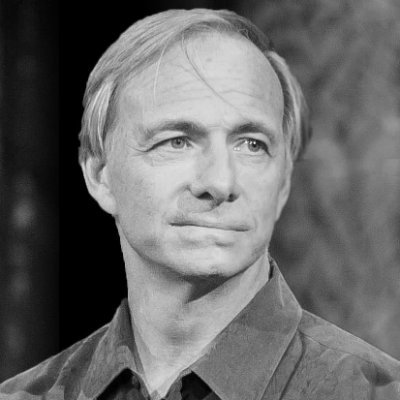
When an empire runs out of its own money, it is able to increase the supply of money. However, printing more money causes borrowing to increase creating a financial bubble. I urge you to watch “The Changing World Order” on my YouTube channel to understand how, and what it means for all of us.
#principles #raydalio
fabio celli retweeted
When great powers rise throughout history, they generally do so for the same reasons. These successful new orders are typically started by powerful revolutionary leaders doing four things:
1) Winning power by gaining more support than their opposition
2) Consolidating power by converting, weakening, or eliminating that opposition
3) Establishing systems and institutions that make the country work well
4) Creating systems that pick successors well over several generations
fabio celli retweeted

Interesting paper on why people follow rules:
Intrinsic respect for rules and social expectations are the most important motives for rule-following ("55–70% of participants conform to an arbitrary costly rule"). Extrinsic incentives and social preferences play only a minor role.

fabio celli retweeted
Now that the budget bill has passed Congress, we can see what the projections look like for deficits, government debt, and debt service expenses. In brief, the bill is expected to lead to spending of about $7 trillion a year with inflows of about $5 trillion a year, so the debt, which is now about 6x of the money taken in, 100 percent of GDP, and about $230,000 per American family, will rise over ten years to about 7.5x the money taken in, 130 percent of GDP, and $425,000 per family. That will increase interest and principal payments on the debt from about $10 trillion ($1 trillion in interest, $9 trillion in principal) to about $18 trillion (of which $2 trillion is interest payments), which will lead to either a big squeezing out (and cutting off) of spending and/or unimaginable tax increases, or a lot of printing and devaluing of money and pushing interest rates to unattractively low levels. This printing and devaluing is not good for those holding bonds as a storehold of wealth, and what’s bad for bonds and US credit markets is bad for everyone because the US Treasury market is the backbone of all capital markets, which are the backbones of our economic and social conditions. Unless this path is soon rectified to bring the budget deficit from roughly 7% of GDP to about 3% by making adjustments to spending, taxes, and interest rates, big, painful disruptions will likely occur.
fabio celli retweeted

Interesting analysis from Simon Pearce. Looking forward to Parts II and III.
One comment I have is that “debt supercycles” of Ray Dalio are actually part of the structural-demographic (SD) model, because the fiscal health of the state is one of the three chief drivers of instability in this theory. Furthermore, not every SD crisis has this component — it varies from case to case.
For sure, though, the debt problem is a very important part of our own crisis. I have the new Dalio book on my reading list, so there will probably be a review from me.
substack.com/@peterturchin/n…
fabio celli retweeted

Deepseek is AI that costs pennies.
Unitree is Robots that cost less than a MacBook. DeepSeek + Unitree G1 = the future of cheap, scalable digital labor. It’s not science fiction anymore. ❤️🤖
Readers added context they thought people might want to know
According to the Unitree website, pricing for the G1 starts at $16,000.00. This is significantly higher than the price of a MacBook.
unitree.com/mobile/g1
macprices.net/16-macbook-pro/
apple.com/shop/buy-mac/m…
fabio celli retweeted

"History Repeats: Historical Phase Recognition from Short Texts" by Fabio Celli and @Ginger_in_AI #clicit2024 @AILC_NLP #NLProc

fabio celli retweeted

New on inequalitylab.world
"The Making of China and India in 21st Century: Long-Run Human Capital Accumulation from 1900 to 2020”, WIL WP 2024/24
Congrats Li Yang & @Nitin_K_Bharti for this very important historical work
Bottom line: China was better able than India to deliver relatively inclusive access to education
wid.world/news-article/china…
prod.wid.world/www-site/uplo…


fabio celli retweeted

Social media is not reality:
-While only 3 % of active accounts are toxic, they produce 33% of all content!
-A mere 0.1 % of users share 80% of fake news
-74 % of all online conflicts are started in just 1 % of communities.
sciencedirect.com/science/ar…

Our new paper takes you Inside the funhouse mirror factory and explains How social media distorts perceptions of norms
0.1 % of users share 80% of fake news!
A tiny proportion of bad actors cause most of the problems and distort the norms.
sciencedirect.com/science/ar…
Via @CRobertson500 & @KS_delRosario

fabio celli retweeted
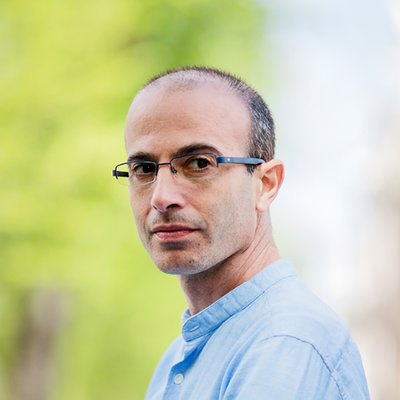
To code or not to code? Is open source more dangerous than expected?
These questions and many others are tackled in today's interview in @LePoint, to celebrate the publication of 'Nexus' in France. French speakers can read it on bit.ly/LePointYNH.
#NexusBook @AlbinMichel
fabio celli retweeted

Elon understands that entrepreneurship is just effective delegation at scale.
All his teams and companies operate at Level 5.

fabio celli retweeted
There is a big gap between what goes viral on social media VS what people want to go viral
In our new @PsychScience paper people report that divisive content, moral outrage, negativity, and misinformation all go viral.
But they want it to stop!
doi.org/10.1177/174569162311…

fabio celli retweeted

"Grazie Occidente!" I rossobruni del twitter sono in sobbuglio, ma qui Rampini ha ragione da vendere.🤭
fabio celli retweeted

Mario Draghi is a bit deluded about potential growth in Europe. It is similar to giving protein to people in nursing homes hoping they will grow a few additional inches.
And the ~1trillion in investment comes with debt, which will make the problems far worse.


fabio celli retweeted

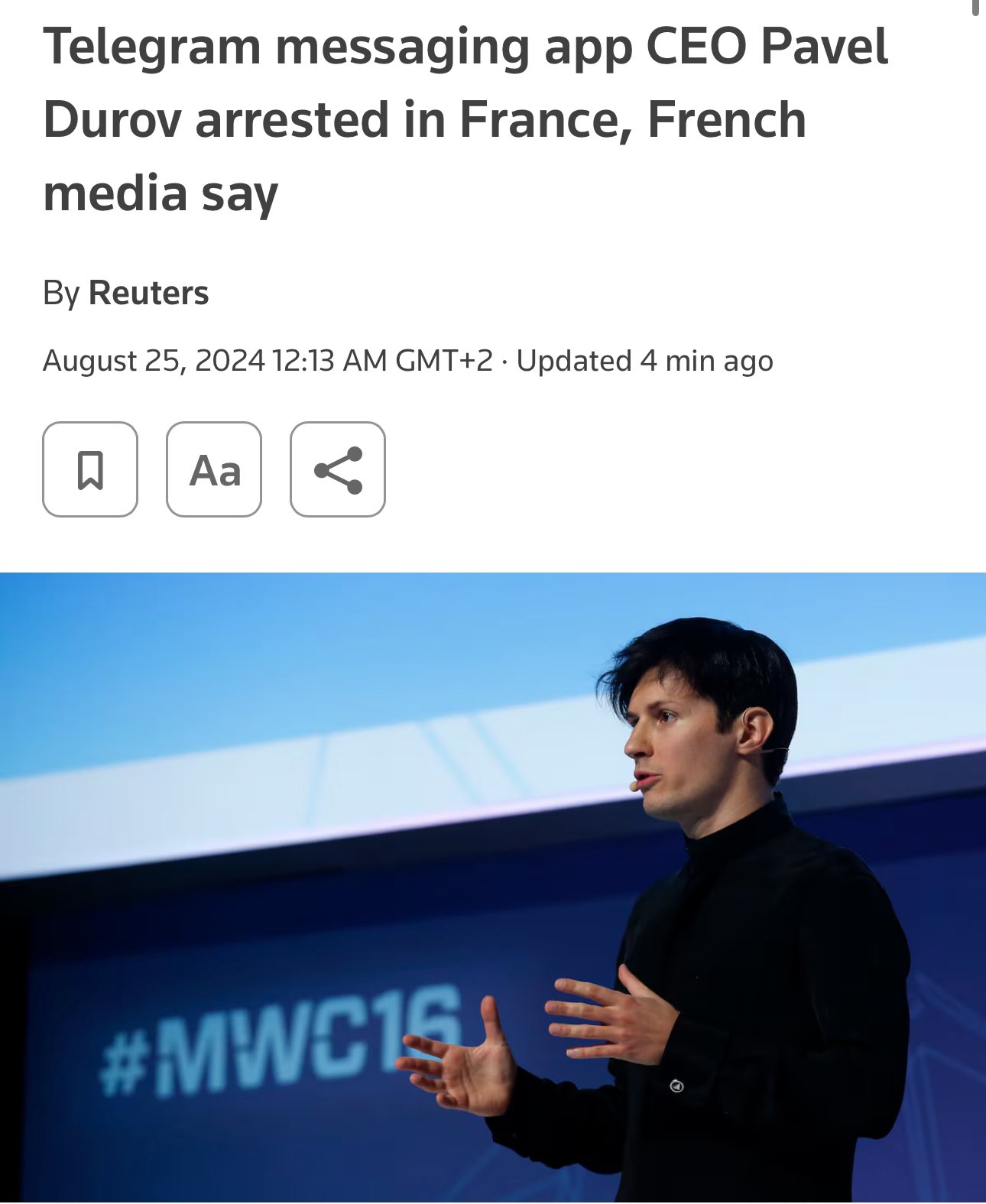
🇪🇺🇫🇷 Telegram is over?
The founder of the Telegram messenger, billionaire Pavel Durov, was arrested at the Paris airport.
"On his platform, he has allowed himself to commit countless crimes, which he does nothing to mitigate or cooperate with”
Pavel Durov will remain in custody until his trial, which will take place today or tomorrow. Durov may be charged with, among other things, money laundering and aiding terrorism.
The EU authorities' main complaint about Telegram is encrypted messages.
This was reported by the French news channel LCI.
fabio celli retweeted

Remember that the people around you influence how you see your own values.
You're shaped by the people you spend time with, so if your friends constantly talk about hustle, that mindset will naturally rub off on you.
