

Lost 28lbs body fat, 8" belly fat and kept it off 27+yrs| Helping 30+ Professionals lose 10lbs+ with a healthy diet | Live longer. #FatLossQuest
Maesteg, Wales
Joined May 2016
- Tweets581
- Following708
- Followers327
- Likes54

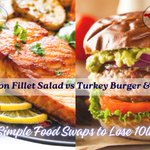


How to Lose 10lbs Without Counting Calories: 5 Changes to Start Today
Weight loss isn't just about eating less. It's also about improving what you eat and how much you move.
Start with 5 simple, yet practical changes:
1. Prioritise protein.
2. Make healthy food swaps.
3. Include healthy fats.
4. Choose whole foods.
5. Move more throughout the day.
Better nutrition. More daily activity. Sustainable habits.
Change the food, not just the portions. Increase daily activity.
#WeightLoss #HealthyEating
Discover more at:
fat-loss-quest.co.uk/blog/ho…

ALT How to Lose 10lbs and improve overall health without calorie counting. 5 simple changes you can start today.
7
This is so true. GP's and Medically Trained Doctors are NOT nutritionists.
In many cases, they cannot even guide themselves on healthy nutrition or eating.
How many Doctors have you seen that are healthy and NOT overweight or obese?
Everytime I see an overweight healthcare professional I am constantly reminded of the phrase.....
"Physician - Heal Thyself!"

You can spend five years at medical school and come out knowing almost nothing about food.
That isn't me hating doctors. Most of them will tell you the same thing themselves. Nutrition gets a tiny slice of the training, and nobody teaches you how to change what a patient eats in a ten-minute appointment.
So think about what happens when you walk in tired, overweight, with creeping blood sugar and rising blood pressure.
You get a test. You get a number. You get a tablet.
Metformin for the blood sugar. Something for the blood pressure. Maybe a statin "while we're at it". An antacid for the heartburn. Antidepressants because you're exhausted and low.
Five prescriptions. And not one question about the cereal, the toast, the low-fat yoghurt, the "healthy" snack bars and the pasta bake you're eating every single day.
Then you're told it's "just your age". Or "it runs in the family".
What nobody tells you is that many of those numbers are signs of the same underlying problem: insulin resistance. And the cheapest test for it, fasting insulin, is almost never run on the NHS.
You can't fix what nobody measures. And you can't medicate your way out of a diet that's making you ill.
Before your next appointment, write down everything you ate yesterday. Take it with you. Ask for:
• Fasting insulin
• HbA1c
• Triglycerides and HDL
• hs-CRP
Then ask the question your GP might not: "Could my food be causing this?"
Share this with someone who's on three tablets and has never once been asked what's on their plate.

1
12
Fructose Raises Liver Fat by 137%
Just a few years ago Apples, Pears and other sweet fruits were considered safe until the hidden enemy reared it's head - fructose.
We were advised it would cause a blood sugar spike but a steady one. Now it has been shown to increase liver fat by 137% ....

Calories measure energy. What happens next? In one human trial, fructose and sucrose approximately doubled liver fat production while glucose did not. Read the full article. toward.health/fructose-is-mo…

ALT IS FRUCTOSE HARMFUL? WHAT HUMAN STUDIES FOUND. Dr. Tro beside an illustrated liver.
10
So true Cary.
I'm sticking with the high fat option. Any fat that drains out in the frying pan will get soaked up by the mushrooms I fry in the fat afterwards - or the kale that gets tossed in it :)

Know what’s funny to me as a butcher?
People afraid of fat pay extra for 90% lean ground sirloin.
People who love fat pay extra for Prime steaks with exquisite marbling.
One pays more to take the fat out.
The other pays more to leave it in.
You get taxed either way.
Fear and love are both extra.

3
Before You Try to Lose Belly Fat, Understand the Problem You’re Trying to Solve
Over the last few posts, I've been looking at belly fat from a slightly different perspective.
Not:
“What's the quickest way to get rid of my belly?”
But:
“What actually is belly fat — and why might I have accumulated it?”
That's an important distinction because the bulge around your waist isn't simply an abdominal-muscle problem waiting for the right collection of crunches.
Belly fat is stored body fat in and around the abdominal area.
Some of it is subcutaneous fat — stored beneath the skin and responsible for much of the fat you can see and pinch.
Some of it may be visceral fat — stored deeper within the abdominal cavity around your internal organs.
And understanding that difference changes the conversation.
We've also looked at something much closer to home:
What changed in Your Life to Cause It?
Perhaps you're sitting considerably more than you did 10 or 20 years ago, moving less during an ordinary working day.
Your eating patterns may have changed, exercise may have gradually disappeared behind work, family and other commitments.
Your sleep may be different and your body composition changes as you get older.
And often it isn't one dramatic event that explains an expanding waistline - it's the accumulation of small changes over a long period of time.
That's why I don't think the best place to begin is:
“Which exercise burns belly fat?”
The better starting point is understanding the problem:
-What is the fat around your abdomen?
-What contributes to its accumulation?
-What has changed in your own life?
And which of those factors can you realistically do something about?
I've put together a more detailed guide explaining "what belly fat is, the different types of abdominal fat and some of the factors involved in its accumulation."
Read: What Is Belly Fat?
fat-loss-quest.co.uk/blog/wh…
But there's one part of this subject that deserves considerably more attention than I can give it here.
Visceral fat - it's the abdominal fat you can't simply pinch between your fingers.
And because of where it's stored — and its relationship with metabolic health — it's something worth understanding properly.

29
Research reveals lifestyle changes in diet and exercise are the primary movers if you want to lose visceral fat - including the use of better fats in your meals....

Visceral fat can spell trouble for your health. eatingwell.com/bad-things-yo…

5
Low-calorie / Low-carb diets with focused exercise designed to burn fat have been a successful regime for fast and effective weight loss for 10+ yrs, yet only now are the sciences corroborating this.
When people talk low-cal, it usually implies low-carb (carbohydrate rich foods are typically high in calories).
Brief research summaries on the Effects of a Healthy Low-Carb Diet:
- Reduced Visceral Fat: Low-carb diets, especially very low-carbohydrate high-fat (VLCHF) diets, significantly reduce visceral adipose tissue (VAT) and trunk fat. This is a key benefit for lowering cardiometabolic risk.
- Improved Body Composition: Individuals on a low-carb diet typically experience decreases in overall body fat and, to a lesser extent, total body mass. However, lean mass (muscle) may decrease slightly as well.
- Blood Lipid Improvements: Low-carb diets can improve cholesterol and blood lipid profiles, reducing risk factors for cardiovascular disease.
- Insulin and Glucose Regulation: Carbohydrate restriction helps stabilize blood glucose levels and can improve insulin sensitivity, making it particularly useful in managing or preventing type 2 diabetes.
- Increased Ketones: The state of ketosis (elevated β-hydroxybutyrate) boosts fat oxidation as a primary fuel source when carbohydrates are restricted.
Effects of HIIT Training
- Enhanced Mitochondrial Function: HIIT markedly increases mitochondrial content and oxidative enzyme activity in skeletal muscle, bolstering energy production and endurance.
- Improved Cardiovascular Fitness: HIIT increases aerobic capacity (VO2max) as effectively—or sometimes more so—than moderate-intensity continuous training, improving heart health and blood pressure.
- Increased Muscle Strength and Power: Regular HIIT enhances lean mass, maximal muscle strength, and muscle power in both young and older adults.
- Improved Exercise Metabolism: HIIT improves the body’s ability to utilize both carbohydrates and fats as fuel, enhancing metabolic flexibility and post-exercise calorie burn.
-Insulin Sensitivity and Blood Sugar: HIIT is shown to rapidly improve insulin sensitivity and glucose uptake by muscles.
Combined Effects of Low-Carb Diet and HIIT
Fat Loss Synergy:
When combined, a low-carb diet and HIIT amplify reductions in visceral fat and improvements in body composition more than either intervention alone.
No Additive CRF Benefit:
HIIT alone significantly improves exercise capacity and cardiorespiratory fitness (CRF), but adding a low-carb diet does not further increase aerobic capacity beyond what is achieved by HIIT alone.
Body Mass Reduction:
Rapid and marked body mass reduction occurs mainly from the low-carb diet, while HIIT preserves or increases muscle power.
Potential Lean Mass Reduction: Extended low-carb diets can reduce lean body mass slightly, even when combined with HIIT.
Metabolic Health: The combination significantly improves markers of metabolic health, including reduction in waist circumference, improved blood lipid profiles, and glucose control.
Just a few of the research findings on the effects of reduced calorie intake via a low-carb diet with HIIT on overweight people.

The combination of a low-calorie diet with a supervised exercise regimen induced nonpharmacologic remission of early-onset type 2 diabetes in more than half of participants in a new study, with low drop-out rates and preservation of lean mass. mdsc.pe/3Upg1ET

26
Strange. While the Ketogenic diet evolved and developed to help children with epilepsy, it has evolved to help bipolar and other mental health illnesses -with numerous studies to back this up.
While anxiety is still a mental health issue, it is strange that a ketogenic diet can not (as yet) help with anxiety.
Perhaps further, deeper studies into the causes of anxiety are next on the agenda?
After talking with many of those in research and in clinical practice and after reviewing our own data
I believe that ketogenic diets are extremely helpful in depression, bipolar and maybe even schizophrenia but unlikely to be helpful in anxiety where they appear to be neutral
🤔
12
Got Belly Fat? Exercising Your Stomach Isn’t the Same as Losing the Fat
You notice your belly getting bigger, so the obvious response seems to be exercise your belly.
-Sit-ups.
-Crunches.
-Planks.
-Abdominal workouts.
It feels logical.
If the problem is around my stomach, surely exercising my stomach is how I get rid of it?
Unfortunately, our bodies don't work like that.
Abdominal exercises can strengthen and develop your abdominal muscles.
Here's where the science becomes important.
Training a particular area of your body isn't a reliable way of selectively removing the fat stored in that same area.
Research looking specifically at abdominal exercise has shown that people can substantially improve the strength and endurance of their abdominal muscles without producing a corresponding reduction in abdominal fat.
In simple terms:
Stronger abs don't automatically mean less belly fat.
Your body mobilises stored fat as part of a much wider energy system. Where you lose body fat — and how quickly it disappears from particular areas — isn't something you can simply dictate by exercising the muscle underneath it.
So you can perform hundreds of crunches and build stronger abdominal muscles while the subcutaneous belly fat covering those muscles remains.
And abdominal exercises aren't a targeted solution for the visceral fat stored deeper within the abdominal cavity either.
Ask Yourself:
“What caused me to accumulate excess body fat in the first place?”
That's a much better question.
It takes us back to energy intake and expenditure.
-How much we're moving.
-How we're eating.
-How our working and living patterns have changed.
-Our age and body composition.
-Sleep and other lifestyle factors.
And, importantly, which of those things we can realistically improve.
You absolutely can train your abdominal muscles - a stronger core has plenty of value.
Just don't confuse strengthening the muscles underneath your belly fat with selectively removing the fat itself.
They're two different objectives.
And if your real objective is to reduce your waistline, understanding that difference could save you an awful lot of crunches.
16
While supplements may have their place as a short term booster, Magnesium can easily be integrated into a natural healthy, balanced diet.
Oranges, for example are high in Magnesium providing ~10mg per orange. Kiwi, on the other hand, provide 17mg/ 100g - roughly 4-7% of your daily intake.
The added benefits of obtaining your vits and Minerals from natural sources is they also come with a whole host of other beneficial nutrients.

Taking magnesium with other supplements, like vitamin D and vitamin B6, may help your body absorb magnesium better. Also learn what you should not take with it. health.com/supplements-to-ta…

1
10
Excellent example of how calorie counting works in a low carb diet and how simple swaps can mean all teh difference to your weight loss and metabolism....
Could you eat 10 eggs? Maybe.
How about 2 slices of pizza? Absolutely! And many more.
Guess which of these two meals has more calories? The answer to this question may surprise you, and it holds one of the essential keys to understanding why the Low Carb Diet WORKS.
9
Stop Drinking Your Calories...
Artificial sweeteners can increase your blood sugar levels....
Many soft drinks manufacturers use alternative /artificial sweeteners such as aspartame (E951), sucralose (E955), acesulfame k (E950), saccharin (E954), sorbitol (E420), steviol glycosides (E960) and xylitol (E967) of which aspartame (found in “Equal” and “Nutrasweet”), sucralose (found in “Splenda”) and saccharin (found in “Sweet and Low”) are the worst offenders.

One change you can make this week: stop drinking your calories.
Soda, sweetened coffee drinks, and other sugary beverages can add tons of sugar with little to no satiety.
Try water, sparkling water, or unsweetened tea instead.
Start with one swap. Build from there.

25
Healthy Eating brings its own rewards including confusion by those who cannot believe you look so young and healthy :)
Everybody wants to know the secret to looking young. Nobody wants to believe the answer.
Weddings, christenings, birthdays, work dos, it's always the same. Ten minutes in and somebody's asking what the secret is. Is it a new cream, have you been away, what are you doing differently?
Then everyone piles their plates up with sandwiches, sausage rolls, quiche, crisps and cake, and notices you're still sat at the table.
"Are you not hungry?"
"Are you not eating?"
"Go on have a sausage roll, one won't kill you."
"Not even a bit of cake? It's a party!"
"Not even a glass of wine?"
"You're not on one of them diets are you?"
So you tell them. Real food. Meat, eggs and butter, nothing cooked in seed oils, no bread, pasta or sugar, maybe a bit of fruit when it's in season. Basically how your great grandparents ate.
And the face. Every time. Then the same person who's just asked how you look so well tells you that can't be good for you.
So it's amazing right up until they find out what it is. Then suddenly it's dangerous and you're going to make yourself poorly.
Already looking forward to the next one.
This is my son btw not Justin Timberlake 🤣

4
Fast Walking for Joint Longevity?
So pleased I trained myself to walk at 4 mph 25+yrs ago - even with 2 heavy shopping bags full!
Now I comfortably speed past many people half my age without breaking a sweat :)
The only downside? They can get in the way, lol.

5 movement hacks I wish I knew at 30 (that saved my mobility at 40):
1) Sitting on the floor builds hip mobility automatically.
2) Fast walking beats slow running for joint longevity.
3) 2-minute movement snacks stop afternoon energy slumps.
4) Dead hangs fix tight shoulders.
5) Balance improves in weeks if you stand on 1 leg while making tea.
What would you add to the list?
#MobilityWork #FunctionalFitness #Longevity

1
1
23
You don't need to lose 100lbs to get the benefits of this advice!
Not counting calories and switching to healthier meals will do more than just generate weight loss -it helps reset your metabolism, fuel your immunity, improve digestive health and improve brain health...
Literally do the OPPOSITE of the common nutritional advice is…
🌽Avoid grains
🍦Avoid sugar
🍫Avoid packaged food
❌Don’t count calories
🥩Eat more meat
🍳Eat more eggs
🐟Eat more fish
🧂Add more salt
✅Count hours/carbs
Thank me when you lose 100lbs
4
Fruits and Cancer Prevention
As per Dr Berg's post below, there are a group of fruits rich in micronutrients that can protect the body's cells and ward off (or destroy) cancer.
However, these fruits mentioned (while being health-giving) do come with other 'complications':
Grapefruit.
Re-knowned for its detoxification, grapefruit should not be consumed if you are taking certain anti-depressant medications.
Tomatoes.
Delicious and very nutritious have a hidden problem - they contain Lectins which (in numbers) can perforate the bowel causing 'Leaky Gut Syndrome'. Cooking tomatoes can also reduce the levels of Lectins aswell as increasing the available volume of Lycopene which has been shown to protect the prostate gland.
Grapes.
Sweet and delicious are rich in fructose causing an increase in blood sugar levels and should be avoided by diabetics.

7 fruits that can destroy cancer:
1. Berries
Blueberries and blackberries are rich in anthocyanins that inhibit cancer growth and feed your gut microbes. This is vital because 80% of your immune system is in your gut microbiome. Research has shown that anthocyanins can decrease breast, prostate, and colon cancer.
2. Citrus fruits
Citrus fruits like lemon, lime, and grapefruit are rich in vitamin C, which supports the immune system in cancer prevention.
Flavonoids found in citrus fruits strengthen the liver's ability to turn carcinogens into harmless particles. They've also been known to decrease the risk for certain types of cancer, especially of the digestive system.
3. Pomegranates
Pomegranates are rich in the compound ellagic acid, which is known for its anti-cancer properties. The compounds in pomegranates protect DNA from damage and decrease inflammation and oxidative stress.
4. Grapes
Grapes contain the phytonutrient resveratrol, a well-studied compound known to decrease aging and support health and longevity. Grapes work as an anti-cancer food by protecting your cells from stress that can trigger cancer.
5. Tomatoes
Tomatoes contain lycopene, a potent cancer-fighting compound. You can increase lycopene by cooking your tomatoes.
6. Avocados
Avocados are rich in glutathione, a powerful antioxidant that can protect your cells from carcinogens. They also contain phytonutrients that target cancer stem cells.
7. Olives
Olives contain oleuropein and hydroxytyrosol, which protect against cancer cell growth. Phytonutrients in olives increase apoptosis, which means they help cancer cells self-destruct.
Dr. Eric Berg, DC, not MD; information only
10
More evidence that a healthy diet can reverse many health problems.
A healthy diet is not just for weight loss - it improves your metabolism.

Seven years ago today, I made a decision that changed my life. ❤️
Happy 7-year Ketoversary to me! 🎉
On October 11, 2019, I was over 300 pounds, living with insulin-dependent type 2 diabetes, inflamed fatty liver disease, chronic kidney disease, GERD, inflammatory arthritis, and Hashimoto's.
Even with 50 units of insulin a day, along with Metformin, my HbA1c was 8.5.
I had no idea just how much my life was about to change.
I started keto, cold-turkey. And what began as a desperate attempt not to die became something I could never have imagined.
Seven years later:
❤️ I've lost half my original body weight. From super-obese to normal weight.
❤️ My type 2 diabetes has been in remission for years, without insulin or Metformin. My HbA1c has remained at healthy levels around 5.2.
❤️ My inflamed fatty liver disease (NASH) and GERD have resolved.
❤️ My kidney function returned to normal.
❤️ My inflammatory markers normalized.
Not everything magically disappeared. I still live with autoimmune disease and have health challenges. Keto didn't make me invincible.
Fascinated by my own improvements, I wanted to know more about the root cause of chronic disease and metabolic health. So, I studied why keto works. I became a health coach, earned multiple certifications, and began helping others find their own path toward better health.
Along the way, I've also been fortunate to meet some wonderful people who share my passion for metabolic health. One of them is my dear friend, @drtonyhampton, who has been a tremendous source of support and encouragement. I've had the pleasure of joining him on his podcast, and we recently reconnected at the amazing Low Carb for Better Health conference. He's pictured here with me. ❤️
Over these seven years, I've learned that health is about so much more than the number on a scale. It's about metabolic health, independence, resilience, and the ability to enjoy life.
And perhaps the biggest lesson of all is that it's never too late to change the direction of your life. Or as Dr. Ken Berry says: "As long as you can fog a mirror, it's not too late".
I was in my fifties and postmenopausal. Today, I'm closing in on 60, and I have more plans, more curiosity, and more determination than ever.
I'm not celebrating seven years of dieting.
I'm celebrating seven years of reclaiming my health. Seven years of learning. Seven years of thriving and a whole new purpose in life.
And I'm nowhere near finished. ❤️
Happy Ketoversary to me! 🥑🥩

1
1
85
Brazil Nuts and Selenium.
Brazil nuts have long been associated with high volumes of Selenium for immunity but but how many should you consume per day?
It has been recommended to eat 1 or 2 per day to maximise the selenium intake.
Read Kristie Leong's post for more...

More Brazil nuts aren’t necessarily healthier.
-
This crunchy nut is among the richest natural sources of selenium—but their selenium content varies dramatically depending on where they’re grown.
RDA: 55 µg/day
U.S. upper limit: 400 µg/day
One study found a single Brazil nut provided ~290 µg.
Why that matters:
• Selenium supports antioxidant enzymes and thyroid hormone metabolism.
• But selenium has a relatively narrow window between enough and too much.
• Chronic excess can cause selenosis: hair loss, brittle nails, GI symptoms, fatigue, skin changes, and garlic-like breath.
And you can’t reliably judge the dose by counting nuts.
One study found 1 nut = ~290 µg.
Another found 2 nuts = ~53 µg.
Same food. Very different selenium exposure.
Your move: Brazil nuts are a nutrient-dense food, not a supplement you need to pile on.
I wouldn’t make a habit of eating more than 1–2 daily—especially if you take a selenium-containing supplement.
Refs:
Alcântara et al., Food Chem, 2022;
Cominetti et al., Nutr Res, 2012; Thomson et al., Am J Clin Nutr, 2008.
4
The Belly Fat You Can Pinch Isn’t the Whole Story!
Grab the excess belly fat around your waist between your fingers. What you’re holding is mainly subcutaneous fat — the fat stored beneath your skin.
It’s visible - you can feel it.
And because it changes the shape of our bodies, it tends to be the belly fat we notice first.
But it isn’t the only abdominal fat we need to understand. There is another type stored much deeper inside the abdomen:
-Visceral fat.
Unlike subcutaneous fat, visceral fat is stored within the abdominal cavity around internal organs.
You can’t simply pinch it. And you can’t reliably judge how much visceral fat somebody has just by looking at them.
That makes the distinction between the two important.
The soft belly fat beneath your skin may be the thing that makes your trousers tighter or changes what you see in the mirror.
But excess visceral fat is particularly important because higher levels of visceral fat are associated with increased metabolic and cardiovascular health risks.
So when we talk about belly fat, we're actually talking about fat stored in different places within the abdominal region — and those differences matter.
If your waistline has gradually expanded, don't just ask:
“How do I get rid of this?”
It's worth understanding:
“What exactly am I trying to get rid of?”
Because understanding the problem properly makes it much easier to start asking the right questions about the solution.

1
33
Many consider carbs as teh bad carbs : bread, pies, pastries et al and usually dismiss the 'healthy versions'.
Ketogenic diets have shown carbs can be limited down to 20 gramms/ day.
A far cry from 300 grammes many consume on a daily basis.
Do we really need food with carbs or can we exist without?....
The idea that carbohydrates are essential is misleading. Most chronic diseases in the United States are actually caused by diets high in carbohydrates.
Dr. Eric Berg, DC, not MD; information only
7