





Khamsa retweeted

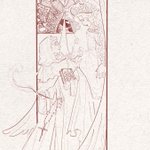
Had a strike of inspiration when watching on of my go to content creators for medieval armor
What started as finding the mix of a sallet and a mempo grew into something far bigger!
Cheers!
#DarkFantasy #characterdesign #noAI #digitalart


Khamsa retweeted

中世の司教や大司教、特に神聖ローマ帝国の諸侯司教(Fürstbischöfe)は近隣諸侯との抗争や帝国遠征、十字軍などで自ら鎧を着て軍勢を指揮し、戦場に臨むことが一般的だった。必ずしも前線で自ら武器を振るわなくとも、自領の軍勢(騎士やミニステリアーレスなど)を率いて参戦し、指揮を執ることは普通だった。
1122年のヴォルムス協約以降、司教たちは帝国諸侯として自ら軍役を果たすことが期待されていた。12世紀末には「ドイツの司教はほぼ全員が兵士か政治家、あるいはその両方」とまで言われた。13世紀のシュヴァーベン写本などには、ミトラ(司教冠)を兜の上に被り、鎖帷子を着て盾、剣、槍を持つ姿が描かれている。
12世紀後半、皇帝フリードリヒ赤髭王に仕えたマインツ大司教クリスティアン・フォン・ブーフは、鎧を着込んで三叉の鈍器を振り回し、9人を討ち取ったと伝えられるほどの好戦的な人物で、イタリア遠征で活躍した。
カノン法(教会法)では、聖職者が血を流すことや武装することを禁じていた。11世紀中葉以降、改革運動の時代には繰り返し禁令が出され、ヘイスティングスの戦いの後にも血を流した者への悔悛が命じられた。しかし、実際にはカロリング朝以来の帝国奉仕の伝統や防衛の必要性から乖離が大きく、鈍器の使用や「指揮のみで自らは殺さず」という建前が取られる一方で、剣を振るう例も少なくなかった。
時代が下ると、自己防衛や正当防衛の例外が次第に認められ、高位聖職者の軍勢指揮は容認される方向に進んでいくことになる。


Khamsa retweeted
⚔️Early to Mid 14th C. plate Armor in Europe & the development of the one piece breastplate👇🏻
The “Coat of Plates” developed in the 13th century was probably the most common form of body armor for European Knights (in addition to mail & gambeson) up until the mid 1300’s.
The knight Raoul de Nesle, killed at the Battle of Courtrai in 1302, listed his arms in his inventory as consisting of “gambesons, mail hauberks, bascinets, kettle hats (chapel de fer), padded cuisses, and both half and full greaves and coats of plates.
By 1330 the coat of plates is frequently mentioned in most wills & inventories of knights-illustrations often hide these coats of plates as they were worn over the hauberk but beneath the surcoat.
One of the most important sources of info on these mid 14th century coats of plates is the grave finds at the Battle of Visby from 1361(see pictures)-the defenders were buried in their full armor; this is practically unheard of; but it gave us incredible examples of the coat of plates and their construction during this time.
The majority of knights at The Battles of Crecy and Poitiers in 1346 and 1356 would have worn a coat of plates over a mail hauberk or gambeson.
Various materials were used for their construction including latten (a copper alloy), whalebone, and cuir bouilli (boiled hardened leather).
By the 1350s effigies start to show the evolution of a single large plate covering the upper chest, accompanied by small plates to cover the shoulders (proto spaulders).
To prevent loss in battle, guard chains were often riveted to this plate which were then attached to the great helm or bascinet etc., sword and dagger.
By the 1360s this plate had increased in size and covered the chest as far as the diphragm.
Although there is literary evidence for a single piece steel breastplate as early as 1340, they only start to show up frequently in artwork and effigies in the 1360s and 1370s. Most knights are depicted with plate defense for the limbs (also splinted limb defenses)whilst still wearing a mail hauberk and coat of plates.
It was not until the last 2 decades of the 14th century did full steel breastplates and the full plate harness become more common.
The proliferation of water wheel powered furnaces and trip hammers in Europe during the mid 14th century was one of the main technological catalysts for the development at scale of large pieces of plate armor like the one piece steel breastplate.
European smiths could now work with and stamp out large sheets of iron, no longer needing to make body armor out of hundreds of small plates.


Khamsa retweeted
⚔️🇮🇹Composite Armor representing a European knight ca. 1400
This armor was assembled and restored in the 1920s using individual elements that had been discovered in the ruins of the Venetian fortress at Chalcis, on the Greek island of Euboea, which had fallen to the Turks in 1470.
The purpose was to present a full armor of the style worn about 1400, a period from which no complete armors survive. Distinctive features are the early form of brigandine (a torso defense constructed of numerous overlapping plates riveted inside a doublet) with two large breast halves and brass borders at the edges of the exposed plates.
Portions of the brass at the top edge of the left cuisse (thigh defense), the lower edges of the right greave (lower leg defense), and the visor are genuine; the remainder is restored.
The helmet, a visored bascinet, is associated with the armor. The velvet covering of the brigandine dates from the early 20th century.
MET Museum NYC
•Medium: Steel, copper alloy, textile, leather
•Dimensions: H. 66 1/2 in. (168.9 cm); Wt. 41 lb. (18.6 kg)


Khamsa retweeted

Hi, I’m onionches, and today is my birthday! I’m already 24 years old!!! 😳😳 💔
I’ll be very happy to reposts of my arts, even though I’m already infinitely happy!