

studying scientific reasoning @TuvaAI & theory of RNA @NYU_courant // fmrly founder @soraidinc (acq. by @clear), physics/ee @stanford
New York, NY
Joined December 2012
- Tweets152
- Following548
- Followers281
- Likes605





Vamsi Varanasi retweeted

The project you’re working on right now could go in a number of directions, but you won’t have time to explore most of them.
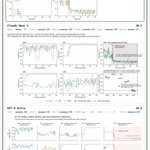
Tuva’s new Autoresearch tool explores some of those paths for you autonomously. Autoresearch agents leverage Rao’s research memory to come up with ideas based on your own work and the literature, then do the work to chase down the threads. Results are read out in concise slides so that you can quickly understand their work and direct next steps if promising - turning you into PI of your AI research group.
DM us if you want to learn more about how Autoresearch can help you do more science, faster.
Vamsi Varanasi retweeted

Unironically, it is so good that biology is cool now. Everyone should be rooting for AI to cure all disease. Stop speculating about whether it will or will not happen and ask yourself what you personally can do to make it happen. Then do it
Vamsi Varanasi retweeted
Agents can help you do more science, but you still need to understand what they’re doing to direct them and communicate results to your colleagues. That’s why we built Rao’s new Reports feature.
Launch Rao to work on a problem or assemble findings from a conversation and report back to you in a concise, visual deck. Iterate on ideas by asking Rao to run new analyses and add slides. When it comes time to read out to others, assemble decks for talks or meetings in minutes, not hours.
Reach out to try it!
Vamsi Varanasi retweeted
Introducing Tuva Reports: a new way to discover more, faster, by turning every scientist into a PI managing a team of agents.
Launch agents on long horizon tasks and have them report back to you in concise, understandable slides. All of the agents' work is backed by detailed traces and Rao's research memory so you can double check and dig into every result. Build on ideas by having agents add to decks with new results, all under your supervision.
Use Tuva Reports to have agents work on threads in parallel to you and generate precise decks for talks in minutes. Reach out to learn more!
Vamsi Varanasi retweeted

My biggest tell in poker is hitting the six seven when being dealt a six / seven
Vamsi Varanasi retweeted
An AI researcher at Princeton uses Rao to explore new research directions! He prefers Claude as a sounding board for ideas, but wants Codex to do preliminary analysis on his topics of interest. Rao lets him orchestrate agents across both.
Reach out if Rao could be useful for you! DM us or check out our website linked below.

Vamsi Varanasi retweeted

He was onto something


Vamsi Varanasi retweeted

“You become the PI of your research group of agents.”
Vamsi Varanasi (@feynmanpoint ), cofounder of @TuvaAI, is building that vision.
Tuva builds shared research memory across all of your agents, meaning they can be proactive and contextual about the sittings of your project. Think swarms of agents chasing down open threads, constantly scanning the literature, surfacing ideas, and bulletproofing your results, all while you direct and validate.
We’re happy to welcome Vamsi to Reactorfield for a session on building a company brain for research.


Vamsi Varanasi retweeted

AI transformed coding, science is next
@ReactorfieldAI makes scientists and deep tech startups AI-native
Built by me and @berkbuilds to accelerate science with frontier AI
Vamsi Varanasi retweeted

Before tech - I was a scientist myself (got a PhD in semiconductor physics)
I can tell you first hand that research and research processes need tools like this to enable better experiment design and speed up learnings and iteration to enable new discoveries
I am personally very excited about this work, and believe it can be extraordinarily high impact
Let's go @feynmanpoint and team @TuvaAI !

Today, we’re launching @TuvaAI to build a human-centric future for agentic science.
Humans collaborating with AI can learn more than either working alone: humans guiding the research, equipped with agents that can test ideas quickly and autonomously, will deliver the next wave of scientific discovery. But science is all about the details. Neither Einstein nor AGI can drive your project forward without intimately understanding your growing, interrelated web of hypotheses, intermediate results, working threads, failed experiments, datasets, notes, and water cooler conversations.
Our first product, Rao, was born out of my frustration having to reteach LLMs these constantly changing details for every single task in my own research. Rao maintains a persistent, dynamic research memory that learns and remembers project context, history, and threads. This research memory then links into our scientific agents as well as other AI software you may already be using, such as Claude or Codex. With Rao, every scientist turns into a PI managing a proactive, agentic research team that automatically stays on the same page.
Rao is live in VS Code and by CLI, and can help with any scientific task that can be done in a computer. Our early users include computational biologists, theoretical neuroscientists, chip designers, and polymer physicists who use Rao daily to ideate, do math, analyze data, and write papers and grants.
Now, we’re excited to announce Rao in closed beta. If your science mostly happens in a computer—theory, computational modeling, experimental data analysis, scientific writing—Rao can help you discover more, faster. Sign up for our waitlist, and if you’re a fit, we’ll work with you to tailor new, contextual agents that augment the way you do science. Link in the comments.
More personally: I’ve been doing scientific research since I was a kid. Scientists do so much for the world, choosing a painstaking career for the joy of discovery, developing technologies we use every day along the way. And yet, the tools scientists use are often cumbersome and woefully out of date. For me, Tuva is much about empowering the people of science with products they love as it is about the discoveries we’ll help them make. And I’m lucky to work with some wonderful humans along the way—@SamsaraDurvasu1 @anuvellore @KimchiOfer among many others. If our mission resonates, please reach out.
Vamsi Varanasi retweeted

Introducing Adaline 2.0 - The Agent Self-Improvement Layer
Adaline turns Traces into Behaviors,
Behaviors surface Issues,
Issues become auto-generated Evals + Data,
Adaline then generates new agent candidates and tests them.
You review the winners and ship!
Vamsi Varanasi retweeted

I have spent my entire life working on this and thinking about this for the past 4 years. I don't know what will happen in 20 years, but I can promise you that on the 5-10 year timescale, scientists are not out of their jobs. AI is going to massively accelerate the pace of science, increase productivity, let individual scientists make way more discoveries way faster, and is going to make science overall more fun. But the model is going to be collaboration between humans and AI, not replacement.
The key difference here between science and e.g. software engineering is that science is not verifiable in any rapid/convenient way (unlike software), unlike programming. We still need humans for their scientific taste.

Today we all lost our jobs.....
Three Nature papers showing that scientists in the conventional sense are obsolete
At least read the first one.... the AI replaced all things that the scientist does ....
nature.com/articles/s41586-0…

Vamsi Varanasi retweeted

rough shape of progress based on current data
'22 - chatgpt - consumer s/w
'25 - claude/coding - enterprise s/w
'26 - '29 - [redacted] - advanced mfg, iphone killer, materials 2.0
'29 - ??
enabled by cambrian explosion of r&d to clear progress bottlenecks
Vamsi Varanasi retweeted

While I generally agree with the point that agents being good at code means the first application in bio will be agents writing code (to paraphrase), this misses the key point about how to enable this effectively: context.

Have learned a lot building and deploying frontier agents into pharma over the past few months. Believe progress in biotech will be faster than many anticipate, and we can learn a lot from how software is unfolding.
It’s unlikely biology will jump straight to fully autonomous AI scientists. Like software, agents first get useful where work is executable, feedback-rich, and economically bottlenecked. In software, that substrate is code. In biology, it is measurement-grounded data analysis.
As agents reliably turn raw molecular data into trusted scientific outputs, they become the interface through which AI starts to understand biology. Essay below:

Vamsi Varanasi retweeted

We raised $6.5m to build humanity’s platform for uploaded consciousness.
Sentience creates one unique model for every person — a digital twin of your mind — to remember everything, recall what matters, and operate as you.
I started this company because I am worried. For the first time, we have intelligence that will fully replace humans across a range of domains within a few years.
For those outside of the tech echo chamber, this is a period wrought with confusion and uncertainty about what actually matters anymore. I’ve had numerous conversations with people who aren’t sure if they have any value as a unique human being, or whether their own thinking matters. While Silicon Valley goes full speed ahead towards AGI, many people are left wondering what place they have in this AI future.
If I can communicate one thing to everyone out there with these doubts, it would be this: your unique knowledge, memories, and who you are still matter. In fact, these things matter now more than ever.
The problem is that the course of AI is heading towards a world where all of us will outsource our thinking to the same one-size-fits-all AI models. This is not a hypothetical future. If 100,000 people ask a question to ChatGPT, every single person gets the same answer. You can see the cost of uniform AI models across writing, social media, and even academic papers. This uniformity is more than annoying – it’s dangerous.
There’s a genuine chance that we lose the texture and vibrancy that makes us unique as a species.
I founded The Sentience Company to arm real humans against this dystopian outcome.
First, your Sentience lets you collect everything that holds context from your life, learning from what you do across every platform – starting on desktop and mobile. Never forget a detail again.
Second, your Sentience becomes the best recall engine for everything in your life. Never copy/paste context or search across 50 chrome tabs again.
Finally, your Sentience becomes the full simulation of you – an AI model that thinks and acts like you, to scale and share your unique ideas and interact with others. Your Sentience emulates more than your context. It understands your values, emotions, drive, and goals.
We’re creating a world where you can leverage your own Sentience model alongside the models of your colleagues and friends to jam on ideas and access their knowledge 24/7.
We’re not building Sentience to scale AGI and replace more human thinking. We’re building Sentience to scale you.
We’re proud that many amazing humans are supporting our mission. Our round was led by @kevinzhang (@BainCapVC), with participation from @ditzikow, @adityaag, @evantana, @AgrawalArian, @gopalkraman, @JPBrebner (@spc), @rex_woodbury, @tmrohan, @soleio, @anniecase1, and many more.

