

Learn what the best in business and tech are seeing, then go find your edge @firesidetapes for business legends
United States
Joined June 2026
- Tweets2.2K
- Following384
- Followers35.1K
- Likes3.4K




Pinned Tweet
Gavin Baker says the physics PhDs calling orbital data centers impossible on X have not out-thought the 10,000 SpaceX engineers who treat it as solved
"It's very hard for me to engage. There are all these people on X and they're like, I am a physics PhD and this is impossible."
"There's a friend, another investor, who actually is a physics PhD, who I had many arguments about it with him, and he's like, I am a PhD and this is impossible. And then he goes to the SpaceX day and talks to the SpaceX engineers, and he's like, well, I was wrong."
"So let's say you're an astrophysics PhD. You are brilliant, you're hanging 100 IQ points on me. Have you thought about this for an hour? Have you thought about it for 10 hours?"
"Because you have 10,000 of the world's smartest engineers at SpaceX who've thought about this each for hundreds if not thousands of hours. And the sum of that, working with very sophisticated engineering tools, is it's a solved problem."
_______
For more on Gavin Baker: firesidealpha.substack.com/p…

Gavin Baker re $SPCX: Investors should start to consider Grok when they think about SpaceX, very few of them talk about Grok at all
"I talk to a lot of investors about SpaceX. And what's just amazing to me is everyone will have a nuanced view on Starlink."
"Maybe they're a skeptic on Starlink direct-to-cell. I think the plan to use these distributed Starlink effectively almost as, we'll call them, small cells, femtocells, is interesting."
"Everybody will have a nuanced view on orbital compute -- whether they're bullish or bearish, they will have a view. They'll have a view on terrestrial compute."
"Very few of these investors talk about Grok at all."
"And it is Pareto dominant on a lot of measures."
"And we have an existence proof that Anthropic went from, whatever it is, $1 billion to $50 billion really fast."
"And if Anthropic is worth, with the $2 trillion per the FT, $3 or $4 trillion, maybe the numbers settle out -- I said I thought that was a market-clearing price, I didn't say that's where I thought it was worth."
"Maybe people should start to consider Grok when they think about SpaceX."
Amazon CEO Andy Jassy says internal teams are building totally reimagined versions of its retail, Prime Video and Fire TV businesses
“But I think what’s harder is to take experiences, take our other consumer experience, take our retail business or take our Prime Video business or our Fire TV business or our Prime Music. Those experiences, they’re not as obvious that the technology has a much better solution today."
"But I actually believe every single one of those businesses we need to reinvent, and we have teams of people working on versions of those businesses that are totally reimagined. Now, do I think we’ll get it right from the get-go? Probably not. We’ll find ways to iterate our way into it. But it’s already yielding all sorts of new ideas and customer experiences that we think are very compelling.”
Andy Jassy reveals AWS capacity is sold out for 2026, largely sold out for 2027, and a good chunk of 2028 is gone
“If you think about it, there’s only so much data center and power today. There’s only so much memory, and I don’t think that that shortage ends in 2027."
"I believe, one of the reasons, coming back to the capital investment, why I think we could invest a lot more and it wouldn’t be a bad use of capital is that '26 is obviously at this point sold out. '27 is largely sold out. We always leave a certain amount for on-demand in our inference service, Bedrock or EC2, but largely sold out, all the big chunks. A good chunk of '28 is sold out."
"There’s so much demand. If you think about the AI business and what we call core business, which think of core as non-AI, they’re both growing at really rapid rates right now. And if you have only a certain amount of memory, you have to decide how much of the memory you want to allocate to HBM, to the AI accelerators, versus to DRAM, into your core. So these are real trade-offs you have to make.”
Fireside Alpha retweeted
Andy Jassy reveals AWS capacity is sold out for 2026, largely sold out for 2027, and a good chunk of 2028 is gone
“If you think about it, there’s only so much data center and power today. There’s only so much memory, and I don’t think that that shortage ends in 2027."
"I believe, one of the reasons, coming back to the capital investment, why I think we could invest a lot more and it wouldn’t be a bad use of capital is that '26 is obviously at this point sold out. '27 is largely sold out. We always leave a certain amount for on-demand in our inference service, Bedrock or EC2, but largely sold out, all the big chunks. A good chunk of '28 is sold out."
"There’s so much demand. If you think about the AI business and what we call core business, which think of core as non-AI, they’re both growing at really rapid rates right now. And if you have only a certain amount of memory, you have to decide how much of the memory you want to allocate to HBM, to the AI accelerators, versus to DRAM, into your core. So these are real trade-offs you have to make.”
Ben Horowitz reveals Amazon CEO Andy Jassy told him its AI compute is sold out beyond 2028, and says that shortage makes this fundamentally different from the dot-com bubble
“This shortage is so bad. You know, I was speaking with Andy Jassy, who runs Amazon, yesterday. And I said, yeah, like, we’re out of everything, you know, till 2028. He’s like, oh, it’s beyond 2028. Like, I don’t think we get stuff back, like, end of 2028, maybe. So everything else is sold out.”
“So he has the advantage of that, he’s got supply in a great shortage, which is extremely different than the internet bubble. The internet bubble, we didn’t have enough demand, because we had to build the internet, people had to get broadband, you know, you needed all this stuff people had to buy, you know, originally, they had to get their browser at price, all this kind of thing.”
“There weren’t enough consumers on the internet to absorb all the bandwidth that had gotten built out. And they had a massive amount of debt, not unlike we’re building today, although not as big. But the lack of demand killed it. We don’t really have a lack of demand in AI. So I think the dynamics will be different.”
“I do think, like, for sure, if you get into a pathological debt situation, that can wreck anybody. It’s why, by the way, we’re not invested in any of these neo-clouds either, for that reason.”
Fireside Alpha retweeted

These kinds of tweets always surprise me if I’m being honest. I think part of it is that people missed the memory trade, but happy to break down the thesis
One of the common themes at Token was agents. Yet when I pushed investors on how to express that thesis, many just said “AI x crypto,” which is a cop out answer
If you want to be long agents beyond “agentic trading,” one of the clearest ways is through inference infrastructure like compute (GPUs) and context (memory)
Training is mostly about how much GPU compute you have, but once you start serving those models memory becomes a much bigger bottleneck. Inference breaks down into prefill which processes the prompt and is generally limited by GPU compute, and decode which generates the response and is limited by memory bandwidth
That’s why caching is so important. It lets agents reuse context instead of paying for expensive GPU prefill again. DeepSeek Flash charges $0.006 per million cached input tokens versus $0.30 uncached at peak rates. That’s 50x cheaper input pricing for reused context
The bandwidth of memory also affects how many tokens per second you can generate. While capacity affects how much context and how many concurrent users you can serve
It's gotten so competitve now that there are different memory tiers making different tradeoffs between bandwidth, capacity and cost
Groq and Cerebras are optimize around extremely fast tokens per second on SRAM chip. Nvidia's Groq has 150 TB/s of memory bandwidth but only 500 MB of SRAM per chip. Since the capacity is so limited you need a rack that connects 256 of these chips to reach 128 GB of SRAM to be able to run the more modern models. Cerebras takes a different approach with a wafer design with 21 PB/s of aggregate memory bandwidth and 44 GB of SRAM, but the main point is that both of the these chips need to be massively networked to fit larger and larger models or more context as the model continue to scale in parameter count
Then you drop to high bandwidth memory from companies like SK hynix and Micron which trades bandwidth for much more capacity. Nvidia's next gen chip the Rubin has 288 GB of capacity and 22 TB/s of memory bandwidth, versus the Groq configuration’s 500 MB and 150 TB/s
That is roughly 7x less memory bandwidth but nearly 600x more capacity. Going further down the higharchy ram and nand based SSDs provide even cheaper capacity further down the hierarchy
One interesting note is that DeepSeek has made a ton of hardware innovations in caching context on SSDs because of the export bans by the US on HBM, further pushing down expensive GPU prefill work. Nvidia has also acknowledge SSDs are a increasing important part of the stack and spin up a new platform called CMX which uses flash storage for reusable inference context. That adds inference caching to traditional storage demand and is one reason I’m bullish on NAND suppliers like SanDisk
I think if you’re bullish agents, you should be bullish memory, because you want to be long context. In the theoretical limit, you’d want effectively unlimited memory and context, like the movie Her, where your agent knows your history, your preferences and everything you’ve worked on
With paid AI adoption at only a few percentage of the world's population, and even fewer people using agents, my bet is that many of us will graduate from one agent to having multiple agents working for us, which will only multiply compute and memory demand
On the supply side of things, Amazon CEO is saying AWS’s capacity blocks are sold out for 2026 and largely sold out for 2027 “There’s only so much memory, and I don’t think that that shortage ends in 2027”
xitter.cf/firesidealpha/status/2…
Memory suppliers are also securing multi year contracts. Micron has agreements extending into 2031, backed by take or pay commitments and substantial cash deposits. Breaking those contracts has financial consequences, and I think customers also risk future allocation.
The point I want to drive home is that securing more memory capacity directly gives Labs the ability to support more concurrent users or larger contexts windows aka more revenue
This is all while people are missing that earnings have gone up so much that the foward PE ratios are actually coming down. The results keep backing up the thesis while people keep calling the top. I believe we are just climbing the wall of worry
I’m bullish on crypto as the future of finance, and I’m bullish on AI. I don’t think we need to mash them together and they don’t need to compete. Just be long both

Andy Jassy reveals AWS capacity is sold out for 2026, largely sold out for 2027, and a good chunk of 2028 is gone
“If you think about it, there’s only so much data center and power today. There’s only so much memory, and I don’t think that that shortage ends in 2027."
"I believe, one of the reasons, coming back to the capital investment, why I think we could invest a lot more and it wouldn’t be a bad use of capital is that '26 is obviously at this point sold out. '27 is largely sold out. We always leave a certain amount for on-demand in our inference service, Bedrock or EC2, but largely sold out, all the big chunks. A good chunk of '28 is sold out."
"There’s so much demand. If you think about the AI business and what we call core business, which think of core as non-AI, they’re both growing at really rapid rates right now. And if you have only a certain amount of memory, you have to decide how much of the memory you want to allocate to HBM, to the AI accelerators, versus to DRAM, into your core. So these are real trade-offs you have to make.”
Ben Horowitz reveals Amazon CEO Andy Jassy told him its AI compute is sold out beyond 2028, and says that shortage makes this fundamentally different from the dot-com bubble
“This shortage is so bad. You know, I was speaking with Andy Jassy, who runs Amazon, yesterday. And I said, yeah, like, we’re out of everything, you know, till 2028. He’s like, oh, it’s beyond 2028. Like, I don’t think we get stuff back, like, end of 2028, maybe. So everything else is sold out.”
“So he has the advantage of that, he’s got supply in a great shortage, which is extremely different than the internet bubble. The internet bubble, we didn’t have enough demand, because we had to build the internet, people had to get broadband, you know, you needed all this stuff people had to buy, you know, originally, they had to get their browser at price, all this kind of thing.”
“There weren’t enough consumers on the internet to absorb all the bandwidth that had gotten built out. And they had a massive amount of debt, not unlike we’re building today, although not as big. But the lack of demand killed it. We don’t really have a lack of demand in AI. So I think the dynamics will be different.”
“I do think, like, for sure, if you get into a pathological debt situation, that can wreck anybody. It’s why, by the way, we’re not invested in any of these neo-clouds either, for that reason.”
DEVELOPING: President Trump defends Elon Musk against Democrats, saying “we have to protect our geniuses” and that he's done nothing wrong
“Well, look, Elon’s a brilliant guy. And I have an expression. We have to protect our brilliant people, because we don’t have too many of them. There aren’t too many of them in the world. And Elon’s done nothing wrong. Elon is a very good guy. He’s a very different kind of a guy."
"But I think people have an obligation to protect our geniuses. There aren’t that many of them. We’re leading in everything right now. We’re leading in AI. We’re leading in everything. It’s amazing how we’re doing. But we are leading superintelligence. We’re leading in every single category. We have more things being built in our country right now than any country has ever had in history.”
Elon Musk giving Jay Leno a tour of SpaceX’s Starbase in 2022.
Shows him Starship, 165 feet tall with more payload volume than a 747, and gives this take on why the rocket is the easy part:
“Manufacturing is by far harder than the design. I mean there’s an old saying, it’s like 1% inspiration, 99% perspiration. I think it might actually be 99.9% perspiration. Actually in America I’d say we underweight the value of manufacturing."
"Manufacturing is extremely important, fundamental and a very difficult thing to do. Even making prototypes of the rocket is easy compared to manufacturing a whole bunch of them. So we’re gearing up to make one of these per month, and then within a few years, we’ll be making one of these every three days.”
_______
Bookmark & watch: youtu.be/wluBlr1j4qk
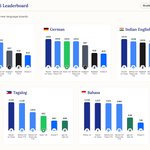
Voice Arena finds ElevenLabs wins every one of its five new TTS leaderboards when only blind native-speaker votes count, with Eleven v4 Turbo on top in four of them
“Across five languages spanning Europe, Southeast Asia and South Asia, each judged only by native listeners, ElevenLabs finishes first on every board, ahead of the next-best model from another provider by 11 to 26 Elo points.
Voice Arena ranks models through blind, head-to-head votes by vetted native speakers, scored with Bradley-Terry Elo.”
The runner-up is also call-out worthy: Google’s Gemini 3.8 TTS models are the best non-ElevenLabs entry on all five boards, tied with Cartesia in French.
OpenAI’s gpt-4o-mini-tts only appears on two boards, and it finishes last in Tagalog and fifth of six in Bahasa.
🤝 Paid partnership


Introducing five new languages on the Voice Arena TTS leaderboard.
Models from @ElevenLabs rank #1 on all five of the new Voice Arena TTS leaderboards: French 🇫🇷, German 🇩🇪, Bahasa 🇮🇩, Tagalog 🇵🇭 and Indian English 🇮🇳.
Eleven v4 Turbo takes the top position on four of the five boards. On Bahasa, ElevenLabs holds both #1 and #2, with Eleven v4 first and Eleven v4 Turbo second.
Across five languages spanning Europe, Southeast Asia and South Asia, each judged only by native listeners, ElevenLabs finishes first on every board, ahead of the next-best model from another provider by 11 to 26 Elo points.
Voice Arena ranks models through blind, head-to-head votes by vetted native speakers, scored with Bradley-Terry Elo.
Board-by-board results below 🧵


Elon Musk giving Jay Leno a tour of SpaceX’s Starbase in 2022.
Shows him Starship, 165 feet tall with more payload volume than a 747, and gives this take on why the rocket is the easy part:
“Manufacturing is by far harder than the design. I mean there’s an old saying, it’s like 1% inspiration, 99% perspiration. I think it might actually be 99.9% perspiration. Actually in America I’d say we underweight the value of manufacturing."
"Manufacturing is extremely important, fundamental and a very difficult thing to do. Even making prototypes of the rocket is easy compared to manufacturing a whole bunch of them. So we’re gearing up to make one of these per month, and then within a few years, we’ll be making one of these every three days.”
_______
Bookmark & watch: youtu.be/wluBlr1j4qk
Intel CTO explains why Intel is helping Elon Musk build Terafab, and what a new fab needs besides tools
DWARKESH: “I think it’ll be interesting to discuss the partnership you guys have with Elon on Terafab. What’s going on there?”
PUSHKAR RANADE (CTO): “Well, I think Elon’s publicly talked about his desire to build a fab.”
[Musk clip spliced in]: “We either build the Terafab or we don’t have the chips. And we need the chips, so we’re going to build the Terafab.”
RANADE: “Sort of the same thinking. I think he’s seeing just an enormous increase in demand for silicon, for compute and for memory. And I think he came to the conclusion that his own businesses are going to require a lot of silicon. And so he thought maybe he should just do it all on his own. Unlike building a car, for example, this is such an intricate and complicated process. We thought we could work together to help accelerate his bringing up his fab.”
DWARKESH: “But because of the bottleneck at the tool level, it seems like the net amount of silicon in the world won’t increase. It’s just that maybe if somebody were to start a new fab, they would get access to guaranteed supply in a way that they wouldn’t have if they’re working with another person’s foundry.”
RANADE: “It’s actually not just tools. I mean, a fab does require a lot of power, a lot of water, a lot of consumables. There’s many other input variables as well.”
DWARKESH: “But those can be scaled in the way that tools cannot.”
RANADE: “Yea. Some more than others, but yes. In one sense, yes, we need a lot more equipment. But it is true, we also need a lot more just raw fab space, raw clean room capacity.”
American Express CEO says Amex will not let AI assistants “run rogue” through its systems, allowing only agents approved through API or MCP channels, and won’t let bots ping Resy every four seconds
Stephen Squeri (CEO): “When you take a step back, you have to embrace AI. And you have to embrace it. And you have to do what your customers want to do. Having said that, I think in terms of, you’ve heard a lot about banks that are blocking."
"And look, we’re going to take a risk-based approach too. We’re just not going to let assistants run rogue through our systems, and that’s not going to happen."
"We need to protect our customers, merchants, and we’re only going to allow agents to access our systems that are either approved through API or MCP channels."
"We’re also focused on providing a very consistent membership experience, meaning we don’t want AI agents to be pinging Resy every four seconds and disadvantaging our other card members.”
Instinct CEO Noah Shinn says agents will let restaurants give tables to birthdays and anniversaries over whoever clicks first
"And traditionally, because of the way that the internet has worked, at least for reservations, it's been first come first serve. So anyone that comes in, no matter how important or how not important it might be, whoever gets in first gets the reservation."
"But what if you had the ability for the agent to be able to communicate on both sides, communicate, hey, this is important. This is actually the person's spouse's birthday, the 30th birthday, a very special event is coming up."
"And the restaurant too can say, let's actually prioritize birthdays or major decade birthdays or major anniversaries or these certain people, I don't know, whatever it might be, right?"
"So now with the ability, with all of the logistical burden of having to describe exactly what your case is and what's happening and why it's important. Now we have the ability to perfectly match what does the restaurant want? What does the user want?"
"And that will result in more special events for the users being able to actually have a spot in the restaurant."
Google VP Bill Jia says AI demand will still go 10x, 100x, 1,000x, and whoever skips the investment now cannot serve it when rivals can
“Yes, I think there are mainly two points, and actually we touched on both of them just now. The first point is that AI’s demand is still enormous, beyond compare. In the future it will still go 10x, 100x, 1,000x."
"If AI demand in the future is going to be very large, and you know it’s going to grow rapidly, then doing the investment now is what should be done, right?"
"Because if you and I don’t invest, others will invest. Then later, when the demand comes up, you yourself have no way to accommodate the demand while everyone else can accommodate it. That’s a big problem, right? So this has to be done first. This is definitely correct.”
_______
Link and breakdown of the Google VP interview: firesidealpha.substack.com/p…
Sundar Pichai reveals Gemini 4 Argon hit almost 25 trillion tokens in its first 72 hours, 3x Gemini 3.0, and Google is capacity constrained serving it
“We took our time with it. We made sure we tested it safely and deployed it carefully. We took a bit longer than our other models, given its capabilities."
"But I think across the board, be it for agentic work, knowledge work, coding, creative tasks, I think Argon is one of the really good frontier models."
"And in the first 72 hours since we launched, it’s almost up to 25 trillion tokens used, which is about 3x what Gemini 3.0 had in the first 72 hours."
"And we are capacity constrained as we are serving it."
"So excited, but there are always areas, both the frontier is just last. It’s very dynamic and you have to keep evolving the models. And there are areas which we can see we need to improve as well. So we’ll be at work on all of that as well.”
Fireside Alpha retweeted
SpaceXSI engineer Lauren Tan reveals her Grok Bot agents now auto-merge their own pull requests, and she woke up to 20 already landed
“So over the past five months, I feel like I’ve really been able to ascend this trust curve. And now I’m at the point where, this sounds kind of scary to say this, and it makes me sound like a slop artist, but I promise I’m not. But I actually have my agents now auto-merging PRs for me, which is like a wild thing to say. But I woke up today, and there were like 20 PRs landed, and I just reviewed them on main, like they were already landed. And they were good.”
Great presentation from SpaceX's Lee Robinson @leerob going over their work on agents, tried to break down into topics and attached corresponding clips

Fireside Alpha retweeted
Intel CTO explains why Intel is helping Elon Musk build Terafab, and what a new fab needs besides tools
DWARKESH: “I think it’ll be interesting to discuss the partnership you guys have with Elon on Terafab. What’s going on there?”
PUSHKAR RANADE (CTO): “Well, I think Elon’s publicly talked about his desire to build a fab.”
[Musk clip spliced in]: “We either build the Terafab or we don’t have the chips. And we need the chips, so we’re going to build the Terafab.”
RANADE: “Sort of the same thinking. I think he’s seeing just an enormous increase in demand for silicon, for compute and for memory. And I think he came to the conclusion that his own businesses are going to require a lot of silicon. And so he thought maybe he should just do it all on his own. Unlike building a car, for example, this is such an intricate and complicated process. We thought we could work together to help accelerate his bringing up his fab.”
DWARKESH: “But because of the bottleneck at the tool level, it seems like the net amount of silicon in the world won’t increase. It’s just that maybe if somebody were to start a new fab, they would get access to guaranteed supply in a way that they wouldn’t have if they’re working with another person’s foundry.”
RANADE: “It’s actually not just tools. I mean, a fab does require a lot of power, a lot of water, a lot of consumables. There’s many other input variables as well.”
DWARKESH: “But those can be scaled in the way that tools cannot.”
RANADE: “Yea. Some more than others, but yes. In one sense, yes, we need a lot more equipment. But it is true, we also need a lot more just raw fab space, raw clean room capacity.”
DEVELOPING: American Airlines CEO backs Starlink when pressed on Elon Musk and Ukraine, saying customers demand the "best" connectivity
LEBEAU: “...But it raises the question, are you comfortable doing business with Starlink?”
ROBERT ISOM (CEO): “American has always been the leader in satellite Wi-Fi. We’ve had more aircraft equipped with satellite Wi-Fi than anybody for longer. As we take a look forward, our customers, they want connectivity. They demand it. And this is something that we are going to make sure that our customers have the best product in the marketplace.”
LEBEAU: “And that means Starlink?”
ISOM: “It’s Starlink.”
Fireside Alpha retweeted
DEVELOPING: American Airlines CEO backs Starlink when pressed on Elon Musk and Ukraine, saying customers demand the "best" connectivity
LEBEAU: “...But it raises the question, are you comfortable doing business with Starlink?”
ROBERT ISOM (CEO): “American has always been the leader in satellite Wi-Fi. We’ve had more aircraft equipped with satellite Wi-Fi than anybody for longer. As we take a look forward, our customers, they want connectivity. They demand it. And this is something that we are going to make sure that our customers have the best product in the marketplace.”
LEBEAU: “And that means Starlink?”
ISOM: “It’s Starlink.”
Marc Andreessen says early AI products suffer from "product manager brain," built for people booking dinners with other product managers
“I’ll give you my version, maybe a little bit of what Chris was saying. But I think so many, I mean, look, there’s a lot of great demos, a lot of great products releasing right now. But there’s this thing I’ve just observed. I saw it in the internet era earlier, and I call it product manager brain, which is product managers basically designing products for product managers."
"By the way, it’s the one thing everybody does is they build products for themselves. Product managers have the story that they’re building for other people. And yet somehow all the use cases are, book me a restaurant in San Francisco to go have dinner with my friends who are also product managers, or book me a plane flight to go to the product management conference where I also get to hang out with all my product manager friends."
"And so there’s this, it’s a little bit, and again, there’s a role for this, but it’s a little bit like, I think it’s like the Anthropic, I’m a, what is it? I’m a happy, helpful, harmful, harmless. I’m a happy, harmless, whatever it is, honest assistant."
"And it’s a little, it also means I am the most boring possible thing you could possibly imagine that’s going to be constantly lecturing you. You’ve asked me a question I’m not allowed to answer. And so it’s like, there’s just going to be this sort of, we just had this very, just the nature of the early companies who just had this very blinkered view on human activity and what people are going to want to do."
"And to your point, with Muse and Instinct, it’s starting to open up. But like, look, this is going to be a much more entertaining, fun, enjoyable, exciting, by the way, lucrative, people are going to make money.”
Instinct CEO Noah Shinn says agents will let restaurants give tables to birthdays and anniversaries over whoever clicks first
"And traditionally, because of the way that the internet has worked, at least for reservations, it's been first come first serve. So anyone that comes in, no matter how important or how not important it might be, whoever gets in first gets the reservation."
"But what if you had the ability for the agent to be able to communicate on both sides, communicate, hey, this is important. This is actually the person's spouse's birthday, the 30th birthday, a very special event is coming up."
"And the restaurant too can say, let's actually prioritize birthdays or major decade birthdays or major anniversaries or these certain people, I don't know, whatever it might be, right?"
"So now with the ability, with all of the logistical burden of having to describe exactly what your case is and what's happening and why it's important. Now we have the ability to perfectly match what does the restaurant want? What does the user want?"
"And that will result in more special events for the users being able to actually have a spot in the restaurant."

SpaceXSI engineer Lauren Tan reveals her Grok Bot agents now auto-merge their own pull requests, and she woke up to 20 already landed
“So over the past five months, I feel like I’ve really been able to ascend this trust curve. And now I’m at the point where, this sounds kind of scary to say this, and it makes me sound like a slop artist, but I promise I’m not. But I actually have my agents now auto-merging PRs for me, which is like a wild thing to say. But I woke up today, and there were like 20 PRs landed, and I just reviewed them on main, like they were already landed. And they were good.”
Great presentation from SpaceX's Lee Robinson @leerob going over their work on agents, tried to break down into topics and attached corresponding clips
